Sunflower Seed Protein Powder Market Size
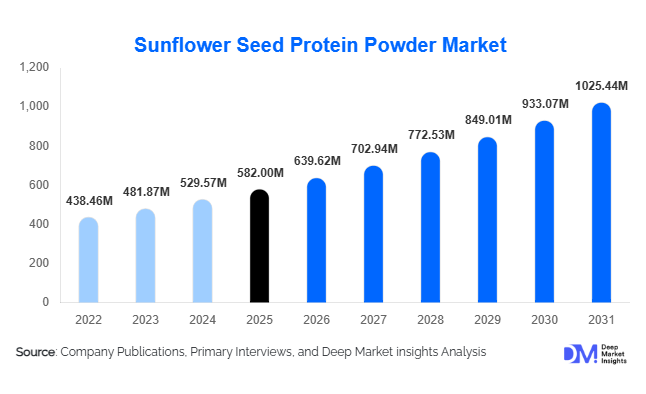
According to Deep Market Insights, the global sunflower seed protein powder market size was valued at USD 582 million in 2025 and is projected to grow from USD 639.62 million in 2026 to reach USD 1025.44 million by 2031, expanding at a CAGR of 9.9% during the forecast period (2026–2031). The sunflower seed protein powder market growth is being driven by increasing consumer preference for plant-based nutrition, rising demand for allergen-free protein ingredients, and growing adoption of sustainable food formulations across food, beverage, nutraceutical, and animal nutrition industries. Manufacturers are increasingly incorporating sunflower protein into meat alternatives, dairy-free products, protein supplements, and functional foods due to its favorable amino acid profile, clean-label positioning, and non-GMO appeal. Technological advancements in protein extraction and purification processes are further enhancing functionality, taste, and solubility, making sunflower protein increasingly competitive against soy, pea, and rice protein alternatives.
Key Market Insights
- Sunflower protein isolate represents the leading product segment, accounting for approximately 42% of the global market due to its high protein concentration and suitability for premium nutrition applications.
- Food and beverage applications dominate market demand, contributing nearly 58% of global consumption as manufacturers increasingly fortify products with plant-based proteins.
- Europe remains the largest regional market, accounting for approximately 34% of global revenue, supported by strong plant-based food adoption and advanced ingredient manufacturing infrastructure.
- Asia-Pacific is the fastest-growing regional market, expanding at an estimated CAGR above 12% through 2031 due to increasing health awareness and rising demand for sustainable nutrition products.
- Organic sunflower protein products are gaining traction, supported by growing consumer demand for clean-label, pesticide-free, and non-GMO ingredients.
- Technological innovations in extraction and fractionation are improving protein functionality, color profile, and flavor characteristics, enabling wider use across premium food formulations.
Sunflower Seed Protein Powder Market Latest Trends
Expansion of Plant-Based Food Innovation
The global transition toward plant-based diets continues to drive innovation in alternative protein ingredients, positioning sunflower seed protein as a promising option for manufacturers seeking diversified protein sources. Food producers are increasingly incorporating sunflower protein into meat analogues, dairy alternatives, bakery products, snacks, and ready-to-drink nutritional beverages. Unlike soy protein, sunflower protein offers a non-allergenic profile and aligns well with clean-label product development strategies. Major food companies are actively exploring multi-protein formulations that combine sunflower protein with pea, fava bean, and rice proteins to improve nutritional value and functional performance. This trend is expected to significantly increase commercial demand for sunflower protein ingredients throughout the forecast period.
Growing Preference for Organic and Sustainable Proteins
Consumers are increasingly evaluating protein ingredients based on sustainability credentials, environmental impact, and transparency throughout the supply chain. Organic sunflower protein products are benefiting from this shift, particularly in North America and Europe where premium food categories continue to expand. Manufacturers are investing in traceable sourcing networks, regenerative agriculture partnerships, and low-carbon production processes to differentiate their offerings. Organic-certified sunflower protein powders command premium pricing and are increasingly being utilized in sports nutrition, meal replacement products, and functional foods targeted toward health-conscious consumers. Sustainability-focused purchasing decisions are expected to remain a defining market trend over the next decade.
Sunflower Seed Protein Powder Market Drivers
Rising Demand for Plant-Based Nutrition
The growing adoption of vegan, vegetarian, and flexitarian diets remains the most significant growth driver for the sunflower seed protein powder market. Consumers are increasingly replacing animal-based proteins with plant-derived alternatives due to health, environmental, and ethical considerations. As global awareness regarding sustainable food systems continues to increase, manufacturers are seeking alternative protein ingredients that can satisfy nutritional requirements while supporting environmental objectives. Sunflower protein's balanced amino acid profile and clean-label positioning make it an attractive solution for a broad range of food applications.
Increasing Demand for Allergen-Free Protein Ingredients
Food allergies and sensitivities continue to influence ingredient selection across the global food industry. Unlike soy, dairy, and gluten-based proteins, sunflower protein exhibits low allergenic potential and supports "free-from" product claims. This advantage has accelerated adoption across nutritional supplements, bakery products, beverages, and children's nutrition products. As manufacturers prioritize consumer-friendly labeling and allergen reduction strategies, sunflower protein demand is expected to benefit significantly from this trend.
Advancements in Protein Extraction Technologies
Recent improvements in extraction, filtration, and fractionation technologies have enhanced the commercial viability of sunflower protein products. Modern processing methods improve protein purity, reduce bitterness, enhance color characteristics, and increase functional performance. These developments have expanded sunflower protein's suitability for premium applications where taste, texture, and appearance are critical purchasing criteria. Continued investment in ingredient innovation is expected to support wider commercial adoption globally.
Sunflower Seed Protein Powder Market Restraints
Higher Production and Processing Costs
Compared with established protein ingredients such as soy protein, sunflower protein production remains relatively limited in scale. Processing facilities require specialized extraction equipment and purification technologies that increase production costs. As a result, sunflower protein products often command higher market prices, limiting adoption in cost-sensitive food categories. Expanding processing capacity and improving operational efficiencies remain critical challenges for market participants.
Dependence on Agricultural Supply Conditions
The sunflower seed protein powder market remains closely linked to global sunflower seed production, which can be affected by weather variability, geopolitical developments, crop yields, and agricultural trade policies. Supply disruptions in major producing regions can impact raw material availability and pricing stability. Market participants must continue diversifying sourcing networks and investing in supply chain resilience to mitigate potential disruptions.
Sunflower Seed Protein Powder Industry Key Opportunities
Rapid Expansion of Plant-Based Meat and Dairy Alternatives
The global plant-based food industry continues to expand rapidly, creating significant opportunities for sunflower protein suppliers. Many food manufacturers remain heavily dependent on soy and pea proteins, creating demand for alternative ingredients that provide differentiation and supply security. Sunflower protein offers strong opportunities in next-generation meat alternatives, dairy-free beverages, and hybrid protein formulations. Companies capable of delivering improved functionality and scalability are well positioned to capitalize on this trend.
Organic and Premium Nutrition Markets
The premium nutrition segment represents a high-growth opportunity for both established suppliers and new entrants. Consumers increasingly seek certified organic, non-GMO, and sustainably sourced protein ingredients that support health and wellness objectives. Organic sunflower protein products typically achieve higher margins than conventional alternatives and continue gaining traction among sports nutrition brands, functional food manufacturers, and specialty health product companies.
Report Scope
| Report Metric | Details |
|---|---|
| Market Size in 2025 | USD 582.00 Million |
| Market Size in 2026 | USD 639.62 Million |
| Market Size in 2031 | USD 1025.44 Million |
| CAGR | 9.9% (2026-2031) |
| Base Year for Estimation | 2025 |
| Historical Data | 2022-2024 |
| Forecast Period | 2026-2031 |
| Report Coverage | Revenue Forecast, Competitive Landscape, Supply Chain Disruption, Growth Factors, Environment & Regulatory Landscape and Trends |
| Geographies Covered | North America, Europe, APAC, Middle East and Africa, LATAM |
| Countries Covered | U.S., Canada, U.K., Germany, France, Spain, Italy, Russia, Nordic, Benelux, Rest of Europe, China, Korea, Japan, India, Australia, Singapore, Taiwan, South East Asia, Rest of Asia-Pacific, UAE, Turky, Saudi Arabia, South Africa, Egypt, Nigeria, Rest of MEA, Brazil, Mexico, Argentina, Chile, Colombia, Rest of LATAM |
Explore more data points, trends and opportunities Download Free Sample Report
Product Type Insights
Based on product type, the global sunflower seed protein powder market is segmented into sunflower protein isolate, sunflower protein concentrate, hydrolyzed sunflower protein, and texturized sunflower protein. Among these, sunflower protein isolate dominates the market, accounting for approximately 42% of global revenue in 2025. The segment’s leadership is primarily attributed to its high protein concentration, superior amino acid availability, improved digestibility, and broad functionality across diverse food and beverage applications. Food manufacturers increasingly prefer isolates for protein-enriched beverages, dairy alternatives, meal replacement products, and clean-label nutritional formulations, where higher protein content and neutral sensory characteristics are critical. The growing consumer preference for allergen-friendly and non-soy protein ingredients has further strengthened the adoption of sunflower protein isolates across mainstream and premium product categories.Sunflower protein concentrates continue to maintain a substantial market presence, particularly in cost-sensitive applications where moderate protein content and favorable economics are important purchasing considerations. The segment benefits from increasing utilization in bakery products, cereals, snack foods, and animal nutrition formulations. Concentrates offer manufacturers a cost-effective means of improving nutritional profiles while maintaining formulation flexibility, making them particularly attractive in emerging markets and high-volume food production environments.Texturized sunflower proteins represent an emerging category within the broader alternative protein industry. As plant-based meat manufacturers seek to diversify protein sources beyond soy and wheat, texturized sunflower proteins are gaining traction due to their desirable texture, sustainability profile, and allergen-friendly positioning. Increasing investment in next-generation plant-based foods and the growing popularity of flexitarian diets are expected to accelerate demand for texturized sunflower protein products throughout the forecast period.
Nature Insights
By nature, the market is categorized into conventional and organic sunflower seed protein powder. Conventional sunflower protein products dominate the global market, accounting for approximately 72% of total revenue in 2025. The segment benefits from large-scale commercial production, established supply chains, higher raw material availability, and competitive pricing structures that support widespread adoption across food, beverage, nutraceutical, and animal nutrition applications. The affordability and scalability of conventional sunflower protein make it the preferred choice for large food manufacturers seeking to meet growing demand for plant-based protein ingredients while maintaining cost efficiency. The leading growth driver for this segment is the increasing incorporation of affordable plant-based proteins into mainstream food and beverage formulations as manufacturers respond to rising global protein consumption.Organic sunflower protein represents one of the fastest-growing categories within the market. Growth is being driven by increasing consumer demand for clean-label products, natural ingredients, sustainable agriculture practices, and transparency across food supply chains. Health-conscious consumers are increasingly willing to pay premium prices for certified organic products that align with their wellness and environmental values. Premium food brands, sports nutrition companies, and specialty health product manufacturers are prioritizing organic sunflower protein to strengthen brand differentiation, enhance product positioning, and capture growing demand within the natural and organic food sector. Expanding organic farming initiatives and rising certification standards across developed markets are expected to further support segment growth.
Application Insights
Based on application, the market is segmented into food and beverages, nutraceuticals, animal nutrition, and personal care and cosmetics. Food and beverage applications account for approximately 58% of total market demand, making them the largest application segment globally. The segment’s dominance is primarily driven by the rapid expansion of plant-based food products and growing consumer demand for protein-fortified foods and beverages. Sunflower protein is increasingly utilized in plant-based meat alternatives, dairy-free beverages, bakery products, breakfast cereals, nutritional bars, and ready-to-drink protein beverages. Its allergen-friendly profile, clean-label appeal, and sustainable sourcing advantages continue to enhance adoption among food manufacturers seeking alternatives to soy and dairy proteins. The increasing popularity of flexitarian diets and protein-centric nutrition trends remains the primary driver supporting segment expansion.Animal nutrition is gaining momentum as livestock feed producers and premium pet food manufacturers seek sustainable and high-quality protein alternatives. Sunflower protein is increasingly being incorporated into pet food formulations due to its nutritional benefits, sustainability credentials, and growing consumer preference for natural pet nutrition products. Increasing pet humanization trends and premiumization within the global pet food industry are expected to drive further adoption.Personal care and cosmetic applications are gradually expanding as sunflower-derived proteins gain recognition for their conditioning, moisturizing, and protective properties. Cosmetic formulators are increasingly utilizing plant-derived proteins in haircare, skincare, and personal hygiene products as consumers demonstrate stronger preferences for naturally sourced ingredients and environmentally responsible formulations.
Distribution Channel Insights
Based on distribution channel, the market is segmented into B2B ingredient supply, ingredient distributors, and online retail channels. B2B ingredient supply channels dominate the sunflower seed protein powder market, accounting for approximately 67% of global revenue in 2025. The segment benefits from long-term procurement agreements between protein manufacturers and large-scale food, beverage, nutraceutical, and pet food companies. The leading growth driver for this segment is the increasing industrial-scale utilization of plant-based protein ingredients across food processing and nutritional product manufacturing. Direct sourcing enables manufacturers to ensure consistent product quality, secure stable supply volumes, and optimize procurement costs, making it the preferred distribution model for major industry participants.Ingredient distributors continue to play a crucial role in expanding market penetration among small and medium-sized manufacturers that may lack direct procurement capabilities. Distributors provide technical support, supply chain flexibility, and access to a broader range of specialty protein ingredients, thereby facilitating adoption across diverse end-use industries.Online retail channels are experiencing steady growth, particularly within sports nutrition, dietary supplements, and consumer-packaged protein products. The expansion of e-commerce platforms, growing digital health awareness, and increasing consumer preference for convenient purchasing channels are contributing to rising online sales. Direct-to-consumer business models and subscription-based nutrition services are expected to further enhance channel growth during the forecast period.
End-Use Industry Insights
Based on end-use industry, the market is segmented into food manufacturers, nutraceutical companies, animal nutrition manufacturers, and cosmetic manufacturers. Food manufacturers represent the largest end-use segment, accounting for approximately 47% of total market demand in 2025. The segment’s leadership is driven by rising global demand for protein-enriched foods, clean-label products, and plant-based alternatives. Food companies are increasingly incorporating sunflower protein into bakery products, beverages, meat alternatives, dairy alternatives, snacks, and functional food products to address evolving consumer nutritional preferences. The primary growth driver for this segment is the accelerating demand for plant-based and protein-fortified food products across both developed and emerging markets.Nutraceutical companies are projected to register the fastest growth during the forecast period. Increasing consumer focus on fitness, preventive healthcare, healthy aging, and performance nutrition continues to support robust demand for protein supplements and functional nutrition products. Sunflower protein’s allergen-friendly positioning and natural ingredient profile make it increasingly attractive within premium nutraceutical formulations.Animal nutrition manufacturers are progressively incorporating sunflower protein into premium pet food and specialty feed applications. Growing emphasis on sustainable feed ingredients, coupled with increasing demand for high-protein pet nutrition products, is creating new opportunities within this segment. Meanwhile, cosmetic manufacturers continue exploring the functionality of sunflower-derived proteins in advanced skincare and haircare formulations, contributing to diversification of market demand.
Explore more data points, trends and opportunities Download Free Sample Report
Sunflower Seed Protein Powder Market Segmentations
By Product Type
- Sunflower Protein Concentrate
- Sunflower Protein Isolate
- Hydrolyzed Sunflower Protein
- Texturized Sunflower Protein Powder
By Nature
- Conventional
- Organic Certified
By Protein Content
- Below 50%
- 50%–70%
- Above 70%
By Functional Property
- Emulsification Grade
- Water-Binding Grade
- Foaming Grade
- High Solubility Grade
- Multi-Functional Grade
By Application
- Plant-Based Meat Alternatives
- Dairy Alternatives
- Bakery Products
- Snacks & Cereals
- Functional Beverages
- Ready-to-Mix Food Products
- Infant & Child Nutrition
- Clinical Nutrition
- Sports Nutrition
- Protein Supplements
- Weight Management Products
Regional Insights
North America
North America accounts for approximately 29% of global sunflower seed protein powder market revenue in 2025, making it one of the most significant regional markets. The United States remains the dominant contributor, supported by strong demand from sports nutrition brands, plant-based food manufacturers, dietary supplement companies, and clean-label product developers. The region benefits from a highly developed health and wellness industry, strong consumer awareness regarding plant-based nutrition, and increasing preference for allergen-free protein ingredients. Rising adoption of vegan, vegetarian, and flexitarian dietary patterns continues to create favorable demand conditions for sunflower protein products. Furthermore, growing investment in alternative protein innovation, expanding product launches across functional foods and beverages, and increasing demand for sustainable food ingredients serve as key drivers supporting regional growth. Canada contributes significantly through expanding organic ingredient production, strong sustainability initiatives, and rising consumption of plant-based foods and nutritional supplements.
Europe
Europe remains the largest regional market, accounting for approximately 34% of global revenue in 2025. Countries such as Germany, France, the United Kingdom, and the Netherlands lead regional demand due to their mature plant-based food industries, advanced food processing sectors, and strong consumer acceptance of alternative proteins. The region benefits from supportive regulatory frameworks promoting sustainable food systems and reduced environmental impact across agricultural value chains. Growing consumer demand for clean-label, non-GMO, and environmentally responsible products continues to accelerate adoption of sunflower-derived proteins. In addition, Europe's proximity to major sunflower cultivation and processing hubs provides supply chain advantages and raw material availability. The primary drivers for regional growth include increasing investment in alternative protein innovation, expanding plant-based food consumption, stringent sustainability goals, and rising demand for locally sourced protein ingredients.
Asia-Pacific
Asia-Pacific represents the fastest-growing regional market and is expected to expand at a CAGR exceeding 12% through 2031. China and India are emerging as major consumption centers due to rapid urbanization, rising disposable incomes, expanding middle-class populations, and increasing awareness regarding health and nutrition. Growing prevalence of lifestyle-related health concerns is encouraging consumers to adopt protein-rich diets and functional nutrition products. Japan and South Korea continue to witness strong demand for premium plant-based foods, sports nutrition products, and innovative functional ingredients. Australia also demonstrates robust adoption of sustainable and clean-label food products. The region’s rapidly expanding food processing industry, increasing investments in plant-based food manufacturing, growing e-commerce penetration, and rising demand for alternative proteins are expected to serve as major drivers supporting long-term market expansion.
Latin America
Latin America accounts for approximately 7% of global market revenue, with Brazil and Argentina representing the largest country-level markets. The region benefits from abundant agricultural resources, significant sunflower cultivation capacity, and expanding food processing infrastructure. Growing consumer interest in healthier dietary choices and plant-based nutrition is creating favorable opportunities for sunflower protein manufacturers. Rising investments in value-added agricultural processing, increasing exports of plant-based ingredients, and expanding regional food manufacturing capabilities continue to support market development. The primary growth drivers include improving consumer awareness of plant-based proteins, strengthening agricultural production capabilities, and increasing demand for sustainable nutrition products across both domestic and export markets.
Middle East & Africa
The Middle East and Africa region accounts for approximately 6% of global demand and is gradually emerging as a promising market for sunflower seed protein powder. The United Arab Emirates and Saudi Arabia are leading regional growth through strategic investments in food security, sustainable agriculture, alternative protein technologies, and local food manufacturing capabilities. Growing government initiatives aimed at reducing dependence on imported food products are creating favorable conditions for plant-based protein adoption. South Africa remains the largest market within Sub-Saharan Africa, supported by increasing consumer awareness regarding nutrition, expanding food manufacturing industries, and rising demand for functional food products. Key regional growth drivers include food security initiatives, increasing investments in alternative protein production, growing urban populations, rising health consciousness, and expanding demand for sustainable and nutritionally enhanced food products.The sunflower seed protein powder market is moderately fragmented, with the top five companies collectively accounting for approximately 43% of global market revenue. Competition is increasingly centered on processing efficiency, protein functionality, sustainability credentials, and geographic expansion. Market leaders continue investing in extraction technologies, organic product development, and strategic partnerships with food and nutrition manufacturers. As demand for alternative proteins expands globally, competitive intensity is expected to increase through capacity expansions, product innovation, and targeted acquisitions.
Key Players in the Sunflower Seed Protein Powder Market
- Cargill
- Botanic Innovations
- Sunflower Family
- Schalk Mühle
- Sprout Living
- Lekithos
- Clearspring
- SunProtein
- Yupik
- ALL ORGANIC TREASURES
- Innerme
- Organicule
- Detox Trading
- Alpen Power
- Sanmark Corp