Shelled Shrimp Market Size
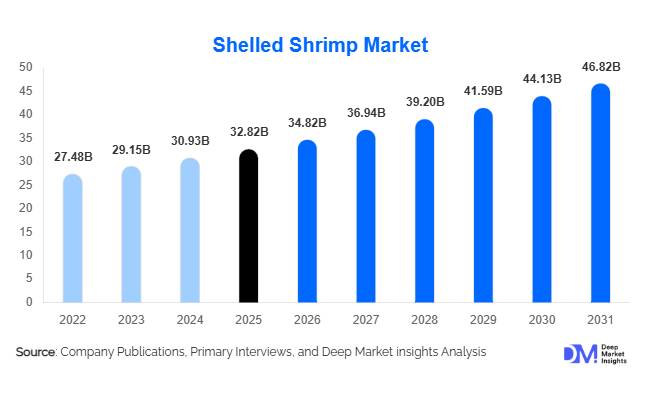
According to Deep Market Insights, the global shelled shrimp market size was valued at USD 32.82 billion in 2025 and is projected to grow from USD 34.82 billion in 2026 to reach USD 46.82 billion by 2031, expanding at a CAGR of 6.1% during the forecast period (2026–2031). Market growth is supported by increasing global seafood consumption, expansion of commercial aquaculture, rising demand for convenient protein products, and continued investments in cold-chain logistics and seafood processing infrastructure. Shelled shrimp—including peeled, peeled & deveined, tail-on, and tail-off products—has become an essential raw material for retail seafood, foodservice operators, ready-to-eat meals, and frozen food manufacturers. Growing consumer preference for high-protein diets, coupled with technological advancements in Individually Quick Frozen (IQF) processing and automated shelling equipment, continues to improve product quality and international trade. Asia-Pacific remains the largest production hub, while North America and Europe continue to dominate import demand due to strong retail penetration and year-round seafood consumption.
Key Market Insights
- Farmed shrimp accounts for nearly 77% of global production, supported by expanding aquaculture operations across India, Ecuador, Vietnam, Indonesia, and China.
- Frozen IQF shelled shrimp continues to dominate international trade, owing to longer shelf life, improved product quality, and efficient global transportation.
- Asia-Pacific leads global production and consumption, while North America remains the world's largest importing region for shelled shrimp products.
- Peeled & Deveined (P&D) shrimp remains the preferred commercial format, driven by demand from restaurants, catering companies, and frozen food manufacturers.
- Automation, AI-based grading, and digital traceability systems are becoming standard investments among leading seafood processors.
- Sustainability certifications and responsible aquaculture practices are increasingly influencing procurement decisions among major retailers and foodservice companies worldwide.
Shelled Shrimp Market Latest Trends
Value-Added Shrimp Products Continue Expanding
The global seafood industry is witnessing strong demand for premium value-added shelled shrimp products, including peeled & deveined, marinated, seasoned, cooked, and ready-to-cook offerings. Retail consumers increasingly seek convenience-oriented seafood products requiring minimal preparation time, while restaurants benefit from reduced labor costs and standardized portion sizes. Manufacturers are expanding premium packaging formats, introducing resealable packs, modified atmosphere packaging, and retail-ready frozen products that extend shelf life while maintaining product quality. These innovations enable processors to improve margins compared with conventional commodity shrimp products.
Digital Traceability and Sustainable Aquaculture Becoming Industry Standards
International buyers are increasingly demanding complete supply-chain transparency. Blockchain-enabled traceability systems, QR-code product tracking, IoT-enabled farm monitoring, and digital quality assurance platforms are becoming integral components of shrimp exports. Sustainability certifications relating to responsible aquaculture, food safety, and environmental stewardship continue to gain importance, particularly among exporters supplying North America and Europe. Investments in disease-resistant shrimp breeding, water recycling systems, and automated feeding technologies are further improving production efficiency while supporting long-term environmental sustainability.
Shelled Shrimp Market Drivers
Growing Global Demand for High-Protein Seafood
Consumer preference for lean, protein-rich diets continues to accelerate worldwide seafood consumption. Shrimp remains one of the most widely consumed seafood products due to its nutritional profile, versatility across cuisines, and convenience. Rising health awareness, increasing disposable incomes, and expanding middle-class populations across Asia-Pacific, Latin America, and the Middle East continue supporting higher household seafood consumption. Restaurants are simultaneously increasing shrimp-based menu offerings to satisfy growing consumer demand for healthier protein alternatives.
Expansion of Commercial Aquaculture Production
Large-scale investments in shrimp aquaculture have significantly improved production capacity over the past decade. Major producing countries such as India, Ecuador, Vietnam, Indonesia, and China continue expanding hatcheries, farming operations, feed production, and processing facilities. Technological improvements including disease-resistant shrimp genetics, automated feeding systems, biosecure farming environments, and water quality monitoring have enhanced productivity while reducing production risks. Stable year-round supply from aquaculture continues strengthening international shrimp trade.
Advancements in Cold Chain and Processing Technologies
Continuous improvements in blast freezing, IQF processing, refrigerated transportation, and automated shelling equipment have transformed the global shelled shrimp industry. Advanced processing technologies improve product consistency, reduce waste, increase processing speed, and preserve freshness during long-distance transportation. Investments in cold-chain infrastructure across emerging economies are expanding export capabilities while improving seafood availability in domestic retail markets.
Shelled Shrimp Market Restraints
Disease Outbreaks and Aquaculture Production Risks
Shrimp farming remains vulnerable to disease outbreaks such as Early Mortality Syndrome (EMS), White Spot Syndrome Virus (WSSV), and Acute Hepatopancreatic Necrosis Disease (AHPND). These outbreaks can significantly reduce harvest volumes, increase production costs, and disrupt global supply chains. Climate variability, water quality deterioration, and biosecurity challenges continue creating operational risks for commercial shrimp producers.
Price Volatility and Trade Uncertainties
Global shrimp prices remain sensitive to fluctuations in feed costs, fuel prices, freight rates, exchange rates, and international trade policies. Oversupply in major exporting countries periodically places downward pressure on shrimp prices, affecting processor profitability. Additionally, import tariffs, food safety regulations, and changing sustainability requirements across importing countries increase compliance costs and operational complexity for exporters.
Shelled Shrimp Industry Key Opportunities
Expansion of Premium Ready-to-Cook Seafood Products
Consumer lifestyles increasingly favor convenient meal preparation, creating strong opportunities for premium ready-to-cook shelled shrimp products. Manufacturers are introducing marinated, seasoned, flavored, and portion-controlled shrimp products targeting retail supermarkets, online grocery platforms, and premium foodservice operators. Premium packaging, extended shelf life, and innovative product formulations allow companies to achieve higher margins while addressing growing demand for convenient seafood solutions.
Sustainable Aquaculture and Certified Seafood Production
Global retailers and restaurant chains are strengthening procurement standards by prioritizing responsibly produced seafood. Investments in sustainable shrimp farming, certified hatcheries, digital traceability systems, and environmentally responsible processing facilities create long-term competitive advantages. Producers complying with international sustainability standards gain improved access to premium export markets while strengthening customer confidence and long-term commercial relationships.
Rising Seafood Consumption Across Emerging Markets
Rapid urbanization, increasing disposable incomes, expansion of organized retail, and growing cold-chain infrastructure are driving seafood consumption across emerging economies. Countries including India, China, Brazil, Mexico, Saudi Arabia, Indonesia, and Vietnam continue experiencing increasing demand for frozen seafood products among households and foodservice operators. Companies establishing regional processing facilities and efficient distribution networks are well positioned to capitalize on expanding domestic consumption while simultaneously supporting export growth.
Report Scope
| Report Metric | Details |
|---|---|
| Market Size in 2025 | USD 32.82 Billion |
| Market Size in 2026 | USD 34.82 Billion |
| Market Size in 2031 | USD 46.82 Billion |
| CAGR | 6.1% (2026-2031) |
| Base Year for Estimation | 2025 |
| Historical Data | 2022-2024 |
| Forecast Period | 2026-2031 |
| Report Coverage | Revenue Forecast, Competitive Landscape, Supply Chain Disruption, Growth Factors, Environment & Regulatory Landscape and Trends |
| Geographies Covered | North America, Europe, APAC, Middle East and Africa, LATAM |
| Countries Covered | U.S., Canada, U.K., Germany, France, Spain, Italy, Russia, Nordic, Benelux, Rest of Europe, China, Korea, Japan, India, Australia, Singapore, Taiwan, South East Asia, Rest of Asia-Pacific, UAE, Turky, Saudi Arabia, South Africa, Egypt, Nigeria, Rest of MEA, Brazil, Mexico, Argentina, Chile, Colombia, Rest of LATAM |
Explore more data points, trends and opportunities Download Free Sample Report
Species Insights
Whiteleg Shrimp (Litopenaeus vannamei) dominates the global shelled shrimp market, accounting for approximately 68.4% of the total market in 2025. The species has become the preferred choice for commercial aquaculture due to its rapid growth rate, excellent feed conversion ratio, adaptability to intensive farming systems, and high survival rates. Countries such as India, Ecuador, China, Vietnam, Indonesia, and Thailand have significantly expanded vannamei production over the past decade, enabling processors to supply standardized shrimp sizes suitable for international retail and foodservice markets. Black Tiger Shrimp (Penaeus monodon) continues to serve the premium seafood segment, particularly in Japan and selected European markets, owing to its larger size and premium pricing. Argentine Red Shrimp has experienced growing demand in premium retail channels because of its naturally sweet flavor and wild-caught positioning. Cold-water shrimp varieties continue to cater to niche markets across Northern Europe and North America, where consumers value premium texture and sustainability certifications.
Source Insights
Farmed shrimp represented nearly 76.8% of the global shelled shrimp market in 2025, making aquaculture the dominant production source. Controlled farming environments provide year-round supply, predictable production volumes, improved traceability, and consistent product quality. Major producing countries continue investing in biosecure farms, disease-resistant shrimp genetics, automated feeding systems, and water quality management technologies to increase yields while minimizing environmental impact. Wild-caught shrimp remains important for premium seafood markets and specialty retail segments, particularly for cold-water shrimp and Argentine Red Shrimp, but fluctuating catch volumes, fishing regulations, and sustainability concerns continue limiting its overall market share. Increasing investments in responsible aquaculture certifications are further strengthening the competitiveness of farmed shrimp within international export markets.
Processing Type Insights
Frozen Individually Quick Frozen (IQF) shelled shrimp accounted for approximately 52.7% of the global market in 2025, making it the leading processing category. IQF technology preserves freshness, texture, and nutritional quality while allowing processors and end users to thaw only the required quantity, reducing food waste. Raw shelled shrimp continues to account for a significant share due to its widespread use by foodservice operators and seafood processors. Cooked shelled shrimp has witnessed increasing adoption within retail and ready-to-eat applications as consumers seek convenient meal solutions. Value-added processing—including marinated, seasoned, breaded, and flavored shrimp—is emerging as one of the fastest-growing segments, supported by premium retail demand and higher profit margins for processors.
Preservation Method Insights
Frozen shelled shrimp held approximately 74.5% of global market demand during 2025, driven by international seafood trade and expanding cold-chain infrastructure. Frozen products offer significantly longer shelf life than chilled seafood while maintaining product quality during long-distance transportation. Continuous investments in blast freezing technology, IQF processing, and refrigerated logistics have strengthened frozen shrimp's dominance across export markets. Chilled shrimp continues serving premium domestic retail markets where freshness commands higher prices, while canned shrimp occupies a relatively smaller niche focused on convenience foods and food processing applications. Vacuum-packed products are also gaining popularity among premium retailers due to their enhanced shelf life and reduced packaging waste.
Shelling Type Insights
Peeled & Deveined (P&D) shrimp accounted for nearly 46.2% of global market revenue in 2025, making it the preferred commercial format worldwide. Restaurants, hotels, institutional caterers, and frozen meal manufacturers increasingly prefer P&D shrimp because it minimizes kitchen preparation time, reduces labor costs, and ensures product consistency. Tail-on shrimp continues to maintain strong demand in premium foodservice applications where product presentation is important, while tail-off shrimp is widely utilized in processed foods, soups, pasta, and ready meals. Easy-peel shrimp remains popular within retail markets as consumers seek products that balance convenience with fresh preparation experiences.
Size Grade Insights
Large shrimp (21–30 count per pound) represented approximately 31.8% of the global market in 2025, making it the leading commercial size category. This segment offers an ideal balance between affordability, serving size, and visual presentation, making it highly attractive across retail, foodservice, and industrial processing applications. Medium-sized shrimp remain popular for frozen meals, salads, and processed foods, while jumbo and extra-large shrimp command premium pricing within upscale restaurants, hospitality, and specialty seafood retailers. Consumer demand for premium seafood experiences is expected to gradually increase the share of larger shrimp categories over the forecast period.
Distribution Channel Insights
Foodservice accounted for approximately 55.1% of global shelled shrimp demand in 2025, making it the largest distribution channel. Restaurants, hotels, cruise operators, institutional caterers, and quick-service restaurants continue driving large-volume purchases due to shrimp's versatility across global cuisines. The recovery of international tourism and hospitality has accelerated procurement by commercial kitchens, particularly in North America, Europe, and Asia-Pacific. Retail distribution remains the second-largest channel, supported by supermarkets, hypermarkets, seafood specialty stores, and rapidly growing online grocery platforms. E-commerce has become increasingly important for premium frozen seafood products, offering consumers wider product selections and home delivery convenience.
End-Use Insights
Restaurants and foodservice represented approximately 48.9% of global end-use demand during 2025, making commercial food preparation the largest consumption segment. Rising consumer preference for seafood-based menu offerings, coupled with labor-saving benefits associated with peeled and deveined shrimp, continues strengthening demand from restaurant operators worldwide. Frozen food manufacturers represent the fastest-growing end-use industry, driven by increasing demand for ready-to-cook meals, frozen pasta dishes, seafood mixes, pizzas, and microwaveable products. Household consumption is also expanding steadily due to growing awareness of seafood's nutritional benefits, increasing disposable incomes, and wider retail availability of premium frozen shrimp products. Industrial food processors continue utilizing shelled shrimp as a key ingredient in soups, dumplings, salads, snacks, and prepared meal products.
Explore more data points, trends and opportunities Download Free Sample Report
Shelled Shrimp Market Segmentations
By Species
- Whiteleg Shrimp
- Black Tiger Shrimp
- Argentine Red Shrimp
- Brown Shrimp
- Pink Shrimp
- Royal Red Shrimp
- Rock Shrimp
- Northern Cold-Water Shrimp
- Others
By Source
- Farmed (Aquaculture)
- Wild-Caught
By Processing Type
- Raw Shelled Shrimp
- Cooked Shelled Shrimp
- Frozen IQF Shelled Shrimp
- Fresh/Chilled Shelled Shrimp
- Value-Added Shelled Shrimp
By Preservation Method
- Frozen
- Chilled
- Canned
- Vacuum Packed
By Shelling Type
- Peeled
- Peeled & Deveined (P&D)
- Easy Peel
- Tail-On
- Tail-Off
Regional Insights
Asia-Pacific
Asia-Pacific remained the largest regional market, accounting for approximately 41.6% of global shelled shrimp demand in 2025. The region combines the world's largest shrimp production capacity with rapidly expanding domestic consumption. China continues leading regional demand due to rising seafood consumption, expanding middle-class incomes, and strong foodservice growth. India has become one of the world's largest exporters of shelled shrimp, supported by competitive aquaculture production, government incentives, and modern processing infrastructure. Vietnam continues strengthening its global export position through investments in value-added seafood processing, while Indonesia and Thailand remain major suppliers to North American, European, and Japanese import markets. Asia-Pacific is projected to record the fastest regional growth, with an estimated CAGR of approximately 6.8% through 2031.
North America
North America accounted for approximately 24.7% of global market demand in 2025, with the United States representing nearly 86% of regional consumption. The region remains the world's largest importer of shelled shrimp due to high seafood consumption, strong restaurant demand, and extensive frozen retail distribution. Consumers increasingly prefer peeled and deveined shrimp for home cooking and ready-to-cook meal preparation. Canada's market continues growing steadily through retail seafood expansion and increasing demand from institutional foodservice operators. Sustainability certifications, product traceability, and premium packaging continue influencing purchasing decisions across North America.
Europe
Europe represented approximately 22.5% of global consumption during 2025. Germany, Spain, France, Italy, the United Kingdom, and the Netherlands collectively account for the majority of regional demand. Spain remains one of Europe's largest shrimp-consuming nations due to its well-established seafood culture, while Germany continues driving retail demand for frozen seafood. European retailers increasingly require certified sustainable shrimp supported by complete supply-chain traceability, encouraging exporters to invest in environmental compliance and food safety systems. Premium peeled and cooked shrimp products continue gaining market share within supermarkets and convenience retail channels.
Latin America
Latin America accounted for approximately 6.4% of global market demand, although the region plays a much larger role in global shrimp production and exports. Ecuador has become one of the world's fastest-growing shrimp exporters, benefiting from high-productivity aquaculture operations and increasing shipments to China, Europe, and the United States. Brazil and Mexico continue experiencing rising domestic seafood consumption, supported by urbanization, retail modernization, and higher disposable incomes. Regional governments continue investing in seafood processing infrastructure to strengthen export competitiveness.
Middle East & Africa
The Middle East & Africa represented approximately 4.8% of the global market in 2025. Saudi Arabia and the United Arab Emirates continue investing in seafood production, food security initiatives, and modern cold-chain infrastructure to reduce dependence on imports. Expanding hospitality, tourism, and premium retail sectors are increasing regional consumption of frozen shelled shrimp products. South Africa remains the largest seafood market in Sub-Saharan Africa, while Egypt continues expanding domestic aquaculture production to support rising seafood demand. The Gulf region is expected to witness above-average growth during the forecast period due to population growth, rising incomes, and increasing seafood consumption.
Key Players in the Shelled Shrimp Market
- Thai Union Group
- Charoen Pokphand Foods (CPF)
- Minh Phu Seafood Corporation
- Devi Sea Foods
- Omarsa S.A.
- Santa Priscila S.A.
- Nueva Pescanova Group
- Clearwater Seafoods
- Seajoy Group
- Avanti Feeds Limited
- PT Central Proteina Prima Tbk
- Apex Frozen Foods Limited
- Bumi Menara Internusa
- Royal Greenland A/S
- Nordic Seafood A/S