Baby Mattresses Market Size
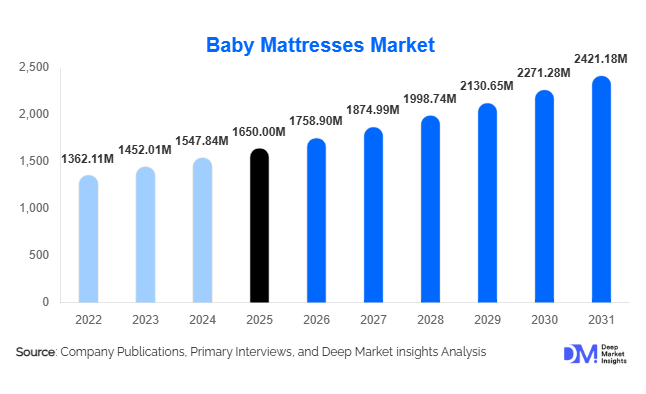
According to Deep Market Insights, the global baby mattresses market size was valued at USD 1,650 million in 2025 and is projected to grow from USD 1,758.90 million in 2026 to reach USD 2,421.18 million by 2031, expanding at a CAGR of 6.6% during the forecast period (2026–2031). The baby mattresses market growth is primarily driven by rising parental awareness regarding infant sleep safety, increasing adoption of organic and chemical-free bedding products, and growing demand for premium baby care products across urban households globally.
Key Market Insights
- Foam baby mattresses dominate the market, supported by affordability, lightweight structure, and widespread availability across global retail channels.
- Organic and natural mattresses are gaining rapid traction, driven by increasing concerns over chemical exposure and skin sensitivity in infants.
- North America leads global demand, supported by strict safety regulations and high consumer spending on premium baby products.
- Asia-Pacific is the fastest-growing region, fueled by rising birth rates, urbanization, and expanding middle-class income levels in China and India.
- Online retail channels are expanding quickly, reshaping purchase behavior through convenience, discounts, and product transparency.
- Dual-firmness and breathable mattress innovations are becoming standard features in premium product categories.
What are the latest trends in the baby mattresses market?
Shift Toward Organic and Eco-Friendly Materials
The baby mattresses market is witnessing a strong transition toward organic, non-toxic, and sustainable materials. Parents are increasingly prioritizing mattresses made from organic cotton, natural latex, and coconut coir due to rising concerns about chemical exposure and infant skin health. Manufacturers are responding by expanding certified organic product lines and adopting eco-labeling practices. This trend is especially prominent in developed regions such as North America and Europe, where regulatory frameworks and consumer awareness are highly mature. Additionally, sustainability certifications are becoming a key purchasing factor, with brands investing in green manufacturing processes and recyclable packaging to align with environmental expectations.
Integration of Smart Safety and Breathable Technologies
Technological innovation is reshaping the baby mattresses industry through the introduction of breathable designs, temperature-regulating layers, and smart monitoring features. Premium mattresses now include airflow-enhancing structures designed to reduce suffocation risks and improve infant sleep quality. Emerging smart mattresses are equipped with sensors that monitor breathing patterns, movement, and temperature, providing real-time alerts to caregivers. This trend is particularly appealing to tech-savvy urban parents seeking enhanced safety assurance. Additionally, antimicrobial coatings and waterproof innovations are becoming standard features, improving hygiene and durability while addressing parental concerns about cleanliness and maintenance.
What are the key drivers in the baby mattresses market?
Rising Infant Safety Awareness and SIDS Prevention Concerns
A major driver of the market is the growing awareness of infant safety risks, particularly Sudden Infant Death Syndrome (SIDS). Parents are increasingly choosing firm, certified mattresses that comply with pediatric safety recommendations. Regulatory bodies across developed markets have introduced strict standards for mattress firmness, breathability, and chemical composition, significantly influencing purchasing behavior. This heightened awareness has elevated baby mattresses from basic household goods to safety-critical infant care products, driving consistent demand for certified and high-quality offerings.
Premiumization of Baby Care Products
Increasing disposable incomes and changing parenting behaviors are driving premiumization in the baby care segment. Consumers are willing to invest in higher-priced mattresses that offer enhanced safety, durability, and comfort. Dual-sided firmness mattresses and organic-certified products are gaining strong traction in urban households. This shift is particularly visible in North America, Europe, and urban Asia-Pacific markets, where parents are prioritizing long-term health benefits over cost considerations. As a result, manufacturers are focusing on product differentiation and innovation to capture premium segments.
Expansion of E-Commerce and Organized Retail
The rapid expansion of online retail platforms and organized baby product stores has significantly boosted market accessibility. E-commerce channels allow consumers to compare features, certifications, and prices, leading to more informed purchase decisions. Direct-to-consumer (DTC) models have further strengthened brand visibility and profit margins. This distribution transformation has enabled global brands to penetrate emerging markets more effectively, particularly in Asia-Pacific and Latin America, where traditional retail infrastructure is still developing.
What are the restraints for the global market?
High Cost of Organic and Premium Mattresses
One of the primary restraints in the baby mattresses market is the high cost associated with organic and premium products. Materials such as natural latex, organic cotton, and advanced breathable foams significantly increase production costs, limiting affordability in price-sensitive markets. This cost barrier restricts widespread adoption in developing economies, where consumers often opt for lower-priced synthetic alternatives despite safety concerns.
Regulatory and Quality Standard Gaps in Emerging Markets
Another major challenge is the lack of uniform safety and quality regulations in several developing regions. Inconsistent enforcement of safety standards leads to the presence of low-quality and non-certified products in the market, creating consumer trust issues. This regulatory fragmentation slows down market expansion and increases risks for international brands attempting to enter emerging economies.
What are the key opportunities in the baby mattresses industry?
Growth of Smart and Connected Baby Care Products
The integration of IoT-enabled baby care products presents a significant opportunity for market expansion. Smart mattresses capable of tracking infant sleep patterns, breathing, and environmental conditions are gaining attention among premium consumers. As digital parenting tools become more common, manufacturers can expand product ecosystems that integrate mattresses with mobile applications and wearable devices. This segment is expected to grow rapidly in technologically advanced markets.
Expansion in Emerging Economies
Emerging markets such as India, Brazil, and Southeast Asia offer strong growth potential due to rising birth rates, increasing urbanization, and expanding middle-class populations. Demand for affordable yet safe baby mattresses is increasing in these regions. Companies that localize production, optimize pricing strategies, and strengthen distribution networks are well-positioned to capture significant market share in these high-growth regions.
Report Scope
| Report Metric | Details |
|---|---|
| Market Size in 2025 | USD 1650 Million |
| Market Size in 2026 | USD 1758.90 Million |
| Market Size in 2031 | USD 2421.18 Million |
| CAGR | 6.6% (2026-2031) |
| Base Year for Estimation | 2025 |
| Historical Data | 2022-2024 |
| Forecast Period | 2026-2031 |
| Report Coverage | Revenue Forecast, Competitive Landscape, Supply Chain Disruption, Growth Factors, Environment & Regulatory Landscape and Trends |
| Geographies Covered | North America, Europe, APAC, Middle East and Africa, LATAM |
| Countries Covered | U.S., Canada, U.K., Germany, France, Spain, Italy, Russia, Nordic, Benelux, Rest of Europe, China, Korea, Japan, India, Australia, Singapore, Taiwan, South East Asia, Rest of Asia-Pacific, UAE, Turky, Saudi Arabia, South Africa, Egypt, Nigeria, Rest of MEA, Brazil, Mexico, Argentina, Chile, Colombia, Rest of LATAM |
Explore more data points, trends and opportunities Download Free Sample Report
Product Type Insights
Foam baby mattresses continue to dominate the global market, accounting for approximately 38% of total market share in 2025, primarily due to their cost-effectiveness, lightweight design, and ease of mass production. The leading driver behind this dominance is their affordability combined with adequate safety compliance, making them highly accessible across both developed and developing markets. Foam mattresses are particularly favored in price-sensitive regions such as Asia-Pacific and Latin America, where consumers prioritize value-for-money products without compromising basic safety standards.
Innerspring mattresses maintain a stable presence in the premium segment, driven by their superior durability and structural support, which appeals to consumers seeking long-term usage and higher resilience. Meanwhile, organic and natural baby mattresses represent the fastest-growing segment, fueled by increasing parental concerns over chemical exposure, allergens, and sustainability. The key growth driver for this segment is the rising demand for non-toxic, eco-friendly baby products, particularly in North America and Europe. Hybrid mattresses, combining foam and innerspring technologies, are gaining traction in mid-to-premium segments due to their enhanced comfort, airflow, and longevity. Across all product types, innovation is centered around breathable designs, waterproof layers, and antimicrobial features, reflecting a broader market shift toward safety, hygiene, and environmental responsibility.
Application Insights
The residential segment remains the dominant application area, accounting for over 80% of total demand, driven by consistent global birth rates and increasing parental expenditure on infant care products. The primary driver for this segment is the growing emphasis on infant safety and sleep quality within households, leading to higher adoption of certified and premium mattresses.
Institutional applications, including daycare centers and maternity hospitals, are emerging as a high-growth segment. This growth is primarily driven by rising female workforce participation and increasing reliance on organized childcare services. These facilities require durable, hygienic, and compliant products, which is boosting demand for waterproof, antimicrobial, and easy-to-clean mattresses. Additionally, the hospitality sector is gradually emerging as a niche application area. Family-friendly hotels and serviced apartments are increasingly investing in baby-safe bedding solutions to enhance customer experience. The key driver here is the growing trend of family travel and premium hospitality services, particularly in developed tourism markets.
Distribution Channel Insights
Offline retail channels continue to dominate the baby mattresses market, contributing nearly 65% of total sales. The leading driver for this dominance is the consumer preference for physical product inspection, especially for baby-related purchases where safety and comfort are critical. Specialty baby stores and large-format retailers provide customers with hands-on experience, product demonstrations, and immediate availability, reinforcing their strong market position. However, online retail is the fastest-growing distribution channel, driven by increasing digital penetration, convenience, and competitive pricing. E-commerce platforms enable detailed product comparisons, access to customer reviews, and wider product availability, making them highly attractive to modern consumers. Direct-to-consumer (DTC) brands are leveraging online channels to offer customized products, reduce intermediary costs, and improve margins.
Emerging trends such as subscription-based baby product bundles and omnichannel retail strategies are further transforming distribution dynamics. The key growth driver for online channels remains the shift in consumer purchasing behavior toward digital platforms, particularly among younger, urban parents.
End-Use Insights
The residential end-use segment dominates the market, supported by global demographic trends and increasing spending on infant health and wellness. The primary growth driver is the rising awareness of safe sleep practices and the willingness of parents to invest in high-quality baby products. This segment benefits from both replacement demand and first-time purchases, ensuring steady growth. The daycare and institutional childcare segment is witnessing faster growth, driven by increasing urbanization and dual-income households. As more parents rely on professional childcare services, demand for durable, compliant, and hygienic mattresses is rising significantly. Hospitals and maternity centers also represent a critical end-use segment, where strict hygiene and safety standards necessitate high-quality mattress solutions.
Furthermore, expanding healthcare infrastructure in emerging markets is strengthening institutional demand. The key driver across non-residential segments is the growing need for standardized, safe, and easy-to-maintain bedding solutions in professional care environments.
Explore more data points, trends and opportunities Download Free Sample Report
Baby Mattresses Market Segmentations
By Product Type
- Foam Baby Mattresses
- Innerspring Baby Mattresses
- Hybrid Baby Mattresses
- Organic/Natural Baby Mattresses
By Application
- Residential Use
- Daycare Centers
- Hospitals & Maternity Centers
- Hospitality & Travel Accommodation
By Distribution Channel
- Online Retail
- Specialty Baby Stores
- Hypermarkets & Supermarkets
- Furniture Stores
- Direct-to-Consumer (DTC) Channels
Regional Insights
North America
North America holds approximately 32% of the global market share, with the United States leading regional demand. The primary drivers of growth in this region include high consumer awareness regarding infant safety, stringent regulatory standards, and strong purchasing power. Regulatory bodies enforce strict guidelines on mattress firmness, flammability, and chemical content, encouraging the adoption of premium and certified products. Additionally, the growing trend of organic and eco-friendly baby products is significantly boosting demand. Canada complements regional growth through increasing adoption of sustainable and dual-firmness mattresses, supported by environmentally conscious consumers.
Europe
Europe accounts for nearly 27% of the global market, with Germany, the UK, and France being key contributors. The region’s growth is primarily driven by strong sustainability preferences, stringent product safety regulations, and increasing demand for organic materials. European consumers are highly inclined toward eco-certified and non-toxic products, pushing manufacturers to innovate in organic mattress offerings. Additionally, government regulations related to chemical usage and product safety ensure high-quality standards, further supporting premium segment growth. The rising popularity of sustainable parenting practices is a major driver across the region.
Asia-Pacific
Asia-Pacific is the fastest-growing region, with a CAGR exceeding global averages. China and India are the primary growth engines due to high birth rates, rapid urbanization, and rising disposable incomes. The expansion of the middle-class population and increasing awareness of infant health are key drivers fueling demand. In addition, the rapid growth of e-commerce platforms is improving product accessibility across both urban and semi-urban areas. Developed markets such as Japan and South Korea contribute through demand for premium and technologically advanced mattresses, while Southeast Asia offers significant untapped potential due to improving living standards and retail infrastructure.
Latin America
Latin America demonstrates moderate growth, led by Brazil and Mexico. The primary drivers in this region include increasing urbanization, improving retail penetration, and rising middle-class income levels. Consumers in this region are gradually shifting from low-cost traditional bedding to standardized baby mattresses, particularly in urban areas. While mid-range products dominate demand, there is a gradual increase in the adoption of premium imported products, especially among affluent consumers. Expanding e-commerce platforms are also playing a crucial role in improving product availability.
Middle East & Africa
The Middle East & Africa region is experiencing steady growth, with key markets including the UAE, Saudi Arabia, and South Africa. Growth in this region is driven by rising disposable incomes, a growing expatriate population, and expanding healthcare infrastructure. The demand for premium baby care products is particularly strong in Gulf countries, where consumers exhibit high purchasing power and a preference for imported, high-quality goods. Additionally, increasing investments in maternity and childcare facilities are boosting institutional demand. In Africa, improving awareness and gradual urbanization are supporting long-term market expansion, although growth remains relatively slower compared to other regions.
Key Players in the Baby Mattresses Market
- Sealy Corporation
- Serta Simmons Bedding
- Tempur Sealy International
- Naturepedic
- Colgate Mattress
- Newton Baby
- Moonlight Slumber
- Delta Children
- Dream On Me
- IKEA
- Graco
- Lullaby Earth
- Milliard Bedding
- DaVinci Baby
- Babyletto