Waffle Market Size
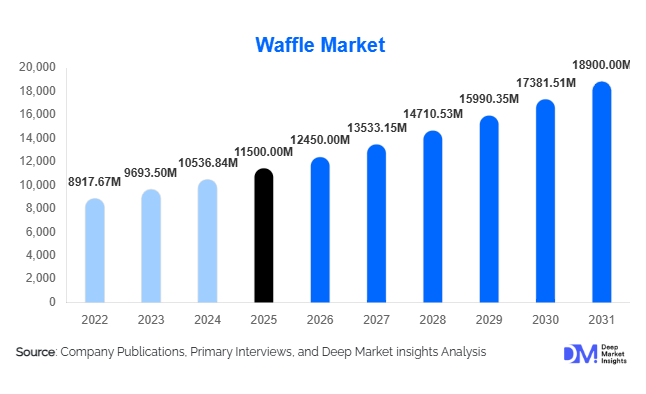
According to Deep Market Insights, the global waffle market size was valued at USD 11,500 million in 2025 and is projected to grow from USD 12,450 million in 2026 to reach USD 18,900 million by 2031, expanding at a CAGR of 8.7% during the forecast period (2026–2031). The waffle market growth is primarily driven by rising demand for convenient breakfast options, increasing adoption of frozen and ready-to-eat foods, and the growing popularity of Western-style bakery products across emerging economies.
Key Market Insights
- Frozen waffles dominate the global market, driven by convenience, longer shelf life, and widespread retail availability in developed regions.
- Health-focused product innovations, including gluten-free, plant-based, and high-protein waffles, are reshaping consumer preferences.
- North America leads the market, supported by high consumption of frozen breakfast products and strong brand presence.
- Asia-Pacific is the fastest-growing region, fueled by urbanization, rising disposable incomes, and expanding café culture.
- Foodservice demand is accelerating, with waffles increasingly used in desserts, savory meals, and fusion cuisines.
- E-commerce and modern retail expansion are improving accessibility and enabling direct-to-consumer growth.
What are the latest trends in the waffle market?
Shift Toward Functional and Health-Oriented Waffles
The waffle market is witnessing a significant transformation with the rise of health-conscious consumers. Manufacturers are increasingly introducing gluten-free, vegan, organic, and protein-enriched waffles to cater to evolving dietary preferences. Ingredients such as oat flour, almond flour, and plant-based proteins are gaining traction, enabling brands to position waffles as both indulgent and nutritious. This trend is particularly strong in North America and Europe, where consumers are actively seeking clean-label and functional food products. Additionally, reduced sugar formulations and fortified waffles with vitamins and minerals are expanding the category into the health and wellness segment.
Expansion of Waffles Beyond Breakfast Applications
Waffles are increasingly being used beyond traditional breakfast consumption. Foodservice providers are integrating waffles into desserts, snacks, and even savory dishes such as chicken-and-waffle combinations. This diversification is driving demand in cafés, quick-service restaurants, and gourmet establishments. The trend is supported by social media influence and evolving consumer preferences for experiential dining. Artisanal waffle formats, including Liege and Belgian waffles with premium toppings, are gaining popularity in urban markets, further enhancing product versatility and appeal.
What are the key drivers in the waffle market?
Rising Demand for Convenience Foods
Busy lifestyles and increasing urbanization are driving demand for convenient, ready-to-eat food options. Frozen waffles, in particular, offer quick preparation and consistent quality, making them a preferred choice for working professionals and families. The expansion of cold chain infrastructure and retail distribution networks is further supporting this trend globally.
Growth of Café Culture and Foodservice Industry
The rapid expansion of cafés, quick-service restaurants, and bakery chains is significantly boosting waffle consumption. Waffles have become a staple menu item due to their versatility and ability to cater to both sweet and savory preferences. This trend is especially prominent in Asia-Pacific and Europe, where café culture is expanding rapidly.
Premiumization and Artisanal Product Demand
Consumers are increasingly willing to pay premium prices for high-quality, artisanal waffles. Gourmet flavors, organic ingredients, and customized offerings are gaining traction, particularly among urban consumers. This shift toward premiumization is enhancing profit margins and encouraging product innovation.
What are the restraints for the global market?
Health Concerns Associated with Traditional Waffles
Traditional waffles are often high in sugar, refined flour, and calories, which can limit their appeal among health-conscious consumers. This has led to declining demand in certain segments unless manufacturers adapt with healthier alternatives.
Volatility in Raw Material Prices
Fluctuations in the prices of key ingredients such as wheat, dairy, and sugar can impact production costs and profit margins. This volatility creates pricing challenges for manufacturers and may affect consumer affordability in price-sensitive markets.
What are the key opportunities in the waffle industry?
Emerging Market Expansion
Emerging economies in Asia-Pacific and Latin America present significant growth opportunities due to rising disposable incomes, urbanization, and westernization of diets. Countries such as India, China, and Brazil are witnessing increasing demand for convenient breakfast options, creating favorable conditions for market entry and expansion.
Product Innovation and Functional Ingredients
The introduction of functional waffles with added protein, fiber, and nutritional benefits is opening new revenue streams. Brands that focus on innovation and differentiation are well-positioned to capture health-conscious consumers and expand their market share.
Foodservice Integration and Menu Diversification
The growing use of waffles in foodservice applications, including desserts and fusion cuisines, is creating new demand channels. Restaurants and cafés are leveraging waffles as versatile menu items, enhancing their appeal across different consumer segments.
Report Scope
| Report Metric | Details |
|---|---|
| Market Size in 2025 | USD 11500 Million |
| Market Size in 2026 | USD 12450 Million |
| Market Size in 2031 | USD 18900 Million |
| CAGR | 8.7% (2026-2031) |
| Base Year for Estimation | 2025 |
| Historical Data | 2022-2024 |
| Forecast Period | 2026-2031 |
| Report Coverage | Revenue Forecast, Competitive Landscape, Supply Chain Disruption, Growth Factors, Environment & Regulatory Landscape and Trends |
| Geographies Covered | North America, Europe, APAC, Middle East and Africa, LATAM |
| Countries Covered | U.S., Canada, U.K., Germany, France, Spain, Italy, Russia, Nordic, Benelux, Rest of Europe, China, Korea, Japan, India, Australia, Singapore, Taiwan, South East Asia, Rest of Asia-Pacific, UAE, Turky, Saudi Arabia, South Africa, Egypt, Nigeria, Rest of MEA, Brazil, Mexico, Argentina, Chile, Colombia, Rest of LATAM |
Explore more data points, trends and opportunities Download Free Sample Report
Product Type Insights
The global waffle market is witnessing strong diversification across product categories, with frozen waffles emerging as the leading segment, accounting for approximately 42% of total demand. The dominance of frozen waffles is primarily driven by their unmatched convenience, extended shelf life, and compatibility with modern retail systems, including supermarkets, hypermarkets, and online grocery platforms. As consumers increasingly prioritize time-saving breakfast solutions, frozen waffles offer a ready-to-heat option that aligns with fast-paced urban lifestyles. Additionally, advancements in freezing technologies have significantly improved texture retention and flavor quality, making frozen variants more appealing to a wider consumer base. The expansion of private-label offerings and the presence of established brands further reinforce the accessibility and affordability of frozen waffles across developed and emerging markets.Waffle mixes represent another important segment, demonstrating steady growth due to their appeal among consumers who prefer home cooking and customization. The increasing inclination toward do-it-yourself (DIY) food preparation, particularly among younger demographics and health-conscious individuals, is driving demand for waffle mixes. This segment is further supported by the introduction of innovative formulations such as gluten-free, high-protein, and fortified mixes that cater to specific dietary requirements. The growing popularity of plant-based lifestyles and clean-label products is also encouraging manufacturers to develop mixes with natural ingredients, minimal additives, and enhanced nutritional profiles. Collectively, these trends are fostering a dynamic product landscape, where convenience, quality, and health considerations play a central role in shaping consumer choices.
Application (End-Use) Insights
In terms of application, household consumption remains the dominant segment, contributing nearly 60% of the global waffle market. This leadership is largely driven by the increasing demand for convenient and quick breakfast options that can be easily prepared at home. The widespread availability of frozen waffles and ready-to-use mixes in retail channels has significantly enhanced product accessibility for household consumers. Additionally, the growing adoption of western-style breakfast habits in emerging economies is further boosting at-home consumption. The rising penetration of kitchen appliances such as waffle makers and toasters is also facilitating the preparation of waffles, thereby strengthening the household segment.Moreover, the growing influence of social media and food blogging is playing a significant role in popularizing visually appealing waffle-based dishes, thereby driving demand in the foodservice sector. The emergence of cloud kitchens and online food delivery platforms is further expanding the reach of waffle-based products, enabling businesses to cater to a larger consumer base without the need for extensive physical infrastructure. As a result, the application landscape of the waffle market is becoming increasingly dynamic, with both household and foodservice segments contributing to sustained growth through distinct yet complementary drivers.
Distribution Channel Insights
The distribution landscape of the waffle market is predominantly led by supermarkets and hypermarkets, which account for approximately 48% of total sales. The strong performance of this channel can be attributed to its extensive product assortment, competitive pricing, and high consumer footfall. Supermarkets and hypermarkets provide a one-stop shopping experience, allowing consumers to access a wide variety of waffle products, including frozen, fresh, and mix-based options. The presence of organized retail chains and the expansion of modern trade infrastructure, particularly in developing regions, are further supporting the growth of this segment. Promotional activities, in-store discounts, and strategic product placements also play a crucial role in influencing consumer purchasing decisions within these retail formats.Specialty stores and foodservice distribution channels also hold a significant share in the market, particularly in the premium and artisanal segments. These channels cater to consumers seeking high-quality, unique, and gourmet waffle products that may not be widely available in mainstream retail outlets. The growing demand for organic, gluten-free, and specialty waffles is further driving the importance of these distribution channels. Overall, the evolving retail landscape, characterized by the integration of online and offline channels, is playing a pivotal role in shaping the accessibility and availability of waffle products across different consumer segments.
Ingredient Type Insights
Based on ingredient type, wheat-based waffles continue to dominate the market, accounting for approximately 55% of total share. The widespread use of wheat as a primary ingredient is primarily due to its affordability, availability, and established consumer acceptance. Wheat-based waffles offer a familiar taste and texture, making them a preferred choice among a broad demographic. Additionally, the well-established supply chain for wheat further supports the large-scale production and distribution of these products, ensuring consistent availability across various regions.High-protein and functional ingredient-based waffles are gaining considerable popularity, especially among fitness enthusiasts and health-conscious consumers. These products often incorporate ingredients such as whey protein, plant-based protein isolates, and added vitamins and minerals to enhance their nutritional profile. The increasing emphasis on health and wellness, coupled with the growing trend of functional foods, is expected to drive further growth in this segment. As consumers continue to seek healthier and more nutritious food options, the ingredient landscape of the waffle market is likely to evolve significantly, offering a wide range of choices tailored to specific dietary needs and preferences.
Explore more data points, trends and opportunities Download Free Sample Report
Waffle Market Segmentations
By Product Type
- Frozen Waffles
- Fresh/Ready-to-Eat Waffles
- Waffle Mixes
By Application
- Household Consumption
- Foodservice Industry
By Distribution Channel
- Supermarkets & Hypermarkets
- Convenience Stores
- Online Retail
- Specialty Stores
- Foodservice Distribution
Regional Insights
North America
North America remains the dominant regional market, accounting for approximately 35% of the global waffle market share in 2025. The United States serves as the primary growth engine within the region, supported by a well-established culture of waffle consumption, particularly in the form of frozen breakfast products. The region’s advanced retail infrastructure, characterized by extensive supermarket and hypermarket networks, ensures widespread product availability and accessibility. Additionally, the presence of leading market players and continuous product innovation contribute to sustained market growth.Several key drivers underpin the strong performance of the North American market. High consumer demand for convenient and ready-to-eat food products, coupled with busy lifestyles, continues to fuel the popularity of frozen waffles. The increasing adoption of health-oriented products, including gluten-free and high-protein waffles, is also shaping market dynamics. Furthermore, the expansion of foodservice chains and the growing trend of dining out are driving demand for premium and specialty waffles in cafés and restaurants. Technological advancements in food processing and packaging, along with strong marketing and branding strategies, further enhance market penetration and consumer engagement in the region.
Europe
Europe holds a significant share of around 28% in the global waffle market, with countries such as Belgium, Germany, and France leading regional demand. Belgium, in particular, plays a crucial role as the origin of traditional waffle varieties, influencing consumption patterns across the region. The European market is characterized by a strong preference for premium and artisanal products, reflecting the region’s rich culinary heritage and emphasis on quality. The growth of the waffle market in Europe is driven by several factors, including the increasing demand for indulgent and gourmet food products, the expansion of café culture, and the rising popularity of street food and dessert-based offerings. Consumers in the region are increasingly seeking unique and authentic food experiences, which is encouraging the adoption of artisanal waffles made with high-quality ingredients. Additionally, the growing trend of health and wellness is driving demand for organic, gluten-free, and clean-label products. Strong tourism activity and the presence of numerous food festivals further contribute to the visibility and popularity of waffles across the region, supporting sustained market growth.
Asia-Pacific
The Asia-Pacific region is emerging as the fastest-growing market for waffles, accounting for approximately 20% of global share and exhibiting a projected CAGR exceeding 10% over the forecast period. Key markets such as China, India, and Japan are driving this growth, supported by rapid urbanization, rising disposable incomes, and changing consumer lifestyles. The increasing influence of Western dietary habits is playing a significant role in boosting the adoption of waffles across the region.Several growth drivers are contributing to the expansion of the waffle market in Asia-Pacific. The proliferation of cafés, quick-service restaurants, and international food chains is introducing consumers to a wide variety of waffle-based products. The growing middle-class population and increasing spending on dining and leisure activities are further supporting market demand. Additionally, the rapid growth of e-commerce platforms and food delivery services is enhancing product accessibility and convenience. Manufacturers are also focusing on product localization by incorporating regional flavors and ingredients, thereby appealing to local tastes and preferences. These factors collectively position Asia-Pacific as a key growth engine for the global waffle market.
Latin America
Latin America accounts for approximately 10% of the global waffle market, with Brazil and Mexico emerging as key contributors. The region is experiencing steady growth, supported by improving economic conditions and increasing consumer awareness of convenience foods. The expansion of modern retail infrastructure, including supermarkets and hypermarkets, is enhancing product availability and accessibility.The growth of the waffle market in Latin America is driven by factors such as rising urbanization, increasing disposable incomes, and the growing influence of Western food trends. The expansion of foodservice establishments, including cafés and fast-food chains, is also contributing to increased demand for waffle-based products. Additionally, the adoption of innovative marketing strategies and promotional activities by market players is helping to raise product awareness and attract new consumers. As the region continues to develop economically, the demand for convenient and ready-to-eat food products is expected to increase, supporting the growth of the waffle market.
Middle East & Africa
The Middle East & Africa region holds a relatively smaller share of approximately 7% in the global waffle market but presents significant growth potential. The market is primarily driven by increasing urbanization, rising disposable incomes, and a growing preference for Western-style food products. Countries such as the United Arab Emirates and South Africa are leading contributors, supported by their well-developed foodservice sectors and high levels of tourism.Key growth drivers in the region include the rapid expansion of the hospitality industry, the increasing presence of international foodservice chains, and the growing popularity of café culture. The influx of expatriates and tourists is also influencing food consumption patterns, leading to greater demand for diverse and international cuisines, including waffles. Additionally, the rising adoption of modern retail formats and the growth of e-commerce platforms are improving product accessibility. As consumer preferences continue to evolve and economic conditions improve, the Middle East & Africa region is expected to witness steady growth in the waffle market over the coming years.
Key Players in the Waffle Market
- Kellogg Company
- General Mills Inc.
- Post Holdings Inc.
- Conagra Brands Inc.
- Nature’s Path Foods
- Van’s Foods
- Kodiak Cakes
- Birch Benders
- Stonewall Kitchen
- Krusteaz
- Lotus Bakeries
- Premier Foods
- Private Label Manufacturers
- Eggo (Brand)
- Aunt Jemima (Legacy Brand)