Refrigerated Snacks Market Size
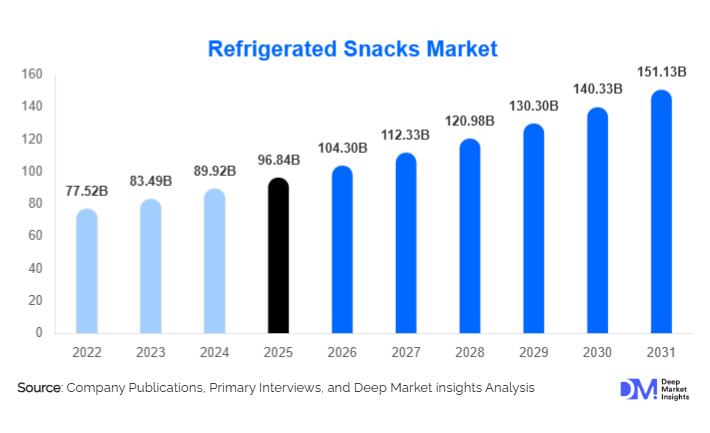
According to Deep Market Insights, the global refrigerated snacks market size was valued at USD 96.84 billion in 2025 and is projected to grow from USD 104.30 billion in 2026 to reach USD 151.13 billion by 2031, expanding at a CAGR of 7.7% during the forecast period (2026–2031). The refrigerated snacks market growth is primarily driven by increasing consumer preference for fresh and minimally processed foods, rising demand for convenient on-the-go meal options, expanding cold-chain logistics infrastructure, and continuous innovation in protein-rich, dairy-based, and fresh prepared snack products. Growing urbanization, higher disposable incomes, and wider availability through organized retail and digital grocery platforms are further supporting sustained market expansion worldwide.
Key Market Insights
- Fresh, protein-rich refrigerated snacks are becoming the preferred choice among health-conscious consumers, driven by increasing demand for clean-label products, natural ingredients, and functional nutrition across both developed and emerging economies.
- Dairy-based refrigerated snacks dominate the global market, supported by strong consumer acceptance of yogurt, cheese snacks, probiotic beverages, and chilled desserts that combine convenience with nutritional value.
- North America dominates the refrigerated snacks market, owing to its mature cold-chain infrastructure, extensive organized retail network, high consumer spending on convenience foods, and strong penetration of premium refrigerated products.
- Asia-Pacific is the fastest-growing regional market, fueled by rapid urbanization, expanding supermarket chains, increasing cold-storage investments, rising middle-class income, and changing dietary preferences across China, India, Japan, South Korea, and Southeast Asia.
- Online grocery retail is emerging as the fastest-growing distribution channel, supported by rapid expansion of quick-commerce platforms, temperature-controlled last-mile delivery, subscription grocery services, and growing consumer confidence in purchasing refrigerated food online.
- Packaging innovation and smart cold-chain technologies, including modified atmosphere packaging (MAP), intelligent temperature monitoring, QR-enabled traceability, and automated refrigerated warehousing, are improving product freshness, reducing food waste, and enhancing supply chain efficiency.
Refrigerated Snacks Market Latest Trends
Growing Consumer Preference for Functional and High-Protein Refrigerated Snacks
Consumer eating habits continue to evolve toward healthier snacking, resulting in rising demand for refrigerated products that deliver superior nutrition without compromising convenience. Manufacturers are rapidly expanding portfolios of Greek yogurt, cottage cheese cups, refrigerated protein packs, egg-based snacks, fresh fruit combinations, and dairy-based functional beverages enriched with probiotics, vitamins, and minerals. Health-conscious consumers increasingly prefer refrigerated snacks because they are perceived as fresher and less processed than shelf-stable alternatives. Product developers are also introducing low-sugar, high-protein, keto-friendly, gluten-free, and plant-based refrigerated snacks to address changing dietary lifestyles. Retailers are dedicating larger refrigerated shelf space to premium fresh snacks, while foodservice operators continue incorporating grab-and-go refrigerated offerings to meet growing consumer demand for nutritious convenience foods throughout the day.
Technology-Driven Cold Chain Modernization and Sustainable Packaging
The refrigerated snacks industry is witnessing significant technological advancement across manufacturing, packaging, logistics, and retail distribution. Smart temperature monitoring systems, automated refrigerated warehouses, AI-enabled inventory management, and IoT-connected transportation networks are improving supply chain visibility while minimizing spoilage losses. Manufacturers are increasingly adopting modified atmosphere packaging, recyclable packaging materials, biodegradable trays, and intelligent freshness indicators that help maintain product quality throughout distribution. QR-code enabled traceability allows consumers to verify sourcing and production information instantly, strengthening transparency and food safety. At the same time, rapid expansion of e-commerce grocery platforms and quick-commerce delivery services is encouraging investments in temperature-controlled fulfillment centers capable of delivering refrigerated snacks within hours, significantly improving accessibility across urban markets.
Refrigerated Snacks Market Drivers
Rising Demand for Fresh, Healthy, and Convenient Food Products
Consumers are increasingly replacing traditional processed snacks with refrigerated alternatives that offer freshness, higher nutritional value, and clean-label formulations. Growing awareness regarding protein consumption, digestive health, and balanced nutrition has accelerated demand for refrigerated yogurt, cheese products, fresh sandwiches, salads, protein snack packs, and chilled desserts across multiple demographic groups. Urban lifestyles, busy work schedules, and rising participation of working professionals have strengthened demand for portable ready-to-eat refrigerated foods that require little or no preparation. Food manufacturers continue investing in innovative formulations incorporating probiotics, plant proteins, natural ingredients, and reduced preservatives to meet evolving consumer expectations. Expansion of premium grocery retailers, convenience stores, and organized supermarket chains has further increased product availability, making refrigerated snacks more accessible across developed and developing economies.
Expansion of Cold-Chain Infrastructure Supporting Market Development
Continuous investments in refrigerated transportation, automated cold storage facilities, and temperature-controlled retail infrastructure are significantly improving distribution efficiency worldwide. Governments and private logistics companies are expanding cold-chain capacity to reduce food spoilage while supporting the growing trade of perishable food products. Emerging economies are witnessing substantial investments in refrigerated warehouses, smart logistics networks, and last-mile cold delivery services, allowing manufacturers to penetrate previously underserved markets. These infrastructure improvements have enabled retailers to expand refrigerated product assortments while maintaining product quality and food safety standards. As cold-chain capabilities continue advancing globally, manufacturers are launching premium refrigerated snack innovations with greater confidence, creating favorable conditions for long-term industry expansion.
Refrigerated Snacks Market Restraints
High Cold-Chain Operating Costs and Product Shelf-Life Limitations
Despite strong market potential, refrigerated snack manufacturers continue facing considerable operational challenges associated with maintaining uninterrupted cold-chain integrity throughout production, transportation, warehousing, and retail distribution. Refrigeration equipment, energy consumption, specialized logistics, and temperature-controlled inventory management significantly increase operating costs compared with ambient packaged foods. Short product shelf life requires rapid inventory turnover, creating additional pressure on retailers and distributors to minimize waste. Product spoilage resulting from temperature fluctuations, transportation delays, or inadequate storage infrastructure can substantially impact profitability. These challenges are particularly significant across developing markets where refrigerated logistics infrastructure remains underdeveloped, limiting broader market penetration and increasing product pricing for end consumers.
Raw Material Price Volatility and Food Safety Compliance
The refrigerated snacks industry remains highly dependent on stable supplies of dairy products, fresh produce, meat, seafood, and specialty ingredients that are subject to seasonal fluctuations, climate conditions, and agricultural supply disruptions. Volatile raw material prices directly affect manufacturing costs and profit margins, making pricing strategies increasingly complex. At the same time, manufacturers must comply with increasingly stringent food safety regulations covering refrigeration standards, microbiological quality, traceability, labeling requirements, and packaging specifications across different countries. Compliance requires continuous investment in quality assurance systems, laboratory testing, digital monitoring technologies, and regulatory certifications, increasing production costs while extending product development timelines.
Refrigerated Snacks Industry Key Opportunities
Rapid Expansion of Online Grocery and Quick-Commerce Platforms
The accelerated growth of online grocery retail presents significant opportunities for refrigerated snack manufacturers to expand their consumer reach beyond traditional brick-and-mortar retail channels. Investments in temperature-controlled fulfillment centers, dark stores, insulated packaging technologies, and last-mile refrigerated delivery networks are making online purchases of fresh food increasingly reliable. Subscription-based grocery services, mobile ordering applications, and quick-commerce platforms capable of delivering refrigerated products within minutes are encouraging higher purchase frequency among urban consumers. Digital retail channels also enable manufacturers to launch premium products directly to consumers, collect purchasing insights through advanced analytics, and implement personalized promotional campaigns that strengthen customer loyalty while expanding category penetration.
Premiumization and Functional Nutrition Innovation
Growing consumer willingness to pay premium prices for healthier, functional, and sustainably produced foods is creating attractive opportunities across the refrigerated snacks industry. Manufacturers are expanding portfolios featuring probiotic dairy snacks, plant-based refrigerated meals, high-protein formulations, organic ingredients, low-sugar desserts, functional beverages, and nutrient-fortified fresh foods that address evolving wellness trends. Clean-label positioning, sustainable packaging, locally sourced ingredients, and transparent supply chains are becoming key competitive differentiators. Product innovation targeting sports nutrition, digestive health, immune support, and personalized nutrition is expected to further diversify refrigerated snack offerings while attracting younger health-conscious consumers seeking convenient solutions that combine freshness, taste, and nutritional value.
Report Scope
| Report Metric | Details |
|---|---|
| Market Size in 2025 | USD 96.84 Billion |
| Market Size in 2026 | USD 104.30 Billion |
| Market Size in 2031 | USD 151.13 Billion |
| CAGR | 7.7% (2026-2031) |
| Base Year for Estimation | 2025 |
| Historical Data | 2022-2024 |
| Forecast Period | 2026-2031 |
| Report Coverage | Revenue Forecast, Competitive Landscape, Supply Chain Disruption, Growth Factors, Environment & Regulatory Landscape and Trends |
| Geographies Covered | North America, Europe, APAC, Middle East and Africa, LATAM |
| Countries Covered | U.S., Canada, U.K., Germany, France, Spain, Italy, Russia, Nordic, Benelux, Rest of Europe, China, Korea, Japan, India, Australia, Singapore, Taiwan, South East Asia, Rest of Asia-Pacific, UAE, Turky, Saudi Arabia, South Africa, Egypt, Nigeria, Rest of MEA, Brazil, Mexico, Argentina, Chile, Colombia, Rest of LATAM |
Explore more data points, trends and opportunities Download Free Sample Report
Product Type Insights
Dairy-based snacks account for the largest share of the refrigerated snacks market, supported by strong consumer demand for yogurt, Greek yogurt, cheese cubes, cheese sticks, probiotic drinks, cottage cheese, refrigerated desserts, and cultured dairy products. Consumers increasingly associate dairy snacks with high protein content, digestive health benefits, and natural nutrition, making them a preferred choice across households, office workers, and fitness-conscious consumers. Manufacturers continue introducing lactose-free, reduced-fat, organic, and high-protein product variants to meet changing dietary preferences. Innovations in probiotic formulations, functional ingredients, and clean-label recipes have further strengthened demand for premium dairy snacks. Sustainable packaging, extended shelf-life technologies, and convenient single-serve packaging formats continue improving consumer adoption while expanding retail shelf presence across supermarkets, convenience stores, and online grocery platforms.Fresh prepared snacks represent one of the fastest-growing product categories due to increasing consumer demand for freshly prepared convenience foods requiring minimal preparation time. This segment includes refrigerated sandwiches, wraps, salads, fruit cups, vegetable snack packs, ready-to-eat bowls, hummus combinations, and refrigerated bakery snacks. Urbanization, increasing workforce participation, and changing eating habits continue driving demand for portable fresh meal solutions that combine convenience with nutritional value. Manufacturers are introducing globally inspired flavors, premium ingredients, plant-based recipes, and customizable meal combinations while investing in modified atmosphere packaging technologies that extend freshness without excessive preservatives.
Distribution Channel Insights
Supermarkets and hypermarkets remain the dominant distribution channel for refrigerated snacks due to their extensive refrigerated display capacity, broad product assortment, and ability to offer premium shopping experiences. Large retail chains continue expanding dedicated refrigerated sections featuring dairy snacks, fresh prepared meals, chilled beverages, meat snacks, and healthy grab-and-go products. Promotional pricing, loyalty programs, in-store product sampling, and premium merchandising strategies encourage higher consumer engagement while supporting new product launches. Advanced inventory management systems and automated refrigeration technologies further improve product availability and reduce spoilage across organized retail outlets.Online retail has emerged as the fastest-growing distribution channel, driven by rapid digitalization of grocery shopping, increasing smartphone penetration, and expansion of temperature-controlled last-mile delivery services. E-commerce platforms, direct-to-consumer websites, subscription grocery services, and quick-commerce applications now offer extensive refrigerated snack portfolios supported by real-time inventory management and same-day delivery. Manufacturers increasingly collaborate with digital retailers to introduce exclusive product launches, personalized promotions, and subscription-based purchasing models. Consumer confidence in online refrigerated food purchases continues improving as cold-chain logistics become more sophisticated and reliable.
Explore more data points, trends and opportunities Download Free Sample Report
Refrigerated Snacks Market Segmentations
By Product Type
- Dairy-Based Snacks
- Meat & Seafood Snacks
- Fresh Prepared Snacks
- Refrigerated Bakery & Dessert Snacks
By Application
- Household Consumption
- Foodservice
- Corporate & Institutional Catering
- Travel & Convenience Retail
By Distribution Channel
- Supermarkets & Hypermarkets
- Convenience Stores
- Online Retail
- Specialty Food Stores
- Warehouse Clubs & Wholesale Stores
Regional Insights
North America
North America continues to dominate the global refrigerated snacks market owing to its highly developed cold-chain infrastructure, mature organized retail sector, and strong consumer preference for convenient healthy foods. The United States represents the largest regional market, supported by widespread availability of refrigerated dairy snacks, protein meal kits, fresh salads, yogurt products, and grab-and-go refrigerated meals. Consumers increasingly prioritize clean-label ingredients, high-protein nutrition, and minimally processed foods, encouraging manufacturers to introduce premium refrigerated snack innovations. Canada also contributes significantly through expanding functional dairy consumption and growing investments in sustainable food packaging. Continuous product innovation, strong purchasing power, advanced logistics infrastructure, and established food safety regulations position North America as the leading regional market throughout the forecast period.
Europe
Europe remains one of the most significant markets for refrigerated snacks due to strong demand for premium dairy products, fresh prepared foods, organic ingredients, and sustainable packaging solutions. Germany, France, the United Kingdom, Italy, Spain, and the Netherlands represent major consumption centers supported by advanced retail infrastructure and established refrigerated food manufacturing industries. Consumers increasingly prefer products featuring natural ingredients, reduced preservatives, locally sourced raw materials, and environmentally friendly packaging. Manufacturers continue investing in recyclable packaging materials, premium functional dairy products, and plant-based refrigerated foods to satisfy changing dietary preferences. Growing awareness of nutrition, food safety, and environmental sustainability continues strengthening long-term market expansion across Europe.
Asia-Pacific
Asia-Pacific is expected to register the fastest growth throughout the forecast period, driven by rapid urbanization, rising disposable income, expanding supermarket chains, and significant investments in refrigerated logistics infrastructure. China, India, Japan, South Korea, Australia, and Southeast Asian countries are witnessing substantial growth in demand for refrigerated dairy products, fresh sandwiches, chilled desserts, protein snacks, and ready-to-eat meals. Changing lifestyles, increasing workforce participation, and greater exposure to Western eating habits continue accelerating refrigerated snack consumption. Digital grocery platforms, quick-commerce services, and premium convenience stores are expanding rapidly across metropolitan areas, creating substantial opportunities for domestic and international manufacturers to strengthen their regional presence.
Latin America
Latin America is experiencing gradual expansion supported by improving cold-chain infrastructure, increasing urban populations, and growing consumer awareness regarding healthy convenience foods. Brazil and Mexico account for the majority of regional demand, while Argentina, Chile, and Colombia continue investing in modern retail development and refrigerated food processing capabilities. Rising middle-class income, expansion of supermarket chains, and increasing adoption of premium dairy products are creating favorable conditions for market growth. Manufacturers are introducing affordable refrigerated snack options tailored to local taste preferences while expanding distribution through convenience stores and online grocery platforms.
Middle East & Africa
The Middle East & Africa market is steadily expanding as investments in organized retail, cold storage infrastructure, and premium food imports continue increasing across the region. Gulf Cooperation Council countries remain the primary growth centers owing to high disposable income, modern supermarket expansion, and strong demand for imported refrigerated dairy products and fresh prepared foods. South Africa leads refrigerated snack production within Africa, supported by improving food manufacturing capabilities and retail modernization. Continued investment in cold-chain logistics, food safety infrastructure, and premium grocery retail is expected to strengthen long-term market development across both the Middle East and Africa.
Key Players in the Refrigerated Snacks Market
- Nestlé S.A.
- Danone S.A.
- General Mills Inc.
- Hormel Foods Corporation
- Kraft Heinz Company
- Tyson Foods Inc.
- Mondelez International, Inc.
- Arla Foods amba
- Lactalis Group
- Bel Group
- FAGE International S.A.
- Chobani LLC
- Conagra Brands, Inc.
- Fresh Del Monte Produce Inc.
- Greencore Group plc