Herbal Soap Market Size
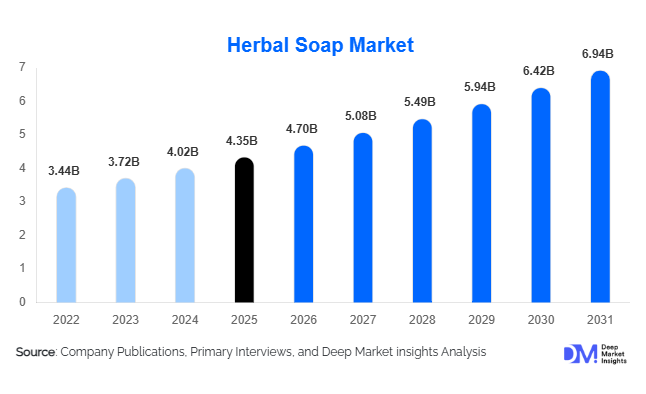
According to Deep Market Insights, the global herbal soap market size was valued at USD 4.35 billion in 2025 and is projected to grow from USD 4.70 billion in 2026 to reach USD 6.94 billion by 2031, expanding at a CAGR of 8.1% during the forecast period (2026–2031). The herbal soap market growth is being driven by increasing consumer preference for natural personal care products, rising awareness regarding the adverse effects of synthetic chemicals in skincare formulations, and growing demand for plant-based and sustainable hygiene solutions. The market is also benefiting from the rapid expansion of organic beauty products, premium wellness trends, and the widespread adoption of herbal ingredients such as neem, aloe vera, turmeric, tea tree oil, sandalwood, and lavender across global consumer markets.
Key Market Insights
- Consumers are increasingly replacing conventional soaps with herbal alternatives due to concerns over parabens, sulfates, synthetic fragrances, and artificial preservatives.
- Organic-certified herbal soaps are witnessing accelerated demand growth, particularly in North America and Europe, where clean-label personal care trends continue to gain momentum.
- Asia-Pacific dominates the global herbal soap market, supported by strong consumer acceptance of traditional herbal ingredients and large-scale production capabilities.
- Online retail channels are becoming the fastest-growing distribution segment, enabling direct-to-consumer brand expansion and premium product penetration.
- Premium and artisanal herbal soaps are gaining popularity among affluent consumers seeking wellness-oriented and environmentally sustainable products.
- Manufacturers are increasingly investing in biodegradable packaging, vegan formulations, and cruelty-free certifications to strengthen product differentiation and brand loyalty.
Herbal Soap Market Trends
Growing Preference for Organic and Clean-Label Personal Care Products
The global shift toward natural wellness and clean-label consumer products is significantly influencing purchasing decisions within the herbal soap industry. Consumers increasingly scrutinize ingredient labels and seek products containing recognizable botanical extracts and naturally derived active ingredients. Organic-certified herbal soaps featuring neem, turmeric, aloe vera, tea tree oil, and lavender are experiencing strong demand across developed and emerging economies alike. Manufacturers are responding through transparent ingredient sourcing, certification programs, and sustainable production practices. The trend is particularly prominent among millennials and Gen Z consumers who prioritize environmental responsibility, cruelty-free formulations, and health-conscious consumption habits.
Premiumization and Artisanal Product Innovation
The premium herbal soap segment is expanding rapidly as consumers seek enhanced skincare benefits and luxury bathing experiences. Artisanal manufacturers are introducing handmade, cold-processed, and specialty botanical formulations featuring essential oils, activated charcoal, therapeutic herbs, and aromatherapy ingredients. Premium products increasingly emphasize wellness benefits such as stress relief, skin nourishment, anti-aging properties, and therapeutic cleansing. Brands are also investing in sustainable packaging, eco-friendly supply chains, and personalized product offerings to capture high-value consumers. The premiumization trend is creating significant opportunities for niche brands while elevating average selling prices across the global herbal soap market.
Herbal Soap Market Drivers
Increasing Consumer Awareness Regarding Skin Health
Growing awareness of skin sensitivities, allergies, and long-term health concerns associated with synthetic chemicals is encouraging consumers to transition toward herbal personal care products. Herbal soaps are widely perceived as gentler alternatives that provide natural cleansing benefits without causing skin irritation. Ingredients such as aloe vera, neem, tea tree oil, and turmeric are increasingly promoted for their antibacterial, moisturizing, and anti-inflammatory properties. This shift in consumer preference continues to strengthen demand across both developed and developing markets.
Expansion of the Global Natural Personal Care Industry
The rapid growth of the natural and organic personal care industry is creating favorable conditions for herbal soap manufacturers. Beauty and personal care companies are expanding product portfolios to include botanical cleansing solutions that align with broader clean beauty trends. Major retailers are dedicating increasing shelf space to natural personal care categories, improving product accessibility and consumer awareness. The convergence of wellness, sustainability, and skincare trends is further accelerating market growth.
Growth of E-Commerce and Direct-to-Consumer Sales Channels
Digital commerce platforms have significantly improved consumer access to herbal soap brands globally. Online channels enable manufacturers to educate consumers about ingredient benefits while offering wider product variety and personalized recommendations. Direct-to-consumer business models have reduced market entry barriers for smaller brands, allowing artisanal and niche manufacturers to compete effectively alongside established personal care companies. The growing influence of social media and wellness influencers is further driving product adoption.
Herbal Soap Market Restraints
Price Premium Compared to Conventional Soap Products
Herbal soaps often command higher prices due to premium natural ingredients, organic certifications, sustainable packaging, and specialized manufacturing processes. In price-sensitive markets, consumers may continue purchasing conventional soap products despite increasing awareness of herbal alternatives. This pricing differential remains a significant challenge for mass-market penetration.
Raw Material Availability and Supply Chain Volatility
The herbal soap industry depends heavily on agricultural raw materials including medicinal plants, essential oils, herbal extracts, and natural fragrances. Climatic conditions, crop failures, seasonal variations, and supply chain disruptions can affect raw material availability and pricing. Such fluctuations may increase production costs and impact manufacturer profitability, particularly for smaller market participants.
Herbal Soap Market Opportunities
Expansion of Organic and Certified Natural Product Categories
The increasing demand for certified organic personal care products presents substantial growth opportunities for herbal soap manufacturers. Consumers are demonstrating a willingness to pay premium prices for products carrying recognized certifications related to organic sourcing, cruelty-free manufacturing, vegan formulations, and sustainable production practices. Companies capable of establishing transparent supply chains and obtaining internationally recognized certifications are likely to capture significant market share over the coming years.
Growing Demand Across Emerging Markets
Rapid urbanization, rising disposable incomes, and increasing awareness of natural wellness products are expanding herbal soap consumption across Asia-Pacific, Latin America, and parts of Africa. Traditional familiarity with herbal ingredients in countries such as India, China, Indonesia, and Thailand provides a strong foundation for product adoption. Manufacturers can capitalize on this trend through localized product formulations and affordable premium offerings tailored to regional consumer preferences.
Integration of Functional and Therapeutic Ingredients
The incorporation of specialized botanical ingredients targeting acne treatment, skin hydration, anti-aging benefits, antimicrobial protection, and aromatherapy applications presents considerable opportunities for product differentiation. Consumers increasingly seek multifunctional personal care products that provide both cleansing and skincare benefits. Functional herbal soaps can therefore command premium pricing while addressing evolving consumer expectations.
Report Scope
| Report Metric | Details |
|---|---|
| Market Size in 2025 | USD 4.35 Billion |
| Market Size in 2026 | USD 4.70 Billion |
| Market Size in 2031 | USD 6.94 Billion |
| CAGR | 8.1% (2026-2031) |
| Base Year for Estimation | 2025 |
| Historical Data | 2022-2024 |
| Forecast Period | 2026-2031 |
| Report Coverage | Revenue Forecast, Competitive Landscape, Supply Chain Disruption, Growth Factors, Environment & Regulatory Landscape and Trends |
| Geographies Covered | North America, Europe, APAC, Middle East and Africa, LATAM |
| Countries Covered | U.S., Canada, U.K., Germany, France, Spain, Italy, Russia, Nordic, Benelux, Rest of Europe, China, Korea, Japan, India, Australia, Singapore, Taiwan, South East Asia, Rest of Asia-Pacific, UAE, Turky, Saudi Arabia, South Africa, Egypt, Nigeria, Rest of MEA, Brazil, Mexico, Argentina, Chile, Colombia, Rest of LATAM |
Explore more data points, trends and opportunities Download Free Sample Report
Product Type Insights
Herbal Beauty Soap accounted for approximately 32% of the global herbal soap market in 2025, making it the largest product segment worldwide. The segment's leadership is primarily driven by the growing convergence of skincare and personal hygiene products, as consumers increasingly seek multifunctional cleansing solutions that provide cosmetic benefits beyond basic cleansing. Herbal beauty soaps are formulated with ingredients such as aloe vera, turmeric, sandalwood, saffron, and essential oils that support skin brightening, hydration, anti-aging, and complexion enhancement. Rising consumer awareness regarding harmful synthetic ingredients in conventional beauty products has further accelerated adoption. In addition, social media-driven beauty trends, increasing demand for natural skincare routines, and the expansion of premium herbal beauty brands have strengthened segment growth globally. The segment continues to benefit from strong demand across Asia-Pacific, North America, and Europe, where consumers are increasingly prioritizing clean-label and plant-based personal care products.
Herbal Moisturizing Soaps represented nearly 21% of market revenue and remain highly popular among consumers experiencing dry skin conditions due to urban lifestyles, pollution exposure, and changing climatic conditions. The increasing use of aloe vera, shea butter, olive oil, and botanical extracts in moisturizing formulations has supported sustained demand. Meanwhile, Herbal Antibacterial Soaps accounted for approximately 17% of market demand, driven by heightened hygiene awareness and growing consumer preference for natural antimicrobial ingredients such as neem, tea tree oil, and tulsi. Premium aromatherapy soaps are emerging as one of the fastest-growing categories as wellness-oriented consumers increasingly seek products offering relaxation, stress relief, and sensory experiences through essential oil-based formulations.
Ingredient Type Insights
Neem-Based Herbal Soaps dominated the ingredient segment with approximately 24% market share in 2025. Neem remains one of the most widely recognized medicinal herbs globally due to its natural antibacterial, antifungal, anti-inflammatory, and skin-healing properties. Strong consumer trust in traditional medicinal systems such as Ayurveda and growing scientific validation of neem's therapeutic benefits continue to support segment leadership. The ingredient is particularly popular across India, Southeast Asia, the Middle East, and Africa, where herbal skincare traditions remain deeply embedded in consumer behavior.
Aloe Vera-Based Soaps accounted for nearly 19% of global revenue, supported by rising demand for moisturizing, soothing, and sensitive-skin formulations. Aloe vera's broad consumer acceptance across all age groups and skin types has enabled widespread product adoption. Turmeric-Based Soaps represented approximately 15% of market demand, driven by increasing interest in natural anti-inflammatory and skin-brightening solutions. Growing consumer preference for multifunctional skincare products is further encouraging demand for turmeric-infused formulations. Additionally, mixed-herb formulations are gaining significant traction as manufacturers combine complementary botanical ingredients to create differentiated products targeting acne control, anti-aging, hydration, and skin repair applications.
Distribution Channel Insights
Hypermarkets and Supermarkets accounted for approximately 36% of total herbal soap market revenue in 2025, making them the dominant distribution channel globally. Their leadership is supported by extensive product visibility, broad consumer reach, competitive pricing strategies, and strong penetration across both developed and emerging economies. Large retail chains increasingly allocate dedicated shelf space to natural and organic personal care products, enabling consumers to compare brands and formulations conveniently. Promotional campaigns, private-label offerings, and expanding wellness-focused retail sections continue to strengthen channel performance.
While traditional retail remains dominant, online retail channels are registering the fastest growth rates globally. Rising internet penetration, smartphone adoption, and direct-to-consumer business models are transforming product accessibility. Consumers increasingly prefer online platforms due to wider product selection, subscription-based purchasing options, ingredient transparency, and consumer reviews. E-commerce platforms are particularly important for premium, artisanal, and niche herbal soap brands seeking global market access. Specialty natural product stores and pharmacies continue to play an important role by catering to health-conscious consumers and therapeutic skincare applications.
End-Use Insights
Household Personal Care applications accounted for nearly 78% of global herbal soap consumption in 2025, making it the largest end-use segment by a substantial margin. The segment's dominance reflects the growing incorporation of herbal soaps into daily hygiene routines as consumers increasingly prioritize skin-friendly, chemical-free cleansing products. Rising health awareness, growing disposable incomes, and expanding availability across both urban and rural markets continue to support household demand. The trend is particularly pronounced among younger consumers, families with children, and consumers suffering from sensitive skin conditions.
Beyond household usage, the hospitality sector is emerging as an important growth contributor as hotels, resorts, and premium accommodation providers increasingly incorporate herbal amenities to enhance guest experiences and support sustainability initiatives. Spa and wellness centers represent one of the fastest-growing end-use categories due to increasing demand for therapeutic and aromatherapy-based personal care treatments. Healthcare institutions are also gradually adopting herbal cleansing products as part of broader efforts to reduce exposure to harsh synthetic chemicals while supporting environmentally responsible procurement practices.
Price Category Insights
Mid-Range Herbal Soaps accounted for approximately 41% of global market revenue in 2025, making them the leading pricing segment. Their strong market position is driven by an optimal balance between affordability and perceived product quality, allowing manufacturers to reach mass-market consumers while offering enhanced herbal benefits. This segment has particularly benefited from rising middle-class populations across Asia-Pacific, Latin America, and Africa, where consumers increasingly seek premium-quality products without significant price premiums.
Premium Herbal Soaps represented nearly 28% of market value and continue to outperform overall market growth due to increasing consumer willingness to spend on wellness-oriented and clean-label personal care products. Premium products often feature certified organic ingredients, sustainable packaging, and specialized skincare benefits, enabling manufacturers to command higher margins. Economy products maintain substantial demand in price-sensitive developing markets, while luxury artisanal soaps are benefiting from growing demand for premium gifting, boutique wellness products, and handcrafted skincare solutions.
Explore more data points, trends and opportunities Download Free Sample Report
Herbal Soap Market Segmentations
By Product Type
- Herbal Bath Soap
- Herbal Medicated Soap
- Herbal Beauty Soap
- Herbal Moisturizing Soap
- Herbal Antibacterial Soap
- Herbal Baby Soap
- Herbal Men's Grooming Soap
- Premium Aromatherapy Soap
By Ingredient Type
- Neem-Based Soap
- Aloe Vera-Based Soap
- Turmeric-Based Soap
- Tea Tree-Based Soap
- Lavender-Based Soap
- Charcoal Herbal Soap
- Sandalwood-Based Soap
- Tulsi/Basil-Based Soap
- Mixed-Herb Formulations
By Nature
- Conventional Herbal Soap
- Organic Certified Herbal Soap
By Distribution Channel
- Hypermarkets & Supermarkets
- Pharmacies & Drug Stores
- Specialty Natural Product Stores
- Beauty & Cosmetic Retailers
- Direct Selling
- Online Retail/E-Commerce
By End Use
- Household Personal Care
- Hospitality & Hotels
- Spa & Wellness Centers
- Healthcare Facilities
- Corporate & Institutional Hygiene
Regional Insights
Asia-Pacific
Asia-Pacific accounted for approximately 41% of the global herbal soap market in 2025, making it the largest regional market worldwide. The region's leadership is supported by strong cultural acceptance of herbal and traditional medicinal ingredients, extensive manufacturing capabilities, abundant availability of botanical raw materials, and a rapidly expanding middle-class consumer base. India alone contributed nearly 12% of global market demand, supported by the widespread popularity of Ayurvedic personal care products, government promotion of traditional medicine systems, and the presence of major herbal consumer goods manufacturers. China accounted for approximately 9% of global consumption, driven by growing demand for natural beauty products, rising health consciousness, and increasing disposable incomes. Indonesia, Thailand, Vietnam, Japan, and South Korea are also experiencing strong growth due to expanding wellness industries, premium skincare adoption, and increasing consumer awareness regarding clean-label formulations. Asia-Pacific is expected to remain the fastest-growing regional market owing to urbanization, retail expansion, and continued investment in herbal personal care manufacturing.
North America
North America represented approximately 24% of global herbal soap revenue in 2025. The United States accounted for nearly 20% of worldwide demand and remains the largest single-country market outside Asia. Regional growth is primarily driven by strong consumer preference for organic and natural personal care products, increasing awareness regarding ingredient transparency, and rising adoption of sustainable consumer goods. Consumers increasingly seek sulfate-free, paraben-free, cruelty-free, and vegan-certified skincare products, creating favorable conditions for herbal soap manufacturers. Canada is also witnessing robust growth due to rising organic product consumption, strong environmental awareness, and growing retail availability of certified natural personal care products. The region benefits from high consumer purchasing power, premium product adoption, and well-developed e-commerce infrastructure.
Europe
Europe accounted for approximately 22% of global herbal soap market revenue in 2025 and remains one of the most mature markets for natural personal care products. Germany, the United Kingdom, France, Italy, and Spain represent the largest consumers within the region. Market growth is supported by stringent cosmetic regulations, increasing demand for sustainable products, strong consumer preference for organic formulations, and growing environmental consciousness. European consumers demonstrate high willingness to pay premium prices for certified natural products, cruelty-free formulations, and environmentally responsible packaging. The region also serves as a major importer of herbal soap products and botanical ingredients, supporting continuous market expansion across both mass-market and premium categories.
Latin America
Latin America represented approximately 7% of global market demand in 2025. Brazil remains the dominant market within the region due to its large beauty and personal care industry, extensive biodiversity resources, and strong consumer preference for naturally derived cosmetic ingredients. The country's rich availability of botanical extracts provides manufacturers with access to unique herbal formulations. Mexico and Argentina are also witnessing rising demand for herbal skincare products as disposable incomes increase and consumers become more aware of the benefits of natural personal care products. Growth is additionally supported by expanding retail distribution networks and increasing penetration of international herbal beauty brands.
Middle East & Africa
The Middle East & Africa accounted for approximately 6% of global herbal soap demand in 2025. Growth within the Middle East is primarily driven by premium beauty consumption, increasing wellness spending, and strong demand for luxury personal care products in countries such as the UAE, Saudi Arabia, and Qatar. Consumers in these markets increasingly favor herbal and natural formulations due to growing awareness regarding skin health and premium beauty trends. In Africa, South Africa remains the largest market, supported by an expanding middle class, improving retail infrastructure, and increasing adoption of natural skincare products. Demand is also rising across Nigeria, Kenya, and Egypt as consumers seek affordable herbal alternatives to conventional personal care products. Long-term regional growth is expected to be supported by urbanization, improving healthcare awareness, and increasing investments in consumer goods distribution networks.
Key Players in the Herbal Soap Market
- Himalaya Wellness Company
- Dabur Ltd.
- Patanjali Ayurved Ltd.
- Godrej Consumer Products Ltd.
- Unilever Plc
- Wipro Consumer Care & Lighting
- PZ Cussons Plc
- Yardley London
- Dr. Bronner's
- Nubian Heritage
- The Body Shop International
- Khadi Natural
- Nature's Essence
- Biotique
- Forest Essentials