Freekeh Market Size
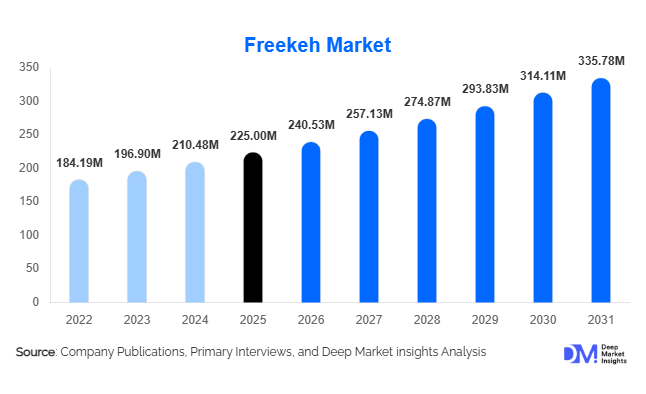
According to Deep Market Insights, the global freekeh market size was valued at USD 225 million in 2025 and is projected to grow from USD 240.53 million in 2026 to reach USD 335.78 million by 2031, expanding at a CAGR of 6.9% during the forecast period (2026–2031). The freekeh market growth is primarily driven by rising consumer demand for ancient grains, increasing adoption of plant-based diets, growing awareness regarding digestive health, and the incorporation of nutrient-dense grains into functional food formulations. Freekeh, which is produced from harvested green wheat that is roasted and processed, has gained significant popularity among health-conscious consumers due to its high fiber content, protein profile, low glycemic index, and prebiotic benefits. The market is witnessing increasing penetration across retail, foodservice, and food manufacturing channels, particularly in North America and Europe, while the Middle East continues to represent the largest consumption base globally. Product innovation in ready-to-cook formats, organic offerings, and value-added functional food applications is expected to further accelerate market expansion over the forecast period.
Key Market Insights
- Whole grain freekeh remains the dominant product category, accounting for nearly 48% of global demand due to consumer preference for minimally processed and nutrient-rich grain products.
- Organic freekeh is emerging as the fastest-growing segment, supported by increasing demand for clean-label, sustainably sourced, and certified organic food products.
- Middle East & Africa dominates the global market, accounting for approximately 36% of global consumption owing to traditional culinary applications and established consumer familiarity.
- Asia-Pacific is the fastest-growing regional market, driven by expanding health food consumption and growing awareness of ancient grains in China, India, Australia, Japan, and South Korea.
- Foodservice operators are increasingly incorporating freekeh into menus, particularly in grain bowls, salads, soups, and Mediterranean-inspired dishes.
- Functional food manufacturers are adopting freekeh as a premium ingredient, leveraging its high fiber, protein, and digestive health benefits across cereals, snacks, and ready meals.
Freekeh Market Latest Trends
Growing Adoption of Ancient Grains in Mainstream Diets
The global shift toward healthier eating habits is accelerating demand for ancient grains such as freekeh, quinoa, millet, amaranth, and teff. Consumers increasingly view freekeh as a superior alternative to refined carbohydrates due to its nutritional density and lower glycemic response. Major food manufacturers are launching freekeh-based cereals, bakery products, meal kits, and ready-to-eat solutions to capitalize on this trend. Retailers are expanding shelf space dedicated to ancient grains, while health-conscious consumers continue to seek minimally processed products that support weight management and digestive wellness. The trend is particularly evident in North America and Europe, where ancient grains have transitioned from specialty products into mainstream grocery categories.
Expansion of Organic and Sustainable Freekeh Production
Sustainability has become a major purchasing criterion among consumers and institutional buyers. Organic freekeh production is expanding rapidly as manufacturers seek premium pricing opportunities and differentiation in competitive markets. Food companies are investing in regenerative agriculture programs, traceable sourcing networks, and environmentally responsible packaging solutions. Sustainability certifications and organic labels are increasingly influencing purchasing decisions, especially among younger consumers and premium retail channels. Producers that demonstrate transparent supply chains and environmentally responsible farming practices are benefiting from stronger retailer partnerships and enhanced consumer loyalty.
Freekeh Market Drivers
Rising Demand for Functional and Nutrient-Dense Foods
Consumers are increasingly prioritizing foods that deliver health benefits beyond basic nutrition. Freekeh's high fiber content, prebiotic properties, protein concentration, and micronutrient profile make it particularly attractive within the functional food category. As digestive health, blood sugar management, and weight control become major health priorities globally, freekeh is being incorporated into a growing range of health-focused food products. Manufacturers are actively promoting freekeh's nutritional advantages to differentiate products within competitive grain and cereal categories.
Expansion of Plant-Based and Flexitarian Diets
The rapid growth of plant-based eating patterns continues to support freekeh market expansion. Consumers seeking alternatives to animal-based protein sources are increasingly incorporating ancient grains into daily diets. Freekeh serves as a valuable source of plant protein and complex carbohydrates while fitting clean-label and minimally processed food preferences. Foodservice operators, meal-kit providers, and food manufacturers are integrating freekeh into vegan and vegetarian product offerings, creating additional demand across multiple end-use industries.
Increasing Popularity of Mediterranean and Middle Eastern Cuisine
The globalization of Mediterranean and Middle Eastern cuisines has significantly enhanced awareness of freekeh among international consumers. Restaurants, catering companies, and hospitality providers are incorporating freekeh into salads, grain bowls, soups, and premium side dishes. Growing consumer interest in authentic ethnic cuisines has created opportunities for freekeh to expand beyond traditional markets and achieve broader acceptance in developed economies.
Freekeh Market Restraints
Limited Consumer Awareness in Emerging Markets
Despite increasing popularity among health-conscious consumers, freekeh remains relatively unfamiliar in many regions compared to rice, oats, quinoa, and wheat-based products. Considerable marketing and consumer education investments are required to communicate the grain's nutritional benefits and culinary versatility. This awareness gap continues to limit mass-market penetration in several developing economies.
Supply Chain Dependence on Specialized Wheat Production
Freekeh production requires harvesting green wheat at a specific growth stage followed by specialized roasting and processing techniques. The geographic concentration of production creates vulnerabilities associated with weather conditions, crop yields, agricultural disruptions, and raw material price fluctuations. Supply constraints can occasionally limit scalability and affect pricing stability across international markets.
Freekeh Industry Key Opportunities
Expansion into Functional Nutrition and Medical Food Applications
The growing global market for medical nutrition and preventive healthcare products presents significant opportunities for freekeh manufacturers. Its naturally high fiber content, resistant starch, and prebiotic characteristics position freekeh as an attractive ingredient for diabetic-friendly foods, digestive health products, weight management formulations, and clinical nutrition applications. Manufacturers that invest in scientific validation and health claim substantiation can access premium pricing opportunities within the rapidly expanding functional nutrition sector.
Untapped Demand Across Asia-Pacific Markets
Asia-Pacific presents substantial long-term growth opportunities as consumers increasingly adopt healthier dietary patterns. Rising disposable incomes, expanding modern retail infrastructure, and growing awareness of functional foods are creating favorable conditions for ancient grain adoption. Markets such as India, China, Indonesia, Thailand, and Vietnam offer considerable untapped demand potential. Localized product innovations, including freekeh-based snacks, instant meals, and breakfast products, could significantly accelerate consumer adoption across the region.
Report Scope
| Report Metric | Details |
|---|---|
| Market Size in 2025 | USD 225.00 Million |
| Market Size in 2026 | USD 240.53 Million |
| Market Size in 2031 | USD 335.78 Million |
| CAGR | 6.9% (2026-2031) |
| Base Year for Estimation | 2025 |
| Historical Data | 2022-2024 |
| Forecast Period | 2026-2031 |
| Report Coverage | Revenue Forecast, Competitive Landscape, Supply Chain Disruption, Growth Factors, Environment & Regulatory Landscape and Trends |
| Geographies Covered | North America, Europe, APAC, Middle East and Africa, LATAM |
| Countries Covered | U.S., Canada, U.K., Germany, France, Spain, Italy, Russia, Nordic, Benelux, Rest of Europe, China, Korea, Japan, India, Australia, Singapore, Taiwan, South East Asia, Rest of Asia-Pacific, UAE, Turky, Saudi Arabia, South Africa, Egypt, Nigeria, Rest of MEA, Brazil, Mexico, Argentina, Chile, Colombia, Rest of LATAM |
Explore more data points, trends and opportunities Download Free Sample Report
Product Form Insights
The whole grain freekeh segment dominated the global freekeh market and accounted for approximately 48% of total revenue in 2025. The segment’s leadership is primarily driven by growing consumer preference for minimally processed, nutrient-dense foods that retain their natural fiber, protein, vitamins, and mineral content. Whole grain freekeh aligns strongly with evolving dietary trends focused on digestive wellness, weight management, and clean-label nutrition. Consumers increasingly perceive whole grain products as healthier alternatives to refined grains, while their authentic texture and versatility across salads, grain bowls, side dishes, and traditional recipes further strengthen adoption. The rising popularity of ancient grains and plant-based eating patterns continues to support demand across both retail and foodservice channels.Cracked freekeh represented the second-largest product form segment, benefiting from its shorter cooking time and ease of preparation compared to whole grain variants. The format is particularly favored by foodservice operators and consumers seeking convenient meal solutions without sacrificing nutritional quality. Freekeh flour is gaining significant traction among bakery and snack manufacturers looking to enhance the nutritional profile of breads, crackers, breakfast products, and functional baked goods. Increasing demand for gluten-conscious and high-fiber formulations is further encouraging ingredient innovation in this segment. Meanwhile, instant and quick-cook freekeh products are witnessing robust growth as busy urban consumers increasingly prioritize convenience-oriented foods that support healthy lifestyles. Value-added blended freekeh products, including grain combinations, ready-to-cook mixes, and meal kits, are emerging as premium offerings that enhance product differentiation, attract health-focused consumers, and create opportunities for higher profit margins across the value chain.
Nature Insights
Conventional freekeh accounted for approximately 72% of global market revenue in 2025, maintaining its dominant position due to broader product availability, established supply chains, and competitive pricing advantages. The segment continues to benefit from strong demand across mainstream retail channels, foodservice establishments, and institutional buyers where affordability and consistent supply remain critical purchasing factors. The widespread cultivation of conventionally produced grains and lower production costs enable manufacturers to offer products at attractive price points, supporting large-scale consumer adoption across both developed and emerging markets.Organic freekeh represents the fastest-growing segment within the market and is expected to register substantial growth throughout the forecast period. The primary driver of growth is the rising consumer preference for clean-label, chemical-free, and environmentally sustainable food products. Increasing awareness regarding pesticide residues, regenerative agricultural practices, and food transparency is encouraging consumers to choose certified organic grain products. Demand is particularly strong across North America and Europe, where consumers demonstrate a higher willingness to pay premium prices for sustainably sourced foods. Expanding retail shelf space dedicated to organic products, supportive government initiatives promoting sustainable farming practices, and increasing participation from specialty health-food brands are further accelerating segment growth. The growing intersection between wellness, environmental responsibility, and premium food consumption continues to position organic freekeh as a key future growth category.
Application Insights
Salads and grain bowls constituted the largest application segment, accounting for approximately 22% of global demand in 2025. The segment's dominance is primarily driven by the growing popularity of healthy meal concepts, Mediterranean dietary patterns, flexitarian lifestyles, and plant-based nutrition. Consumers increasingly seek nutrient-rich ingredients that provide satiety, protein, fiber, and complex carbohydrates, making freekeh an attractive addition to modern meal solutions. The expanding presence of grain bowls across quick-service restaurants, cafés, and meal delivery platforms further reinforces segment growth.Soups and stews continue to represent a significant application area, particularly across Middle Eastern and Mediterranean markets where freekeh has a longstanding culinary heritage. The grain’s ability to enhance texture, nutritional value, and flavor profiles supports its continued use in traditional recipes and contemporary food preparations. Bakery applications are expanding steadily as manufacturers incorporate freekeh flour into breads, crackers, biscuits, and specialty baked goods aimed at health-conscious consumers. Breakfast cereals and granola products are emerging as a rapidly growing category as food producers increasingly seek nutrient-dense ingredients to support premium positioning and functional health claims. In addition, ready-to-eat meals, frozen foods, and functional food products are becoming important growth avenues due to rising consumer demand for convenient, nutritious, and minimally processed meal options. The increasing incorporation of freekeh into innovative food formulations highlights its expanding role across diverse food categories.
Distribution Channel Insights
Offline retail channels dominated global freekeh sales and accounted for nearly 68% of market revenue in 2025. The segment’s leadership is driven by strong consumer preference for in-store product evaluation, immediate product availability, and established purchasing habits for grocery and staple food products. Supermarkets, hypermarkets, specialty health-food stores, organic retailers, and traditional grocery outlets continue to serve as the primary distribution channels worldwide. The extensive shelf presence of freekeh products within organized retail environments significantly enhances consumer awareness and product accessibility. Specialty retailers remain particularly influential in driving sales of premium, organic, and imported freekeh products by targeting health-conscious consumers seeking specialized dietary offerings.Online distribution channels are experiencing accelerated growth as digital commerce continues to reshape food purchasing behavior. The expansion of e-commerce platforms, direct-to-consumer brand websites, subscription-based grocery services, and online health-food marketplaces is creating new opportunities for market participants. Digital channels allow manufacturers to communicate nutritional benefits, product origins, and sustainability credentials more effectively while reaching niche customer segments that actively seek functional and specialty food products. Growing internet penetration, increasing smartphone usage, and evolving consumer confidence in online grocery shopping are expected to further support the expansion of e-commerce sales throughout the forecast period.
End-User Insights
Retail consumers represented the largest end-user segment and accounted for approximately 44% of global market demand in 2025. The segment’s dominance is largely attributed to rising health awareness, growing interest in home-cooked meals, and increasing consumer adoption of nutrient-rich grain alternatives. As individuals become more focused on preventive healthcare, digestive wellness, and balanced nutrition, freekeh is gaining recognition as a versatile ingredient suitable for a wide range of dietary preferences. The continued growth of plant-based and flexitarian lifestyles further supports household consumption across major markets.Food processing companies constitute one of the fastest-growing end-user categories as manufacturers increasingly incorporate freekeh into cereals, snacks, bakery products, ready meals, and functional food formulations. The ingredient's nutritional profile and clean-label appeal make it particularly attractive for product innovation initiatives. The foodservice industry, including restaurants, hotels, cafés, catering companies, and quick-service establishments, is also expanding its use of freekeh in premium menu offerings designed to appeal to health-conscious diners. Institutional buyers such as schools, hospitals, universities, and corporate cafeterias are gradually integrating freekeh into meal programs as part of broader efforts to improve nutritional standards and support healthy eating initiatives. The diversification of end-user applications is expected to remain a key contributor to long-term market expansion.
Explore more data points, trends and opportunities Download Free Sample Report
Freekeh Market Segmentations
By Product Form
- Whole Grain Freekeh
- Cracked Freekeh
- Freekeh Flour
- Instant/Quick-Cook Freekeh
- Value-Added Blended Freekeh Products
By Nature
- Conventional Freekeh
- Organic Freekeh
By Packaging Type
- Retail Packaged Freekeh
- Bulk/Industrial Freekeh
By Distribution Channel
- Supermarkets & Hypermarkets
- Specialty Health Food Stores
- Traditional Grocery Stores
- Foodservice Distributors
- E-commerce Marketplaces
- Direct-to-Consumer Brand Websites
By Application
- Household Consumption
- Salads & Grain Bowls
- Soups & Stews
- Pilafs & Side Dishes
- Bakery Products
- Breakfast Cereals & Granola
- Snack Foods
- Ready-to-Eat Meals
- Functional & Health Foods
- Foodservice Menu Applications
Regional Insights
North America
North America accounted for approximately 22% of global market revenue in 2025, supported by strong consumer interest in functional foods, plant-based diets, and ancient grain products. The United States dominates regional demand owing to the growing popularity of clean-label nutrition, wellness-focused food choices, and high-protein grain alternatives. Freekeh is becoming increasingly accessible through mainstream supermarkets, specialty health-food retailers, online grocery platforms, and foodservice channels. Canada is also witnessing growing adoption driven by rising organic food consumption and increasing awareness of nutrient-dense grain products.Regional growth is being driven by expanding consumer focus on digestive health, increasing prevalence of lifestyle-related health concerns, and growing demand for plant-based protein sources. Product innovation by food manufacturers, rising incorporation of freekeh into packaged foods and ready meals, strong retail penetration of specialty grains, and increasing demand for sustainable food products are further supporting market expansion. The growing influence of nutrition-focused social media trends and consumer willingness to experiment with alternative grains are expected to continue driving regional demand.
Europe
Europe represented approximately 27% of global market revenue in 2025 and remains one of the most mature markets for ancient grains and functional food ingredients. Germany, the United Kingdom, France, Italy, and the Netherlands are among the leading consumption markets. European consumers exhibit strong preferences for organic foods, sustainable sourcing practices, and plant-based nutrition, creating favorable conditions for freekeh adoption across multiple food categories. Retailers continue to expand shelf space dedicated to ancient grains, while food manufacturers increasingly incorporate freekeh into premium packaged foods, bakery products, and convenient meal solutions.Regional growth is primarily supported by stringent sustainability standards, increasing consumer awareness regarding healthy dietary patterns, and growing demand for clean-label food ingredients. The expansion of vegetarian, vegan, and flexitarian populations across Europe is creating additional opportunities for grain-based protein alternatives. Government initiatives promoting sustainable agriculture, increasing organic food consumption, and rising investments in functional food innovation are further contributing to market development. The region's strong focus on environmental responsibility and nutritional quality continues to position freekeh as an attractive ingredient within the broader health-food landscape.
Asia-Pacific
Asia-Pacific is the fastest-growing regional market and is projected to expand at a CAGR exceeding 8.5% through 2031. Australia currently represents the largest regional market due to established production capabilities, greater consumer familiarity, and a well-developed health-food sector. China and India are emerging as major growth engines as urban consumers increasingly seek healthier grain alternatives and adopt modern dietary habits. Japan and South Korea are also witnessing growing demand through functional food applications, premium grocery retailing, and wellness-oriented food products.The region’s rapid growth is being driven by rising disposable incomes, accelerating urbanization, expanding middle-class populations, and increasing awareness of preventive healthcare. Growing penetration of e-commerce platforms is improving product accessibility, while the influence of Western dietary trends and demand for premium imported food products is supporting freekeh adoption. Increasing investments in functional foods, expanding retail distribution networks, and rising consumer interest in plant-based nutrition are expected to create significant long-term growth opportunities throughout the Asia-Pacific market.
Latin America
Latin America remains a relatively small but steadily expanding market for freekeh. Brazil, Mexico, Argentina, and Chile are emerging as important consumption centers due to increasing awareness of healthy eating trends, premium grain products, and functional nutrition. Demand remains concentrated among affluent urban consumers, health-conscious households, and specialty food retail channels, although broader market penetration is gradually increasing.Regional growth is supported by rising consumer awareness regarding nutrition and wellness, increasing adoption of plant-based diets, and expanding availability of imported specialty food products. The modernization of retail infrastructure, growth of organized supermarkets and hypermarkets, and increasing penetration of e-commerce channels are improving consumer access to ancient grain products. Additionally, rising disposable incomes among urban populations and growing demand for premium food offerings are expected to contribute to sustained market development across the region over the forecast period.
Middle East & Africa
Middle East & Africa remained the largest regional market, accounting for approximately 36% of global demand in 2025. Countries including Saudi Arabia, the UAE, Jordan, Lebanon, and Egypt continue to benefit from longstanding culinary traditions and strong consumer familiarity with freekeh. The grain remains deeply integrated into regional cuisines and enjoys widespread acceptance across both household and foodservice applications. In addition to being a major consumption hub, the region serves as an important production and processing center within global freekeh supply chains.Regional growth is driven by increasing investments in food security initiatives, modernization of grain processing infrastructure, and government programs supporting agricultural productivity and sustainable farming practices. Population growth, rising demand for traditional and nutritious food products, and expanding foodservice industries across Gulf countries are creating additional market opportunities. Furthermore, growing exports of processed grain products, improvements in supply chain efficiency, and increasing international recognition of Middle Eastern cuisine are expected to strengthen the region’s position in the global freekeh market throughout the forecast period.
Key Players in the Freekeh Market
- Archer Daniels Midland (ADM)
- Ardent Mills
- Bob's Red Mill
- Wholegrain Milling Co.
- Woodland Foods
- Freekeh Foods
- Greenwheat Freekeh
- Freekehlicious
- Canaan Fair Trade
- Hodmedod's
- Ancient Harvest
- Marrico Foods
- Nutriwish
- To Your Health Sprouted Flour Co.
- Honest to Goodness