Foot Hydrating Socks Market Size
According to Deep Market Insights, the global foot hydrating socks market size was valued at USD 240 million in 2025 and is projected to grow from USD 254.40 million in 2026 to reach USD 340.44 million by 2031, expanding at a CAGR of 6.0% during the forecast period (2026–2031). The foot hydrating socks market growth is primarily driven by increasing consumer awareness of foot health, the growing popularity of home-based spa treatments, and rising demand for convenient skincare solutions. Hydrating socks, infused with moisturizing compounds such as aloe vera, shea butter, and essential oils, provide an easy and effective method to treat dry skin, cracked heels, and rough feet.
These products are increasingly being incorporated into personal care routines, especially among consumers seeking affordable alternatives to professional spa treatments. Advances in textile technology, including silicone-lined fabrics and microencapsulation of moisturizing agents, are enhancing product functionality and durability. As self-care and wellness trends continue to gain traction globally, hydrating socks are becoming a popular addition to the broader foot care and skincare industry.
Key Market Insights
- The market is expanding due to growing consumer awareness of foot health, particularly in regions with colder climates where dry skin conditions are common.
- At-home spa treatments are becoming mainstream, boosting demand for convenient skincare products such as hydrating socks.
- North America dominates the global market, supported by high consumer spending on personal care and well-developed retail networks.
- Asia-Pacific is the fastest-growing regional market, driven by rising disposable incomes and the growing popularity of beauty and skincare products.
- Technological innovations in textile manufacturing, including gel-infused fabrics and microencapsulation of moisturizing ingredients, are improving product performance.
- E-commerce platforms are significantly boosting product accessibility, enabling brands to reach global consumers through direct-to-consumer channels.
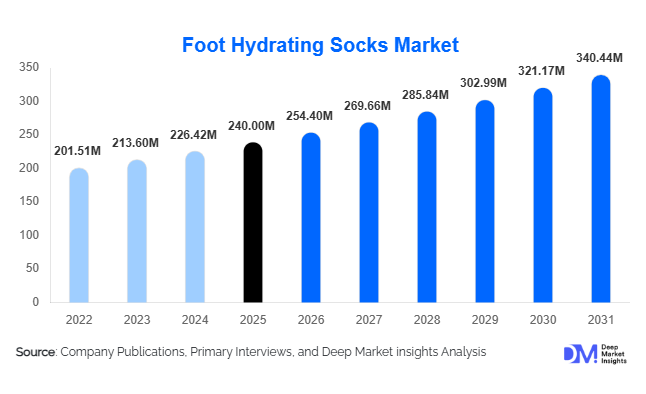
What are the latest trends in the foot hydrating socks market?
Growth of At-Home Spa and Self-Care Products
Consumers are increasingly adopting home-based beauty treatments as part of their daily wellness routines. Hydrating socks provide a simple and effective solution for maintaining foot health without visiting professional salons. This trend accelerated during the last few years as consumers looked for cost-effective alternatives to spa treatments. Manufacturers are responding by introducing products designed for overnight hydration, spa-like treatments, and multi-step skincare routines. Single-use hydrating socks combined with exfoliating foot masks and moisturizing treatments are becoming increasingly popular among consumers seeking complete foot care solutions at home.
Integration of Advanced Textile Technology
Innovations in textile engineering are transforming the functionality of hydrating socks. Modern products now feature gel-lined interiors and microencapsulated ingredients that gradually release moisturizing compounds during wear. Materials such as bamboo fibers and silicone-infused textiles are being incorporated to improve breathability and comfort. These technologies extend the duration of hydration and improve the overall effectiveness of the product. Additionally, reusable hydrating socks with replaceable moisturizing inserts are emerging as sustainable alternatives to single-use products, aligning with growing consumer demand for environmentally friendly personal care items.
What are the key drivers in the foot hydrating socks market?
Rising Awareness of Foot Health and Skincare
Increasing awareness regarding foot health is one of the most significant drivers for the foot hydrating socks market. Consumers are recognizing the importance of maintaining healthy skin on their feet, particularly for preventing cracked heels and dryness. Dermatologists and beauty professionals are increasingly recommending hydrating socks as part of routine foot care treatments. Social media and beauty influencers have also contributed to the growing popularity of foot care products by highlighting their benefits in skincare routines.
Rapid Expansion of E-Commerce Retail Channels
The rise of online retail platforms has significantly expanded the accessibility of hydrating socks globally. Consumers can now explore a wide range of brands, compare prices, and read product reviews before making purchasing decisions. E-commerce platforms also allow manufacturers to directly market their products to consumers through targeted digital campaigns. Subscription-based skincare services and online beauty marketplaces have further strengthened demand for hydrating socks, particularly among younger consumers who prefer purchasing personal care products online.
What are the restraints for the global market?
Competition from Alternative Foot Care Products
The foot hydrating socks market faces competition from other skincare products such as moisturizing creams, exfoliating foot masks, and medicated lotions. These products provide similar benefits and are often widely available at lower prices, which may limit the adoption of hydrating socks among cost-conscious consumers. Manufacturers must continuously innovate to differentiate their products and justify premium pricing.
Limited Awareness in Emerging Markets
While hydrating socks are widely recognized in developed markets, consumer awareness remains relatively limited in many emerging economies. Traditional foot care methods such as lotions and oils remain more popular in these regions. The lack of awareness regarding specialized foot care products can restrict market penetration, particularly in rural and price-sensitive markets.
What are the key opportunities in the foot hydrating socks industry?
Development of Medical-Grade Hydrating Socks
The increasing prevalence of diabetes and age-related foot conditions presents an opportunity for manufacturers to develop medical-grade hydrating socks designed for therapeutic applications. Products designed specifically for individuals suffering from dry skin disorders, cracked heels, and diabetic foot complications can expand the market beyond cosmetic applications. Collaboration with dermatologists and healthcare providers could help companies penetrate medical distribution channels such as pharmacies and hospitals.
Expansion in Emerging Beauty Markets
Emerging economies in the Asia-Pacific and Latin America represent major growth opportunities for hydrating sock manufacturers. Rising disposable incomes and increasing consumer interest in beauty and wellness products are driving demand for innovative skincare solutions in these regions. Localized marketing campaigns and affordable product lines tailored to regional preferences could help companies capture new customer segments.
Report Scope
| Report Metric | Details |
|---|---|
| Market Size in 2025 | USD 240 Million |
| Market Size in 2026 | USD 254.40 Million |
| Market Size in 2031 | USD 340.44 Million |
| CAGR | 6.0% (2026-2031) |
| Base Year for Estimation | 2025 |
| Historical Data | 2022-2024 |
| Forecast Period | 2026-2031 |
| Report Coverage | Revenue Forecast, Competitive Landscape, Supply Chain Disruption, Growth Factors, Environment & Regulatory Landscape and Trends |
| Geographies Covered | North America, Europe, APAC, Middle East and Africa, LATAM |
| Countries Covered | U.S., Canada, U.K., Germany, France, Spain, Italy, Russia, Nordic, Benelux, Rest of Europe, China, Korea, Japan, India, Australia, Singapore, Taiwan, South East Asia, Rest of Asia-Pacific, UAE, Turky, Saudi Arabia, South Africa, Egypt, Nigeria, Rest of MEA, Brazil, Mexico, Argentina, Chile, Colombia, Rest of LATAM |
Explore more data points, trends and opportunities Download Free Sample Report
Product Type Insights
Gel-infused hydrating socks represent the leading product category in the global foot hydrating socks market, accounting for nearly 42% of total market revenue in 2025. These socks feature silicone or gel-lined interiors embedded with moisturizing agents such as aloe vera, jojoba oil, vitamin E, and shea butter, which gradually release hydration when worn. The primary driver for this segment’s dominance is the strong consumer preference for intensive overnight treatments that deliver visible improvements in skin softness and repair cracked heels. Gel-infused socks are particularly effective at locking moisture against the skin while preventing evaporation, making them suitable for individuals experiencing chronic dryness or callused heels.
The segment has also benefited from continuous product innovation. Manufacturers are introducing reusable gel-lined socks with improved breathability and durability, enabling consumers to use them repeatedly with moisturizing creams or oils. Additionally, dermatologically tested gel socks are gaining traction in the therapeutic foot care segment, particularly among elderly consumers and individuals with diabetes-related foot dryness. Essential oil–infused and botanical-based hydrating socks are emerging as high-growth categories within the product landscape as consumers increasingly prioritize natural and organic skincare ingredients. Products infused with lavender, peppermint, coconut oil, and herbal extracts appeal to consumers seeking holistic wellness experiences that combine skincare benefits with aromatherapy. Another important development in this segment is the introduction of multifunctional hydrating socks that combine exfoliation, anti-bacterial protection, and deep hydration in a single product. These premium offerings are gaining traction in developed markets such as North America and Europe, where consumers are willing to pay higher prices for advanced skincare technologies. As a result, the gel-infused segment continues to lead the market due to its superior performance, higher perceived value, and strong alignment with evolving consumer skincare routines.
Application Insights
Cosmetic foot care remains the dominant application segment in the global foot hydrating socks market, accounting for approximately 65% of total demand in 2025. The strong growth of this segment is largely driven by increasing consumer interest in personal grooming and skincare routines that extend beyond facial care to include full-body wellness. Hydrating socks are widely used to address common cosmetic concerns such as dry skin, cracked heels, and rough foot texture, making them an attractive solution for consumers seeking convenient and non-invasive treatments. The expansion of at-home spa treatments has further accelerated demand in the cosmetic segment. Consumers increasingly incorporate hydrating socks into their nighttime skincare routines as an affordable alternative to professional salon treatments. Social media trends and beauty influencer endorsements have also contributed to rising adoption, particularly among younger demographics seeking simple yet effective beauty products.
Therapeutic foot care represents the fastest-growing application area in the market. Hydrating socks designed for medical or dermatological purposes are gaining popularity among individuals suffering from severe dryness, cracked heels, or diabetic foot conditions. Healthcare providers and dermatologists are increasingly recommending moisturizing socks as a complementary solution to topical treatments, particularly for patients requiring extended hydration. Professional spas and salons also contribute to demand by incorporating hydrating socks into pedicure services and specialized foot therapy treatments, creating additional growth opportunities within the application segment.
Distribution Channel Insights
Online retail platforms dominate the distribution landscape of the foot hydrating socks market, accounting for approximately 38% of total global sales in 2025. The primary driver behind this segment’s leadership is the rapid expansion of e-commerce platforms that enable consumers to access a wide range of skincare products from global brands. Online platforms allow consumers to compare prices, read product reviews, and explore new product innovations, which significantly influence purchasing decisions in the beauty and personal care industry.
The direct-to-consumer business model adopted by many skincare brands has further strengthened online sales. Companies are increasingly launching exclusive product lines through their websites and digital marketplaces, enabling them to reach global customers without relying heavily on traditional retail distribution channels. Social media marketing, influencer promotions, and targeted advertising campaigns have also enhanced product visibility and consumer engagement. Specialty beauty stores remain an important offline distribution channel, particularly for premium skincare products that require professional guidance or in-store demonstrations. Pharmacies and drugstores are also gaining importance as retail outlets for medical-grade hydrating socks recommended by healthcare professionals. These stores provide consumers with access to dermatologically approved products, especially those designed for therapeutic applications such as diabetic foot care and skin repair treatments.
End-User Insights
Women constitute the largest consumer group in the global foot hydrating socks market, accounting for approximately 69% of total demand in 2025. The strong dominance of this segment is driven by higher spending on beauty and personal care products, as well as greater engagement with skincare routines. Women are more likely to invest in specialized foot care products as part of their grooming and wellness practices, particularly in developed markets where skincare awareness is high. The growing popularity of pedicure treatments, spa services, and at-home beauty routines has significantly increased demand for hydrating socks among female consumers. Marketing campaigns targeted at women, including influencer endorsements and beauty tutorials, have also contributed to the expansion of this segment.
Demand among male consumers is gradually increasing as awareness of foot health grows. Men involved in sports, fitness activities, and physically demanding occupations are increasingly adopting foot care products to prevent dryness and discomfort. Additionally, elderly consumers represent an important end-user segment, particularly for therapeutic hydrating socks designed to alleviate chronic dryness and cracked heels. As the global population ages, demand for specialized foot care solutions targeting older demographics is expected to rise steadily.
Explore more data points, trends and opportunities Download Free Sample Report
Foot Hydrating Socks Market Segmentations
By Product Type
- Gel-Infused Hydrating Socks
- Silicone-Lined Moisturizing Socks
- Essential Oil-Infused Hydrating Socks
- Botanical / Herbal Extract Infused Socks
- Shea Butter / Aloe Vera Moisturizing Socks
- Multi-Layer Moisture Lock Socks
- Exfoliating & Hydrating Combination Socks
By Application
- Cosmetic Foot Care
- Therapeutic / Medical Foot Care
- Professional Spa & Salon Treatments
- Home-Based Foot Care
By Distribution Channel
- Online Retail & E-Commerce Platforms
- Specialty Beauty & Personal Care Stores
- Pharmacies & Drugstores
- Supermarkets & Hypermarkets
- Dermatology Clinics & Medical Supply Stores
By End User
- Women
- Men
- Elderly Consumers
- Unisex Consumers
Regional Insights
North America
North America dominates the global foot hydrating socks market, accounting for approximately 36% of total market demand in 2025. The United States represents the largest national market in the region, driven by high consumer spending on personal care products and strong awareness of skincare and wellness practices. The widespread adoption of home-based spa treatments and the popularity of dermatologically tested skincare products have significantly contributed to the region’s market leadership.
Another key driver of regional growth is the well-established retail infrastructure, including specialty beauty stores, pharmacies, and e-commerce platforms that offer a wide variety of skincare products. Consumers in the United States and Canada are highly receptive to innovative skincare technologies, including gel-infused textiles and reusable moisturizing socks. Additionally, the growing elderly population in North America has increased demand for therapeutic foot care products designed to treat dry skin and cracked heels, further strengthening regional market growth.
Europe
Europe accounts for nearly 28% of the global foot hydrating socks market, supported by strong consumer awareness of dermatological health and high demand for premium skincare products. Countries such as Germany, the United Kingdom, France, and Italy represent the largest markets within the region due to their well-developed beauty and personal care industries.
One of the primary drivers of regional growth is the increasing preference for natural and organic skincare solutions. European consumers place significant emphasis on ingredient transparency and environmentally sustainable products, encouraging manufacturers to develop hydrating socks infused with botanical extracts and eco-friendly fabrics. The strong presence of specialty beauty retailers and pharmacy chains also facilitates widespread product availability. Additionally, growing interest in wellness tourism and spa treatments across Europe has increased demand for professional foot care products, further supporting market expansion.
Asia-Pacific
Asia-Pacific represents the fastest-growing regional market for foot hydrating socks due to rapid urbanization, rising disposable incomes, and expanding middle-class populations. Countries such as China, Japan, South Korea, and India are witnessing strong demand for beauty and skincare products as consumers increasingly prioritize personal grooming and wellness.
South Korea and Japan play a particularly influential role in shaping global skincare trends through their advanced cosmetic industries and innovative beauty products. Hydrating socks and other specialized skincare solutions often originate in these markets before gaining international popularity. The rapid growth of e-commerce platforms across Asia-Pacific has further improved product accessibility, allowing consumers to purchase international skincare brands easily. Additionally, the strong manufacturing capabilities of countries such as China enable large-scale production and export of hydrating socks, supporting both domestic consumption and global supply.
Latin America
Latin America is gradually emerging as a promising growth market for foot hydrating socks, driven primarily by expanding beauty and personal care industries in countries such as Brazil and Mexico. Rising urbanization and increasing disposable incomes have encouraged consumers to adopt modern skincare products that address specific cosmetic concerns.
The growing popularity of beauty salons and professional spa treatments has also contributed to increasing demand for hydrating socks within the region. Online retail platforms are playing a crucial role in improving product availability by enabling international skincare brands to reach Latin American consumers directly. As awareness of specialized foot care products continues to grow, the regional market is expected to experience steady expansion in the coming years.
Middle East & Africa
The Middle East and Africa currently represent a smaller share of the global foot hydrating socks market, but the region is experiencing steady growth due to increasing demand for premium personal care products. Countries such as the United Arab Emirates, Saudi Arabia, and South Africa are witnessing rising consumer interest in skincare and wellness solutions.
One of the key drivers of market growth in the region is the rapid expansion of luxury beauty retail chains and international cosmetic brands. High disposable incomes among consumers in the Gulf Cooperation Council (GCC) countries have increased demand for premium skincare products, including hydrating socks designed for intensive moisturizing treatments. Additionally, the expansion of modern retail infrastructure and growing e-commerce adoption are improving product accessibility across the region. As consumer awareness of skincare continues to rise, the Middle East and Africa are expected to emerge as an attractive growth market for hydrating sock manufacturers.