Food for Special Medical Purpose (FSMP) Market Size
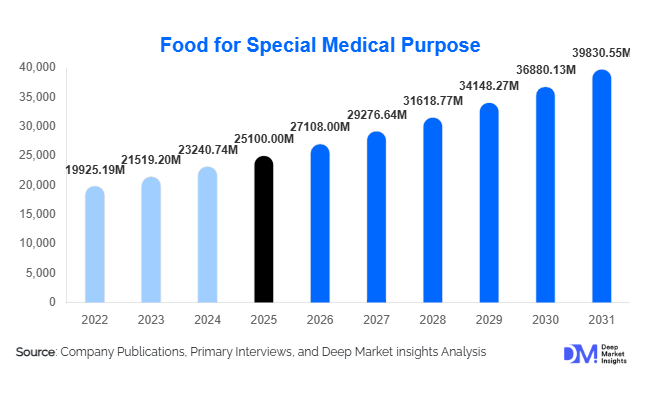
According to Deep Market Insights, the global Food for Special Medical Purpose (FSMP) market size was valued at USD 25,100 million in 2025 and is projected to grow from USD 27,108 million in 2026 to reach USD 39,830.55 million by 2031, expanding at a CAGR of 8.0% during the forecast period (2026–2031). The FSMP market growth is primarily driven by the rising prevalence of chronic diseases, increasing geriatric population, and growing awareness regarding clinical nutrition as an essential component of disease management and recovery.
Key Market Insights
- Oral nutritional supplements dominate the market, accounting for over 50% share due to ease of administration and growing use in outpatient and homecare settings.
- Oncology nutrition remains the leading therapeutic segment, driven by the increasing global burden of cancer and the importance of nutritional support during treatment.
- North America leads the global market, supported by advanced healthcare systems and strong clinical nutrition adoption.
- Asia-Pacific is the fastest-growing region, fueled by rising healthcare awareness, large patient populations, and expanding medical infrastructure.
- Home healthcare is emerging as a key growth segment, with increasing demand for patient-centric, at-home nutritional care solutions.
- Technological advancements in personalized nutrition, including AI-based dietary planning and nutrigenomics, are reshaping product innovation.
What are the latest trends in the FSMP market?
Shift Toward Personalized Clinical Nutrition
The FSMP market is increasingly moving toward personalized nutrition solutions tailored to individual patient needs. Advances in nutrigenomics and diagnostic tools are enabling manufacturers to develop targeted formulations based on disease profiles, metabolic conditions, and genetic predispositions. This trend is particularly relevant in oncology, metabolic disorders, and pediatric nutrition, where standardized solutions are often insufficient. Companies are leveraging digital health platforms and AI-driven analytics to create customized nutritional plans, improving patient outcomes and compliance. The integration of personalized FSMP solutions into clinical practice is expected to redefine therapeutic nutrition, offering more precise and effective dietary interventions.
Expansion of Home-Based Clinical Nutrition
Home healthcare is becoming a critical delivery channel for FSMP products. Patients recovering from surgeries, managing chronic diseases, or requiring long-term nutritional support are increasingly opting for home-based care. This shift is driven by cost efficiencies, convenience, and improved quality of life. Manufacturers are responding by developing ready-to-consume, easy-to-administer products with enhanced taste and packaging. The rise of telemedicine and remote patient monitoring is further supporting this trend, allowing healthcare professionals to supervise nutritional intake and adjust treatment plans in real time. As healthcare systems globally aim to reduce hospital stays, the role of FSMP in home settings is expanding significantly.
What are the key drivers in the FSMP market?
Rising Prevalence of Chronic Diseases
The increasing incidence of chronic conditions such as cancer, diabetes, gastrointestinal disorders, and neurological diseases is a major driver for the FSMP market. These conditions often lead to malnutrition or require specialized dietary management, making FSMP products essential for patient care. Clinical guidelines increasingly recommend nutritional intervention as part of treatment protocols, further boosting demand. The growing global disease burden, particularly in aging populations, is expected to sustain long-term market growth.
Rapidly Aging Population
The global geriatric population is expanding rapidly, particularly in developed regions such as Europe, Japan, and North America. Older adults are more prone to malnutrition, muscle loss, and chronic illnesses, creating strong demand for specialized nutritional solutions. FSMP products designed for geriatric care, including high-protein and easily digestible formulations, are gaining widespread adoption. Governments and healthcare providers are increasingly incorporating clinical nutrition into elderly care programs, further supporting market expansion.
What are the restraints for the global market?
High Cost of Specialized Nutrition Products
FSMP products are typically priced at a premium due to specialized formulations, clinical validation requirements, and high-quality ingredients. This cost factor limits accessibility, particularly in low- and middle-income countries. Reimbursement policies for clinical nutrition also vary significantly across regions, further impacting affordability and adoption rates.
Stringent Regulatory Frameworks
The FSMP market is subject to strict regulatory requirements, including product approvals, labeling standards, and clinical validation. These regulations vary across regions, creating challenges for manufacturers in terms of compliance and market entry. Delays in regulatory approvals and the need for extensive clinical trials can increase costs and limit the speed of innovation.
What are the key opportunities in the FSMP industry?
Growth in Emerging Markets
Emerging economies such as China, India, and Brazil present significant growth opportunities due to rising healthcare awareness, increasing diagnosis rates, and improving access to medical care. FSMP penetration remains relatively low in these regions, offering substantial untapped potential. Government initiatives aimed at improving nutrition and healthcare infrastructure are further supporting market expansion. Companies investing in localized production, affordable product lines, and physician education can capitalize on this growing demand.
Integration of Digital Health and AI
The integration of digital technologies into clinical nutrition is opening new avenues for growth. AI-driven platforms can analyze patient data to recommend personalized nutritional solutions, enhancing treatment outcomes. Mobile applications and remote monitoring tools are enabling better patient adherence and real-time tracking of nutritional intake. This technological convergence is expected to transform the FSMP market, making it more data-driven and patient-centric.
Report Scope
| Report Metric | Details |
|---|---|
| Market Size in 2025 | USD 25100.00 Million |
| Market Size in 2026 | USD 27108.00 Million |
| Market Size in 2031 | USD 39830.55 Million |
| CAGR | 8% (2026-2031) |
| Base Year for Estimation | 2025 |
| Historical Data | 2022-2024 |
| Forecast Period | 2026-2031 |
| Report Coverage | Revenue Forecast, Competitive Landscape, Supply Chain Disruption, Growth Factors, Environment & Regulatory Landscape and Trends |
| Geographies Covered | North America, Europe, APAC, Middle East and Africa, LATAM |
| Countries Covered | U.S., Canada, U.K., Germany, France, Spain, Italy, Russia, Nordic, Benelux, Rest of Europe, China, Korea, Japan, India, Australia, Singapore, Taiwan, South East Asia, Rest of Asia-Pacific, UAE, Turky, Saudi Arabia, South Africa, Egypt, Nigeria, Rest of MEA, Brazil, Mexico, Argentina, Chile, Colombia, Rest of LATAM |
Explore more data points, trends and opportunities Download Free Sample Report
Product Type Insights
The product type segmentation of the Food for Special Medical Purpose (FSMP) market reflects the varying clinical requirements and consumption preferences across patient populations, with oral nutritional supplements (ONS) continuing to dominate the landscape. In 2025, ONS account for approximately 52% of the total market share, underscoring their widespread acceptance and clinical versatility. Their dominance is primarily driven by ease of administration, palatability, and non-invasive nature, making them suitable for a broad spectrum of patients ranging from those with mild malnutrition to individuals recovering from chronic illnesses. Unlike invasive feeding methods, ONS can be conveniently consumed without medical supervision, which significantly enhances patient compliance, particularly in homecare settings. The increasing emphasis on patient-centric care and self-management of health conditions is further accelerating the adoption of ONS products globally.Parenteral nutrition, although critical in life-saving scenarios, accounts for a relatively smaller share of the market due to its complexity, higher cost, and requirement for specialized medical supervision. This method involves the intravenous delivery of nutrients and is primarily used when the gastrointestinal tract is non-functional or cannot be accessed. Despite its limited share, the segment remains indispensable in acute care settings, particularly for patients with severe gastrointestinal disorders or complications. Ongoing technological advancements aimed at improving safety, reducing infection risks, and enhancing nutrient stability are expected to support steady growth in this segment over the forecast period.
Application Insights
The application landscape of the FSMP market is shaped by the increasing integration of clinical nutrition into disease management protocols, with oncology nutrition emerging as the leading segment, accounting for approximately 24% of the global market share. Cancer patients frequently experience malnutrition due to the side effects of treatments such as chemotherapy and radiation therapy, which can lead to reduced appetite, nutrient absorption issues, and significant weight loss. As a result, specialized nutritional formulations play a critical role in improving treatment outcomes, enhancing patient quality of life, and reducing complications. The leading driver for the oncology nutrition segment is the rising global cancer burden combined with growing clinical recognition of nutrition as an essential component of comprehensive cancer care.Neurological disorders, including Alzheimer’s disease, Parkinson’s disease, and stroke-related complications, are emerging as important areas of application for FSMP products. These conditions often impair swallowing ability and cognitive function, necessitating the use of clinically formulated nutrition to maintain adequate nutrient intake. The renal disorder segment is also gaining traction, supported by the increasing prevalence of chronic kidney disease and the need for nutrient-specific formulations that manage electrolyte balance and protein intake.The expanding scope of FSMP applications is further supported by ongoing research and development efforts aimed at creating disease-specific formulations. This trend is fostering closer collaboration between healthcare providers and nutrition manufacturers, ultimately driving the integration of FSMP into standard treatment protocols across multiple therapeutic areas.
Distribution Channel Insights
The distribution landscape of the FSMP market is characterized by a strong reliance on institutional channels, with hospital pharmacies accounting for approximately 45% of total sales. This dominance is primarily attributed to the prescription-based nature of FSMP products, which are often recommended and administered under medical supervision. Hospitals serve as the primary point of care for patients requiring specialized nutrition, particularly in acute and critical care settings, thereby driving consistent demand through hospital pharmacies. The leading driver for this segment is the high level of trust and clinical validation associated with hospital-based dispensing, ensuring appropriate product selection and usage.Online pharmacies and e-commerce platforms are rapidly emerging as dynamic distribution channels within the FSMP market. The digital transformation of healthcare, coupled with the growing adoption of telemedicine and remote patient monitoring, is facilitating the direct-to-consumer distribution of FSMP products. Online platforms offer the advantages of convenience, discreet purchasing, and access to a wider range of products, making them particularly appealing for homecare patients and caregivers. The expansion of digital health ecosystems and improvements in logistics and delivery infrastructure are expected to further accelerate the growth of this segment in the coming years.
End-Use Insights
The end-use segmentation of the FSMP market highlights the dominance of hospitals as the primary consumers of specialized nutrition products. Hospitals account for the largest share due to the high volume of patients requiring clinical nutrition support in acute care settings. These institutions play a critical role in diagnosing malnutrition, prescribing appropriate FSMP products, and monitoring patient outcomes. The leading driver for the hospital segment is the increasing burden of chronic and acute diseases that necessitate medically supervised nutritional interventions.Long-term care facilities and rehabilitation centers are also gaining prominence as key end-users of FSMP products. These facilities cater to patients requiring extended care and recovery support, including elderly individuals and those recovering from surgeries or severe illnesses. In developed regions, the expansion of long-term care infrastructure and the emphasis on improving patient outcomes are driving the adoption of specialized nutrition solutions. Additionally, export-driven demand from Europe is contributing to the global expansion of FSMP usage across diverse healthcare settings.
Age Group Insights
The FSMP market is significantly influenced by demographic factors, with the geriatric population accounting for approximately 48% of total demand in 2025. This segment’s dominance is primarily due to the higher susceptibility of older adults to malnutrition, chronic diseases, and age-related physiological changes that affect nutrient absorption and metabolism. The leading driver for the geriatric segment is the rapid global aging population, which is increasing the need for targeted nutritional interventions to maintain health and quality of life. FSMP products designed for elderly patients often include enhanced protein content, vitamins, and minerals to address specific nutritional deficiencies.Pediatric nutrition, while representing a smaller share, remains a critical segment within the FSMP market. This segment focuses on addressing specific medical conditions such as inborn errors of metabolism, growth disorders, and severe allergies. The development of highly specialized formulations tailored to the unique nutritional needs of infants and children is driving growth in this segment. Continuous advancements in pediatric clinical nutrition and increasing awareness among healthcare providers and parents are expected
Explore more data points, trends and opportunities Download Free Sample Report
Food for Special Medical Purpose Segmentations
By Product Type
- Oral Nutritional Supplements
- Enteral Nutrition
- Parenteral Nutrition
By Therapeutic Area
- Oncology Nutrition
- Gastrointestinal Disorders
- Metabolic Disorders
- Neurological Disorders
- Renal & Liver Disorders
- Pediatric Disorders
- Critical Care & Post-Surgery Recovery
By Route of Administration
- Oral
- Enteral
- Parenteral
By Distribution Channel
- Hospital Pharmacies
- Retail Pharmacies
- Online Pharmacies & E-commerce
- Institutional Sales
Regional Insights
North America
North America leads the global FSMP market, accounting for approximately 34% of the total market share in 2025. The region’s dominance is largely driven by the United States, which benefits from a well-established healthcare infrastructure and a high level of awareness regarding clinical nutrition. One of the key drivers of regional growth is the strong integration of FSMP into standard medical practice, supported by favorable reimbursement policies that encourage the use of specialized nutrition products. Additionally, the presence of major market players and ongoing investments in research and development are fostering innovation and product availability. The rising prevalence of chronic diseases, coupled with an aging population, continues to drive demand for FSMP products across hospitals, long-term care facilities, and home healthcare settings.
Europe
Europe holds around 30% of the global FSMP market share, with leading contributions from countries such as Germany, France, and the United Kingdom. The region is characterized by robust regulatory frameworks that ensure the quality and safety of FSMP products, thereby enhancing consumer trust. A key driver of growth in Europe is the strong integration of clinical nutrition into public healthcare systems, supported by government initiatives and reimbursement policies. The rapidly aging population across European countries is further increasing the demand for specialized nutrition solutions, particularly in long-term care settings. Additionally, the region’s focus on preventive healthcare and early intervention is encouraging the adoption of FSMP products as part of comprehensive treatment strategies.
Asia-Pacific
Asia-Pacific is the fastest-growing region in the FSMP market, with a CAGR exceeding 9.5%. Countries such as China, India, and Japan are at the forefront of regional growth, driven by large population bases and increasing healthcare expenditure. One of the primary drivers of growth in this region is the rising awareness of clinical nutrition and its role in disease management. Rapid urbanization, improving healthcare infrastructure, and the expansion of private healthcare providers are further supporting market development. Despite relatively low market penetration compared to developed regions, the growing middle-class population and increasing access to healthcare services present significant growth opportunities. Government initiatives aimed at improving nutrition and healthcare outcomes are also contributing to the expansion of the FSMP market in Asia-Pacific.
Latin America
Latin America accounts for approximately 6% of the global FSMP market, with Brazil and Mexico serving as key markets. The region’s growth is primarily driven by the increasing prevalence of chronic diseases and the gradual improvement of healthcare infrastructure. Expanding access to medical services and rising awareness of the importance of nutrition in disease management are supporting the adoption of FSMP products. Additionally, economic development and urbanization are contributing to improved healthcare spending, which is expected to drive further market growth. However, challenges such as limited reimbursement policies and price sensitivity may continue to influence market dynamics in the region.
Middle East & Africa
The Middle East & Africa region holds a relatively smaller share of around 4–5% of the global FSMP market but is expected to witness steady growth in the coming years. The primary drivers of regional growth include improving healthcare infrastructure and increasing investments in the healthcare sector, particularly in countries such as the United Arab Emirates and Saudi Arabia. Rising awareness of clinical nutrition and the growing burden of chronic diseases are also contributing to market expansion. In addition, government initiatives aimed at enhancing healthcare quality and accessibility are supporting the adoption of FSMP products. While the market remains in a developing stage, the increasing focus on healthcare modernization and the expansion of private healthcare facilities are expected to create new growth opportunities in the region.
Key Players in the FSMP Market
- Nestlé Health Science
- Danone Nutricia
- Abbott Laboratories
- Fresenius Kabi
- Baxter International
- Mead Johnson Nutrition
- B. Braun Melsungen
- Perrigo Company
- Meiji Holdings
- Ajinomoto Co.
- Otsuka Holdings
- Reckitt Benckiser
- Hero Group
- Arla Foods Ingredients
- Lion Corporation