Electrolyte and Vitamin Water Market Size
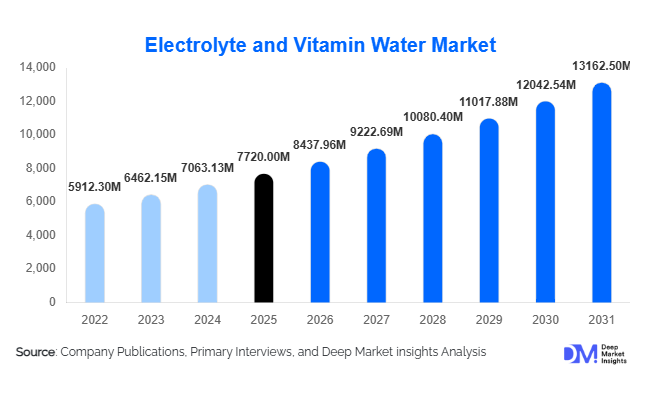
According to Deep Market Insights, the global electrolyte and vitamin water market size was valued at USD 7,720 million in 2025 and is projected to grow from USD 8,437.96 million in 2026 to reach USD 13,162.50 million by 2031, expanding at a CAGR of 9.3% during the forecast period (2026–2031). The market growth is primarily driven by the increasing shift toward functional beverages, rising health awareness among consumers, and growing demand for low-calorie hydration solutions enriched with vitamins and electrolytes.
Key Market Insights
- Functional hydration beverages are rapidly replacing traditional sugary drinks, driven by consumer demand for healthier alternatives.
- Clean-label and natural ingredient-based products are gaining strong traction, particularly among millennials and urban consumers.
- North America dominates the market due to high awareness, strong brand presence, and premium product adoption.
- Asia-Pacific is the fastest-growing region, fueled by urbanization, rising disposable income, and fitness trends.
- E-commerce channels are expanding rapidly, offering direct-to-consumer access and personalized product offerings.
- Product innovation in flavors, formulations, and packaging continues to drive consumer engagement and brand differentiation.
What are the latest trends in the electrolyte and vitamin water market?
Shift Toward Clean-Label and Natural Ingredients
Consumers are increasingly prioritizing transparency and ingredient quality, leading to a surge in demand for clean-label electrolyte and vitamin water products. Brands are reformulating their offerings to include natural minerals, plant-based extracts, and fruit-derived vitamins while eliminating artificial additives and preservatives. This trend is particularly strong in developed markets where consumers are highly aware of the health implications of synthetic ingredients. Organic-certified and non-GMO formulations are gaining shelf space, and companies are leveraging these attributes in marketing strategies to build trust and brand loyalty.
Rise of Functional and Personalized Hydration
The market is witnessing a transition from generic hydration products to targeted functional beverages designed for specific health benefits such as immunity, energy, and cognitive performance. Personalized nutrition is emerging as a key trend, with companies exploring AI-driven solutions to customize hydration based on individual health needs. The incorporation of additional functional ingredients such as adaptogens, probiotics, and nootropics is further expanding the scope of electrolyte and vitamin water beyond traditional sports hydration.
What are the key drivers in the electrolyte and vitamin water market?
Growing Health and Wellness Awareness
Rising awareness regarding lifestyle diseases, obesity, and dehydration is encouraging consumers to opt for healthier beverage alternatives. Electrolyte and vitamin water products are perceived as beneficial due to their hydration and nutritional properties, making them a preferred choice among both fitness enthusiasts and general consumers.
Expansion of Fitness and Sports Culture
The global increase in gym memberships, sports participation, and outdoor activities has significantly boosted demand for hydration beverages. Electrolyte-enriched water is particularly popular among athletes and active individuals for maintaining fluid balance and improving performance, thereby driving consistent market growth.
What are the restraints for the global market?
Premium Pricing and Limited Affordability
Electrolyte and vitamin water products are typically priced higher than regular bottled water, limiting their accessibility in price-sensitive markets. This cost barrier restricts widespread adoption, especially in developing economies where consumers are highly price-conscious.
Regulatory and Labeling Challenges
Strict regulations regarding health claims, ingredient transparency, and sugar content are posing challenges for manufacturers. Compliance with varying international standards increases operational complexity and may delay product launches.
What are the key opportunities in the electrolyte and vitamin water industry?
Expansion in Emerging Markets
Emerging economies in Asia-Pacific, Latin America, and Africa present significant growth opportunities due to rising urbanization and increasing health awareness. Companies can tap into these markets by offering affordable products tailored to local tastes and preferences, thereby expanding their consumer base.
Innovation in Sustainable Packaging
Sustainability is becoming a key differentiator in the beverage industry. Companies investing in eco-friendly packaging solutions such as biodegradable bottles and recyclable materials are gaining competitive advantage. Government regulations promoting sustainability further support this transition, making it a long-term growth opportunity.
Report Scope
| Report Metric | Details |
|---|---|
| Market Size in 2025 | USD 7720.00 Million |
| Market Size in 2026 | USD 8437.96 Million |
| Market Size in 2031 | USD 13162.50 Million |
| CAGR | 9.3% (2026-2031) |
| Base Year for Estimation | 2025 |
| Historical Data | 2022-2024 |
| Forecast Period | 2026-2031 |
| Report Coverage | Revenue Forecast, Competitive Landscape, Supply Chain Disruption, Growth Factors, Environment & Regulatory Landscape and Trends |
| Geographies Covered | North America, Europe, APAC, Middle East and Africa, LATAM |
| Countries Covered | U.S., Canada, U.K., Germany, France, Spain, Italy, Russia, Nordic, Benelux, Rest of Europe, China, Korea, Japan, India, Australia, Singapore, Taiwan, South East Asia, Rest of Asia-Pacific, UAE, Turky, Saudi Arabia, South Africa, Egypt, Nigeria, Rest of MEA, Brazil, Mexico, Argentina, Chile, Colombia, Rest of LATAM |
Explore more data points, trends and opportunities Download Free Sample Report
Product Type Insights
The electrolyte and vitamin water market is characterized by a diverse and evolving product landscape, where innovation and multifunctionality are reshaping consumer preferences. Among the various product types, electrolyte and vitamin blended water dominates the market, accounting for approximately 34% of the global share in 2025. This segment’s leadership is primarily attributed to its ability to offer dual benefits—hydration and nutritional supplementation—in a single product. Consumers today are increasingly seeking beverages that go beyond basic refreshment, and this segment fulfills that demand by delivering essential electrolytes for hydration alongside vitamins that support immunity, energy metabolism, and overall well-being. The growing awareness of lifestyle-related health concerns, combined with the rising popularity of preventive healthcare, has significantly contributed to the expansion of this segment.Vitamin-infused water is also gaining traction, particularly among wellness-oriented consumers who prefer functional beverages with added health benefits. This segment is benefiting from the growing inclination toward clean-label products and natural formulations. Consumers are increasingly scrutinizing product labels, leading to a preference for beverages that are free from artificial additives and contain naturally derived vitamins and nutrients. As a result, manufacturers are focusing on transparent labeling and incorporating plant-based or organic ingredients to enhance product appeal.Emerging product categories such as protein-enhanced water and energy-infused water are witnessing notable growth, supported by continuous innovation and evolving consumer demands. Protein-enhanced water caters to individuals seeking convenient protein intake for muscle recovery and weight management, while energy-infused water targets consumers looking for sustained energy without the high sugar content typically associated with traditional energy drinks. These innovations reflect a broader trend toward multifunctional beverages that combine hydration with additional health benefits, thereby creating new growth opportunities within the market.
Application Insights
In terms of application, hydration and replenishment remains the leading segment, contributing around 38% of the market share. The dominance of this segment can be attributed to its universal relevance, as hydration is a fundamental physiological need across all demographics. The increasing awareness of the importance of maintaining optimal hydration levels for overall health, cognitive function, and physical performance has driven widespread adoption of electrolyte and vitamin water products. Additionally, the growing incidence of dehydration-related health issues, particularly in urban populations with busy lifestyles, has further reinforced the demand for convenient hydration solutions.The leading driver for this segment is the rising consumer shift toward healthier beverage alternatives. Traditional sugary drinks are increasingly being replaced by functional beverages that offer hydration along with added nutritional benefits. This shift is particularly evident among younger consumers and working professionals who are actively seeking products that align with their health-conscious lifestyles. Furthermore, the expansion of on-the-go consumption patterns has boosted the demand for ready-to-drink hydration solutions, making electrolyte and vitamin water a preferred choice.Energy and performance enhancement applications are also gaining prominence, particularly within the sports nutrition segment. These products are designed to improve endurance, reduce fatigue, and enhance overall physical performance. The growing popularity of fitness regimes, gym memberships, and athletic activities has contributed to the expansion of this segment. Additionally, the increasing adoption of active lifestyles among urban populations has created a strong demand for beverages that support energy and performance.Detox and wellness applications represent another emerging segment, driven by the rising interest in holistic health and lifestyle management. Consumers are increasingly seeking products that aid in detoxification, digestion, and overall wellness. This has led to the introduction of beverages infused with ingredients such as antioxidants, herbal extracts, and natural detoxifying agents. The integration of these functionalities into electrolyte and vitamin water products reflects the evolving consumer preference for comprehensive health solutions.
Distribution Channel Insights
Distribution channels play a critical role in shaping market dynamics, with supermarkets and hypermarkets dominating the segment and holding approximately 41% of the market share. The leading driver for this segment is the extensive product visibility and accessibility offered by these retail formats. Supermarkets and hypermarkets provide consumers with a wide range of options, enabling them to compare products and make informed purchasing decisions. The availability of promotional offers, discounts, and bundled deals further enhances consumer engagement and drives sales.Online retail channels are experiencing rapid growth, driven by digitalization and changing consumer buying behavior. The increasing penetration of smartphones and internet connectivity has facilitated the rise of e-commerce platforms, enabling consumers to purchase beverages from the comfort of their homes. The availability of subscription models, doorstep delivery, and a wide range of product options has contributed to the expansion of this channel. Additionally, the growing influence of digital marketing and social media has played a crucial role in promoting electrolyte and vitamin water products online.Specialty health stores and gyms represent niche but important distribution channels, particularly for premium and targeted products. These channels cater to fitness-conscious consumers who are more likely to seek specialized hydration solutions. The presence of knowledgeable staff and personalized recommendations further enhances the consumer experience, making these channels an effective platform for introducing new and innovative products.
End-User Insights
The end-user landscape of the electrolyte and vitamin water market is diverse, with general consumers representing the largest segment and accounting for nearly 44% of the market. The leading driver for this segment is the widespread shift from niche sports beverages to mainstream hydration solutions. As awareness of health and wellness continues to grow, consumers across all age groups are incorporating functional beverages into their daily routines. This trend is further supported by the increasing availability of affordable and accessible products, making electrolyte and vitamin water a viable option for the general population.Athletes and fitness enthusiasts remain a key segment, driving demand for performance-oriented products. These consumers require specialized hydration solutions to support their physical activities, making electrolyte and vitamin water an essential part of their regimen. The growing popularity of fitness culture, coupled with the increasing number of sports events and competitions, has contributed to the sustained demand from this segment.The medical and clinical nutrition segment is emerging as a promising growth area, particularly for hydration therapy and recovery applications. Healthcare professionals are increasingly recognizing the importance of proper hydration in patient care, leading to the adoption of electrolyte-based beverages in medical settings. This trend is expected to gain momentum as the focus on patient recovery and wellness continues to increase.Additionally, the aging population represents a growing consumer base, driven by the increasing awareness of hydration-related health benefits. Older adults are more susceptible to dehydration and related health issues, making electrolyte and vitamin water an important component of their daily nutrition. The development of products specifically tailored to the needs of this demographic is expected to create new growth opportunities in the market.
Explore more data points, trends and opportunities Download Free Sample Report
Electrolyte and Vitamin Water Market Segmentations
By Product Type
- Electrolyte Water
- Vitamin-Infused Water
- Electrolyte + Vitamin Blended Water
- Protein + Electrolyte Water
- Energy-Enhanced Vitamin Water
By Application
- Hydration & Replenishment
- Immunity Boosting
- Energy & Performance Enhancement
- Detox & Wellness
- Cognitive Health & Focus
By Distribution Channel
- Supermarkets & Hypermarkets
- Convenience Stores
- Online Retail / E-commerce
- Specialty Health Stores
- Gyms & Fitness Centers
Regional Insights
North America
North America holds the largest share of the electrolyte and vitamin water market, accounting for approximately 38% of the global market in 2025. The region’s dominance is underpinned by a combination of high consumer awareness, advanced retail infrastructure, and a strong presence of leading market players. The United States, in particular, serves as the primary growth engine, driven by the widespread adoption of functional beverages and a well-established fitness culture. Consumers in this region are highly receptive to innovative products, which has encouraged manufacturers to continuously introduce new formulations and flavors.One of the key drivers of regional growth is the increasing prevalence of health-conscious lifestyles. Consumers are actively seeking alternatives to sugary beverages, leading to a surge in demand for low-calorie, nutrient-enhanced drinks. Additionally, the rising incidence of lifestyle-related diseases such as obesity and diabetes has further accelerated the shift toward healthier beverage options. The strong influence of marketing and branding, combined with the presence of established distribution networks, has also played a significant role in driving market growth in North America.
Asia-Pacific
Asia-Pacific represents around 27% of the global market and is the fastest-growing region, with a CAGR exceeding 11%. The region’s growth is driven by rapid urbanization, rising disposable incomes, and a growing middle-class population. Countries such as China, India, and Japan are at the forefront of this expansion, with increasing awareness of health and wellness playing a pivotal role in shaping consumer behavior.India, in particular, is witnessing strong demand due to its expanding middle class and increasing adoption of fitness and wellness trends. The proliferation of gyms, fitness centers, and sports activities has created a favorable environment for the growth of electrolyte and vitamin water products. Additionally, the rising influence of Western lifestyles and dietary habits has contributed to the increasing popularity of functional beverages in the region.Another significant driver of growth in Asia-Pacific is the expansion of modern retail and e-commerce platforms. The increasing penetration of online shopping has made it easier for consumers to access a wide range of products, thereby boosting market growth. Furthermore, government initiatives promoting health and wellness, along with increasing investments in the food and beverage sector, are expected to support the continued expansion of the market in this region.
Europe
Europe accounts for approximately 22% of the market share, with countries such as Germany, the United Kingdom, and France being key contributors. The region is characterized by a strong emphasis on quality, sustainability, and regulatory compliance. Consumers in Europe are highly conscious of product ingredients, leading to a growing demand for clean-label and organic beverages.The primary driver of regional growth is the increasing preference for natural and minimally processed products. Stringent regulations governing food and beverage formulations have encouraged manufacturers to adopt transparent labeling practices and eliminate artificial additives. This has resulted in the development of innovative products that align with consumer expectations for health and sustainability.Additionally, the rising trend of environmental consciousness has influenced purchasing decisions, with consumers favoring brands that prioritize eco-friendly packaging and sustainable sourcing. The growing popularity of plant-based diets and functional nutrition further supports the demand for electrolyte and vitamin water products in the region.
Latin America
Latin America holds about 7% of the market, led by countries such as Brazil and Mexico. The region is experiencing steady growth, supported by increasing sports participation and rising awareness of functional beverages. The expanding urban population and improving economic conditions have contributed to the growing demand for convenient and health-oriented products.A key driver of growth in Latin America is the increasing adoption of active lifestyles, particularly among younger consumers. The popularity of sports and fitness activities has created a strong demand for hydration solutions, driving the growth of electrolyte and vitamin water products. Additionally, the expansion of retail infrastructure and the growing presence of international brands have enhanced product availability and accessibility in the region.
Middle East & Africa
The Middle East & Africa region accounts for nearly 6% of the market and is the fastest-growing region, with a CAGR of around 12%. The region’s growth is driven by rising disposable incomes, rapid urbanization, and increasing exposure to global consumer trends. The adoption of Western lifestyles, coupled with a growing focus on health and wellness, has significantly influenced consumer preferences.One of the primary drivers of growth in this region is the high prevalence of hot climatic conditions, which increases the need for effective hydration solutions. This has created a strong demand for electrolyte-based beverages that help maintain hydration levels in extreme temperatures. Additionally, the expanding retail sector and the increasing availability of premium products have further supported market growth.Government initiatives aimed at promoting health and reducing the consumption of sugary beverages have also played a crucial role in driving demand for functional drinks. As awareness of the benefits of electrolyte and vitamin water continues to grow, the region is expected to witness sustained expansion in the coming years.
Key Players in the Electrolyte and Vitamin Water Market
- PepsiCo
- Coca-Cola Company
- Nestlé
- Danone
- Suntory Holdings
- Keurig Dr Pepper
- Kraft Heinz
- Glanbia plc
- BA Sports Nutrition
- The Vitamin Shoppe
- Hint Inc.
- Essentia Water LLC
- BodyArmor
- Aquarius
- Pocari Sweat