Baked Cheesecake Market Size
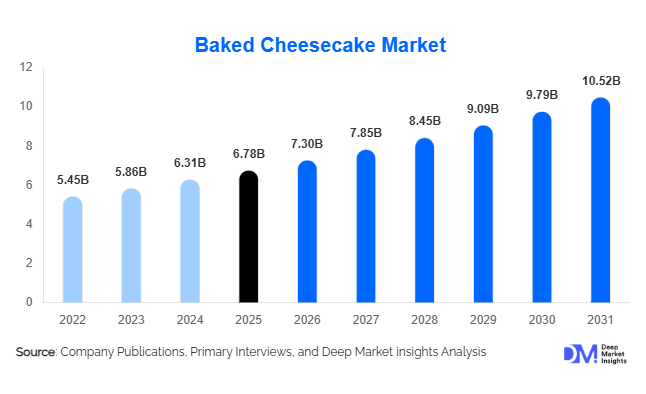
According to Deep Market Insights, the global baked cheesecake market size was valued at USD 6.78 billion in 2025 and is projected to grow from USD 7.30 billion in 2026 to reach USD 10.52 billion by 2031, expanding at a CAGR of 7.6% during the forecast period (2026–2031). The baked cheesecake market growth is primarily driven by rising consumer demand for premium desserts, increasing café culture worldwide, expanding frozen bakery distribution networks, and the growing popularity of indulgent yet customizable bakery products. As consumer preferences shift toward premium dessert experiences, manufacturers are investing heavily in product innovation, healthier formulations, and convenience-focused packaging formats. The market is also benefiting from growing online food delivery penetration and the rapid expansion of specialty bakery chains across both developed and emerging economies.
Key Market Insights
- Premium and gourmet baked cheesecakes are gaining substantial market share as consumers increasingly seek artisanal ingredients, unique flavors, and premium dessert experiences.
- Frozen baked cheesecake products are witnessing rapid adoption globally, supported by improved cold-chain infrastructure and longer shelf-life advantages.
- North America remains the largest regional market, led by strong consumer familiarity with cheesecake products and a mature foodservice sector.
- Asia-Pacific is the fastest-growing region, driven by urbanization, rising disposable income, and the rapid expansion of café and bakery chains.
- Plant-based and reduced-sugar cheesecake variants are expanding rapidly, reflecting changing consumer health and wellness preferences.
- Digital food retailing and direct-to-consumer dessert platforms are transforming distribution models and improving consumer accessibility.
Baked Cheesecake Market Latest Trends
Premiumization and Gourmet Flavor Innovation
The baked cheesecake industry is experiencing a strong premiumization trend as consumers increasingly seek indulgent dessert experiences featuring high-quality ingredients and unique flavor profiles. Manufacturers are introducing gourmet offerings that incorporate premium cream cheeses, imported fruits, Belgian chocolate, specialty coffee blends, salted caramel, pistachio, matcha, and seasonal ingredients. Premium and artisan baked cheesecakes are becoming increasingly popular across retail and foodservice channels, particularly in North America, Europe, Japan, South Korea, and Australia. Luxury dessert cafés and bakery chains are further accelerating this trend by positioning baked cheesecakes as premium lifestyle products rather than conventional bakery items. Seasonal limited-edition launches and regional flavor adaptations are also helping brands improve consumer engagement and pricing power.
Growth of Health-Oriented and Plant-Based Cheesecakes
Consumer demand for healthier indulgence is driving the emergence of low-sugar, high-protein, reduced-fat, vegan, dairy-free, and lactose-free baked cheesecakes. Younger consumers and health-conscious demographics are increasingly seeking desserts that align with dietary preferences without compromising taste. Manufacturers are responding through innovative formulations utilizing plant-based cream cheese alternatives, natural sweeteners, protein fortification, and clean-label ingredients. Vegan baked cheesecake launches have accelerated across major markets, particularly in North America and Europe. Foodservice operators are also incorporating health-focused cheesecake variants into menus to attract broader consumer segments, creating a significant avenue for future market growth.
Baked Cheesecake Market Drivers
Expansion of Global Café and Coffee Chain Networks
The rapid growth of cafés, specialty coffee chains, and dessert-focused outlets worldwide has significantly increased demand for baked cheesecakes. Cheesecake products serve as high-margin complementary offerings alongside coffee and beverage sales, making them a preferred menu item for operators. Major coffee chains and independent cafés continue to expand globally, creating substantial demand for premium dessert products. Urbanization trends and changing social consumption patterns further support the role of cafés as important consumption channels for baked cheesecakes.
Rising Demand for Premium Dessert Experiences
Consumers increasingly prioritize experiential food consumption and are willing to pay premium prices for indulgent, visually appealing desserts. Baked cheesecakes benefit from this trend due to their premium perception, flavor versatility, and suitability for celebrations and gifting occasions. Premium desserts have become particularly popular among millennials and Gen Z consumers who actively share food experiences through social media platforms. This trend has encouraged manufacturers to invest in innovative flavors, premium ingredients, and attractive packaging formats that support higher average selling prices.
Growth of Frozen Bakery Distribution Infrastructure
Advancements in frozen food logistics and cold-chain infrastructure have expanded baked cheesecake availability beyond traditional bakery outlets. Frozen baked cheesecakes allow manufacturers to serve geographically diverse markets while maintaining product quality and freshness. The growing penetration of supermarkets, hypermarkets, and foodservice distributors offering frozen desserts has significantly broadened market accessibility. Improved freezing technologies have also enhanced texture retention and shelf stability, increasing consumer acceptance of frozen cheesecake products.
Baked Cheesecake Market Restraints
Volatility in Dairy Ingredient Prices
The baked cheesecake market remains highly dependent on dairy-based ingredients such as cream cheese, butter, milk products, and eggs. Price fluctuations in dairy commodities directly impact production costs and profit margins. Rising feed costs, climate-related agricultural disruptions, and supply chain uncertainties continue to create pricing volatility, particularly affecting small and mid-sized manufacturers with limited purchasing leverage.
Health and Nutritional Concerns
Despite strong consumer demand, baked cheesecakes continue to face scrutiny due to their relatively high sugar, fat, and calorie content. Increasing consumer awareness regarding obesity, diabetes, and overall nutritional health may constrain demand among certain demographic groups. Regulatory initiatives targeting sugar reduction and nutritional labeling could further pressure manufacturers to reformulate products while maintaining taste and texture characteristics.
Baked Cheesecake Industry Key Opportunities
Rapid Expansion in Asia-Pacific Premium Bakery Markets
Asia-Pacific represents the largest untapped growth opportunity for baked cheesecake manufacturers. Rising disposable incomes, westernization of food preferences, and the proliferation of café culture across China, India, Indonesia, Vietnam, Thailand, and the Philippines are driving demand for premium bakery products. International bakery chains and local operators are expanding aggressively throughout the region, creating substantial opportunities for cheesecake manufacturers. Urban middle-class consumers increasingly view cheesecake as a premium aspirational dessert, supporting strong long-term demand growth.
Growth of Direct-to-Consumer and Online Dessert Platforms
E-commerce and food delivery platforms are transforming dessert purchasing behavior. Direct-to-consumer sales channels allow manufacturers to bypass traditional retail constraints, improve margins, and access valuable consumer data. Subscription dessert programs, customized cheesecake offerings, celebration cakes, and nationwide frozen delivery capabilities are creating new revenue streams. Digital channels also facilitate premium product positioning and targeted marketing campaigns that strengthen brand loyalty.
Product Innovation Through Functional and Specialty Ingredients
Manufacturers have significant opportunities to differentiate products through functional ingredients, clean-label formulations, and specialized dietary offerings. High-protein cheesecakes, probiotic-enhanced desserts, keto-friendly options, and plant-based variants are attracting growing consumer interest. These premium niches command higher margins and help manufacturers address evolving health and wellness trends while maintaining indulgent product appeal.
Report Scope
| Report Metric | Details |
|---|---|
| Market Size in 2025 | USD 6.78 Billion |
| Market Size in 2026 | USD 7.30 Billion |
| Market Size in 2031 | USD 10.52 Billion |
| CAGR | 7.6% (2026-2031) |
| Base Year for Estimation | 2025 |
| Historical Data | 2022-2024 |
| Forecast Period | 2026-2031 |
| Report Coverage | Revenue Forecast, Competitive Landscape, Supply Chain Disruption, Growth Factors, Environment & Regulatory Landscape and Trends |
| Geographies Covered | North America, Europe, APAC, Middle East and Africa, LATAM |
| Countries Covered | U.S., Canada, U.K., Germany, France, Spain, Italy, Russia, Nordic, Benelux, Rest of Europe, China, Korea, Japan, India, Australia, Singapore, Taiwan, South East Asia, Rest of Asia-Pacific, UAE, Turky, Saudi Arabia, South Africa, Egypt, Nigeria, Rest of MEA, Brazil, Mexico, Argentina, Chile, Colombia, Rest of LATAM |
Explore more data points, trends and opportunities Download Free Sample Report
Product Type Insights
Classic baked cheesecakes continue to dominate the global market, accounting for approximately 38.2% of total market revenue in 2025. This dominance is primarily driven by strong consumer familiarity, long-established product acceptance across cultures, and consistent demand across both retail and foodservice environments. Traditional New York-style cheesecakes remain the benchmark product in North America and Europe, reinforcing category stability and repeat purchase behavior. The leading driver for this segment is its strong legacy appeal combined with standardized recipes that ensure consistent taste and quality across mass production. At the same time, flavored baked cheesecakes are witnessing accelerated growth, supported by continuous flavor innovation, seasonal product launches, and experimentation by artisanal and industrial manufacturers. Premium and specialty cheesecakes are emerging as a high-growth sub-segment, fueled by premiumization trends, rising disposable incomes, and consumers’ willingness to pay more for indulgent and visually appealing desserts. Health-oriented and plant-based cheesecakes are also expanding rapidly, particularly among younger demographics, with the leading growth driver being the shift toward cleaner labels, dairy alternatives, and perceived healthier indulgence options.
Form Insights
Whole cheesecakes represented approximately 46.5% of global market revenue in 2025, maintaining leadership due to their strong association with celebrations, gifting occasions, and foodservice presentation formats. Their dominance is supported by their visual appeal and ability to serve multiple consumers, making them highly preferred in restaurants, bakeries, and event catering. The leading driver for this segment is its strong alignment with social and celebratory consumption occasions, which continues to reinforce bulk purchase behavior. However, cheesecake slices and mini cheesecakes are witnessing faster growth as consumers increasingly prioritize convenience, portion control, and individual indulgence formats. Bite-sized portions and cheesecake bars are also gaining traction in cafés, convenience stores, and corporate catering channels, supported by rising demand for grab-and-go dessert options and impulse purchasing behavior in urban retail environments.
Storage Format Insights
Fresh and chilled baked cheesecakes accounted for nearly 57.3% of market revenue in 2025, primarily driven by strong consumer perception of freshness, superior taste quality, and premium product positioning. The leading driver in this segment is the preference for freshly prepared bakery-style desserts, particularly in urban retail and café environments where quality perception strongly influences purchase decisions. Nevertheless, frozen baked cheesecakes are emerging as the fastest-growing storage format due to advancements in freezing and preservation technologies, expanded cold-chain logistics, and increasing adoption by international foodservice operators. Frozen formats also benefit from reduced spoilage risks, improved inventory management, and longer shelf stability, making them highly attractive for large-scale distribution and export-oriented manufacturers.
Distribution Channel Insights
Supermarkets and hypermarkets remained the leading distribution channel, accounting for approximately 31.5% of global baked cheesecake sales in 2025. Their dominance is driven by extensive product assortment, strong cold-chain infrastructure, and high consumer accessibility, which together enhance purchase convenience and brand visibility. The leading driver for this channel is its ability to offer one-stop shopping experiences combined with competitive pricing and consistent product availability. Specialty bakery stores continue to perform strongly in premium segments, benefiting from artisanal positioning and perceived product authenticity. Meanwhile, online retail and direct-to-consumer channels are experiencing double-digit growth, supported by increasing digital penetration, evolving consumer shopping habits, and improved refrigerated last-mile delivery systems. Food delivery applications are further expanding access to premium cheesecakes, particularly in urban areas where convenience and instant gratification are key demand factors.
End-Use Insights
Household consumers accounted for approximately 42.8% of global demand in 2025, driven by rising at-home indulgence trends, increasing availability of premium packaged desserts, and growing interest in recreating café-style experiences at home. The leading driver in this segment is the expansion of modern retail penetration combined with lifestyle shifts toward home-based consumption and entertainment. Among commercial end users, cafés and coffee chains represent the fastest-growing segment, supported by strong product pairing with specialty beverages and increasing demand for premium dessert menus. Hotels, restaurants, catering operators, and travel foodservice providers are also expanding their baked cheesecake offerings, as premium desserts are increasingly used as differentiation tools to enhance customer experience, improve menu value perception, and strengthen brand positioning in competitive hospitality markets.
Explore more data points, trends and opportunities Download Free Sample Report
Baked Cheesecake Market Segmentations
By Product Type
- Classic Baked Cheesecake
- Flavored Baked Cheesecake
- Premium & Specialty Baked Cheesecake
- Health-Oriented Baked Cheesecake
- Plant-Based Baked Cheesecake
By Form
- Whole Cheesecakes
- Cheesecake Slices
- Mini Cheesecakes
- Cheesecake Bars & Squares
- Bite-Sized Cheesecake Portions
By Storage Format
- Fresh/Chilled Baked Cheesecake
- Frozen Baked Cheesecake
- Ambient Shelf-Stable Baked Cheesecake
By Packaging Type
- Bulk Packaging
- Retail Family Packs
- Single-Serve Packs
- Multipack Portions
- Foodservice Packaging
By Price Positioning
- Economy
- Mid-Range
- Premium
- Luxury/Gourmet
Regional Insights
North America
North America held the largest share of the global baked cheesecake market in 2025, accounting for approximately 39.4% of total revenue. The United States continues to dominate regional demand due to deeply embedded cheesecake consumption culture, highly developed foodservice infrastructure, and strong consumer preference for indulgent desserts. Canada is also contributing steadily to growth through expanding specialty bakery retail and premium product offerings. The key growth driver in this region is the combination of mature cold-chain logistics and consistently high per-capita dessert consumption, which supports sustained product availability and innovation in both retail and foodservice segments.
Europe
Europe represented approximately 28.6% of global market revenue in 2025, with major contributions from Germany, the United Kingdom, France, Italy, and the Netherlands. Regional growth is strongly driven by rising demand for premium, artisan, and clean-label bakery products, alongside increasing consumer focus on ingredient transparency and product authenticity. The leading driver in Europe is the strong café and bakery culture, which continuously supports demand for high-quality desserts in both on-the-go and dine-in formats. Additionally, growing adoption of frozen desserts and expanding retail modernization are further strengthening market penetration across both Western and Eastern European countries.
Asia-Pacific
Asia-Pacific is the fastest-growing regional market, projected to expand at a CAGR exceeding 9.5% through 2031. Growth is primarily driven by rapid urbanization, rising disposable incomes, and increasing Westernization of dietary preferences. China remains the largest market in the region due to rapid expansion of bakery chains, café culture, and premium dessert outlets, while India is emerging as the fastest-growing country market supported by a young population base, growing middle class, and increasing exposure to international dessert trends. Japan and South Korea continue to drive innovation in premium and aesthetically designed cheesecake variants. The leading regional growth driver is the rapid expansion of modern retail and café chains that are actively introducing premium Western dessert formats to a broad consumer base.
Latin America
Latin America, led by Brazil, Mexico, Argentina, and Chile, is witnessing steady growth supported by increasing penetration of modern retail formats and rising consumer exposure to international bakery trends. Growth is also driven by the expansion of international bakery chains and improving economic stability in key urban centers. The leading driver in this region is urbanization combined with growing middle-class consumption, which is gradually shifting demand toward premium and indulgent dessert categories. While still smaller in scale compared to North America and Europe, long-term growth prospects remain positive due to improving retail infrastructure and expanding café culture.
Middle East & Africa
The Middle East and Africa region is experiencing rising demand for premium bakery and dessert products, particularly in the UAE, Saudi Arabia, and South Africa. Growth is supported by expanding tourism activity, large-scale hospitality investments, and increasing café culture across urban centers. Gulf countries are becoming key import hubs for premium frozen cheesecakes, driven by strong demand in luxury hospitality and foodservice sectors. South Africa continues to represent the largest domestic market in the African region. The primary growth driver across this region is the expansion of premium hospitality and tourism infrastructure, which significantly boosts demand for high-value dessert offerings in hotels, cafés, and fine dining establishments.
Key Players in the Baked Cheesecake Market
- The Cheesecake Factory Bakery
- Rich Products Corporation
- Sara Lee Frozen Bakery
- Dawn Foods
- Dessert Holdings
- Bimbo Bakeries USA
- Coppenrath & Wiese
- Mademoiselle Desserts
- Baker & Baker
- Tipiak
- Junior's Restaurant
- Finsbury Food Group
- David's Cookies
- Eli's Cheesecake Company
- Cheesecake Royale