Pet Food Market Size
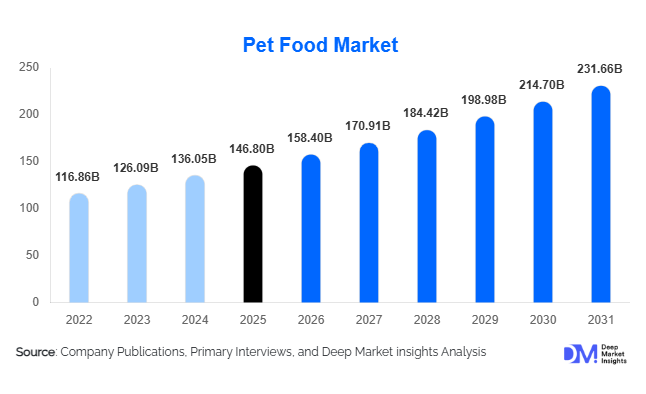
According to Deep Market Insights, the global pet food market was valued at USD 146.80 billion in 2025 and is projected to grow from USD 158.40 billion in 2026 to reach USD 231.66 billion by 2031, expanding at a CAGR of 7.9% during the forecast period (2026–2031). Market expansion is supported by rising pet ownership, increasing expenditure on premium nutrition, growing awareness regarding companion animal health, and continuous product innovation across dry, wet, functional, and specialty pet food categories. The increasing humanization of pets, rapid penetration of e-commerce platforms, and expansion of veterinary nutrition products continue to strengthen long-term industry growth across both developed and emerging economies.
Key Market Insights
- North America accounted for approximately 39.4% of global revenue in 2025 owing to high pet ownership rates and premium pet food consumption.
- Asia-Pacific is projected to register the fastest CAGR of 9.4% through 2031, supported by rising disposable income and increasing adoption of companion animals.
- Dry pet food remains the leading product category, contributing nearly 58.8% of global revenue due to affordability, convenience, and longer shelf life.
- Dogs continue to represent the largest consumer segment, accounting for approximately 61.2% of worldwide pet food demand.
- Premium, natural, organic, grain-free, and functional nutrition products are experiencing faster adoption than conventional formulations across major international markets.
- Online retail channels continue to expand rapidly, supported by subscription-based purchasing, direct-to-consumer platforms, and personalized nutrition recommendations.
Pet Food Market Trends
Premium Nutrition and Functional Ingredients Continue to Expand
Consumer spending on premium pet nutrition continues to increase as pet owners increasingly view companion animals as family members. Manufacturers are introducing products enriched with probiotics, omega-3 fatty acids, antioxidants, vitamins, joint-support ingredients, digestive health supplements, and immune-boosting formulations. Functional nutrition products are witnessing particularly strong demand among aging pets and breeds requiring specialized dietary management. Grain-free recipes, high-protein formulations, freeze-dried meals, and limited-ingredient diets are becoming mainstream offerings across supermarkets, specialty pet stores, veterinary clinics, and online retail platforms. Companies are also investing heavily in research to develop personalized nutrition products tailored according to breed, age, weight, lifestyle, and medical conditions.
Sustainability and Digital Transformation Reshaping Product Development
Sustainability has become an important competitive differentiator across the global pet food industry. Manufacturers are incorporating responsibly sourced proteins, recyclable packaging materials, renewable manufacturing processes, and alternative ingredients such as insect protein and plant-based proteins to reduce environmental impact. Simultaneously, digital transformation is reshaping customer engagement through AI-powered nutrition recommendations, subscription-based delivery models, smart packaging technologies, and direct-to-consumer sales channels. Advanced manufacturing automation, improved traceability systems, and data-driven supply chain management are enabling companies to improve product quality while responding more efficiently to changing consumer preferences.
Pet Food Market Drivers
Growing Humanization of Companion Animals
One of the strongest factors supporting market expansion is the increasing humanization of pets worldwide. Consumers are allocating higher household budgets toward premium nutrition, preventive healthcare, dietary supplements, and customized feeding solutions for dogs and cats. Higher adoption rates among millennials and Gen Z consumers, coupled with increasing awareness regarding animal nutrition, continue to stimulate demand for premium commercial pet food. Veterinary professionals are also recommending scientifically formulated diets that support digestive health, weight management, dental care, immune function, and age-specific nutritional requirements, creating sustained demand across premium product categories.
Rapid Growth of Premium Retail and Veterinary Nutrition
The expansion of organized retail networks, specialty pet stores, veterinary clinics, and online marketplaces has significantly improved product accessibility. Manufacturers are increasingly introducing prescription diets, breed-specific formulations, therapeutic nutrition, and functional treats targeting obesity management, allergies, urinary health, gastrointestinal disorders, and mobility support. Strong investments in product innovation, clinical nutrition research, and premium branding continue to enhance consumer confidence while driving higher average spending per pet.
Pet Food Market Restraints
Volatility in Raw Material Prices
Fluctuating prices of meat proteins, fish meal, grains, edible oils, vitamins, packaging materials, and transportation services remain significant challenges for manufacturers. Global supply chain disruptions, inflationary pressures, and geopolitical uncertainties have increased production costs across multiple regions. Small and medium-sized manufacturers often experience greater pressure on operating margins, limiting their ability to invest in product innovation while maintaining competitive pricing.
Stringent Regulatory Requirements
Pet food manufacturers must comply with extensive regulations related to ingredient safety, nutritional labeling, manufacturing practices, product testing, traceability, and import-export compliance across different countries. Maintaining consistent quality standards while meeting evolving regulatory requirements increases operational complexity and compliance costs. Product recalls associated with contamination or ingredient quality can also affect consumer confidence and brand reputation.
Pet Food Market Opportunities
Personalized and Specialized Pet Nutrition
Personalized nutrition represents one of the most promising opportunities within the global pet food industry. Companies are increasingly developing customized diets based on breed characteristics, age, activity levels, allergies, digestive health, weight management requirements, and veterinary recommendations. Subscription-based nutrition platforms, DNA-based dietary recommendations, and AI-assisted meal planning are creating new revenue opportunities while strengthening long-term customer relationships.
Emerging Markets Creating New Growth Potential
Developing economies across Asia-Pacific, Latin America, and the Middle East are experiencing rapid increases in pet ownership alongside expanding middle-class populations and higher disposable incomes. Improvements in retail infrastructure, rising awareness regarding commercial pet nutrition, and increasing availability of premium imported brands are accelerating market penetration. International manufacturers are expanding production facilities, strengthening local distribution partnerships, and introducing region-specific formulations to capitalize on these high-growth opportunities.
Report Scope
| Report Metric | Details |
|---|---|
| Market Size in 2025 | USD 146.8 Billion |
| Market Size in 2026 | USD 158.40 Billion |
| Market Size in 2031 | USD 231.66 Billion |
| CAGR | 7.9% (2026-2031) |
| Base Year for Estimation | 2025 |
| Historical Data | 2022-2024 |
| Forecast Period | 2026-2031 |
| Report Coverage | Revenue Forecast, Competitive Landscape, Supply Chain Disruption, Growth Factors, Environment & Regulatory Landscape and Trends |
| Geographies Covered | North America, Europe, APAC, Middle East and Africa, LATAM |
| Countries Covered | U.S., Canada, U.K., Germany, France, Spain, Italy, Russia, Nordic, Benelux, Rest of Europe, China, Korea, Japan, India, Australia, Singapore, Taiwan, South East Asia, Rest of Asia-Pacific, UAE, Turky, Saudi Arabia, South Africa, Egypt, Nigeria, Rest of MEA, Brazil, Mexico, Argentina, Chile, Colombia, Rest of LATAM |
Explore more data points, trends and opportunities Download Free Sample Report
Product Type Insights
Dry pet food continues to account for the largest share of the global pet food market due to its cost-effectiveness, convenience, longer shelf life, and ease of storage. This category represents the majority of commercial pet food consumption worldwide and is particularly popular among dog owners. Manufacturers are increasingly introducing premium dry kibble enriched with high-quality animal proteins, probiotics, omega fatty acids, antioxidants, and functional ingredients that support digestive health, immunity, skin, and coat health. Grain-free, limited-ingredient, freeze-dried coated, and high-protein formulations are becoming mainstream offerings as consumers prioritize nutritional value alongside convenience. Continuous investments in extrusion technologies and ingredient optimization are further improving product quality while extending product shelf life.
Wet pet food has established a strong position among premium consumers due to its superior palatability, higher moisture content, and nutritional benefits for pets requiring hydration support. Veterinary professionals frequently recommend wet food for senior pets, cats, and animals with urinary or dental health concerns. Manufacturers continue expanding premium product portfolios through natural recipes, organic ingredients, human-grade formulations, and preservative-free offerings. Innovative packaging solutions including recyclable cans, pouches, and single-serving containers are also improving convenience while supporting sustainability initiatives.
Treats and snacks represent one of the fastest-growing product categories as pet owners increasingly purchase functional rewards and supplemental nutrition products. Dental chews, training treats, protein snacks, freeze-dried treats, calming supplements, and joint-support formulations continue to gain popularity across both developed and emerging markets. Functional treats incorporating vitamins, probiotics, collagen, glucosamine, and natural botanicals are experiencing particularly strong demand as consumers seek preventive healthcare solutions for companion animals.
Animal Type Insights
Dog food represents the largest revenue-generating segment within the global pet food industry, supported by high ownership rates and greater annual food consumption per animal. Premium nutrition, breed-specific formulations, age-based diets, weight management products, and veterinary therapeutic foods continue to drive value growth within this segment. Manufacturers are introducing specialized nutrition solutions for puppies, adult dogs, senior dogs, large breeds, small breeds, and highly active working dogs. Increasing expenditure on premium nutrition and preventive healthcare continues to strengthen long-term demand.
Cat food continues to register robust growth due to increasing urban pet ownership and rising awareness regarding feline nutritional requirements. Consumers increasingly prefer high-protein diets, grain-free recipes, hairball control formulations, urinary health products, digestive support diets, and indoor cat nutrition. Wet food remains particularly popular within this segment due to hydration benefits and improved palatability. Premium cat treats, functional supplements, and customized feeding programs are also contributing to higher consumer spending.
Other pets, including birds, fish, rabbits, hamsters, guinea pigs, reptiles, and small mammals, collectively represent a growing niche segment. Manufacturers continue expanding species-specific nutrition products that provide balanced vitamins, minerals, proteins, and essential nutrients tailored to individual dietary requirements. Rising ownership of exotic pets and growing awareness regarding specialized nutrition continue supporting market expansion within this category.
Distribution Channel Insights
Supermarkets and hypermarkets continue to represent one of the largest distribution channels due to extensive product availability, competitive pricing, and strong consumer accessibility. Large retail chains increasingly dedicate expanded shelf space to premium, organic, grain-free, and veterinary-recommended products while offering private-label alternatives to attract value-conscious consumers.
Specialty pet stores maintain a significant competitive advantage by providing expert guidance, premium product portfolios, customized recommendations, and exclusive access to veterinary diets and specialty nutrition products. These stores continue expanding value-added services including nutritional consultations, grooming, wellness programs, and loyalty memberships that strengthen long-term customer relationships.
Online retail has become the fastest-growing distribution channel as consumers increasingly prefer home delivery, subscription services, automatic replenishment, and personalized product recommendations. Digital platforms provide access to broader product selections, customer reviews, competitive pricing, and AI-powered nutrition guidance. Direct-to-consumer business models are allowing manufacturers to strengthen customer engagement while improving profitability through recurring subscription revenues.
Ingredient Type Insights
Animal-based ingredients remain the primary source of protein across commercial pet food formulations. Chicken, beef, lamb, turkey, salmon, tuna, duck, and fish proteins continue to dominate premium product development due to their high digestibility and balanced amino acid profiles. Manufacturers are increasingly emphasizing responsibly sourced meat ingredients, antibiotic-free livestock, and sustainable fisheries to address evolving consumer preferences regarding ingredient transparency and environmental responsibility.
Plant-based ingredients continue gaining importance as complementary nutritional components that provide dietary fiber, vitamins, minerals, antioxidants, and carbohydrates. Brown rice, oats, sweet potatoes, peas, lentils, chickpeas, flaxseed, blueberries, cranberries, spinach, and pumpkin are increasingly incorporated into premium formulations. Growing investment in alternative proteins, including insect protein and fermentation-derived ingredients, is further expanding innovation opportunities across sustainable pet nutrition.
Pricing Category Insights
Economy products continue serving price-sensitive consumers through affordable formulations that satisfy basic nutritional requirements while maintaining regulatory quality standards. Private-label brands and regional manufacturers remain highly competitive within this category, particularly across developing economies where affordability remains a key purchasing factor.
Mid-range products represent the largest consumer segment by balancing nutritional quality with competitive pricing. These products increasingly incorporate functional ingredients, higher-quality protein sources, natural preservatives, and enhanced formulations while remaining accessible to mainstream pet owners. Continuous product innovation within this category supports stable long-term market demand.
Premium and super-premium products continue recording the highest value growth across the global pet food industry. Consumers are increasingly willing to invest in organic ingredients, human-grade proteins, grain-free formulations, freeze-dried meals, customized nutrition, limited-ingredient recipes, and veterinary-recommended diets that improve overall pet health and wellness. Premiumization remains one of the strongest long-term trends shaping the competitive landscape of the global pet food market.
Explore more data points, trends and opportunities Download Free Sample Report
Pet Food Market Segmentations
By Product Type
- Dry Pet Food
- Wet Pet Food
- Treats & Snacks
- Veterinary Diets
By Animal Type
- Dogs
- Cats
- Other Pets
By Distribution Channel
- Supermarkets & Hypermarkets
- Pet Specialty Stores
- Veterinary Clinics
- Online Retail
- Others
Regional Insights
North America
North America continues to dominate the global pet food market, accounting for the largest share of industry revenue due to high pet ownership, premium product adoption, and strong consumer spending on companion animal health. The United States represents the largest market within the region, supported by a well-established pet care industry, advanced manufacturing capabilities, and an extensive network of supermarkets, specialty retailers, veterinary clinics, and online platforms. Canada also contributes significantly through increasing demand for natural, organic, and functional pet nutrition products. Consumers across the region increasingly purchase grain-free formulations, freeze-dried meals, fresh pet food, and veterinary prescription diets that support preventive healthcare and long-term wellness.
The region also benefits from continuous product innovation and strong investments in research and development. Major manufacturers are expanding production facilities, introducing personalized nutrition solutions, and integrating sustainable packaging materials into their product portfolios. Subscription-based pet food services, direct-to-consumer platforms, and AI-powered nutritional recommendations are becoming increasingly common. Growing awareness regarding ingredient transparency, clean-label products, and environmentally responsible sourcing continues to influence purchasing decisions, making North America one of the most mature and innovation-driven pet food markets globally.
Europe
Europe represents one of the largest regional markets, supported by high standards of pet nutrition, stringent food safety regulations, and increasing demand for premium companion animal products. Germany, the United Kingdom, France, Italy, Spain, and the Netherlands remain key contributors to regional revenue. Consumers across Europe demonstrate strong preference for natural ingredients, organic formulations, responsibly sourced proteins, and environmentally sustainable packaging solutions. Premium pet food continues gaining popularity as pet owners increasingly prioritize long-term health, disease prevention, and balanced nutrition.
European manufacturers continue investing heavily in sustainable production technologies, recyclable packaging, renewable energy utilization, and ethical ingredient sourcing. Veterinary nutrition, breed-specific diets, and functional pet foods containing probiotics, omega fatty acids, antioxidants, and digestive health supplements are experiencing steady growth throughout the region. E-commerce platforms have further expanded market accessibility by providing consumers with convenient purchasing options, subscription services, and personalized nutrition recommendations, supporting long-term market expansion.
Asia-Pacific
Asia-Pacific is projected to register the fastest growth throughout the forecast period owing to rapid urbanization, rising disposable incomes, changing lifestyles, and increasing adoption of companion animals. China, Japan, Australia, South Korea, and India collectively account for the majority of regional demand, while several Southeast Asian countries are witnessing accelerated market development. Younger consumers increasingly consider pets as family members, resulting in greater expenditure on premium nutrition, healthcare products, grooming services, and specialized diets.
International manufacturers continue expanding their presence across Asia-Pacific through local manufacturing facilities, strategic partnerships, product localization, and digital marketing initiatives. Online retail channels are playing an increasingly important role in product distribution, particularly in China and India, where e-commerce adoption continues to accelerate. Premium imported brands, natural ingredients, grain-free formulations, and functional nutrition products are experiencing strong demand as consumer awareness regarding pet health continues to improve across the region.
Latin America
Latin America continues to emerge as an attractive growth market, supported by increasing pet ownership, expanding middle-class populations, and improving retail infrastructure. Brazil represents the largest regional market, followed by Mexico, Argentina, Chile, and Colombia. Commercial pet food adoption continues replacing traditional household feeding practices as consumers become increasingly aware of balanced nutrition and preventive healthcare. Premium dog food and cat food categories continue recording healthy growth, particularly within major metropolitan areas.
Manufacturers are expanding regional production capacity while strengthening distribution partnerships with supermarkets, veterinary clinics, pet specialty stores, and online retailers. Product innovation focusing on affordability, locally sourced ingredients, and functional nutrition is supporting market penetration across price-sensitive consumer segments. Increasing investment from international brands is expected to further strengthen product availability and competitive intensity throughout the forecast period.
Middle East & Africa
The Middle East & Africa region is steadily expanding as awareness regarding companion animal nutrition continues to improve across both developed and developing economies. Countries including the United Arab Emirates, Saudi Arabia, South Africa, Israel, and Egypt are witnessing increasing demand for premium commercial pet food products. Rising urbanization, higher disposable income, and growing acceptance of companion animals are encouraging consumers to transition from homemade diets toward scientifically formulated commercial nutrition.
Regional manufacturers and international companies continue investing in distribution expansion, localized product offerings, and premium nutrition portfolios to meet evolving consumer requirements. Veterinary healthcare services, organized retail channels, and digital commerce platforms are improving accessibility across major cities. Although the region currently represents a smaller share of the global market compared with North America and Europe, favorable demographic trends, expanding retail infrastructure, and increasing consumer awareness are expected to create significant long-term growth opportunities for the pet food industry.
Key Players in the Pet Food Market
- Mars, Incorporated
- Nestlé Purina PetCare
- Hill's Pet Nutrition, Inc.
- The J.M. Smucker Company
- General Mills, Inc. (Blue Buffalo)
- Diamond Pet Foods
- WellPet LLC
- United Petfood
- Affinity Petcare S.A.
- Heristo AG
- Unicharm Corporation
- Nisshin Pet Food Inc.
- Spectrum Brands Holdings, Inc.
- Colgate-Palmolive Company (Hill's Pet Nutrition)
- ADM Animal Nutrition