Alpine Skiing Market Size
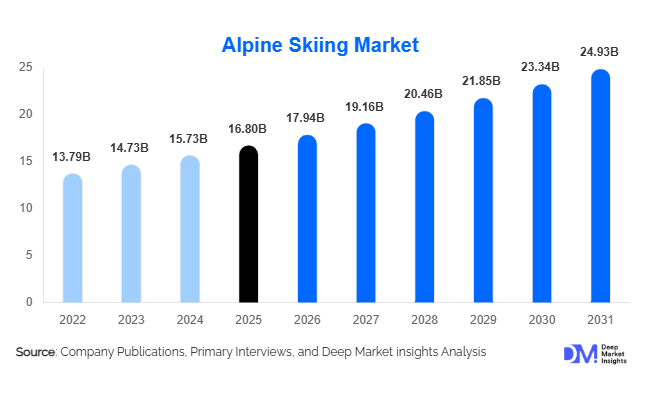
According to Deep Market Insights, the global alpine skiing market size was valued at USD 16.8 billion in 2025 and is projected to grow from USD 17.94 billion in 2026 to reach USD 24.93 billion by 2031, expanding at a CAGR of 6.8% during the forecast period (2026–2031). The alpine skiing market growth is primarily driven by increasing participation in winter sports, rising ski tourism across Europe and Asia-Pacific, and growing demand for technologically advanced ski equipment and premium alpine apparel. The expansion of luxury mountain resorts, investments in snow infrastructure, and growing interest in adventure-based recreational activities are further supporting long-term market growth globally.
Key Market Insights
- Europe dominates the alpine skiing market, accounting for nearly 41% of global demand due to its mature ski tourism ecosystem and premium alpine destinations.
- Asia-Pacific is emerging as the fastest-growing regional market, led by China, Japan, and South Korea through expanding winter sports infrastructure and tourism investments.
- Recreational skiing remains the largest application segment, contributing more than 60% of total market revenues globally.
- Premium and high-performance ski equipment are witnessing strong adoption, driven by consumer preference for lightweight materials, enhanced safety, and advanced customization.
- Sustainability is becoming a major purchasing factor, with growing demand for eco-friendly ski apparel, recyclable materials, and low-carbon manufacturing practices.
- Smart ski technologies, including AI-enabled tracking, GPS-integrated helmets, and wearable analytics, are increasingly reshaping the competitive landscape.
Alpine Skiing Market Trends
Growth of Smart and Connected Ski Equipment
The alpine skiing industry is increasingly integrating smart technologies into equipment and apparel to enhance safety, performance monitoring, and user experience. GPS-enabled helmets, biometric wearables, avalanche detection systems, and AI-powered performance tracking tools are gaining popularity among recreational and professional skiers alike. Manufacturers are introducing connected devices that provide real-time analytics related to speed, terrain mapping, body movement, and weather conditions. Younger consumers are particularly attracted to digitally enhanced skiing experiences that combine adventure sports with wearable technology. Mobile applications integrated with ski resorts are further improving customer engagement through digital lift passes, navigation support, and performance-sharing platforms. This technological transformation is enabling premium pricing opportunities while also strengthening brand differentiation in a competitive market.
Sustainable Ski Tourism and Eco-Friendly Equipment
Sustainability has emerged as a critical trend shaping the alpine skiing market globally. Consumers are increasingly prioritizing environmentally responsible ski equipment manufactured using recycled wood cores, biodegradable waxes, and low-carbon production methods. Ski resorts are also investing in renewable energy systems, electric snow groomers, sustainable accommodation infrastructure, and water-efficient snowmaking technologies to reduce environmental impact. Eco-conscious travelers are showing stronger preference for resorts and brands with carbon-neutral certifications and sustainability commitments. Circular business models such as rental subscriptions, resale platforms, and equipment refurbishment programs are also expanding rapidly, especially in Europe and North America. The focus on sustainability is expected to remain a defining factor influencing purchasing behavior and operational strategies across the industry.
Alpine Skiing Market Drivers
Rising Winter Sports Participation
The increasing popularity of winter sports and outdoor recreational activities is one of the primary drivers supporting alpine skiing market expansion. Skiing is becoming increasingly mainstream among younger demographics, families, and adventure travelers seeking experiential tourism. Governments across Europe and Asia are actively promoting winter sports participation through tourism campaigns, sports infrastructure investments, and youth development programs. Ski resorts are also introducing beginner-friendly packages, training academies, and bundled travel experiences to attract new participants. The growing popularity of alpine adventure tourism and social media-driven outdoor lifestyle trends is further accelerating participation rates globally.
Expansion of Ski Tourism Infrastructure
Significant investments in ski resorts, transportation connectivity, artificial snowmaking systems, and mountain hospitality infrastructure are driving market growth. Europe continues to modernize its mature alpine tourism ecosystem, while countries such as China, Japan, and South Korea are rapidly expanding integrated winter tourism facilities. Luxury mountain resorts combining skiing, wellness tourism, gourmet hospitality, and year-round recreation are attracting high-spending international travelers. Ski lift modernization, digital resort management systems, and improved accessibility are further enhancing customer experience and supporting tourism-driven equipment demand.
Alpine Skiing Market Restraints
Climate Variability and Shortened Ski Seasons
Climate change and unpredictable snowfall patterns remain major challenges for the alpine skiing industry. Rising temperatures are shortening ski seasons in several traditional ski regions, particularly at lower altitudes. Resorts are increasingly dependent on artificial snowmaking systems, which significantly increase energy and operational costs. Smaller resorts with limited financial capacity face growing sustainability challenges due to fluctuating snowfall conditions. Long-term climate variability may also influence tourism demand and investment decisions within vulnerable alpine destinations.
High Participation and Equipment Costs
Alpine skiing remains a relatively expensive recreational activity due to high equipment costs, resort fees, travel expenses, and accommodation charges. Premium ski gear, technical apparel, and lift passes create affordability barriers for middle-income consumers, particularly in emerging markets. While rental models and subscription-based equipment services are helping improve accessibility, overall participation costs continue to restrict broader market penetration. Seasonal demand fluctuations also create operational challenges for equipment manufacturers and tourism operators.
Alpine Skiing Market Opportunities
Expansion of Ski Tourism Across Asia-Pacific
Asia-Pacific represents one of the largest growth opportunities for the alpine skiing market. China, Japan, and South Korea are heavily investing in winter sports infrastructure, ski resorts, and tourism connectivity. Rising disposable incomes, growing middle-class travel spending, and government support for winter sports participation are significantly expanding the regional consumer base. China’s post-Winter Olympics investment cycle continues to stimulate demand for ski equipment, training academies, and integrated resort development. Emerging mountain tourism destinations in India and Central Asia also present long-term opportunities for global brands seeking geographic expansion.
Rental, Subscription, and Recommerce Business Models
The growing preference for experience-based consumption among younger consumers is creating strong opportunities for rental and subscription-based alpine skiing services. Ski resorts and equipment manufacturers are increasingly launching integrated rental ecosystems that provide seasonal leasing, premium demo programs, and digitally managed equipment subscriptions. Recommerce platforms for refurbished skis, boots, and apparel are also expanding rapidly, particularly in Europe. These business models reduce upfront participation costs while improving customer retention and recurring revenue generation for industry participants.
Report Scope
| Report Metric | Details |
|---|---|
| Market Size in 2025 | USD 16.8 Billion |
| Market Size in 2026 | USD 17.94 Billion |
| Market Size in 2031 | USD 24.93 Billion |
| CAGR | 6.8% (2026-2031) |
| Base Year for Estimation | 2025 |
| Historical Data | 2022-2024 |
| Forecast Period | 2026-2031 |
| Report Coverage | Revenue Forecast, Competitive Landscape, Supply Chain Disruption, Growth Factors, Environment & Regulatory Landscape and Trends |
| Geographies Covered | North America, Europe, APAC, Middle East and Africa, LATAM |
| Countries Covered | U.S., Canada, U.K., Germany, France, Spain, Italy, Russia, Nordic, Benelux, Rest of Europe, China, Korea, Japan, India, Australia, Singapore, Taiwan, South East Asia, Rest of Asia-Pacific, UAE, Turky, Saudi Arabia, South Africa, Egypt, Nigeria, Rest of MEA, Brazil, Mexico, Argentina, Chile, Colombia, Rest of LATAM |
Explore more data points, trends and opportunities Download Free Sample Report
Product Type Insights
Skis remain the largest product category within the alpine skiing market, accounting for nearly 31% of total industry revenues in 2025. Demand is being driven by continuous innovation in lightweight materials, carbon-fiber construction, and terrain-specific ski designs tailored for all-mountain, freestyle, and backcountry applications. Ski boots represent another major segment, with consumers increasingly seeking customized fitting solutions and enhanced comfort technologies. Helmets and protective gear are witnessing strong growth due to rising safety awareness and stricter resort regulations. Smart helmets integrated with communication systems and navigation tools are gaining traction among premium consumers. Ski apparel is also experiencing robust growth through demand for waterproof fabrics, thermal insulation technologies, and sustainable outerwear collections. Rental equipment and subscription-based ski gear services are emerging as rapidly growing sub-segments that improve accessibility for occasional and beginner skiers.
Application Insights
Recreational alpine skiing dominates the market, contributing more than 60% of global revenues due to growing participation in winter tourism and outdoor sports. Family-oriented ski vacations, beginner training programs, and adventure tourism experiences continue to support recreational demand globally. Competitive skiing remains a smaller but highly profitable segment driven by professional sports leagues, international championships, and ski academies. Ski mountaineering and backcountry skiing are among the fastest-growing applications, supported by increasing interest in adventure sports and off-piste exploration. Ski tourism applications are expanding beyond traditional winter recreation to include wellness retreats, luxury mountain experiences, and year-round alpine adventure tourism. Training academies and sports clubs are also increasing investments in advanced performance equipment and digital coaching systems.
Distribution Channel Insights
Specialty sports retail stores continue to dominate alpine skiing equipment sales due to consumer preference for professional fitting services, expert product guidance, and customized recommendations. Brand-owned retail outlets are also expanding rapidly as manufacturers strengthen direct-to-consumer engagement strategies. E-commerce platforms represent the fastest-growing distribution channel, supported by growing digital adoption, online customization tools, and direct shipping capabilities. Ski resorts and rental shops remain highly important distribution channels, particularly for beginner and occasional skiers seeking short-term equipment access. Recommerce platforms and second-hand equipment marketplaces are gaining popularity among price-sensitive consumers and environmentally conscious buyers. Digital subscription platforms are further reshaping distribution by enabling recurring equipment leasing models and premium seasonal upgrade programs.
Skier Type Insights
Recreational skiers account for the largest share of the alpine skiing market, representing nearly 58% of total global revenues in 2025. This segment is supported by increasing winter tourism participation, family-oriented travel experiences, and growing accessibility through rental ecosystems. Professional and competitive skiers contribute significantly to premium equipment demand, particularly for racing skis, advanced boots, and performance apparel. Adventure and backcountry skiers represent one of the fastest-growing segments due to rising interest in alpine exploration and off-piste skiing activities. Youth and junior skiers are becoming increasingly important for long-term market development, with resorts and governments investing in beginner training programs and youth sports initiatives. Luxury leisure skiers continue to drive demand for high-end alpine apparel, exclusive resort experiences, and customized equipment solutions.
Price Category Insights
Premium ski equipment dominates the alpine skiing market, accounting for approximately 44% of global revenues in 2025. Consumers increasingly prefer high-performance products offering superior durability, advanced safety technologies, and lightweight construction. Ultra-premium and luxury ski equipment segments are particularly strong in Europe and North America, where affluent consumers prioritize customized products and exclusive alpine experiences. Mid-range products continue to appeal to mainstream recreational skiers seeking balance between performance and affordability. Entry-level equipment remains important for beginner participation and rental fleets, although competitive pricing pressures are highest within this category. Increasing consumer preference for premium outdoor recreation experiences is expected to continue supporting premiumization trends across the industry.
Explore more data points, trends and opportunities Download Free Sample Report
Alpine Skiing Market Segmentations
By Product Type
- Skis
- Ski Boots
- Ski Bindings
- Ski Poles
- Helmets & Protective Gear
- Ski Apparel
- Ski Goggles & Accessories
- Rental & Subscription Equipment
By Application
- Recreational Alpine Skiing
- Competitive & Professional Skiing
- Ski Mountaineering
- Backcountry & Adventure Skiing
- Ski Tourism & Resort Activities
- Ski Training Academies
By Distribution Channel
- Specialty Sports Retail Stores
- Brand-Owned Stores
- E-commerce Platforms
- Ski Resorts & Rental Shops
- Department Stores & Hypermarkets
- Second-Hand & Recommerce Platforms
By Skier Type
- Recreational Skiers
- Professional Skiers
- Adventure & Backcountry Skiers
- Youth & Junior Skiers
- Luxury Leisure Skiers
By Price Category
- Entry-Level
- Mid-Range
- Premium
- Ultra-Premium & Luxury
Regional Insights
North America
North America accounts for nearly 30% of the global alpine skiing market, led primarily by the United States and Canada. Strong winter sports participation, established ski resort infrastructure, and high consumer spending on premium sporting equipment continue to support regional growth. Colorado, Utah, California, British Columbia, and Alberta remain major demand centers for alpine tourism and ski equipment sales. Consumers in North America are increasingly adopting smart ski technologies, premium outerwear, and advanced safety equipment. The region also benefits from a strong luxury ski tourism ecosystem and growing interest in backcountry skiing and adventure recreation.
Europe
Europe remains the dominant regional market with approximately 41% share of global revenues in 2025. Countries including Switzerland, Austria, France, Italy, and Germany represent major hubs for alpine tourism, luxury skiing experiences, and premium equipment demand. The Alps continue to attract millions of international visitors annually, supporting strong equipment replacement cycles and resort investments. European consumers are highly receptive to sustainable ski apparel, eco-certified resorts, and recyclable equipment technologies. Austria and Switzerland remain global leaders in high-end alpine tourism and luxury ski infrastructure development.
Asia-Pacific
Asia-Pacific is the fastest-growing regional market and is projected to expand at a CAGR exceeding 8% during the forecast period. China remains the largest growth engine due to extensive investments in winter sports infrastructure following the Winter Olympics. Japan continues to benefit from strong domestic ski culture and rising inbound tourism demand. South Korea is also witnessing growing participation in recreational skiing supported by resort modernization and increasing outdoor sports spending. India is emerging as a niche growth market through Himalayan tourism development and growing interest in winter adventure activities among younger consumers.
Latin America
Latin America represents a smaller but steadily developing alpine skiing market led by Chile and Argentina. Ski tourism across the Andes region is supporting moderate equipment demand, particularly among affluent consumers and international visitors. The region is gradually attracting investments in ski resort modernization and tourism infrastructure. Seasonal tourism flows from North America and Europe also contribute to equipment rental and hospitality revenues within the regional market.
Middle East & Africa
The Middle East & Africa region currently represents a niche market but is witnessing gradual expansion through luxury tourism and indoor skiing facilities. The UAE remains a key regional demand center due to indoor ski resorts and strong outbound winter tourism spending. Saudi Arabia’s tourism diversification strategy may create future opportunities for winter recreation infrastructure development. South Africa also contributes to regional demand through outbound ski tourism and luxury travel spending among high-income consumers.
Key Players in the Alpine Skiing Market
- Amer Sports
- Rossignol Group
- HEAD
- K2 Sports
- Fischer Sports
- Tecnica Group
- Scott Sports
- Burton
- Decathlon
- Columbia Sportswear
- Helly Hansen
- Mammut
- Volkl
- Black Diamond Equipment
- Salomon