Top 5 Companies in Snack Bars Market | Leading Brands and Industry Insights
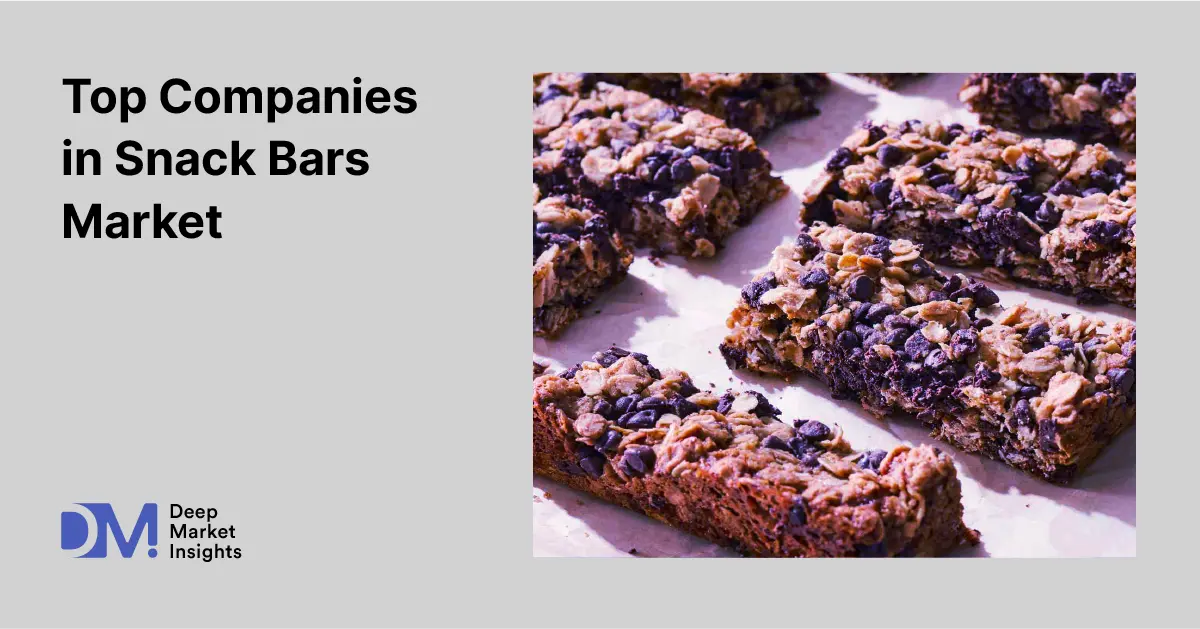
The global snack bars industry has evolved into a highly competitive segment within the packaged food and convenience food categories. Demand for protein bars, granola bars, cereal bars, and meal replacement bars continues to rise due to changing consumer lifestyles and increasing preference for portable nutrition products. The market records annual consumption exceeding 18 billion snack bars globally, with North America accounting for nearly 38% of total retail sales volume. Average retail pricing ranges from USD 1.2 to USD 3.5 per bar depending on ingredients, protein content, and branding strategy.The Top Companies in Snack Bars Market are focusing on product innovation, clean-label ingredients, high-protein formulations, and retail expansion to strengthen market positioning. Large FMCG corporations and specialized nutrition brands dominate shelf space across supermarkets, convenience stores, e-commerce platforms, and fitness retail chains.
Top Companies in Snack Bars Market: Market Overview with Data
The snack bars sector represents one of the fastest-moving packaged snack categories across developed and emerging economies. Protein bars account for nearly 42% of global snack bar sales volume, while granola and cereal bars contribute approximately 35% of category demand. North America remains the leading production hub with more than 7 billion units manufactured annually, followed by Europe and Asia-Pacific.Private-label brands currently represent around 14% of total market sales, especially in value-oriented retail channels. Premium organic and plant-based snack bars are typically priced between USD 2.5 and USD 4.0 per unit, while mainstream cereal bars average USD 0.8 to USD 1.8 per unit.
Retail distribution plays a critical role in category performance. Supermarkets and hypermarkets contribute nearly 52% of total snack bar sales, while online sales channels now account for approximately 11% of category revenue. Ingredient sourcing also influences pricing structures, particularly for products using whey protein isolate, nuts, seeds, and natural sweeteners.Manufacturers continue to expand production capacities to meet increasing demand for high-protein and low-sugar products. Several leading companies operate manufacturing facilities with annual production capacities exceeding 500 million bars.
Top Companies in Snack Bars Market
Mars Incorporated

Mars Incorporated remains one of the most influential participants among the Top Companies in Snack Bars Market through its KIND Snacks portfolio. The company strengthened its position in healthy snacking after acquiring KIND North America and expanding distribution globally. KIND offers protein bars, nut bars, breakfast bars, and plant-based snack products targeting health-conscious consumers.Mars generates annual revenue exceeding USD 45 billion across its broader FMCG operations, while KIND products maintain strong penetration across North American retail chains. The company distributes products in more than 80 countries and continues to invest in low-sugar and clean-label product development.Mars focuses heavily on premium positioning, ingredient transparency, and sustainability initiatives. Its snack bars generally retail between USD 1.5 and USD 3.2 per bar depending on formulation and packaging format. Strong retail partnerships and advanced supply chain capabilities allow Mars to maintain significant shelf visibility across supermarkets and convenience stores.
General Mills Inc.
General Mills is a major player in the snack bars category through brands such as Nature Valley, Fiber One, and Larabar. Nature Valley alone sells billions of bars annually across granola, protein, and nut-based product segments. The company leverages its strong retail distribution network to maintain broad market coverage in North America, Europe, and Asia-Pacific.General Mills reported annual corporate revenue above USD 19 billion, with convenient snacking representing a key growth segment. Nature Valley products are widely recognized for mainstream affordability, with average retail prices ranging from USD 0.7 to USD 2.0 per bar.The company emphasizes innovation in protein-rich formulations, reduced sugar recipes, and gluten-free options. General Mills also benefits from economies of scale in sourcing oats, grains, nuts, and sweeteners. Its manufacturing infrastructure supports high-volume production across multiple snack categories, enabling cost efficiency and stable supply chain operations.
Kellogg Company
Kellogg Company maintains a strong presence in the snack bars market through brands including RXBAR, Nutri-Grain, and Special K bars. RXBAR has become particularly prominent within the premium protein bar segment due to its simple ingredient positioning and high-protein formulations.Kellogg generates annual revenues exceeding USD 13 billion and maintains manufacturing and distribution operations in over 180 countries. RXBAR products typically contain 12 grams of protein per serving and retail between USD 2 and USD 3.5 per unit.The company’s strategy focuses on health-oriented snacking, sports nutrition positioning, and functional ingredients. Kellogg also invests in direct-to-consumer sales and e-commerce partnerships to strengthen digital channel performance. The company benefits from diversified category exposure across cereals, snacks, and frozen foods, which supports integrated supply chain management and retailer negotiations.
Mondelez International

Mondelez International has expanded aggressively in the snack bars category through brands such as CLIF Bar and Grenade. The acquisition of CLIF Bar significantly strengthened Mondelez’s position in performance nutrition and organic snack segments.Mondelez reports annual revenues of more than USD 36 billion and operates in over 150 countries. CLIF Bar products maintain strong visibility in fitness retail stores, supermarkets, and outdoor recreation channels. Premium energy and protein bars from the company generally retail between USD 1.8 and USD 3.8 per bar.The company prioritizes premiumization, sports nutrition, and sustainable ingredient sourcing. Mondelez also leverages extensive global distribution capabilities and strategic retail partnerships. Investments in plant-based protein ingredients and functional nutrition products continue to support portfolio expansion within high-margin snack categories.
PepsiCo Inc.
PepsiCo participates in the snack bars industry through Quaker Chewy bars and other nutrition-focused snack offerings. The company benefits from one of the world’s largest food and beverage distribution systems, serving retail, convenience, and institutional customers globally.PepsiCo generates annual revenues above USD 90 billion, with convenient foods representing a major business segment. Quaker snack bars are positioned within the value and family-oriented category, typically priced between USD 0.6 and USD 1.5 per bar.The company focuses on mass-market accessibility, flavor innovation, and retail expansion. PepsiCo’s extensive procurement capabilities provide advantages in oat sourcing, packaging procurement, and logistics management. The company also invests in healthier formulations with reduced sugar and higher fiber content to align with changing consumer preferences.
The Simply Good Foods Company
The Simply Good Foods Company has established a strong market presence through brands such as Atkins and Quest Nutrition. Quest bars are particularly popular in the sports nutrition and ketogenic snack categories due to their high-protein and low-carbohydrate formulations.The company generates annual revenues exceeding USD 1 billion and continues to expand retail penetration across supermarkets, fitness stores, and online platforms. Quest bars typically contain 15-21 grams of protein and retail between USD 2 and USD 3 per unit.The company’s strategy centers on functional nutrition, active lifestyle branding, and product innovation. Investments in high-protein ingredients, fiber blends, and sugar alternatives support differentiation within competitive premium snack categories. Strong consumer loyalty and targeted marketing toward fitness-focused consumers continue to strengthen brand positioning.
Competitive Landscape Insights
The snack bars market remains moderately consolidated, with the top five manufacturers controlling approximately 48% of total global category revenue. Premium health-focused brands continue gaining shelf space, while private-label suppliers compete aggressively in value-oriented retail channels.Protein bars represent the highest-margin segment, often achieving retail prices 40% to 60% higher than traditional cereal bars. Premium organic bars using non-GMO ingredients, nuts, seeds, and plant proteins also maintain stronger pricing power compared to conventional products.Supply chain efficiency plays a crucial role in profitability. Major manufacturers secure long-term sourcing agreements for oats, whey protein, almonds, peanuts, and natural sweeteners to reduce raw material volatility. Packaging automation and high-volume production lines help large manufacturers maintain operational efficiency.Regional competition differs significantly. North America leads premium product innovation, while Europe demonstrates strong demand for organic and low-sugar formulations. Asia-Pacific manufacturers increasingly focus on affordable nutrition bars targeted at urban consumers and convenience retail expansion.
The Top Companies in Snack Bars Market continue to strengthen their positions through innovation, premiumization, and retail expansion strategies. Companies including Mars Incorporated, General Mills, Kellogg Company, Mondelez International, PepsiCo, and The Simply Good Foods Company dominate the competitive landscape through strong brand portfolios and extensive distribution capabilities.The industry remains highly dynamic, driven by rising demand for portable nutrition, protein-rich products, and clean-label ingredients. Pricing strategies, manufacturing scale, ingredient sourcing, and retailer partnerships remain critical competitive factors for companies operating in the snack bars category. As consumer preferences continue shifting toward healthier snacking options, leading manufacturers are expected to prioritize product differentiation and operational efficiency to maintain long-term market leadership.