7 Leading Brands in Plant-Based Meat Market, Positioning, and Competitive Insights
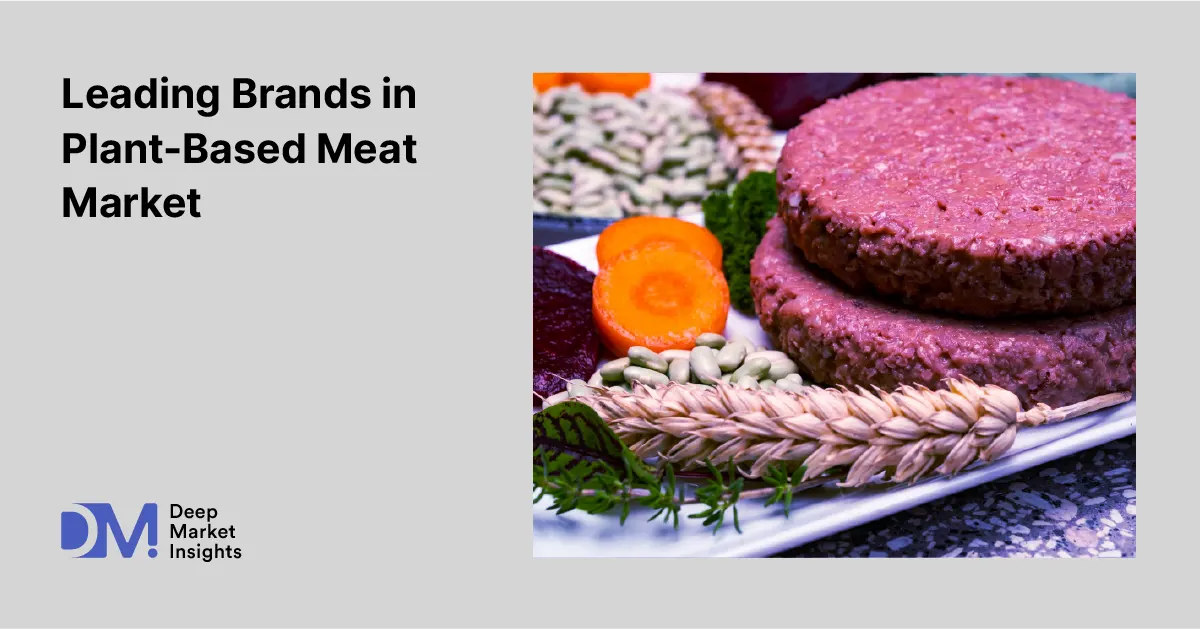
The global plant-based meat industry has evolved into a strategic growth segment for food manufacturers, retailers, and ingredient suppliers. Demand for alternative protein products continues to expand across retail, foodservice, and institutional procurement channels due to changing consumer preferences, sustainability initiatives, and protein diversification strategies. The Leading Brands in Plant-Based Meat Market includes products such as burgers, sausages, nuggets, minced meat, and ready-to-cook alternatives produced using soy, pea protein, wheat gluten, and mycoprotein.Global plant-based meat consumption exceeded 3.5 million tons in 2025, while average retail pricing ranged between USD 6 and USD 11 per pound depending on ingredient composition and product format. North America accounted for nearly 38% of total branded sales volume, followed by Europe with approximately 30% market participation. Large FMCG companies and specialized protein innovators continue to expand manufacturing capacity and product portfolios to strengthen retail penetration and foodservice partnerships.
Leading Brands in Plant-Based Meat Market Overview with Data
The Leading Brands in Plant-Based Meat Market operates through a combination of dedicated plant-protein manufacturers, multinational food corporations, and ingredient technology providers. Branded retail products dominate shelf visibility in supermarkets, while quick-service restaurants and institutional catering drive bulk procurement demand.Soy protein and pea protein remain the primary raw materials in commercial-scale production. Pea protein-based products account for nearly 42% of branded plant-based meat launches due to improved texture and allergen positioning. Average wholesale pricing for plant-based burger patties ranges from USD 3.20 to USD 5.80 per kilogram for large-volume procurement contracts.The United States remains the largest regional production hub, with annual plant-based meat output exceeding 1.2 million tons. Europe contributes approximately 900,000 tons annually, supported by strong retail adoption in Germany, the United Kingdom, and the Netherlands. Asia-Pacific is emerging as a manufacturing and consumption center, particularly in China and Singapore, where foodservice integration continues to expand.Retail distribution accounts for nearly 64% of total sales volume, while foodservice contributes close to 28%. Premium product categories, including clean-label and non-GMO alternatives, command pricing premiums of 15% to 25% over conventional frozen meat substitutes.
Leading Brands in Plant-Based Meat Market
Beyond Meat
Beyond Meat is one of the most recognized companies in the global plant-based meat category. The company focuses on pea protein-based burgers, sausages, beef crumbles, and chicken alternatives sold across retail and foodservice channels. Beyond Meat operates production facilities in the United States, Europe, and China to support international distribution.The company generated annual revenues exceeding USD 340 million from plant-based product sales and maintains distribution partnerships with more than 130,000 retail and foodservice outlets globally. Beyond Meat products are typically positioned within the premium pricing category, with retail burger packs averaging USD 7 to USD 9.Its strategy centers on ingredient innovation, texture enhancement, and restaurant collaborations. The company also invests heavily in reducing sodium and saturated fat levels to improve product positioning among health-conscious consumers and institutional buyers.
Impossible Foods

Impossible Foods has established a strong position in the Leading Brands in Plant-Based Meat Market through its soy-based meat alternatives and proprietary heme technology. The company’s product portfolio includes burgers, chicken nuggets, sausage patties, and ground meat substitutes targeted at both retail and quick-service restaurant segments.Impossible Foods distributes products through more than 40,000 restaurant locations and thousands of retail stores across North America and Asia-Pacific. Its manufacturing network supports annual production volumes estimated above 500,000 tons.The company differentiates itself through flavor replication technology and aggressive foodservice expansion. Wholesale pricing for foodservice burger patties ranges between USD 4 and USD 6 per kilogram depending on order volume. Impossible Foods continues to prioritize restaurant partnerships and institutional supply agreements to strengthen long-term procurement relationships.
Nestlé

Nestlé has expanded rapidly within the plant-based protein sector through its Garden Gourmet and Sweet Earth product lines. The company leverages its global FMCG infrastructure to scale plant-based burgers, mince products, deli slices, and frozen meals across Europe and North America.Nestlé operates multiple manufacturing facilities dedicated to alternative proteins and benefits from annual corporate revenues exceeding USD 100 billion across all segments. Plant-based food products represent a growing strategic category within its prepared meals portfolio.The company’s broad distribution network enables competitive pricing across retail chains. Mid-tier plant-based products under the Garden Gourmet brand are typically priced 10% to 15% lower than premium competitors. Nestlé’s strategy emphasizes product accessibility, clean-label development, and retail expansion through large supermarket partnerships.
Tyson Foods

Tyson Foods has entered the alternative protein sector through its Raised & Rooted brand and strategic investments in plant-based innovation. The company combines conventional protein expertise with advanced manufacturing capabilities to serve retail and institutional foodservice buyers.Tyson Foods operates one of the largest protein distribution networks globally, with food products sold in more than 140 countries. Its plant-based offerings include nuggets, burgers, blended protein products, and ready-to-cook formats designed for mass-market adoption.The company focuses on pricing competitiveness and supply chain efficiency. Large-scale procurement contracts allow Tyson Foods to reduce manufacturing costs and offer mid-range pricing between USD 5 and USD 7 for consumer-ready retail packs. Its market strategy prioritizes retail penetration, co-manufacturing partnerships, and hybrid protein innovation.
Quorn Foods

Quorn Foods is a major producer of mycoprotein-based meat alternatives. The company has developed a strong presence across Europe and selected international markets through frozen ready meals, meat-free mince, nuggets, and deli products.Quorn Foods produces more than 20,000 tons of mycoprotein annually through fermentation-based manufacturing systems. The company maintains strong market penetration in the United Kingdom, where plant-based product consumption remains among the highest in Europe.Its strategy emphasizes sustainability positioning and low-carbon protein production. Quorn products are widely adopted in institutional catering, including schools and healthcare foodservice operations. The company also benefits from stable pricing structures due to vertically integrated fermentation production.
Maple Leaf Foods

Maple Leaf Foods has strengthened its alternative protein operations through its Lightlife and Field Roast brands. The company offers plant-based sausages, burgers, deli slices, and gourmet meat alternatives targeted at premium retail consumers.Maple Leaf Foods invested more than USD 300 million into plant-protein manufacturing infrastructure and innovation capabilities. Its North American distribution network supports broad supermarket penetration and foodservice expansion.Field Roast products occupy the premium segment, with specialty sausages and artisan-style products often priced between USD 8 and USD 12 per retail package. Maple Leaf Foods focuses on culinary differentiation, clean ingredient labeling, and premium merchandising strategies to compete with mainstream plant-based meat brands.
Unilever

Unilever participates in the Leading Brands in Plant-Based Meat Market through its The Vegetarian Butcher brand. The company supplies burgers, mince products, chicken-style alternatives, and ready-to-cook formats to retail and foodservice customers across Europe and Asia.The Vegetarian Butcher products are distributed in more than 55 countries and maintain strong visibility in quick-service restaurant chains. Unilever leverages global procurement capabilities and large-scale FMCG logistics to optimize pricing and retail availability.The company’s strategy centers on international expansion and menu integration with restaurant operators. Product innovation focuses on texture consistency and scalable manufacturing. Unilever also continues to expand regional production capacity to reduce transportation costs and improve delivery efficiency.
Competitive Landscape Insights
The Leading Brands in Plant-Based Meat Market remains moderately consolidated, with the top five companies controlling nearly 58% of branded retail sales volume. Specialized plant-protein companies dominate premium product innovation, while multinational FMCG firms compete through distribution strength and pricing leverage.Premium plant-based meat products account for approximately 35% of total retail sales, with average pricing ranging from USD 8 to USD 12 per package. Mid-range products represent nearly 45% of market volume and are increasingly favored by large retailers seeking mass-market adoption.Supply chain management has become a critical competitive factor. Pea protein sourcing remains concentrated in North America and Europe, while soy protein processing capacity continues to expand in Asia-Pacific. Companies investing in vertically integrated production systems achieve lower ingredient procurement costs and improved pricing stability.Foodservice partnerships also influence market positioning. Restaurant chains increasingly require large-volume supply contracts, standardized product quality, and flexible packaging formats. Companies with diversified manufacturing footprints maintain stronger resilience against raw material volatility and transportation disruptions.
The Leading Brands in Plant-Based Meat Market continues to attract strong commercial interest from FMCG companies, foodservice operators, retailers, and institutional buyers. Market competition increasingly depends on manufacturing scale, ingredient innovation, pricing efficiency, and distribution reach.Companies such as Beyond Meat, Impossible Foods, Nestlé, Tyson Foods, Quorn Foods, Maple Leaf Foods, and Unilever continue to shape the competitive landscape through capacity expansion, product diversification, and retail partnerships. Procurement professionals and decision-makers evaluating suppliers within the plant-based meat category should prioritize companies with scalable production systems, stable raw material sourcing, and differentiated product portfolios capable of supporting long-term commercial growth.