Top 6 Companies in Home Cleaning Products Market | Industry Leaders and Competitive Insights
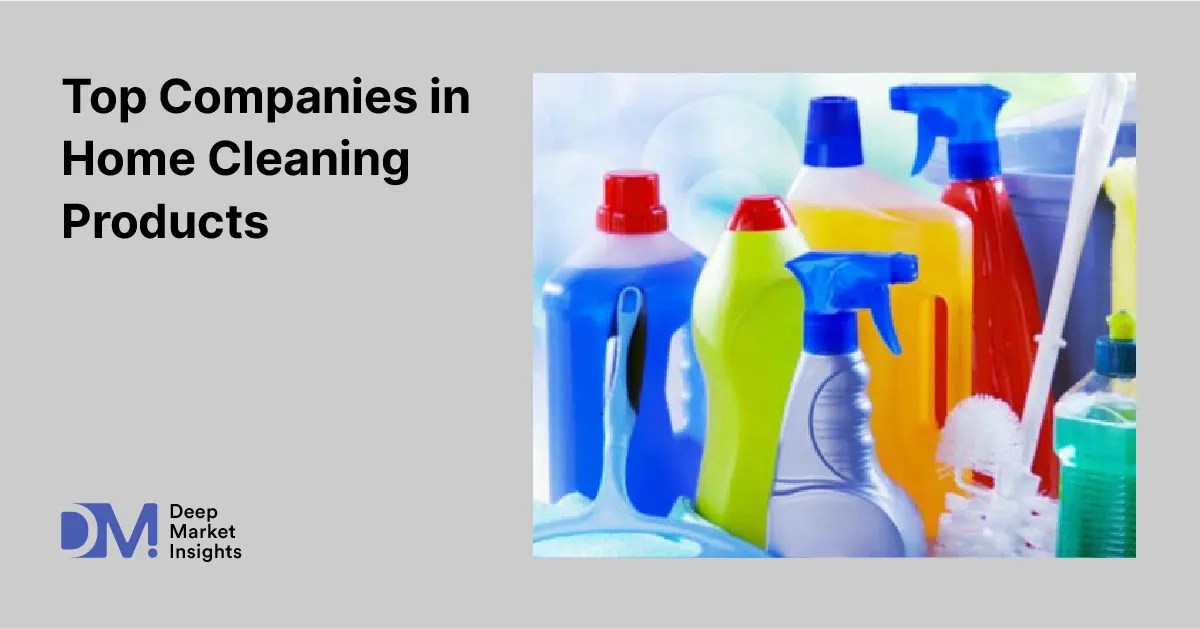
The global market for home cleaning products continues to expand as commercial buyers, retailers, hospitality operators, and institutional procurement teams prioritize hygiene, sanitation, and premium cleaning performance. Demand for surface cleaners, laundry detergents, dishwashing liquids, disinfectants, floor cleaners, and specialty hygiene products has increased across both developed and emerging economies. The market processes more than 45 million tons of cleaning formulations annually, while institutional and household consumption exceeds 320 billion units globally each year. Average retail pricing for mainstream liquid cleaning products ranges between USD 2 and USD 12 per unit depending on concentration, packaging, and category positioning.The Top Companies in Home Cleaning Products market compete through large-scale manufacturing capacity, product innovation, sustainability initiatives, and extensive global distribution networks. Leading companies maintain production facilities across North America, Europe, and Asia-Pacific to support procurement efficiency and regional supply chain resilience.
Top Companies in Home Cleaning Products Market: Market Overview with Data
The home cleaning products market includes detergents, disinfectants, toilet cleaners, floor cleaners, glass cleaners, dishwashing products, air care products, and specialty hygiene formulations used in residential and institutional settings. Large multinational manufacturers dominate the premium and mass-market segments, while regional suppliers compete on pricing and localized distribution.Asia-Pacific accounts for nearly 38% of global cleaning product consumption due to high population density and expanding urban households. North America contributes approximately 27% of total market demand, supported by premium product adoption and high per-capita spending on hygiene products. Europe represents close to 24% of market consumption with strong demand for eco-friendly and concentrated formulations.
Manufacturing output remains highly concentrated among global FMCG companies with integrated supply chains and chemical processing capabilities. Large producers operate manufacturing capacities exceeding 500,000 metric tons annually across detergent and surface care categories. Average bulk procurement prices for institutional cleaning liquids range from USD 1.5 to USD 4 per liter depending on formulation strength and packaging volume.Private-label penetration has also increased in retail channels, accounting for nearly 18% of supermarket cleaning product sales in several developed markets. However, branded products continue to dominate premium disinfectant and specialty hygiene categories because of consumer trust and established performance benchmarks.
Top Companies in Home Cleaning Products Market
Procter & Gamble
Procter & Gamble is one of the largest participants in the global home cleaning sector through brands such as Tide, Ariel, Mr. Clean, Dawn, and Swiffer. The company generates annual revenue exceeding USD 80 billion, with a substantial share contributed by fabric care and home care categories. P&G operates manufacturing and distribution facilities in more than 70 countries, enabling large-scale product availability across retail and institutional channels.The company focuses heavily on premiumization and product innovation, particularly in concentrated detergents and sustainable packaging formats. Its laundry detergent portfolio alone processes millions of units weekly across North America and Europe. P&G maintains a strong position in premium detergent categories where unit pricing often ranges between USD 8 and USD 20 for advanced formulations. The company’s strategy emphasizes automation, digital supply chain visibility, and retail partnerships with major global supermarket chains.
Unilever
Unilever maintains a diversified home care portfolio that includes Domestos, Cif, OMO, Surf, and Sunlight. The company serves more than 190 countries and reports annual turnover above EUR 59 billion across its consumer goods businesses. Home care products represent a significant contributor to its emerging-market growth strategy.Unilever focuses on affordability and high-volume market penetration, particularly across Asia, Africa, and Latin America. Its detergent and surface care production facilities support both mass-market and premium product segments. In several developing markets, small-format cleaning sachets priced below USD 1 contribute substantially to sales volume growth.The company has also expanded investments in plant-based ingredients and recyclable packaging to meet sustainability procurement requirements from retailers and institutional buyers. Its broad geographic footprint and localized manufacturing strategy help reduce transportation costs and improve supply reliability.
Reckitt
Reckitt is a major player in disinfectants and hygiene-focused cleaning products through brands such as Lysol, Dettol, Finish, and Vanish. The company records annual revenue above GBP 14 billion and maintains strong positioning in hygiene-sensitive categories.Reckitt’s competitive advantage lies in disinfectant leadership and strong consumer trust in antibacterial formulations. The company experienced significant volume expansion in disinfectant sprays and wipes, with some production facilities operating at utilization rates above 90% during periods of elevated hygiene demand.Its Finish brand also maintains strong market penetration in automatic dishwashing products across Europe and North America. Reckitt continues to invest in scientific product validation, premium packaging, and institutional cleaning partnerships. Pricing for premium disinfectant products commonly ranges from USD 4 to USD 15 depending on pack size and formulation.
Henkel
Henkel operates a strong home care and laundry division through brands such as Persil, Purex, Bref, and Pril. The company generates annual sales exceeding EUR 21 billion and operates manufacturing facilities across Europe, Asia-Pacific, and the Americas.Henkel’s laundry and home care business is recognized for concentrated detergents and efficient cleaning technologies designed to reduce water and energy usage. The company has increased investments in enzyme-based formulations and refillable packaging systems to align with sustainability-focused procurement trends.Henkel holds a strong presence in European detergent markets where premium liquid detergents account for a major portion of retail shelf space. The company also supports industrial and institutional buyers with large-volume packaging solutions. Its product portfolio spans both economy and premium categories, helping the company maintain broad pricing flexibility.
SC Johnson
SC Johnson is a privately held manufacturer known for brands including Windex, Pledge, Scrubbing Bubbles, Glade, and Mr Muscle. The company operates in more than 70 countries and maintains a strong presence in household cleaning aerosols, air care, and specialty surface cleaners.SC Johnson differentiates itself through specialized formulations and premium household cleaning products targeted at urban consumers and institutional buyers. The company’s aerosol and spray production volumes remain substantial, particularly in North America and Europe where demand for convenience-oriented cleaning formats continues to rise.The company invests heavily in packaging innovation, fragrance development, and sustainability initiatives such as recycled plastic usage. Premium spray cleaners from SC Johnson frequently retail between USD 3 and USD 10 per unit depending on category and geography. Its strong retailer relationships support shelf visibility across supermarkets, convenience stores, and e-commerce channels.
Kao Corporation
Kao Corporation is a major Asian participant in the home cleaning products market through brands such as Attack, Magiclean, and Quickle. The company reports annual revenue exceeding JPY 1.5 trillion and maintains significant manufacturing operations across Japan and Southeast Asia.Kao focuses on high-efficiency cleaning formulations, concentrated laundry detergents, and compact packaging solutions tailored for densely populated urban markets. The company maintains strong market share in Japan’s premium laundry detergent category where compact liquid detergents continue to outperform traditional powder formats.Kao’s regional strategy emphasizes innovation, product safety, and low-water cleaning performance. Its manufacturing facilities integrate advanced automation systems that improve production consistency and reduce operational waste. The company also benefits from strong retail distribution partnerships throughout East and Southeast Asia.
Competitive Landscape Insights
The Top Companies in Home Cleaning Products market remains moderately consolidated, with the five largest manufacturers controlling approximately 55% to 60% of total branded market sales. Premium multinational brands dominate detergent, disinfectant, and specialty cleaning categories, while regional firms remain competitive in low-cost surface cleaners and commodity detergents.Pricing segmentation is divided into economy, mid-range, and premium categories. Economy cleaning products typically retail below USD 3 per unit, while premium concentrated detergents and disinfectants can exceed USD 15 per package. Institutional procurement contracts often prioritize concentrated bulk formats because they reduce transportation and storage costs.Supply chain efficiency has become a major competitive differentiator. Leading manufacturers increasingly localize production to reduce raw material volatility and shipping expenses. Packaging materials, surfactants, fragrances, and specialty chemicals remain critical input categories influencing production costs. Many global suppliers now maintain regional warehousing hubs to support faster replenishment cycles and reduce retail stock disruptions.
E-commerce distribution has also expanded rapidly, particularly for subscription-based detergent and disinfectant products. Digital sales channels now account for more than 15% of cleaning product sales in several developed markets, creating additional opportunities for direct-to-consumer distribution and institutional ordering platforms.The Top Companies in Home Cleaning Products market continue to compete through manufacturing scale, product innovation, sustainability initiatives, and extensive global distribution capabilities. Companies such as Procter & Gamble, Unilever, Reckitt, Henkel, SC Johnson, and Kao Corporation maintain strong positions because of diversified product portfolios and established brand recognition.For procurement professionals and B2B buyers, supplier selection increasingly depends on pricing stability, production capacity, sustainability compliance, and regional supply chain efficiency. Premiumization, concentrated formulations, and environmentally responsible packaging continue to shape purchasing decisions across retail and institutional channels. As competition intensifies, leading manufacturers are expected to strengthen automation, local manufacturing, and digital distribution strategies to maintain operational efficiency and long-term market positioning.


