Sheep Milk Market Size
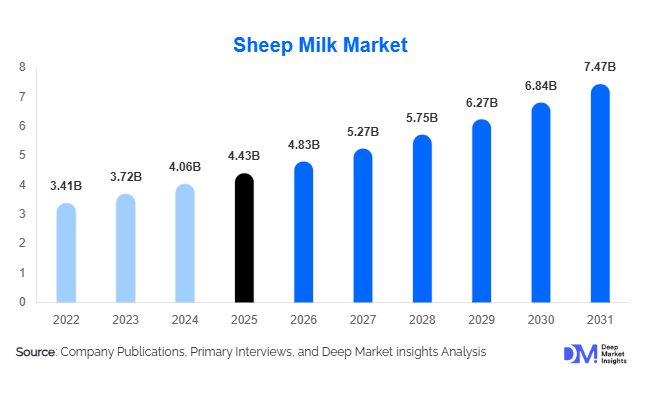
According to Deep Market Insights, the global sheep milk market size was valued at USD 4.43 billion in 2025 and is projected to grow from USD 4.83 billion in 2026 to reach USD 7.47 billion by 2031, expanding at a CAGR of 9.1% during the forecast period (2026–2031). The sheep milk market growth is primarily driven by increasing consumer preference for nutrient-rich dairy products, rising demand for artisanal sheep milk cheese, and expanding applications of sheep milk in infant nutrition, functional foods, and premium dairy formulations.
Key Market Insights
- Sheep milk is increasingly gaining traction as a premium dairy alternative, supported by its high protein, calcium, and digestibility advantages over conventional cow milk.
- Artisanal and specialty sheep milk cheese production continues to expand globally, particularly across Mediterranean countries with strong export demand.
- Europe dominates the global sheep milk market, driven by established dairy traditions, advanced cheese manufacturing infrastructure, and strong regional consumption patterns.
- Asia-Pacific is emerging as the fastest-growing market, fueled by rising premium nutrition demand, growing middle-class spending, and expanding infant formula consumption.
- Organic and grass-fed sheep milk products are witnessing strong adoption, reflecting growing consumer preference for sustainable and clean-label dairy products.
- Technological advancements in dairy processing and cold-chain logistics are improving shelf life, international trade efficiency, and accessibility of sheep milk products globally.
sheep milk market latest trends
Premium and Functional Dairy Consumption Expanding Rapidly
The sheep milk market is increasingly benefiting from the global premiumization trend within the dairy industry. Consumers are actively seeking high-protein, mineral-rich, and naturally digestible dairy products that align with health-focused lifestyles. Sheep milk products, particularly cheeses, yogurts, and protein powders, are being positioned as premium alternatives to conventional dairy. Functional nutrition applications are also accelerating, with sheep milk increasingly used in sports nutrition, immunity-support beverages, and clinical nutrition products. Manufacturers are introducing fortified formulations enriched with probiotics, omega fatty acids, and bioactive proteins to cater to rising demand for functional foods. This trend is especially visible across Europe, North America, Japan, and Australia where premium dairy consumption continues to rise steadily.
Growth of Organic and Sustainable Sheep Dairy Farming
Sustainability and ethical sourcing trends are significantly influencing the sheep milk industry. Consumers are increasingly preferring organically produced and grass-fed dairy products due to environmental and animal welfare considerations. Governments across Europe and Oceania are supporting sustainable livestock farming through subsidies and certification programs, encouraging dairy producers to expand organic sheep farming operations. Dairy brands are also emphasizing transparent sourcing, low-carbon production, and traceability systems to strengthen consumer trust. In addition, regenerative grazing practices and renewable-energy-powered dairy processing facilities are gaining traction among premium sheep milk manufacturers. The growing popularity of sustainable dairy products is expected to create long-term growth opportunities for organic sheep milk producers globally.
sheep milk market drivers
Rising Demand for Nutrient-Dense Dairy Products
Increasing consumer awareness regarding nutrition and wellness is a major factor driving the sheep milk market. Sheep milk naturally contains higher levels of protein, calcium, zinc, and beneficial fatty acids compared to conventional cow milk, making it highly attractive among health-conscious consumers. The demand for nutrient-rich dairy products is particularly strong within premium retail categories and sports nutrition applications. Consumers seeking minimally processed and high-functional-value foods are increasingly adopting sheep milk-based products such as yogurt, protein concentrates, and fortified beverages.
Growing Global Consumption of Specialty Cheese
The rapid expansion of artisanal and gourmet cheese consumption globally is significantly supporting sheep milk market growth. Premium sheep milk cheeses such as Manchego, Pecorino, Roquefort, and Feta continue to witness strong international demand across restaurants, hotels, and specialty retail stores. Rising culinary tourism and growing consumer interest in Mediterranean diets are further boosting sheep milk cheese exports. Hospitality and foodservice industries are increasingly incorporating specialty sheep milk products into premium menus, particularly in North America, Europe, and Asia-Pacific.
global market restraints
Limited Production Scalability and High Costs
One of the major restraints within the sheep milk market is limited large-scale production capacity. Sheep produce significantly lower milk yields compared to dairy cattle, resulting in higher production costs per liter. Seasonal lactation cycles, grazing requirements, and specialized farm management further increase operational expenses. As a result, sheep milk products remain substantially more expensive than conventional dairy products, restricting penetration within price-sensitive consumer segments and developing economies.
Cold-Chain and Supply Chain Limitations
The distribution of sheep milk products requires highly efficient cold-chain logistics due to the perishability of dairy products and the premium nature of sheep milk derivatives. Several emerging markets still lack adequate refrigerated transportation and dairy storage infrastructure, limiting product availability outside urban centers. International trade barriers, food safety compliance requirements, and inconsistent dairy regulations across countries also create operational challenges for exporters and manufacturers operating in the global sheep milk market.
sheep milk industry key opportunities
Expansion of Sheep Milk Infant Formula
The growing premium infant nutrition industry presents substantial opportunities for sheep milk manufacturers. Sheep milk possesses naturally digestible proteins and high micronutrient density, making it increasingly suitable for infant formula applications. Rising birth rates across emerging economies and increasing consumer willingness to invest in premium infant nutrition products are encouraging dairy companies to launch specialized sheep milk infant formula brands. China, Southeast Asia, and Europe are expected to emerge as key growth markets for these products over the coming years.
Functional Nutrition and Sports Supplement Applications
The expanding global sports nutrition and functional food industries are creating new opportunities for sheep milk-derived ingredients. Sheep milk protein concentrates and whey derivatives are increasingly used in recovery beverages, nutritional supplements, and immunity-support products. Aging populations, preventive healthcare trends, and growing consumer focus on active lifestyles are accelerating demand for high-quality dairy proteins. Manufacturers are investing in advanced filtration and drying technologies to develop premium protein ingredients targeted at sports nutrition and clinical nutrition applications.
Report Scope
| Report Metric | Details |
|---|---|
| Market Size in 2025 | USD 4.43 Billion |
| Market Size in 2026 | USD 4.83 Billion |
| Market Size in 2031 | USD 7.47 Billion |
| CAGR | 9.1% (2026-2031) |
| Base Year for Estimation | 2025 |
| Historical Data | 2022-2024 |
| Forecast Period | 2026-2031 |
| Report Coverage | Revenue Forecast, Competitive Landscape, Supply Chain Disruption, Growth Factors, Environment & Regulatory Landscape and Trends |
| Geographies Covered | North America, Europe, APAC, Middle East and Africa, LATAM |
| Countries Covered | U.S., Canada, U.K., Germany, France, Spain, Italy, Russia, Nordic, Benelux, Rest of Europe, China, Korea, Japan, India, Australia, Singapore, Taiwan, South East Asia, Rest of Asia-Pacific, UAE, Turky, Saudi Arabia, South Africa, Egypt, Nigeria, Rest of MEA, Brazil, Mexico, Argentina, Chile, Colombia, Rest of LATAM |
Explore more data points, trends and opportunities Download Free Sample Report
Product Type Insights
Sheep milk cheese continues to dominate the global sheep milk market, accounting for the largest share of industry revenue due to strong international demand for premium artisanal and specialty dairy products. The segment benefits from high consumer preference for authentic Mediterranean and European cheeses such as Manchego, Pecorino, Feta, and Roquefort, which maintain strong retail and foodservice penetration across North America and Europe. The leading driver supporting cheese segment dominance is the growing global consumer inclination toward premium, protein-rich, and naturally aged dairy products with distinct flavor profiles. Rising gourmet food consumption, increasing restaurant utilization, and expanding premium retail shelf space are further strengthening segment growth worldwide.UHT sheep milk and flavored dairy beverages are emerging rapidly within urban retail channels, particularly across Asia-Pacific and the Middle East where premium dairy consumption is expanding steadily. Convenience-oriented consumption patterns and rising disposable incomes are encouraging the adoption of ready-to-drink sheep milk beverages among younger demographics. Organic sheep milk products are recording the fastest growth rates across the industry as consumers increasingly prioritize sustainable farming practices, clean-label ingredients, hormone-free dairy products, and environmentally responsible food production. Growing certification initiatives and rising consumer trust in organic dairy products are expected to further accelerate long-term segment expansion.
Application Insights
The food and beverage sector remains the largest application segment within the global sheep milk market, driven by extensive utilization in cheeses, yogurts, desserts, bakery products, gourmet dairy ingredients, and premium dairy beverages. The leading driver supporting segment dominance is the strong global demand for high-value specialty dairy products across retail, hospitality, and foodservice industries. Premiumization trends within the dairy sector, combined with increasing consumer willingness to pay for artisanal and authentic products, continue supporting strong market penetration for sheep milk ingredients across developed and emerging economies.Cosmetic and personal care applications are also emerging steadily, with sheep milk increasingly incorporated into premium skincare, wellness, and beauty products due to its vitamin, mineral, and fatty acid content. Luxury cosmetic brands are utilizing sheep milk extracts in moisturizers, soaps, and anti-aging formulations to target premium consumer segments. Pharmaceutical and clinical nutrition applications are gradually developing as healthcare industries continue exploring the nutritional benefits of sheep milk-derived ingredients for elderly nutrition, recovery-focused nutrition solutions, and specialized dietary products.
Distribution Channel Insights
Supermarkets and hypermarkets remain the dominant distribution channels for sheep milk products due to expanding premium dairy shelf space, rising organized retail penetration, and growing consumer accessibility to specialty dairy products. The leading driver supporting segment leadership is the increasing availability of premium and imported dairy products within modern retail chains across urban markets globally. Large retail operators continue expanding refrigerated dairy sections and premium cheese offerings to cater to rising consumer demand for gourmet food products.Foodservice distribution channels, including hotels, restaurants, gourmet cafés, and luxury hospitality operators, are also contributing significantly to market demand, particularly for specialty cheese and premium dairy ingredients. International cuisine trends and rising gourmet dining culture are encouraging greater incorporation of sheep milk cheeses within restaurant menus globally. Manufacturers are increasingly investing in digital retail strategies, premium packaging innovations, and brand-focused marketing campaigns to strengthen product visibility, improve consumer engagement, and enhance premium positioning within competitive dairy markets.
End-Use Industry Insights
The food and beverage industry accounts for the largest share of global sheep milk demand due to extensive utilization in cheese manufacturing, cultured dairy products, gourmet foods, and premium dairy beverages. The leading driver supporting this segment is the expanding global demand for specialty and value-added dairy products among premium consumer groups. Increasing consumer interest in authentic culinary experiences and artisanal dairy products continues to stimulate demand across both retail and foodservice industries.Hospitality and luxury foodservice sectors continue driving premium cheese consumption globally, particularly within gourmet restaurants, luxury hotels, and international catering services. Growing tourism activity and premium dining experiences are strengthening the use of imported and artisanal sheep milk products across hospitality markets. Cosmetic manufacturers are gradually increasing the incorporation of sheep milk extracts into skincare and wellness products, creating additional diversification opportunities for dairy processors and ingredient suppliers seeking higher-margin product applications.
Explore more data points, trends and opportunities Download Free Sample Report
Sheep Milk Market Segmentations
By Product Type
- Raw Sheep Milk
- Pasteurized Sheep Milk
- UHT Sheep Milk
- Powdered Sheep Milk
- Condensed Sheep Milk
- Fermented Sheep Milk Products
By Derivative Product
- Sheep Milk Cheese
- Sheep Milk Yogurt
- Sheep Milk Butter
- Sheep Milk Ice Cream
- Sheep Milk Infant Formula
- Sheep Milk Protein Ingredients
- Sheep Milk Whey Products
- Sheep Milk Desserts
- Sheep Milk Beverages
By Nature
- Organic
- Conventional
By Application
- Dairy Products
- Bakery & Confectionery
- Infant Nutrition
- Clinical Nutrition
- Functional Foods
- Sports Nutrition
- Cosmetics & Personal Care
- Pharmaceuticals
By Distribution Channel
- Supermarkets & Hypermarkets
- Convenience Stores
- Specialty Dairy Stores
- Online Retail
- Direct-to-Consumer Sales
- Foodservice Distribution
- Institutional Sales
Regional Insights
North America
North America represents a significant market for premium sheep milk products, led primarily by the United States and Canada. Rising demand for artisanal cheese, organic dairy products, premium nutrition products, and functional food applications is supporting market growth across the region. Health-conscious consumers and gourmet food trends continue driving strong imports of sheep milk cheeses from Europe, particularly within metropolitan and affluent urban markets. Specialty retailers, gourmet supermarkets, and premium foodservice operators are increasingly expanding their sheep milk product portfolios to cater to evolving consumer preferences.The primary driver supporting regional market growth is the rapidly increasing consumer demand for premium and specialty dairy products with high nutritional value and clean-label positioning. Additionally, rising awareness regarding digestibility benefits associated with sheep milk products, combined with increasing adoption of Mediterranean dietary patterns, continues to accelerate regional consumption. Expanding e-commerce grocery platforms, premium restaurant culture, and growing investments in artisanal dairy production are further strengthening long-term market opportunities across North America.
Europe
Europe dominates the global sheep milk market, accounting for approximately 52% of global revenue in 2025. Spain, Italy, Greece, and France remain leading producers due to their extensive sheep farming infrastructure, advanced dairy processing capabilities, and longstanding cheese-making traditions. Spain alone contributes a substantial portion of global sheep milk cheese exports, particularly through Manchego production. Strong consumer preference for authentic regional cheeses, PDO-certified products, and premium organic dairy continues supporting European market leadership.The leading driver supporting regional growth is the strong cultural and historical consumption of traditional sheep milk cheeses across European countries. Government support for protected designation products, advanced dairy cooperatives, and sustainable sheep farming practices continue strengthening regional production capacity and export competitiveness. Rising demand for artisanal cheeses across international markets, combined with expanding premium dairy tourism and gourmet food consumption, is further supporting continuous growth throughout the European sheep milk industry.
Asia-Pacific
Asia-Pacific is the fastest-growing regional market for sheep milk products, supported by rising middle-class incomes, increasing premium dairy consumption, rapid urbanization, and expanding infant nutrition demand. China is emerging as a major importer and domestic producer of sheep milk products due to rapid growth in premium infant formula consumption and rising consumer preference for high-quality imported dairy products. India, Japan, Australia, and New Zealand are also witnessing increasing demand for specialty dairy products, premium cheese, and functional nutrition applications.The major driver fueling regional growth is the rapid expansion of premium infant nutrition and health-oriented dairy consumption among urban consumers. Increasing westernization of diets, rising awareness regarding functional dairy benefits, and growing disposable incomes are accelerating sheep milk product adoption across both developed and developing Asian economies. Expanding e-commerce grocery platforms, improving cold-chain infrastructure, and strong investments in premium dairy retail channels are further contributing to long-term regional market expansion.
Latin America
Latin America is gradually developing as an emerging market for sheep milk products, particularly in Brazil and Argentina where premium dairy consumption continues to increase steadily. Gourmet cheese demand, hospitality sector expansion, rising urban disposable incomes, and growing exposure to international cuisines are supporting market development across the region. Regional dairy producers are increasingly exploring specialty sheep milk cheese manufacturing to diversify premium dairy portfolios and enhance export competitiveness.The leading driver supporting regional growth is the increasing demand for artisanal and gourmet dairy products among urban middle-class consumers. Expanding tourism activity, growth of premium restaurant chains, and increasing penetration of organized retail channels are creating favorable opportunities for specialty dairy product sales. Additionally, improving domestic dairy processing capabilities and growing interest in value-added dairy production are expected to support future market expansion across Latin America.
Middle East & Africa
The Middle East & Africa region is witnessing rising demand for premium imported sheep milk products due to expanding luxury hospitality sectors, growing affluent consumer populations, and increasing consumption of premium dairy products. Gulf countries including the UAE and Saudi Arabia are increasingly importing premium sheep milk cheese, specialty yogurts, and artisanal dairy products to cater to high-income consumers and international tourism markets. South Africa continues to emerge as a regional producer of artisanal sheep milk products targeting both premium domestic consumers and export markets.The primary driver supporting regional market growth is the rapid expansion of luxury hospitality, tourism, and premium foodservice industries across the Gulf region. Rising disposable incomes, increasing western food consumption patterns, and strong demand for imported gourmet dairy products are accelerating market penetration. Investments in premium retail infrastructure, international hotel developments, and upscale dining establishments are expected to support long-term demand growth for sheep milk products across the Middle East & Africa region.
Key Players in the Sheep Milk Market
- Fonterra Co-operative Group
- Bellwether Farms
- Maui Milk
- Spring Sheep Milk Co
- OVINO
- Ferndale Farmstead
- Roquefort Vernieres
- Shepherd Gourmet Dairy
- Meredith Dairy
- Secret Lands Farm
- Sarda Affumicati
- Casa de Ovejas
- Origin Earth
- Manchega Oveja Negra
- Ewe Move Dairy