Hotel Linen Market Size
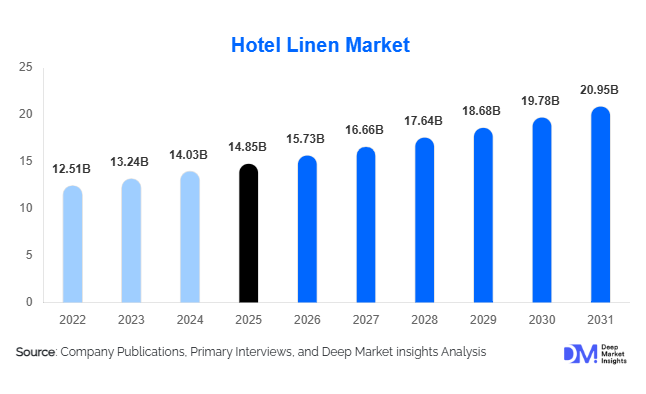
According to Deep Market Insights, the global hotel linen market size was valued at USD 14.85 billion in 2025 and is projected to grow from USD 15.73 billion in 2026 to reach USD 20.95 billion by 2031, expanding at a CAGR of 5.9% during the forecast period (2026–2031). The hotel linen market growth is primarily driven by the expansion of the global hospitality industry, increasing hotel construction activities, rising tourism, and growing emphasis on premium guest experiences. Hotels are increasingly investing in high-quality bed linen, bath linen, and table linen to enhance customer satisfaction, strengthen brand positioning, and improve guest retention. Furthermore, rising sustainability initiatives across the hospitality sector are encouraging the adoption of organic cotton, recycled fibers, and environmentally certified textile products. Continuous refurbishment of hotels, increasing replacement cycles for commercial linen, and technological advancements in textile manufacturing are further supporting long-term market expansion.
Key Market Insights
- Bed linen remains the largest product segment, accounting for nearly 47% of the global market owing to higher replacement frequency and greater inventory requirements per hotel room.
- Asia-Pacific dominates the global hotel linen market, supported by rapid hotel construction, increasing tourism, and expanding international hospitality chains across China, India, Southeast Asia, and Australia.
- Sustainable hotel linen procurement is becoming a major purchasing criterion, with global hotel brands increasingly adopting organic cotton, recycled polyester blends, and eco-certified textile products.
- Luxury and upscale hotels continue to drive premium linen demand, investing in higher thread-count bedding, designer bath linen, customized embroidery, and decorative textile collections to improve guest satisfaction.
- Digital procurement platforms and RFID-enabled linen management systems are transforming hospitality supply chains by improving inventory visibility, reducing operational losses, and optimizing replacement cycles.
- Commercial textile manufacturers are investing heavily in automation, water-efficient dyeing technologies, and sustainable production facilities to improve production efficiency while meeting increasingly stringent environmental regulations.
Hotel Linen Market Trends
Sustainable Hospitality Textiles Becoming Industry Standard
Environmental sustainability has become one of the defining trends shaping the global hotel linen market. International hotel operators are integrating Environmental, Social, and Governance (ESG) objectives into procurement strategies, resulting in increasing demand for organic cotton, recycled polyester, bamboo fibers, and low-impact textile manufacturing processes. Manufacturers are investing in water-saving dyeing technologies, renewable energy-powered production facilities, biodegradable packaging, and circular textile recycling programs to align with evolving customer expectations. Sustainability certifications such as OEKO-TEX®, GOTS, and Better Cotton are increasingly influencing supplier selection among multinational hotel groups. Beyond environmental benefits, sustainable linen solutions also enhance hotel brand reputation, improve customer loyalty, and support corporate sustainability reporting, making eco-friendly textiles a long-term competitive advantage for suppliers.
Smart Linen Management and Digital Procurement Expanding Rapidly
The adoption of digital technologies across hotel operations is transforming linen procurement and inventory management. Hotels are increasingly implementing RFID-enabled linen tracking systems that provide real-time visibility into inventory movement, laundry cycles, replacement schedules, and asset utilization. Artificial intelligence-based inventory forecasting, cloud-based procurement platforms, and automated ordering systems are improving operational efficiency while reducing linen losses and procurement costs. Commercial laundries are also integrating predictive analytics to optimize washing frequencies and extend product lifespan. These technological advancements enable hotel operators to reduce operational expenses, improve service consistency, and maintain higher quality standards while strengthening relationships with strategic linen suppliers.
Hotel Linen Market Drivers
Expansion of Global Hospitality Infrastructure
The continuous expansion of hotels, resorts, serviced apartments, and mixed-use hospitality developments remains one of the strongest growth drivers for the hotel linen market. Governments across Asia-Pacific, the Middle East, and several emerging tourism economies are investing significantly in tourism infrastructure, airports, convention centers, and hospitality corridors. International hotel chains continue expanding into secondary cities while independent hotels increasingly renovate their properties to remain competitive. Every newly constructed hotel generates substantial first-time demand for bed linen, bath linen, table linen, decorative textiles, and replacement inventory, creating stable long-term procurement opportunities for manufacturers worldwide.
Growing Focus on Guest Comfort and Premium Hospitality Experiences
Customer expectations regarding hotel accommodation continue to evolve, placing greater emphasis on comfort, cleanliness, luxury, and overall sleep quality. Hotels increasingly differentiate themselves through premium bedding collections, luxury bath towels, spa robes, embroidered linen, and high-thread-count cotton products. Online travel reviews frequently reference bedding quality and room cleanliness, encouraging hotel operators to invest in superior textile products that improve customer satisfaction scores and repeat bookings. This premiumization trend has significantly increased average linen expenditure per hotel room, particularly within upscale, luxury, and boutique hospitality segments.
Hotel Linen Market Restraints
Volatility in Raw Material Prices
The hotel linen market remains highly sensitive to fluctuations in cotton prices, energy costs, transportation expenses, and labor wages. Cotton production is influenced by weather conditions, agricultural output, and geopolitical factors, resulting in periodic price volatility that directly impacts manufacturing costs. Since hospitality procurement contracts often span multiple years, manufacturers face margin pressure when raw material costs increase unexpectedly. Freight cost fluctuations and global supply chain disruptions further complicate pricing strategies for exporters supplying international hotel groups.
High Operational and Replacement Costs for Hospitality Operators
Commercial hotel linen experiences intensive daily usage, frequent industrial laundering, chemical exposure, and repeated handling, resulting in relatively short product lifecycles compared to residential textiles. Hotels must maintain multiple linen sets per room while regularly replacing worn products to preserve service quality. Rising laundry expenses, labor shortages, increasing utility costs, and inventory management challenges continue to elevate the total cost of ownership for hotel operators. Budget hotels often delay replacement cycles or prioritize lower-cost products, limiting demand growth within price-sensitive accommodation segments.
Hotel Linen Market Opportunities
Growing Adoption of Sustainable and Certified Textile Products
The increasing emphasis on responsible sourcing presents significant opportunities for manufacturers capable of supplying environmentally certified hospitality textiles. International hotel brands are actively incorporating organic cotton, recycled fibers, biodegradable packaging, and traceable supply chains into procurement frameworks. Suppliers investing in sustainable manufacturing technologies, water recycling systems, renewable energy, and carbon reduction initiatives are strengthening their competitive positioning while securing long-term supply agreements with multinational hospitality companies. As sustainability increasingly influences purchasing decisions, eco-certified hotel linen is expected to represent one of the fastest-growing product categories over the forecast period.
Rapid Hotel Development Across Emerging Tourism Markets
Emerging economies continue to represent substantial untapped opportunities for hotel linen manufacturers. Countries including India, Saudi Arabia, Vietnam, Indonesia, the United Arab Emirates, and several African tourism destinations are witnessing significant hotel construction supported by government tourism initiatives and foreign direct investment. International hotel brands are expanding aggressively into these markets, creating strong first-time procurement demand for hospitality textiles. Additionally, increasing refurbishment activity among existing hotels and the rapid expansion of boutique hotels, wellness resorts, and serviced apartments provide recurring opportunities for premium linen suppliers seeking long-term growth.
Report Scope
| Report Metric | Details |
|---|---|
| Market Size in 2025 | USD 14.85 Billion |
| Market Size in 2026 | USD 15.73 Billion |
| Market Size in 2031 | USD 20.95 Billion |
| CAGR | 5.9% (2026-2031) |
| Base Year for Estimation | 2025 |
| Historical Data | 2022-2024 |
| Forecast Period | 2026-2031 |
| Report Coverage | Revenue Forecast, Competitive Landscape, Supply Chain Disruption, Growth Factors, Environment & Regulatory Landscape and Trends |
| Geographies Covered | North America, Europe, APAC, Middle East and Africa, LATAM |
| Countries Covered | U.S., Canada, U.K., Germany, France, Spain, Italy, Russia, Nordic, Benelux, Rest of Europe, China, Korea, Japan, India, Australia, Singapore, Taiwan, South East Asia, Rest of Asia-Pacific, UAE, Turky, Saudi Arabia, South Africa, Egypt, Nigeria, Rest of MEA, Brazil, Mexico, Argentina, Chile, Colombia, Rest of LATAM |
Explore more data points, trends and opportunities Download Free Sample Report
Product Type Insights
Bed linen dominates the global hotel linen market, accounting for approximately 46.8% of total market revenue in 2025. Products including bed sheets, pillowcases, duvet covers, comforters, blankets, and mattress protectors constitute the largest procurement category owing to their high replacement frequency and the requirement for multiple inventory sets per occupied room. International hotel chains generally maintain three to five linen sets for each guest room to ensure uninterrupted operations during laundering and peak occupancy periods. Increasing guest expectations for premium sleep experiences have encouraged hotels to adopt higher thread-count cotton bedding, luxury duvets, and breathable fabric blends that improve comfort while enhancing brand perception.
Bath linen represents the second-largest product segment, driven by strong demand for bath towels, hand towels, face towels, bathrobes, bath mats, and spa towels across hotels and wellness resorts. Growth in luxury hospitality and wellness tourism has accelerated investments in premium terry towels with superior absorbency and durability. Table linen, including banquet cloths, napkins, runners, and placemats, continues to benefit from the expansion of hotel restaurants, convention facilities, and event venues. Decorative linen, including curtains, cushion covers, upholstery fabrics, and throws, is witnessing increasing adoption among boutique hotels and luxury properties seeking to enhance interior aesthetics and strengthen guest experiences through customized room designs.
Material Insights
Cotton remains the dominant material segment, contributing nearly 58.4% of the global hotel linen market in 2025. Hotels continue to prioritize cotton because of its exceptional softness, breathability, moisture absorption, and long-term durability under repeated commercial laundering. Premium hospitality brands increasingly procure Egyptian cotton, Pima cotton, and organic cotton collections to differentiate guest experiences while supporting sustainability commitments. Organic cotton demand has grown significantly as multinational hotel groups integrate environmentally responsible procurement policies into their global sourcing strategies.
Cotton-polyester blended fabrics continue to gain market share due to their excellent balance between comfort, wrinkle resistance, durability, and lower maintenance costs. Polyester-based hospitality textiles are widely used within economy and mid-scale hotels because they provide extended product life and faster drying characteristics. Bamboo fibers, recycled polyester, hemp-based textiles, and other sustainable materials are emerging as high-growth categories, particularly among eco-conscious hotels seeking environmentally certified products. Manufacturers are increasingly investing in innovative textile blends that combine premium guest comfort with improved lifecycle performance and reduced environmental impact.
Hotel Category Insights
Upscale hotels account for the largest share of hotel linen procurement, representing approximately 29.7% of global market demand in 2025. These establishments invest heavily in premium bedding, decorative textiles, bathrobes, luxury towels, banquet linen, and specialty spa products to enhance guest satisfaction and strengthen competitive positioning. Frequent refurbishment cycles, higher occupancy rates, and greater emphasis on customer experience contribute to sustained procurement volumes within this category.
Luxury hotels generate the highest average expenditure per room despite representing a smaller share of total hotel inventory. These properties increasingly specify high-thread-count cotton bedding, designer table linen, embroidered bathrobes, and customized hospitality textiles that reflect brand identity. Mid-scale and upper midscale hotels continue to generate stable demand owing to the rapid expansion of international franchise brands across emerging economies. Boutique hotels and wellness resorts are becoming increasingly important customers for customized linen solutions, premium decorative fabrics, and environmentally certified textile products that support differentiated guest experiences.
Distribution Channel Insights
Direct sales remain the leading distribution channel, accounting for nearly 48.6% of global hotel linen procurement. Large hotel chains typically negotiate long-term supply agreements directly with manufacturers to standardize product specifications, improve quality consistency, and achieve volume-based pricing advantages across multiple properties. Direct procurement also enables centralized inventory management, improved supply chain visibility, and customized product development tailored to hospitality brand standards.
Hospitality procurement organizations and specialized institutional distributors continue to play an important role, particularly among independent hotels and regional hospitality groups. Commercial laundry providers increasingly offer managed linen programs that combine rental services, inventory management, and scheduled replacement solutions, enabling hotels to reduce capital expenditure while maintaining operational efficiency. Digital B2B procurement platforms are experiencing rapid adoption as hospitality operators seek streamlined purchasing processes, transparent pricing, real-time inventory management, and integrated supplier communication. The expansion of digital procurement ecosystems is expected to improve purchasing efficiency and strengthen manufacturer-customer relationships throughout the forecast period.
Explore more data points, trends and opportunities Download Free Sample Report
Hotel Linen Market Segmentations
By Product Type
- Bed Linen
- Bath Linen
- Table Linen
- Kitchen Linen
- Decorative Linen
By Material
- Cotton
- Cotton-Polyester Blends
- Polyester
- Linen (Flax)
- Bamboo Fiber
- Microfiber
- Recycled Fibers
- Others
By Hotel Category
- Economy Hotels
- Mid-Scale Hotels
- Upper Midscale Hotels
- Upscale Hotels
- Luxury Hotels
- Boutique Hotels
- Resorts
- Serviced Apartments
- Extended Stay Hotels
By Distribution Channel
- Direct Sales
- Hospitality Procurement Companies
- Hotel Supply Dealers
- Manufacturers' Sales Network
- B2B E-commerce Platforms
Regional Insights
North America
North America accounted for approximately 27.6% of the global hotel linen market in 2025, supported by one of the world's most mature hospitality industries. The United States represents nearly 22.4% of global market demand, driven by extensive hotel infrastructure, continuous renovation activities, premium hospitality standards, and high replacement rates for commercial linen. Luxury hotels, convention centers, casino resorts, and business hotels continue investing in premium bedding and bath linen to maintain competitive differentiation. Canada contributes steady demand through expanding tourism, while Mexico benefits from increasing investments in coastal resorts and international hospitality brands serving both leisure and business travelers.
Europe
Europe represents the second-largest regional market, accounting for approximately 25.3% of global revenue. Germany, the United Kingdom, France, Italy, and Spain collectively dominate regional demand owing to their mature hospitality industries and strong tourism sectors. European hotel operators place considerable emphasis on sustainability, encouraging procurement of organic cotton, recycled fibers, and environmentally certified textile products. Luxury hotels and boutique accommodations across Western Europe continue upgrading premium bedding collections to enhance customer experience while complying with increasingly stringent environmental regulations.
Asia-Pacific
Asia-Pacific leads the global hotel linen market with approximately 31.8% market share in 2025 and is projected to remain the fastest-growing regional market throughout the forecast period. China contributes nearly 13.2% of global demand, supported by extensive hotel construction, domestic tourism, and growing international hospitality investments. India represents approximately 5.6% of the global market and is expected to register one of the highest growth rates through 2031, driven by rapid hotel development, government tourism initiatives, religious tourism, and increasing foreign investment in hospitality infrastructure. Japan, Australia, South Korea, Thailand, Vietnam, Indonesia, Malaysia, and Singapore continue generating significant demand through expanding tourism, luxury resorts, and international hotel chain expansion.
Latin America
Latin America accounted for approximately 6.9% of global market revenue in 2025. Brazil remains the region's largest hospitality textile market due to its sizeable domestic tourism industry and expanding hotel infrastructure. Mexico continues witnessing increasing procurement demand from international beach resorts and urban business hotels. Argentina, Chile, Colombia, and Peru are gradually expanding hospitality investments, creating additional opportunities for premium and mid-range hotel linen suppliers.
Middle East & Africa
The Middle East & Africa represented approximately 8.4% of the global hotel linen market in 2025 and is expected to record one of the fastest regional growth rates through 2031. Saudi Arabia and the United Arab Emirates continue investing heavily in luxury hotels, mega tourism developments, and integrated hospitality projects under national economic diversification programs. Qatar is also expanding hotel infrastructure to support international tourism growth. Across Africa, South Africa, Egypt, Morocco, and Kenya remain major hospitality markets, supported by growing international tourist arrivals, hotel modernization projects, and increasing investment in luxury safari lodges and resort developments.
Key Players in the Hotel Linen Market
- Standard Textile Co., Inc.
- WestPoint Home
- 1888 Mills
- Venus Group
- Welspun Living Limited
- Trident Group
- Frette
- Garnier-Thiebaut
- Sferra
- Beaumont & Brown