Global Anmum Materna Market Size
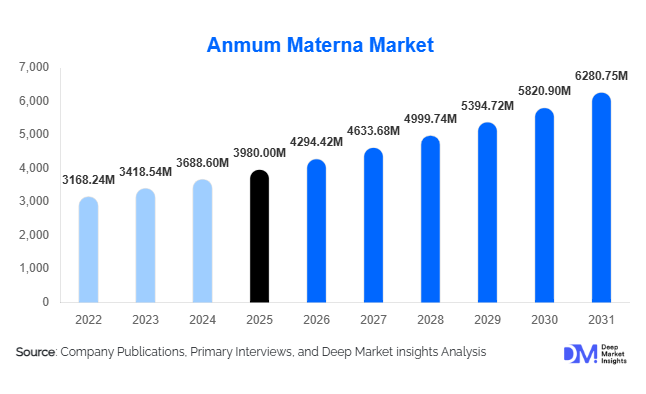
According to Deep Market Insights, the global Anmum Materna Market size was valued at USD 3,980 million in 2026 and is projected to grow from USD 4,294.42 million in 2027 to reach USD 6,280.75 million by 2031, expanding at a CAGR of 7.9% during the forecast period (2026–2031). The market growth is primarily driven by increasing awareness of prenatal and postnatal nutrition, rising demand for clinically formulated maternal supplements, growing prevalence of micronutrient deficiencies among pregnant women, and the rapid expansion of premium maternal nutrition products across both developed and emerging economies. In addition, the shift toward functional nutrition-such as DHA-enriched, probiotic-fortified, and plant-based formulations-is significantly strengthening global market adoption.
Key Market Insights
- Maternal nutrition is shifting from basic supplementation to clinically validated functional nutrition, with DHA, folic acid, iron, and probiotics becoming standard inclusions in premium formulations.
- Asia-Pacific dominates global demand, driven by high birth rates, expanding middle-class income, and increasing healthcare awareness among urban populations.
- Online retail and pharmacy-led distribution channels are rapidly expanding, reshaping purchasing behavior through subscription models and digital health recommendations.
- Premium maternal milk powders are gaining strong traction, particularly in North America and Europe, where consumers prioritize organic and clean-label formulations.
- Healthcare professional recommendations significantly influence adoption, especially in hospital-linked prenatal and postnatal nutrition programs.
- Plant-based and lactose-free maternal nutrition is emerging as a niche but fast-growing segment, driven by dietary preferences and allergen concerns.
Global Anmum Materna Market Latest Trends
Shift Toward Functional and Personalized Maternal Nutrition
The market is witnessing a strong transition toward functional maternal nutrition products designed for specific health outcomes. Manufacturers are increasingly developing trimester-specific formulations that address evolving nutritional needs during pregnancy. Products enriched with DHA for fetal brain development, iron for anemia prevention, and probiotics for digestive health are gaining widespread acceptance. Additionally, personalized nutrition solutions supported by digital health platforms are emerging, enabling tailored dietary recommendations based on maternal age, pregnancy stage, and medical conditions such as gestational diabetes or high-risk pregnancies.
Expansion of Plant-Based and Clean-Label Products
Consumer preference for clean-label, organic, and plant-based maternal nutrition products is growing rapidly. This trend is particularly strong in developed regions such as Europe and North America, where health-conscious consumers demand transparency in ingredient sourcing and minimal processing. Plant-based maternal milk powders derived from soy, oats, and almonds are gaining traction among lactose-intolerant and vegan consumers. This shift is encouraging manufacturers to invest in alternative protein technologies and sustainable sourcing practices to align with evolving dietary expectations.
Global Anmum Materna Market Drivers
Rising Awareness of Maternal and Fetal Health Nutrition
Increasing awareness of the importance of maternal nutrition is one of the most significant drivers of market growth. Healthcare professionals increasingly recommend maternal milk powders as part of prenatal care to reduce risks such as low birth weight, anemia, and developmental deficiencies. Governments and health organizations are also promoting maternal nutrition awareness programs, particularly in developing economies, contributing to higher adoption rates of fortified nutritional products.
Growth in Premiumization and Functional Ingredient Adoption
The demand for premium maternal nutrition products enriched with functional ingredients such as DHA, choline, probiotics, and omega-3 fatty acids is rising rapidly. Consumers are willing to pay higher prices for scientifically backed formulations that offer targeted health benefits. This premiumization trend is enabling manufacturers to expand profit margins while also driving product innovation and differentiation in a highly competitive market.
Expansion of Digital Retail and Healthcare Ecosystems
The rapid expansion of e-commerce platforms, online pharmacies, and telehealth ecosystems is significantly improving product accessibility. Digital channels now influence a large portion of purchasing decisions, especially among urban consumers. Subscription-based delivery models and personalized digital recommendations are enhancing customer retention and encouraging repeat purchases, particularly in developed markets.
Global Anmum Materna Market Restraints
High Product Cost and Limited Affordability in Emerging Markets
Despite growing awareness, the relatively high cost of premium maternal milk powders limits adoption in price-sensitive regions. Products enriched with DHA, probiotics, and organic ingredients are often unaffordable for low- and middle-income consumers. This creates a gap between demand awareness and actual market penetration, particularly in rural and semi-urban areas of developing economies.
Stringent Regulatory Compliance and Product Approval Barriers
The maternal nutrition market is subject to strict regulatory frameworks governing safety, labeling, and health claims. Compliance requirements vary across regions, increasing complexity for global manufacturers. Approval delays, clinical validation requirements, and rising scrutiny over nutritional claims can slow product launches and increase operational costs.
Global Anmum Materna Market Key Opportunities
Expansion in Emerging Economies Through Public Health Programs
Emerging markets such as India, China, Indonesia, Brazil, and several African nations present strong growth opportunities due to expanding maternal healthcare initiatives. Government-supported nutrition programs aimed at reducing maternal anemia and improving birth outcomes are creating institutional demand for fortified maternal milk products. Public-private partnerships are expected to play a key role in expanding product penetration in these regions.
Rise of Personalized and Digital Nutrition Solutions
The integration of artificial intelligence and digital health platforms is enabling personalized maternal nutrition recommendations. This trend allows companies to develop customized product offerings based on individual health profiles. Subscription-based nutrition services and telemedicine-supported dietary guidance are emerging as key growth channels for premium maternal milk powder brands.
Report Scope
| Report Metric | Details |
|---|---|
| Market Size in 2025 | USD 3980.00 Million |
| Market Size in 2026 | USD 4294.42 Million |
| Market Size in 2031 | USD 6280.75 Million |
| CAGR | 7.9% (2026-2031) |
| Base Year for Estimation | 2025 |
| Historical Data | 2022-2024 |
| Forecast Period | 2026-2031 |
| Report Coverage | Revenue Forecast, Competitive Landscape, Supply Chain Disruption, Growth Factors, Environment & Regulatory Landscape and Trends |
| Geographies Covered | North America, Europe, APAC, Middle East and Africa, LATAM |
| Countries Covered | U.S., Canada, U.K., Germany, France, Spain, Italy, Russia, Nordic, Benelux, Rest of Europe, China, Korea, Japan, India, Australia, Singapore, Taiwan, South East Asia, Rest of Asia-Pacific, UAE, Turky, Saudi Arabia, South Africa, Egypt, Nigeria, Rest of MEA, Brazil, Mexico, Argentina, Chile, Colombia, Rest of LATAM |
Explore more data points, trends and opportunities Download Free Sample Report
Product Type Insights
Prenatal pregnancy milk powder remains the dominant product category in the global Anmum Materna Market, primarily driven by widespread physician recommendations, increasing awareness regarding maternal nutrition, and the growing need to meet trimester-specific nutritional requirements during pregnancy. These formulations are enriched with essential nutrients such as folic acid, DHA, calcium, iron, protein, vitamins, and minerals that support fetal development while maintaining maternal health throughout pregnancy. The increasing prevalence of nutritional deficiencies among pregnant women, coupled with rising prenatal healthcare consultations, continues to strengthen demand for specialized prenatal formulations. In addition, manufacturers are introducing scientifically formulated products with clean-label ingredients, organic certifications, reduced sugar content, and enhanced digestibility, further supporting product adoption. Postpartum and lactation-focused milk powders are witnessing significant growth as awareness regarding maternal recovery, breastfeeding support, and postpartum nutritional replenishment increases across both developed and emerging economies. These formulations help restore maternal nutrient reserves while enhancing breast milk quality and supporting infant growth. Meanwhile, pre-conception nutrition products are gradually emerging as an important niche category, driven by increasing fertility planning, delayed pregnancies, and growing consumer focus on preparing the body before conception. The expanding preference for life-stage-specific nutritional solutions continues to encourage manufacturers to diversify their product portfolios, reinforcing the market's transition toward highly specialized maternal nutrition products.
Application Insights
Individual consumers represent the largest application segment, accounting for the majority of global demand as pregnant and lactating women increasingly prioritize preventive healthcare and balanced nutrition throughout the maternal journey. The segment's leadership is primarily driven by growing consumer awareness regarding the importance of prenatal and postnatal nutrition, rising disposable incomes, expanding access to nutritional information through healthcare professionals and digital platforms, and the widespread availability of maternal milk powders across both online and offline retail channels. Consumers are increasingly seeking premium formulations that offer targeted health benefits, including improved fetal brain development, enhanced immunity, digestive support, and maternal wellness. Hospitals and maternity clinics continue to expand their adoption of maternal milk powders as part of comprehensive prenatal care programs, particularly for high-risk pregnancies requiring medically supervised nutritional support. Government nutrition programs and NGO-led maternal health initiatives remain essential in addressing maternal malnutrition across developing economies by improving access to fortified nutritional products among low-income populations. Fertility clinics and maternal wellness centers are also emerging as premium application areas, where personalized nutritional counseling and customized supplementation programs are creating additional opportunities for specialized maternal milk powder products.
Distribution Channel Insights
Online retail has emerged as the fastest-growing distribution channel, supported by increasing digital penetration, expanding e-commerce ecosystems, smartphone adoption, and changing consumer purchasing behavior favoring convenience and home delivery. Digital platforms enable consumers to compare product formulations, access expert recommendations, read customer reviews, and subscribe to recurring delivery programs, significantly improving purchasing convenience and brand loyalty. Pharmacies and drug stores continue to represent one of the most trusted distribution channels, benefiting from strong healthcare professional recommendations and consumer confidence in medically endorsed maternal nutrition products. Supermarkets and hypermarkets maintain a substantial market presence by offering broad product assortments, attractive promotional campaigns, and convenient accessibility for routine household shopping, particularly across urban and suburban markets. Specialty baby stores and nutrition outlets further support premium product sales by providing expert guidance and specialized maternal healthcare products. In addition, direct-to-consumer platforms and subscription-based business models are becoming increasingly important, allowing manufacturers to strengthen consumer engagement, collect valuable customer insights, personalize product offerings, and improve long-term customer retention through recurring purchases.
Explore more data points, trends and opportunities Download Free Sample Report
Anmum Materna Market Segmentations
By Product Type
- Pre-Conception Maternal Milk Powder
- Prenatal Pregnancy Milk Powder
- Postpartum & Lactation Milk Powder
By Nutritional Formulation
- DHA & Omega-3 Enriched Formula
- Iron-Fortified Formula
- Folic Acid-Enriched Formula
- Probiotic & Digestive Health Formula
- High-Protein Formula
- Organic & Clean-Label Formula
- Plant-Based Formula
- Gestational Diabetes-Specific Formula
By Ingredient Source
- Dairy-Based Formula
- Plant-Based Formula
- Hybrid Formula
By Distribution Channel
- Online Retail
- Pharmacies & Drug Stores
- Supermarkets & Hypermarkets
- Specialty Mother & Baby Stores
- Hospital & Clinic Sales
- Direct-to-Consumer (D2C) & Subscription Models
Regional Insights
North America
North America accounts for approximately 22% of the global Anmum Materna Market, supported by high consumer awareness, advanced healthcare infrastructure, and strong demand for premium maternal nutrition products. The United States remains the largest contributor to regional demand, driven by widespread adoption of DHA-enriched, high-protein, and organic maternal milk formulations recommended by healthcare professionals. Canada also contributes steadily through increasing maternal wellness awareness and preventive healthcare practices. Regional growth is primarily fueled by rising maternal age, growing incidence of high-risk pregnancies, increasing prenatal healthcare expenditure, strong physician recommendations, expanding availability of scientifically formulated nutritional products, continuous product innovation, and high consumer preference for clean-label and clinically validated maternal nutrition solutions.
Europe
Europe represents nearly 19% of global demand, supported by stringent regulatory standards, strong consumer confidence in quality-certified nutritional products, and increasing preference for organic and clean-label formulations. Germany, the United Kingdom, and France remain the leading regional markets due to high healthcare awareness and well-established maternal healthcare systems. The region continues to witness growing demand for scientifically validated formulations containing natural ingredients, probiotics, vitamins, and essential minerals. Market growth is further supported by favorable maternity healthcare policies, increasing focus on preventive nutrition, rising adoption of organic maternal products, expanding consumer demand for sustainable packaging, and continuous innovation by leading nutrition manufacturers introducing premium maternal formulations.
Asia-Pacific
Asia-Pacific dominates the global Anmum Materna Market with approximately 41% share, led by China and India, which collectively account for a significant proportion of regional births and maternal nutrition demand. Rapid urbanization, increasing disposable incomes, growing middle-class populations, expanding female workforce participation, and rising awareness regarding maternal and infant health continue to drive market expansion. Government-supported maternal health initiatives, nutrition awareness campaigns, and improved access to healthcare services have further accelerated product adoption across the region. Southeast Asian countries are emerging as high-growth markets due to improving healthcare infrastructure, expanding modern retail networks, rising e-commerce penetration, increasing physician recommendations, higher birth rates in several developing economies, and growing consumer preference for premium fortified maternal nutrition products.
Latin America
Latin America continues to demonstrate steady market growth, with Brazil and Mexico serving as the primary contributors owing to improving maternal healthcare awareness and expanding access to nutritional products. Increasing urbanization, growing investments in healthcare infrastructure, and wider availability of maternal milk powders through pharmacies and organized retail channels are strengthening regional demand. Government nutrition initiatives and educational campaigns promoting healthy pregnancies are also supporting market expansion. Growth is additionally driven by rising participation of women in prenatal care programs, expanding private healthcare services, increasing retail penetration, gradual premiumization of nutritional products, and growing adoption of fortified maternal formulations despite ongoing price sensitivity among a significant portion of consumers.
Middle East & Africa
The Middle East & Africa represents the fastest-growing regional market, driven by rising healthcare investments, improving maternal healthcare infrastructure, increasing awareness of maternal nutrition, and expanding access to fortified nutritional products. The United Arab Emirates and Saudi Arabia lead premium product adoption due to high disposable incomes, strong healthcare systems, and increasing demand for imported, premium-quality maternal nutrition products. Across Africa, governments, international organizations, and NGOs continue to strengthen maternal nutrition through public health programs aimed at reducing nutritional deficiencies among pregnant women. Regional growth is further supported by improving healthcare accessibility, increasing birth rates across several African countries, expanding pharmacy and retail distribution networks, growing urban populations, rising nutrition education initiatives, and increasing availability of affordable fortified maternal milk powder products.
Key Players in the Global Anmum Materna Market
- Nestlé
- Danone
- Fonterra
- Abbott
- Arla Foods
- FrieslandCampina
- Meiji Holdings
- HiPP
- Yili Group
- Mengniu Dairy
- Bellamy’s Organic