Leading 5 Brands in Personal Care Appliances Market, Positioning, and Competitive Insights
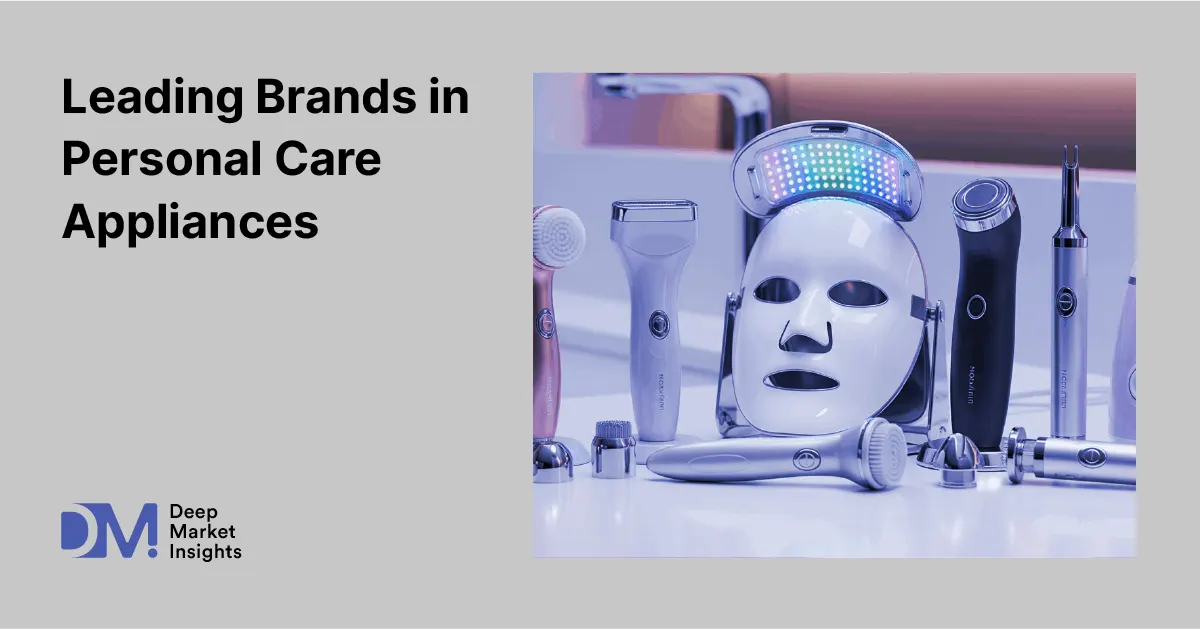
The global market for Leading Brands in Personal Care Appliances continues to expand as consumers prioritize convenience, grooming, and premium beauty experiences at home. Personal care appliances include electric shavers, trimmers, hair dryers, straighteners, epilators, oral care devices, and skincare tools. The category has become highly competitive due to rising urban consumption, expanding e-commerce penetration, and rapid product innovation.Asia-Pacific accounts for nearly 38% of global consumption, driven by strong demand in India, China, Japan, and South Korea. Premium hair styling devices now retail between USD 250 and USD 600, while mass-market grooming products remain in the USD 20–80 range. Global annual unit production for hair care and grooming appliances exceeds 320 million units, with China remaining the dominant manufacturing hub for OEM and private-label production.
Leading Brands in Personal Care Appliances Market Overview with Data
The Leading Brands in Personal Care Appliances market is characterized by strong brand loyalty, premiumization, and aggressive omnichannel distribution strategies. Electric grooming products represent one of the highest-volume categories, with trimmers and shavers accounting for nearly 45% of total appliance sales globally.North America holds approximately 28% market share due to high spending on premium grooming and oral care products, while Europe contributes close to 25% through established beauty appliance brands and salon-driven demand. Asia-Pacific remains the fastest consumption center because of rising disposable income and increasing male grooming adoption.
Pricing segmentation defines market positioning clearly:
-
Entry-level trimmers: USD 15–40
-
Mid-range hair dryers and stylers: USD 60–180
-
Premium smart beauty devices: USD 300–700
Manufacturers increasingly focus on cordless technology, AI-enabled sensors, ceramic heating systems, and energy-efficient motors. Online retail channels now contribute more than 40% of total appliance sales in several developed markets.
Top Companies in Leading Brands in Personal Care Appliances Market
Procter & Gamble

Procter & Gamble maintains a strong position in the personal care appliances sector through Braun and Oral-B. The company commands an estimated 17% market share in premium grooming and oral-care appliances. Braun Series 9 electric shavers and Oral-B iO smart toothbrushes remain flagship products across North America and Europe.The company’s personal care appliance revenue exceeds USD 3 billion annually, supported by extensive retail penetration in more than 180 countries. P&G focuses heavily on product innovation, including AI-driven shaving systems and connected oral care devices. Its manufacturing network supports high-volume production while maintaining premium pricing strategies. Braun electric shavers typically retail between USD 180 and USD 450, targeting professional and affluent consumers. The company also leverages subscription models for replacement heads and accessories to increase recurring revenue.
Philips

Philips remains one of the most recognized global players in grooming and beauty appliances. The company’s portfolio includes OneBlade trimmers, Sonicare toothbrushes, and Lumea IPL hair-removal systems. Philips holds approximately 15% market share in the global personal care appliance industry.Philips operates manufacturing and distribution networks across Europe, Asia, and Latin America, with products sold in nearly 100 countries. Its personal health division generates multi-billion-dollar annual revenue and allocates substantial investment toward R&D and sensor-based grooming technology. Premium Philips grooming devices retail between USD 70 and USD 500 depending on product category.The company’s strategy emphasizes smart grooming ecosystems, rechargeable battery efficiency, and direct-to-consumer online sales. Philips also benefits from strong positioning in emerging markets, where mid-priced trimmers and hair styling tools continue to gain traction among younger consumers.
Panasonic

Panasonic has established a strong presence in beauty technology and premium grooming appliances, particularly in Asia-Pacific markets. Its portfolio includes nanoe hair dryers, facial steamers, beard trimmers, and professional salon-grade styling devices.The company generates an estimated USD 2.3 billion from its beauty and grooming appliance segment and holds more than 12% market share globally. Panasonic differentiates itself through Japanese engineering, durability, and advanced moisture-retention technology in hair care appliances.Its premium nanoe hair dryers often retail between USD 150 and USD 350, positioning the brand in the high-end segment. Panasonic also benefits from strong manufacturing capabilities in Japan, Thailand, and China. The company increasingly targets urban consumers seeking salon-quality grooming solutions for home use.
Dyson

Dyson transformed the premium beauty appliance segment with products such as the Supersonic hair dryer and Airwrap multi-styler. The company created a new ultra-premium category where products routinely sell between USD 400 and USD 700.Dyson’s beauty appliance segment generates more than USD 1 billion annually and contributes significantly to the company’s overall appliance business. The company reportedly sold nearly 20 million products across categories in a recent year.Its competitive advantage lies in digital motors, airflow engineering, and luxury branding. Dyson invests heavily in R&D, spending millions weekly on engineering innovation. The company primarily targets premium consumers and professional salons, with strong demand across the United States, the United Kingdom, China, and the Middle East.
Conair
Conair remains a major player in mass-market hair care appliances and professional salon tools. Its portfolio includes hair dryers, curling irons, straighteners, and BaBylissPRO styling equipment. The company generates more than USD 2 billion in annual revenue across consumer appliance categories.Conair’s strength lies in wide retail distribution and competitive pricing. Entry-level Conair products often retail below USD 50, while BaBylissPRO professional tools range between USD 120 and USD 300. The company serves both household consumers and salon professionals.North America remains its strongest region, although the company continues expanding through e-commerce partnerships and international distributors. Conair also benefits from high-volume production sourcing across Asia, enabling aggressive pricing strategies in highly competitive retail channels.
Competitive Landscape Insights
The Leading Brands in Personal Care Appliances market remains moderately fragmented despite the dominance of multinational brands. The top five companies collectively account for nearly 35–40% of total global market share.
Premiumization continues to reshape pricing segmentation:
-
Economy segment: Below USD 40
-
Mid-tier segment: USD 50–150
-
Premium segment: Above USD 250
Chinese OEM manufacturers play a critical role in the supply chain by producing motors, lithium-ion batteries, ceramic plates, and plastic housing components for global brands. Many Western brands rely on outsourced manufacturing while retaining proprietary motor and sensor technologies internally.E-commerce platforms now influence procurement and pricing decisions significantly. Online-exclusive product launches and influencer-led marketing strategies have increased conversion rates among younger consumers. At the same time, professional salon partnerships remain important for premium brands seeking higher-margin sales.
Innovation competition has intensified around:
-
Smart sensors
-
Heat protection technology
-
Cordless operation
-
Sustainable packaging
-
AI-enabled grooming systems
The global Leading Brands in Personal Care Appliances market is driven by technological innovation, premium grooming demand, and expanding online retail infrastructure. Companies such as Philips, Procter & Gamble, Panasonic, Dyson, and Conair continue to dominate through strong brand equity, advanced product engineering, and global distribution networks.The market increasingly favors companies capable of balancing premium innovation with scalable production capacity. Businesses that invest in smart grooming technologies, sustainable manufacturing, and direct-to-consumer engagement are positioned to maintain competitive advantage in this evolving consumer appliance landscape.