Top 7 Companies in Travel Retail Market | Growth & Insights
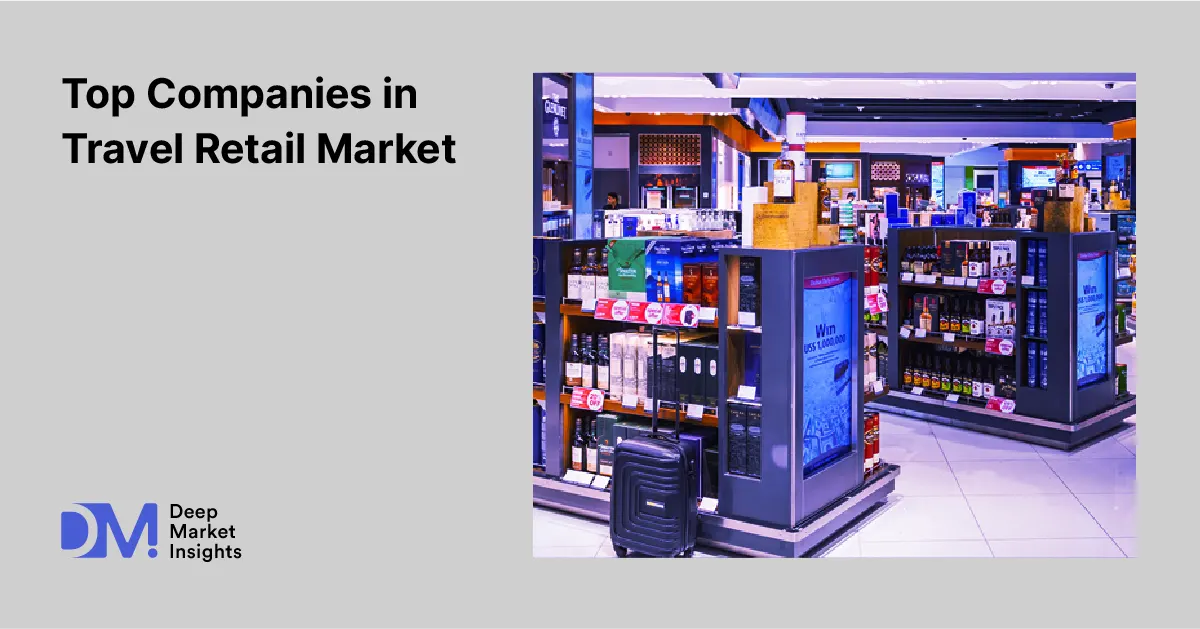
The Top Companies in Travel Retail Market are shaping a dynamic global ecosystem that connects brands with high-value international travelers across airports, cruise liners, and border shops. The market has evolved into a premium retail channel, generating estimated annual revenues exceeding $75 billion, driven by rising international passenger traffic surpassing 4.5 billion travelers globally. Duty-free and travel-exclusive product segments contribute nearly 55% of total sales, highlighting their importance in brand positioning.For procurement professionals and B2B stakeholders, understanding company-level strategies, supply chain capabilities, and pricing structures is critical. This blog analyzes leading players, their operational scale, and how they compete in a fragmented yet high-margin retail landscape.
Market Overview with Data
The travel retail market operates at the intersection of luxury retail, FMCG, and experiential shopping. Airports account for approximately 70% of total travel retail sales, followed by border shops and cruise channels.
From a regional perspective:
-
Asia-Pacific leads with nearly 45% market share, driven by high passenger volumes in hubs like China and Southeast Asia
-
Europe holds around 30%, supported by strong intra-regional travel
-
Middle East & Africa contribute close to 15%, with premium-focused retail environments
Product pricing in travel retail typically reflects a 10-25% discount advantage compared to domestic luxury retail, particularly in categories like fragrances, cosmetics, and alcohol. Average transaction values range between $80 and $120 per traveler, with premium shoppers exceeding $300 per purchase in flagship airport stores.Consumption trends indicate that perfumes & cosmetics contribute nearly 35% of sales, followed by wines & spirits at 25%, and confectionery at 15%. This diversified demand profile allows companies to optimize product mix and margin strategies.
Top Companies in Travel Retail Market
Avolta (formerly Dufry Group)

Avolta is one of the largest travel retail operators globally, with operations spanning over 1,800 stores across 70+ countries. The company generates annual revenues exceeding $10 billion, positioning it as a dominant force in airport retail.Its portfolio includes duty-free shops, convenience stores, and luxury boutiques, covering categories such as cosmetics, spirits, tobacco, and fashion accessories. Avolta’s strategy focuses on concession agreements with major international airports, ensuring high footfall and premium shelf visibility.The company invests heavily in digital integration, including pre-order platforms and omnichannel retailing. With a strong presence in Europe and Latin America, Avolta leverages scale efficiencies and centralized procurement to maintain competitive pricing and margins.
Lagardère Travel Retail

Lagardère Travel Retail operates over 4,900 outlets in 40+ countries, generating revenues in the range of $6-7 billion annually. The company specializes in three key segments: duty-free, travel essentials, and foodservice.Its diversified business model allows cross-category bundling, increasing average basket size by up to 20% in high-traffic locations. Lagardère’s strong footprint in Europe and Asia-Pacific strengthens its position in both luxury and convenience retail.The company emphasizes local adaptation, tailoring product assortments based on traveler demographics. Strategic partnerships with global brands and airport authorities enable long-term concession contracts, ensuring revenue stability and operational continuity.
Lotte Duty Free

Lotte Duty Free is a leading player headquartered in Asia, with revenues exceeding $5 billion and a strong focus on Korean and Chinese traveler segments. The company operates more than 20 duty-free stores globally, including flagship locations in Seoul and major international airports.It holds a dominant position in cosmetics and luxury goods, with these categories contributing nearly 60% of its total sales. Lotte’s pricing strategy combines competitive discounts with exclusive product launches, attracting high-spending tourists.The company’s expansion into overseas markets, including Southeast Asia and Oceania, reflects its ambition to diversify revenue streams and reduce dependence on domestic tourism flows.
DFS Group\

DFS Group, a subsidiary of LVMH, operates around 420 stores across 15 global markets, with annual revenues estimated at $4-5 billion. It is known for its premium positioning and strong presence in luxury goods and high-end spirits.DFS pioneered the concept of downtown duty-free stores, particularly in Asia, where it captures spending beyond airports. The company focuses on experiential retail, offering curated shopping environments that drive higher per-customer spending, often exceeding $250 per transaction.Its association with luxury brands provides exclusive product offerings and limited editions, reinforcing its competitive advantage in the premium segment.
China Duty Free Group (CDFG)

China Duty Free Group is one of the fastest-growing players, with revenues surpassing $9 billion, largely driven by domestic duty-free consumption. The company operates over 200 stores, including large-scale complexes in Hainan.CDFG benefits from government policies supporting duty-free retail, enabling price advantages of up to 30% compared to domestic retail markets. Its strong focus on Chinese consumers positions it as a leader in the Asia-Pacific region.The company’s scale and purchasing power allow it to negotiate favorable supplier contracts, enhancing margins while maintaining competitive pricing.
Heinemann (Gebr. Heinemann)

Gebr. Heinemann is a family-owned German company with operations in over 100 countries and annual revenues exceeding $4 billion. It specializes in duty-free and travel value retail, with a strong presence in Europe and the Middle East.The company operates both retail stores and distribution services, supplying products to airports and airlines. Its vertically integrated model improves supply chain efficiency and reduces lead times by approximately 15-20%.Heinemann focuses on premium product curation and localized assortments, ensuring relevance across diverse traveler segments.
Shilla Duty Free

Shilla Duty Free, part of the Samsung Group, generates revenues of around $3-4 billion and operates key outlets in South Korea and international airports. The company is known for its strong performance in cosmetics and luxury fashion.It leverages data analytics to optimize product mix and pricing strategies, improving conversion rates by nearly 10% in high-traffic locations. Shilla’s focus on digital engagement and loyalty programs enhances repeat purchases among frequent travelers.Its expansion strategy targets Southeast Asia, where rising middle-class travel demand drives incremental growth.
Competitive Landscape Insights
The Top Companies in Travel Retail Market operate in a moderately consolidated environment. The top five players collectively account for approximately 55-60% of total market share, while regional operators and niche players make up the remaining 40-45%.
Pricing segmentation is divided into three tiers:
-
Premium luxury segment: High margins, price range above $150 per product
-
Mid-tier segment: Core revenue driver, priced between $50-$150
-
Value segment: High-volume categories like confectionery, priced below $50
Supply chain efficiency is a key differentiator. Leading companies achieve inventory turnover cycles of 30-45 days, compared to 60+ days for smaller operators. Centralized procurement and global sourcing reduce costs by up to 12-18%, enabling competitive pricing.Additionally, concession agreements with airports remain the most critical barrier to entry. Contracts typically span 5-10 years, ensuring long-term revenue visibility but requiring significant upfront investment.
Conclusion
The Top Companies in Travel Retail Market demonstrate strong operational scale, diversified portfolios, and strategic airport partnerships. Market leaders such as Avolta, Lagardère, and China Duty Free Group dominate through extensive global footprints and robust supply chains.For procurement professionals, the market offers opportunities in high-margin categories, particularly cosmetics and luxury goods, supported by favorable pricing structures and high traveler spending. Competitive advantage increasingly depends on digital integration, localized product offerings, and efficient inventory management.As international travel continues to normalize, companies that align pricing strategies with consumer behavior and secure premium retail locations will maintain leadership in this evolving global market.