Luxury Goods Pricing Strategy & Global Supply Chain: Pricing, Production, Consumption & Trade Analysis
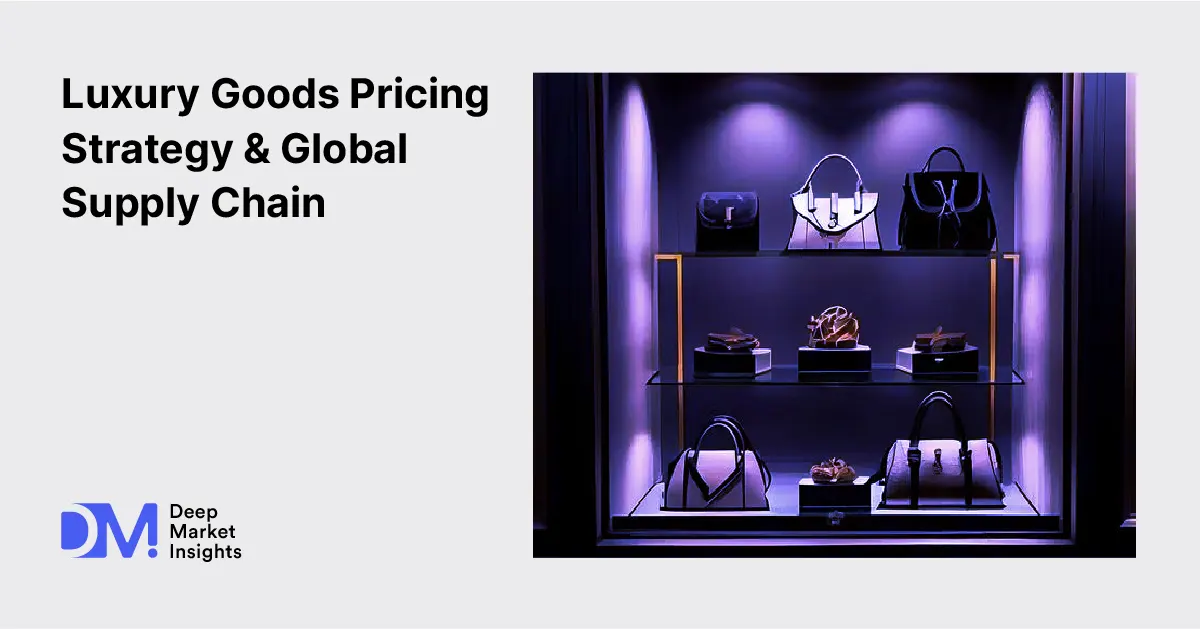
The global Luxury Goods industry operates on a highly engineered pricing and supply chain structure where scarcity, craftsmanship, and brand equity define value. Luxury handbags typically retail between $800 and $5,000, while ultra-exclusive pieces such as limited-edition watches can exceed $50,000 per unit depending on materials and brand positioning.
On the production side, select luxury watchmakers maintain controlled output; for instance, premium Swiss manufacturers collectively produce under 2.5 million high-end watches annually, preserving exclusivity and pricing power. This tightly managed balance between supply and demand is central to luxury economics.
Luxury Goods Pricing Analysis
Luxury pricing strategies are anchored in perceived value, exclusivity, and brand heritage rather than cost-based structures. Brands deliberately maintain wide price dispersion across product tiers. A standard entry-level luxury leather handbag is priced between $900 and $3,500, while flagship designs such as iconic quilted or monogram collections can exceed $7,000 in retail pricing. Ultra-luxury segments, including bespoke couture, range from $10,000 to $100,000 per piece, especially in fashion houses operating in haute couture segments.
The resale market amplifies pricing volatility. A Hermès Birkin bag, originally priced at around $10,000-$15,000, can resell for up to $200,000 depending on rarity and condition. This secondary market behavior reinforces primary market pricing stability. Luxury watches follow a similar stratification. Entry luxury timepieces begin near $5,000, while limited editions from Swiss manufacturers regularly exceed $30,000-$80,000.
Brands like LVMH leverage controlled scarcity to maintain pricing power across fashion, jewelry, and accessories segments.
Luxury Goods Production Analysis
Production in the luxury sector is intentionally constrained to preserve exclusivity and brand equity. Unlike mass-market goods, output levels are not optimized for scale but for controlled scarcity. The Swiss watch industry produces approximately 1.1 million Rolex units annually, a figure carefully managed to maintain long-term value appreciation and brand prestige. Across the broader Swiss luxury watch segment, total production remains under 3 million units per year, highlighting strict output discipline.
In fashion, major luxury conglomerates such as Gucci and Chanel operate with limited production runs per collection. Seasonal apparel lines often consist of 5,000-50,000 units per design, ensuring rarity and exclusivity.
Leather goods production is heavily concentrated in Europe, particularly Italy and France. Italy alone produces over 1.5 billion square feet of luxury-grade leather annually, supporting high-end handbag and footwear manufacturing clusters. Additionally, haute couture production is extremely limited, with fewer than 4,000 couture garments produced globally each year, reinforcing extreme scarcity in the upper tier of the market.
Luxury Goods Consumption Analysis
Luxury consumption is geographically concentrated but increasingly diversified due to rising global wealth distribution.
Asia-Pacific, led by China, accounts for approximately 35-40% of global luxury consumption, driven by expanding high-net-worth populations and urban affluence. The United States contributes roughly 25% of total luxury demand, with strong spending in fashion, jewelry, and watches. European consumers account for approximately 20% of global luxury consumption, supported by both domestic purchasing and tourism-driven retail activity in fashion capitals such as Paris and Milan.
Spending behavior also varies significantly. High-net-worth consumers allocate between 15-25% of discretionary spending toward luxury goods, particularly in fashion and personal accessories. The average luxury consumer purchases between 2-6 high-value items annually, though ultra-high-net-worth individuals may exceed 10-15 luxury transactions per year, particularly across multiple brand categories.
Luxury Goods Import & Export Analysis
Luxury goods trade is a critical component of global high-value exports, with Europe dominating both production and outbound flows.
The European Union exports luxury goods valued at approximately €250-€300 billion annually, with fashion, leather goods, jewelry, and watches forming the core categories. France and Italy together account for more than 60% of EU luxury exports, driven by heritage brands and artisanal manufacturing networks.
Italy alone exports over €35 billion in leather goods and fashion products annually, making it one of the largest global hubs for luxury supply chains. Switzerland exports luxury watches worth approximately CHF 25-30 billion per year, with Asia and North America as primary destinations.
On the import side, China imports over $100 billion in luxury goods annually, primarily from Europe. The United States also imports significant volumes, exceeding $80 billion in high-end fashion, jewelry, and accessories annually. Cross-border e-commerce has further expanded luxury imports, with digital channels accounting for nearly 20-25% of total luxury trade transactions globally.
Luxury Goods Supply Chain Analysis
The luxury supply chain is built on precision, traceability, and controlled distribution. Unlike fast-moving consumer goods, luxury supply chains prioritize craftsmanship over speed.
Raw material sourcing is highly selective. For example, premium leather used in handbags undergoes multiple treatment stages, increasing lead times to 6-12 months per product cycle. Precious metals used in jewelry are often sourced from certified ethical mining operations, adding compliance layers that extend production timelines. Manufacturing is centralized in artisan clusters, primarily in Italy, France, and Switzerland. Each product often passes through 30-150 individual craftsmanship stages, depending on complexity.
Logistics also plays a strategic role. Approximately 40% of luxury goods are transported via air freight, despite higher costs, to reduce transit time and maintain product integrity. High-value shipments are often insured at rates exceeding 3-5% of item value, reflecting risk sensitivity. Distribution remains tightly controlled through flagship boutiques, exclusive retail partners, and limited online platforms. Many brands restrict product availability across more than 70-80 countries, reinforcing exclusivity and regional pricing strategies.