Leading 6 Brands in Baby Care Products Market, Positioning, and Competitive Insights
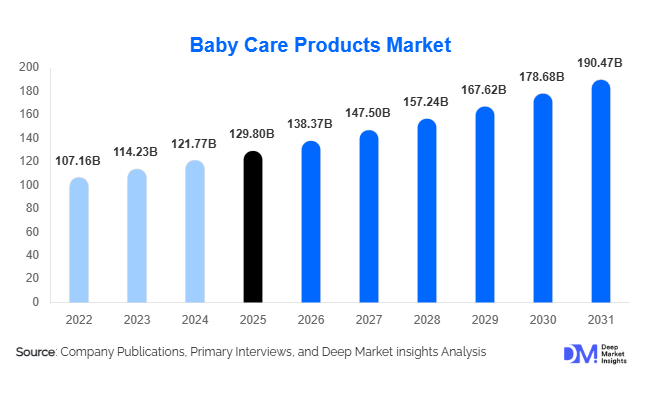
The Leading Brands in Baby Care Products market has become a critical segment within the global FMCG and consumer healthcare industry. Rising birth-related spending, premiumization trends, and increasing awareness regarding infant hygiene and nutrition continue to drive procurement demand across retail, e-commerce, and healthcare channels. The market includes diapers, baby wipes, skincare products, baby shampoos, feeding products, and infant nutrition solutions.Global annual consumption of disposable baby diapers exceeds 420 billion units, while premium baby skincare products account for nearly 35% of organized retail sales in urban markets. Average retail pricing for baby wipes ranges between USD 2 and USD 8 per pack depending on quality and formulation, while premium diaper packs often retail between USD 18 and USD 45. Procurement professionals increasingly prioritize product safety certifications, dermatological testing, and sustainable packaging when selecting suppliers and brand partners.
Leading Brands in Baby Care Products Market Overview with Data
The Leading Brands in Baby Care Products market is heavily concentrated among multinational FMCG companies with strong manufacturing and retail distribution networks. North America and Asia-Pacific together account for nearly 62% of global baby care product consumption, supported by high urbanization and organized retail penetration.Disposable diapers remain the largest product category, contributing approximately 48% of total market revenues. Baby skincare products contribute nearly 22%, while wipes and hygiene products collectively account for around 18%. Average manufacturing costs for standard diapers range from USD 0.08 to USD 0.20 per unit depending on absorbent material quality and automation levels.
Asia-Pacific serves as the largest production hub due to lower manufacturing costs and strong demand in countries such as China and India. Premium baby lotions and shampoos typically achieve gross retail margins between 25% and 40%, making them attractive categories for retailers and procurement chains.Private-label competition is increasing, yet multinational brands continue to dominate because of established trust, pediatric endorsements, and extensive marketing investments.
Leading Brands in Baby Care Products Market
Procter & Gamble
Procter & Gamble remains one of the strongest players in the baby care industry through its Pampers brand portfolio. The company operates in more than 180 countries and generates annual corporate revenues exceeding USD 80 billion. Pampers maintains a leading position in the disposable diaper segment with estimated global market share between 28% and 32%.The company focuses heavily on premium diapers, smart absorbent technologies, and skin-sensitive formulations. Pampers premium diaper packs are generally priced between USD 25 and USD 45 in developed markets. Procter & Gamble continues expanding automated manufacturing facilities to improve production efficiency and reduce packaging waste. The company’s strategy emphasizes innovation, hospital partnerships, and direct-to-consumer digital channels. Strong supply chain integration and large-scale procurement capabilities also support its leadership in high-volume retail contracts.
Kimberly-Clark Corporation
Kimberly-Clark Corporation is a major competitor in the baby care segment through its Huggies brand. The company generates annual revenues above USD 20 billion and operates manufacturing facilities across North America, Europe, Asia, and Latin America.Huggies products include diapers, pull-ups, baby wipes, and overnight protection solutions. The company produces billions of diaper units annually, serving both retail and institutional procurement channels. Huggies maintains strong positioning in premium and mid-tier pricing segments, with diaper pack pricing commonly ranging from USD 18 to USD 40.Kimberly-Clark focuses on product differentiation through leak-lock systems, eco-friendly packaging, and dermatologically tested materials. The company has also increased investments in sustainable pulp sourcing and recycled packaging initiatives. Its strong retail relationships and supply reliability continue to strengthen its position in supermarkets and pharmacy chains globally.
Johnson & Johnson
Johnson & Johnson has maintained a long-standing presence in baby care products through baby shampoos, oils, powders, lotions, and skincare products. The company’s consumer health division contributes billions in annual sales across personal care categories.Johnson’s Baby products are widely recognized in hospitals and pediatric healthcare networks. Baby oils and lotions under the brand generally retail between USD 4 and USD 15 depending on packaging size and regional positioning. The company has reformulated many products to eliminate parabens, sulfates, and artificial dyes to align with changing regulatory and consumer standards.The company’s strategy centers on clinical trust, dermatological safety, and extensive global distribution. Its strong brand recall and healthcare affiliations make it a preferred supplier in institutional and pharmacy procurement channels. Emerging market expansion remains a major focus area for long-term category leadership.
Nestlé
Nestlé plays a dominant role in infant nutrition through brands such as Gerber and NAN. The company generates annual revenues exceeding USD 100 billion, with infant nutrition representing a substantial strategic segment.Nestlé’s baby care portfolio includes infant cereals, formula milk, purees, and nutritional snacks. Premium infant formula products can retail between USD 20 and USD 60 per container depending on nutritional specifications and import regulations. The company maintains extensive R&D investments focused on probiotics, immunity support, and specialized nutrition.Nestlé leverages hospital networks, pediatric partnerships, and pharmacy channels to strengthen product credibility. The company also operates advanced production facilities with stringent quality controls due to high regulatory oversight in infant nutrition. Its extensive distribution footprint across Asia and Latin America supports strong volume growth and procurement partnerships.
Unilever
Unilever participates in the baby care market through skincare, hygiene, and baby cleansing products. The company’s global revenue base exceeds USD 60 billion, supported by extensive retail penetration in emerging and developed markets.Unilever’s baby product offerings include baby soaps, lotions, creams, and shampoos designed for sensitive skin applications. The company competes strongly in mid-priced product categories, with baby skincare products generally priced between USD 3 and USD 12.Its market strategy emphasizes affordability, sustainability, and broad distribution access. Unilever continues investing in biodegradable ingredients and recyclable packaging solutions to strengthen environmental positioning. The company also benefits from strong procurement relationships with supermarkets, wholesalers, and pharmacy chains across Asia and Africa, where demand for affordable baby hygiene products continues to rise.
Himalaya Wellness Company
Himalaya Wellness Company has emerged as a significant player in herbal and natural baby care products. The company maintains strong market penetration in India, the Middle East, and Southeast Asia through baby lotions, shampoos, wipes, rash creams, and soaps.Himalaya’s baby care products are positioned within the affordable premium category, with most retail products priced between USD 2 and USD 10. The company benefits from growing consumer demand for herbal and chemical-free formulations. Manufacturing operations are supported by large-scale herbal sourcing and vertically integrated production processes.The company’s strategy focuses on ayurvedic positioning, pediatric safety claims, and pharmacy-led distribution. Increasing exports and e-commerce penetration have strengthened its international visibility. Himalaya continues to gain share among consumers seeking natural alternatives to synthetic baby skincare products.
Competitive Landscape Insights
The Leading Brands in Baby Care Products market remains moderately consolidated, with the top five companies collectively controlling nearly 65% of organized global sales. Premium diaper brands alone account for approximately 55% of category revenues in developed markets.
Pricing segmentation typically falls into three tiers:
-
Economy products: USD 0.08–0.12 per diaper unit
-
Mid-tier products: USD 0.13–0.18 per unit
-
Premium products: USD 0.20–0.35 per unit
Large manufacturers increasingly rely on automated production systems capable of producing over 700 diaper units per minute to improve margins and supply consistency. Procurement decisions now heavily depend on regulatory compliance, hypoallergenic formulations, and sustainable packaging standards.Supply chain localization has also become important due to rising logistics costs and import restrictions in several regions. Companies with regional manufacturing facilities maintain stronger retail fulfillment performance and inventory resilience.
Conclusion
The Leading Brands in Baby Care Products market continues to be shaped by multinational FMCG leaders with strong brand equity, advanced manufacturing capabilities, and diversified product portfolios. Companies such as Pampers, Huggies, Johnson’s Baby, Gerber, and Himalaya maintain competitive advantages through innovation, trusted formulations, and global distribution strength.For procurement professionals and decision-makers, supplier evaluation increasingly depends on pricing consistency, production scale, product safety certifications, and sustainability initiatives. As consumer demand shifts toward premium, natural, and dermatologist-tested products, companies with strong R&D capabilities and efficient supply chains will continue strengthening their competitive positioning in the global baby care industry.