Gnocchi Market Size
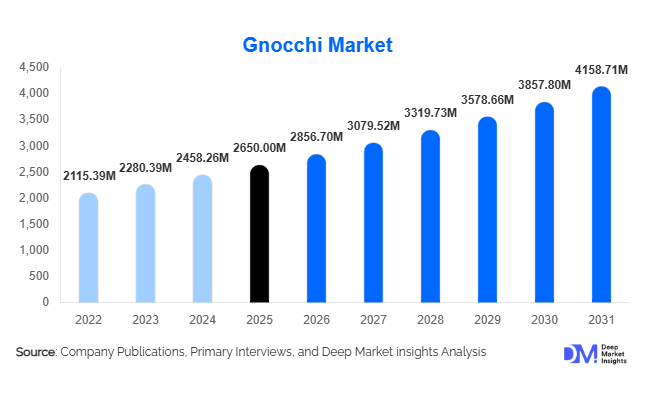
According to Deep Market Insights, the global gnocchi market size was valued at USD 2,650 million in 2025 and is projected to grow from USD 2,856.70 million in 2026 to reach USD 4,158.71 million by 2031, expanding at a CAGR of 7.8% during the forecast period (2026–2031). The gnocchi market growth is primarily driven by rising global demand for convenient ready-to-cook meals, increasing popularity of Italian cuisine, and expanding product innovation in gluten-free, organic, and flavored variants. Growing penetration of frozen food categories and retail expansion across emerging markets are further supporting sustained growth.
Key Market Insights
- Frozen gnocchi is witnessing strong demand globally, driven by convenience, longer shelf life, and increasing adoption of frozen food consumption patterns.
- Potato-based gnocchi dominates the market, accounting for over 50% share due to its traditional authenticity and widespread acceptance.
- Europe remains the largest market, led by Italy, France, and Germany due to cultural consumption and strong export activity.
- Asia-Pacific is the fastest-growing region, driven by urbanization, rising disposable incomes, and growing exposure to Western cuisine.
- Supermarkets and hypermarkets dominate distribution, supported by wide product availability and consumer accessibility.
- Health-focused innovation, including gluten-free and organic gnocchi, is reshaping consumer preferences globally.
What are the latest trends in the gnocchi market?
Shift Toward Health-Conscious and Specialty Gnocchi
Consumers are increasingly prioritizing healthier food options, driving demand for gluten-free, organic, and clean-label gnocchi. Manufacturers are innovating with alternative ingredients such as chickpea flour, quinoa, and vegetable-based formulations to cater to dietary restrictions and health-conscious consumers. These products often command premium pricing and are gaining traction in developed markets where clean-label trends are well established. Additionally, flavored gnocchi infused with spinach, beetroot, or pumpkin is expanding product diversity, allowing brands to target niche segments and differentiate their offerings in competitive retail environments.
Growth of Ready-to-Eat and Meal Kit Integration
The expansion of ready-to-eat meals and meal kit services is significantly influencing the gnocchi market. Consumers are seeking complete meal solutions that reduce preparation time while maintaining quality and taste. Gnocchi is increasingly being bundled with sauces and side dishes in meal kits, enhancing convenience and driving repeat purchases. Online grocery platforms and subscription-based meal services are further accelerating this trend, enabling manufacturers to reach new customer segments. This shift is particularly strong in North America and urban Asia-Pacific markets, where time-constrained consumers prefer quick and easy meal options.
What are the key drivers in the gnocchi market?
Rising Demand for Convenience Foods
Modern lifestyles characterized by busy schedules and dual-income households are driving demand for convenient food solutions. Gnocchi, especially in frozen and shelf-stable formats, offers quick preparation and versatility, making it a preferred choice for consumers seeking easy meal options. The increasing penetration of frozen food retail infrastructure globally is further supporting this trend, enabling wider accessibility and adoption.
Global Popularity of Italian Cuisine
The growing influence of Italian cuisine worldwide is a major growth driver for the gnocchi market. Increased exposure through social media, travel, and culinary content has encouraged consumers to experiment with international dishes. Restaurants and foodservice providers are incorporating gnocchi into their menus, further boosting demand. This trend is particularly prominent in North America and Asia-Pacific, where Italian cuisine continues to gain popularity.
What are the restraints for the global market?
Limited Shelf Life of Fresh Gnocchi
Fresh gnocchi has a relatively short shelf life, which poses challenges for distribution and storage, particularly in regions lacking advanced cold chain infrastructure. This limitation restricts market expansion in developing regions and increases logistics costs for manufacturers and retailers.
Competition from Staple Alternatives
The gnocchi market faces strong competition from other carbohydrate staples such as pasta, rice, and noodles, which are more widely consumed and often more affordable. Price-sensitive consumers in emerging markets may prefer these alternatives, limiting gnocchi’s penetration in cost-conscious segments.
What are the key opportunities in the gnocchi industry?
Expansion in Emerging Markets
Emerging economies in Asia-Pacific and Latin America present significant growth opportunities for gnocchi manufacturers. Rising urbanization, increasing disposable incomes, and exposure to global cuisines are driving demand for premium and convenient food products. Localized product offerings and targeted marketing strategies can help companies tap into these high-growth markets.
Premium and Artisanal Product Development
The growing demand for premium and artisanal food products is creating opportunities for high-quality gnocchi offerings. Consumers are willing to pay higher prices for authentic, handcrafted, and organic products. Companies can leverage this trend by focusing on quality ingredients, unique flavors, and sustainable production practices to enhance brand value and profitability.
Report Scope
| Report Metric | Details |
|---|---|
| Market Size in 2025 | USD 2650.00 Million |
| Market Size in 2026 | USD 2856.70 Million |
| Market Size in 2031 | USD 4158.71 Million |
| CAGR | 7.8% (2026-2031) |
| Base Year for Estimation | 2025 |
| Historical Data | 2022-2024 |
| Forecast Period | 2026-2031 |
| Report Coverage | Revenue Forecast, Competitive Landscape, Supply Chain Disruption, Growth Factors, Environment & Regulatory Landscape and Trends |
| Geographies Covered | North America, Europe, APAC, Middle East and Africa, LATAM |
| Countries Covered | U.S., Canada, U.K., Germany, France, Spain, Italy, Russia, Nordic, Benelux, Rest of Europe, China, Korea, Japan, India, Australia, Singapore, Taiwan, South East Asia, Rest of Asia-Pacific, UAE, Turky, Saudi Arabia, South Africa, Egypt, Nigeria, Rest of MEA, Brazil, Mexico, Argentina, Chile, Colombia, Rest of LATAM |
Explore more data points, trends and opportunities Download Free Sample Report
Product Type Insights
Potato-based gnocchi continues to dominate the global market, accounting for approximately 52% of total market share in 2025, and this leadership position is deeply rooted in its cultural authenticity, sensory appeal, and culinary versatility. As a traditional staple of Italian cuisine, potato-based gnocchi benefits from a strong legacy that resonates with consumers seeking comfort foods and authentic dining experiences. Its soft texture, neutral flavor profile, and ability to pair well with a wide variety of sauces-from rich tomato bases to creamy and herb-infused preparations-make it a highly adaptable product across different cuisines and consumption occasions.The leading driver for this segment is its strong consumer familiarity combined with versatility across multiple culinary applications, which enables it to maintain consistent demand across both developed and emerging markets. In Europe, particularly in Italy, potato-based gnocchi is considered a household staple, reinforcing steady consumption patterns. Meanwhile, in North America and Asia-Pacific, increasing interest in international cuisines has elevated its adoption, particularly among younger consumers and urban households experimenting with global flavors.Although semolina-based gnocchi and flavored variants such as spinach, beetroot, and gluten-free options are gaining traction, especially within premium and health-conscious segments, their market penetration remains comparatively limited. These alternatives are primarily driven by niche consumer demands, including dietary preferences and the growing focus on functional and specialty foods. However, they are yet to match the scale and mass appeal of traditional potato-based products. The segment’s dominance is further reinforced by advancements in processing technologies that enhance product consistency and shelf stability without compromising taste, enabling manufacturers to scale production efficiently while maintaining quality standards.
Application (End-Use) Insights
Household consumption represents the largest end-use segment, contributing approximately 48% of the global market share, reflecting a strong shift in consumer behavior toward home-based dining and culinary experimentation. The primary growth driver for this segment is the increasing trend of home cooking supported by rising interest in international cuisines and convenience-oriented meal preparation. Consumers are increasingly seeking easy-to-cook products that deliver restaurant-quality experiences at home, and gnocchi fits this demand perfectly due to its short preparation time and adaptability.At the same time, the foodservice sector is the fastest-growing application segment, driven by menu diversification and the increasing popularity of global cuisines in casual dining and fast-casual formats. Restaurants are incorporating gnocchi into their menus as a versatile dish that can be customized with local ingredients, thereby appealing to a wide range of consumer preferences. The growing demand for premium dining experiences, coupled with the expansion of international restaurant chains, is further accelerating growth in this segment.Emerging applications such as meal kits and ready-to-eat packaged meals are also expanding the consumption landscape. These formats cater to time-constrained consumers seeking convenience without compromising on quality. Meal kit providers are increasingly including gnocchi as part of their offerings due to its ease of preparation and ability to complement diverse flavor profiles. This trend is particularly prominent in urban markets where busy lifestyles and higher disposable incomes drive demand for convenient yet high-quality meal solutions.
Distribution Channel Insights
Supermarkets and hypermarkets dominate the distribution landscape, accounting for nearly 45% of the global market share, owing to their extensive reach, product variety, and competitive pricing strategies. The leading driver for this segment is the high product visibility combined with consumer preference for one-stop shopping experiences, which enhances accessibility and convenience. These retail formats provide a wide assortment of gnocchi products, ranging from traditional potato-based variants to premium and specialty offerings, enabling consumers to compare options and make informed purchasing decisions.Online retail is rapidly gaining traction as a significant distribution channel, supported by the growth of e-commerce platforms and changing consumer shopping behavior. The increasing penetration of smartphones, improved logistics infrastructure, and the convenience of home delivery have encouraged consumers to purchase food products online. This trend has been further accelerated by the global shift toward digitalization and the growing preference for contactless shopping experiences. Online platforms also enable manufacturers to reach a wider audience, including consumers in remote and underserved areas, thereby expanding market penetration.Specialty food stores continue to cater to premium and artisanal segments, offering high-quality, organic, and niche gnocchi products. These stores appeal to consumers seeking authentic and gourmet experiences, often emphasizing product origin, craftsmanship, and ingredient quality. While their overall market share is smaller compared to supermarkets and online channels, their influence on brand perception and premium positioning is significant, particularly in urban and high-income markets.
Form Insights
Frozen gnocchi leads the market by form, holding approximately 38% share, driven by its extended shelf life, convenience, and ability to retain quality over time. The primary growth driver for this segment is the increasing consumer demand for convenient, ready-to-cook products with longer storage capabilities, particularly in regions with high consumption of frozen foods. Frozen gnocchi offers a practical solution for consumers seeking quick meal options without compromising on taste or texture, making it a popular choice among working professionals and busy households.Shelf-stable packaged gnocchi is also gaining popularity, particularly in emerging markets where cold chain infrastructure may be limited. These products offer the advantage of easy storage and transportation, making them suitable for regions with logistical challenges. The growing demand for packaged and processed foods, driven by urbanization and changing lifestyles, is supporting the expansion of this segment.Fresh gnocchi, while preferred for its authenticity and superior taste, faces challenges related to perishability and distribution. The need for refrigeration and shorter shelf life limits its availability in certain markets. However, it continues to hold a niche position, particularly in premium segments and foodservice applications where quality and authenticity are prioritized. Innovations in packaging and preservation techniques are expected to mitigate some of these challenges, enabling broader distribution of fresh products in the future.
Explore more data points, trends and opportunities Download Free Sample Report
Gnocchi Market Segmentations
By Product Type
- Potato-Based Gnocchi
- Semolina-Based Gnocchi
- Flour-Based Gnocchi
- Gluten-Free Gnocchi
- Flavored/Infused Gnocchi
By Application
- Household Consumption
- Restaurants
- Fine Dining Restaurants
- QSRs & Fast Casual Chains
- Institutional Catering
By Distribution Channel
- Supermarkets & Hypermarkets
- Convenience Stores
- Specialty Food Stores
- Online Retail/E-commerce
- Foodservice/B2B Supply
Regional Insights
Europe
Europe dominates the global gnocchi market, accounting for approximately 38% of the market share in 2025, with Italy serving as the epicenter of production and consumption. The region’s leadership is driven by a combination of cultural heritage, well-established manufacturing capabilities, and strong export networks. Italy alone contributes nearly 18% of global demand, supported by deep-rooted culinary traditions and widespread domestic consumption.The key growth driver in Europe is the strong cultural affinity toward traditional foods combined with a mature food processing industry, which ensures consistent quality and supply. Additionally, the presence of leading manufacturers and well-developed distribution channels enables efficient market operations. The growing demand for premium and artisanal food products is further enhancing market growth, as consumers increasingly seek authentic and high-quality offerings. Export activity also plays a significant role, with European producers supplying gnocchi to international markets, thereby reinforcing the region’s global dominance.
North America
North America holds around 28% market share, with the United States leading regional demand. The region’s growth is driven by changing dietary preferences, increasing interest in international cuisines, and a strong inclination toward convenience foods. The primary driver for North America is the high consumption of frozen and ready-to-cook meals supported by busy lifestyles and advanced retail infrastructure.The expansion of supermarket chains and the rapid growth of e-commerce platforms have significantly improved product accessibility, enabling consumers to explore a wide range of gnocchi products. Additionally, the foodservice sector plays a crucial role in driving demand, with restaurants incorporating gnocchi into their menus as part of their efforts to offer diverse and innovative dishes. The rising popularity of Italian cuisine, coupled with the influence of food culture and media, continues to support market expansion in the region.
Asia-Pacific
Asia-Pacific is the fastest-growing region, with a projected CAGR of 9.2%, driven by rapid urbanization, rising disposable incomes, and increasing exposure to Western dietary habits. Countries such as China, Japan, and India are emerging as key markets, supported by expanding middle-class populations and evolving consumer preferences.Additionally, the increasing presence of international restaurant chains and the growing influence of global food trends are contributing to market growth. Manufacturers are also adapting their offerings to suit local tastes, introducing innovative flavors and formats that cater to regional preferences. This localization strategy is expected to play a critical role in sustaining long-term growth in Asia-Pacific.
Latin America
Latin America accounts for approximately 8% of the global market, with Brazil and Argentina leading demand. The region’s growth is supported by cultural similarities in cuisine, particularly the influence of European culinary traditions, which facilitate the acceptance of gnocchi as a familiar dish.The primary growth driver in Latin America is the increasing adoption of international food trends combined with a growing urban population. As consumers become more exposed to global cuisines, the demand for products like gnocchi is rising. The expansion of retail infrastructure and the gradual growth of the foodservice sector are further supporting market development. Economic improvements and rising disposable incomes are also enabling consumers to spend more on packaged and premium food products, contributing to market growth.
Middle East & Africa
The Middle East & Africa region holds around 6% market share, with growth driven by a combination of demographic and economic factors. Countries such as the UAE and Saudi Arabia are markets, supported by expanding hospitality sectors and a significant expatriate population.The key driver in this region is the growth of the hospitality and tourism industries coupled with increasing demand for premium and international cuisines. The presence of a diverse population with varied culinary preferences has created a favorable environment for the adoption of global food products, including gnocchi. Additionally, the expansion of modern retail formats and the increasing availability of imported food products are enhancing market accessibility.Rising disposable incomes and changing lifestyles are further contributing to market growth, as consumers seek convenient and high-quality meal options. While the market is still in its early stages compared to other regions, the growing influence of global food trends and ongoing economic development are expected to drive steady expansion in the coming years.
Key Players in the Gnocchi Market
- Barilla Group
- De Cecco
- Giovanni Rana
- Nestlé (Buitoni)
- Ebro Foods
- General Mills
- Premier Foods
- TreeHouse Foods
- La Molisana
- Garofalo
- Cipriani Food
- Pasta Zara
- Divella
- Colavita
- Pastificio Rana