Women Outdoor Apparel Market Size
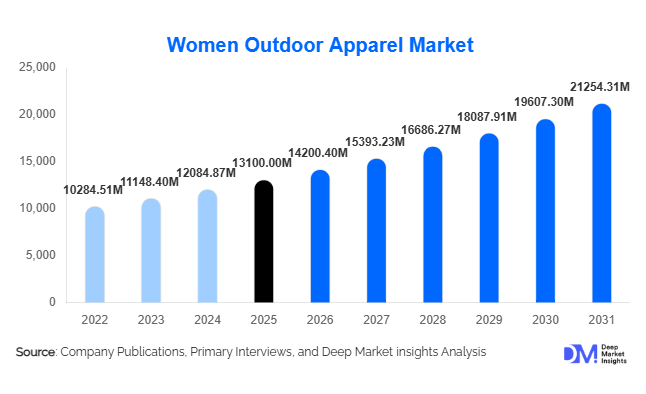
According to Deep Market Insights, the global women outdoor apparel market size was valued at USD 13,100 million in 2025 and is projected to grow from USD 14,200.40 million in 2026 to reach USD 21,254.31 million by 2031, expanding at a CAGR of 8.4% during the forecast period (2026–2031). The market growth is primarily driven by rising female participation in outdoor recreational activities, increasing demand for functional and performance-oriented clothing, and the expansion of athleisure trends that merge outdoor functionality with everyday fashion.
Outdoor recreation activities such as hiking, trekking, camping, cycling, and trail running have gained substantial popularity among women globally. As a result, the demand for specialized apparel designed with moisture-wicking fabrics, waterproof protection, thermal insulation, and ergonomic fits has grown significantly. The market is also benefiting from rapid technological advancements in textile engineering, enabling brands to introduce innovative fabrics that offer superior durability, breathability, and flexibility.
In addition, the convergence of outdoor performance apparel with lifestyle fashion has expanded the consumer base beyond adventure enthusiasts. Women increasingly wear outdoor apparel in urban environments for casual wear, travel, and fitness activities. Sustainability is another critical factor shaping the industry, with leading brands adopting recycled fabrics, eco-friendly dyeing processes, and circular manufacturing models. These developments are positioning the women's outdoor apparel market as one of the fastest-growing segments within the global sportswear and technical clothing industry.
Key Market Insights
- Rising female participation in outdoor sports and adventure tourism is significantly boosting demand for performance-driven apparel.
- Outerwear products such as jackets and insulated layers dominate the market due to their essential role in weather protection during outdoor activities.
- North America leads global demand, supported by a strong outdoor recreation culture and high consumer spending on sports apparel.
- Asia-Pacific is the fastest-growing regional market, driven by rising middle-class participation in outdoor activities and adventure tourism.
- Sustainable fabrics and recycled materials are gaining traction as environmentally conscious consumers demand eco-friendly clothing options.
- Direct-to-consumer online retail and e-commerce platforms are rapidly transforming distribution strategies in the industry.
What are the latest trends in the women outdoor apparel market?
Sustainable Outdoor Apparel Production
Sustainability has emerged as one of the most influential trends in the women outdoor apparel market. Consumers are increasingly prioritizing products made with environmentally responsible materials and manufacturing processes. Leading brands are incorporating recycled polyester, organic cotton, and biodegradable fibers into their apparel collections. Many companies are also adopting closed-loop recycling systems that allow worn-out garments to be repurposed into new clothing items.
In addition to sustainable materials, companies are focusing on reducing water consumption, chemical usage, and carbon emissions during manufacturing. Certifications related to responsible sourcing and environmental stewardship are becoming essential differentiators for brands competing in the market. The adoption of sustainable packaging and supply chain transparency initiatives further strengthens brand credibility among environmentally conscious consumers.
Outdoor Apparel Integration with Athleisure Fashion
The convergence of outdoor apparel and athleisure fashion is transforming the industry landscape. Women are increasingly wearing hiking jackets, fleece tops, outdoor leggings, and technical shirts in everyday settings such as commuting, travel, and casual social activities. This trend has expanded the market beyond traditional outdoor enthusiasts to include lifestyle consumers seeking comfort and functionality.
Outdoor brands are responding by designing apparel that combines technical performance with stylish aesthetics. Lightweight fabrics, slim silhouettes, and versatile clothing designs allow garments to transition seamlessly between outdoor adventures and urban environments. Social media and influencer marketing have further accelerated this trend, promoting outdoor apparel as both functional gear and fashionable clothing.
What are the key drivers in the women outdoor apparel market?
Growing Participation of Women in Outdoor Recreation
One of the most significant growth drivers in the women outdoor apparel market is the increasing participation of women in outdoor recreational activities. Hiking, trekking, camping, cycling, and mountaineering have become popular lifestyle pursuits among women seeking fitness, adventure, and wellness experiences. Governments and tourism organizations worldwide are promoting outdoor recreation through investments in national parks, hiking trails, and adventure tourism infrastructure.
As female participation rises, the demand for specialized clothing designed for female body structures and performance requirements is expanding rapidly. Apparel manufacturers are developing gender-specific designs that offer improved fit, flexibility, and mobility, enhancing the overall outdoor experience for women.
Technological Innovations in Performance Fabrics
Technological advancements in textile engineering are significantly contributing to market growth. Modern outdoor apparel incorporates features such as waterproof breathable membranes, thermal insulation layers, UV protection, and moisture-wicking fabrics that enhance comfort during outdoor activities.
These innovations allow clothing to perform effectively across a wide range of environmental conditions while maintaining durability and lightweight characteristics. Consumers increasingly prefer apparel that offers multifunctional performance, which encourages brands to invest heavily in research and development of advanced textile technologies.
What are the restraints for the global market?
High Cost of Technical Outdoor Apparel
One of the key restraints affecting market expansion is the relatively high cost of technical outdoor apparel. Premium jackets, insulated parkas, and specialized hiking gear often incorporate advanced materials and complex manufacturing processes, which significantly increase retail prices. As a result, these products may be less accessible to consumers in price-sensitive markets.
The higher cost structure can slow adoption in developing economies where consumers may prefer lower-priced alternatives or multipurpose clothing. Manufacturers must therefore balance performance innovation with cost efficiency to expand their customer base.
Seasonal Demand Variability
The demand for outdoor apparel is highly seasonal in many regions. Winter clothing such as insulated jackets, snow pants, and thermal layers experiences strong demand during colder months but declines significantly during warmer seasons. This seasonal fluctuation can create inventory management challenges for manufacturers and retailers.
Companies must carefully plan production schedules, supply chain logistics, and inventory management strategies to maintain profitability despite seasonal demand variations.
What are the key opportunities in the women outdoor apparel industry?
Expansion of Adventure Tourism Among Women
The rapid growth of adventure tourism presents a major opportunity for women outdoor apparel manufacturers. Female travelers are increasingly participating in trekking expeditions, mountaineering trips, and nature-based travel experiences. Destinations such as the Himalayas, the Alps, and national parks across North America are witnessing increased female participation in outdoor adventures.
This trend is generating strong demand for lightweight, versatile clothing designed specifically for travel and exploration. Apparel that combines weather resistance, comfort, and portability is particularly appealing to female adventure travelers.
Growth of Direct-to-Consumer E-commerce Channels
The expansion of digital commerce platforms is creating significant opportunities for outdoor apparel brands to reach global consumers. Direct-to-consumer e-commerce channels allow companies to improve profit margins by bypassing traditional retail intermediaries.
Online platforms also enable brands to gather valuable consumer insights, personalize product recommendations, and build strong brand loyalty through digital engagement strategies. Social media marketing and influencer collaborations are increasingly influencing purchasing decisions, particularly among younger consumers.
Report Scope
| Report Metric | Details |
|---|---|
| Market Size in 2025 | USD 13100 Million |
| Market Size in 2026 | USD 14200.40 Million |
| Market Size in 2031 | USD 21254.31 Million |
| CAGR | 8.4% (2026-2031) |
| Base Year for Estimation | 2025 |
| Historical Data | 2022-2024 |
| Forecast Period | 2026-2031 |
| Report Coverage | Revenue Forecast, Competitive Landscape, Supply Chain Disruption, Growth Factors, Environment & Regulatory Landscape and Trends |
| Geographies Covered | North America, Europe, APAC, Middle East and Africa, LATAM |
| Countries Covered | U.S., Canada, U.K., Germany, France, Spain, Italy, Russia, Nordic, Benelux, Rest of Europe, China, Korea, Japan, India, Australia, Singapore, Taiwan, South East Asia, Rest of Asia-Pacific, UAE, Turky, Saudi Arabia, South Africa, Egypt, Nigeria, Rest of MEA, Brazil, Mexico, Argentina, Chile, Colombia, Rest of LATAM |
Explore more data points, trends and opportunities Download Free Sample Report
Product Type Insights
Outerwear dominates the women outdoor apparel market, accounting for approximately 42% of global revenue. The segment’s leadership is primarily driven by the critical role outerwear plays in protecting users from environmental elements such as wind, rain, snow, and extreme temperatures during outdoor activities. Products such as insulated jackets, waterproof rain jackets, softshell layers, and technical parkas are essential components of layered outdoor clothing systems. These garments often incorporate advanced fabric technologies including waterproof-breathable membranes, thermal insulation materials, and windproof laminates, which significantly enhance functionality and performance in harsh environments. The strong demand for outerwear is also supported by its relatively higher price point compared with other apparel categories, making it a major revenue contributor for outdoor apparel brands. In addition, the increasing popularity of multi-season outdoor activities such as trekking, camping, and winter sports is further boosting demand for high-performance outerwear among female consumers.
Topwear, including base layers, fleece tops, hoodies, and performance t-shirts, represents a substantial portion of market demand as these garments form the foundation of temperature regulation and moisture management within outdoor clothing systems. Technological innovations such as moisture-wicking fabrics, antimicrobial treatments, and breathable knit structures are making these products increasingly popular among outdoor enthusiasts. Bottomwear such as hiking pants, outdoor leggings, convertible trousers, and trail shorts is gaining traction due to its versatility, ergonomic fit, and durability. These garments are designed to offer flexibility and comfort during extended outdoor activities while maintaining resistance to abrasion and environmental conditions. Accessories including gloves, hats, gaiters, and technical socks also contribute to market growth by improving comfort and performance during outdoor adventures. As female participation in outdoor sports continues to rise globally, demand across all product categories is expected to expand steadily.
Material Insights
Synthetic fabrics dominate the material segment, accounting for nearly 61% of the global market share. The leadership of this segment is primarily driven by the superior functional properties offered by synthetic materials such as polyester, nylon, and elastane blends. These fabrics provide excellent durability, lightweight performance, moisture management, and resistance to abrasion, making them ideal for outdoor clothing applications. Polyester and nylon are particularly popular due to their ability to wick moisture away from the body, dry quickly, and maintain structural integrity under demanding outdoor conditions. In addition, advancements in fabric engineering have enabled manufacturers to incorporate stretch properties, UV protection, and odor-resistant treatments into synthetic textiles, further enhancing their suitability for outdoor sports and recreational activities.
Natural fabrics such as merino wool and organic cotton are also gaining traction within the market, particularly among environmentally conscious consumers seeking sustainable clothing alternatives. Merino wool is valued for its natural temperature regulation, breathability, and antimicrobial properties, making it a preferred material for base layers and mid-layers. Hybrid technical fabrics combining waterproof membranes, insulation layers, and breathable textile structures are increasingly used in high-performance outdoor apparel designed for extreme weather conditions. These advanced fabrics enable manufacturers to deliver products that balance durability, comfort, and weather protection. As consumers become more aware of fabric performance characteristics, demand for innovative textile technologies is expected to continue driving growth within the material segment.
Activity Type Insights
Hiking and trekking apparel represents the largest activity segment, accounting for approximately 28% of the global women outdoor apparel market. The segment’s dominance is largely attributed to the widespread popularity of hiking as one of the most accessible outdoor recreational activities worldwide. Hiking requires specialized clothing that can provide moisture control, temperature regulation, and protection from changing weather conditions. Women participating in hiking and trekking typically require multiple layers of clothing, including moisture-wicking base layers, breathable mid-layers, and protective outerwear. This layered clothing requirement significantly increases apparel demand per participant, thereby driving market revenue. Additionally, governments across multiple countries are investing heavily in hiking trails, national parks, and eco-tourism infrastructure, which further encourages participation in hiking and trekking activities.
Running and trail running apparel represents another rapidly growing segment due to the increasing popularity of outdoor fitness and endurance sports. Lightweight performance fabrics, compression clothing, and breathable designs are key features driving demand in this segment. Skiing and snowboarding apparel remain essential categories in colder regions, particularly in North America, Europe, and parts of Asia. Insulated jackets, snow pants, and waterproof gear are critical for safety and comfort during winter sports activities. The growing popularity of winter tourism and mountain sports is expected to sustain demand for specialized apparel in this segment.
Distribution Channel Insights
Offline retail channels dominate the women outdoor apparel market, accounting for around 58% of global sales. Specialty outdoor stores, brand-owned retail outlets, and sporting goods retailers continue to play a crucial role in the industry because consumers often prefer to physically evaluate apparel before making purchasing decisions. Factors such as garment fit, material quality, technical features, and overall comfort are important considerations for consumers investing in performance-oriented outdoor clothing. Retail staff in specialty outdoor stores also provide expert guidance regarding product functionality, layering systems, and activity-specific clothing recommendations, which enhances the shopping experience for consumers. As a result, offline retail remains particularly important for premium outdoor apparel brands.
However, online retail is rapidly expanding and is expected to capture an increasing share of the market in the coming years. Growth in e-commerce platforms, brand-owned websites, and multi-brand online marketplaces has made it easier for consumers to access a wider range of outdoor apparel products. Digital platforms also enable companies to offer personalized recommendations, promotional pricing, and convenient delivery options. The rise of social media marketing and influencer collaborations is further accelerating online sales within the industry.
Explore more data points, trends and opportunities Download Free Sample Report
Women Outdoor Apparel Market Segmentations
By Product Type
- Outerwear
- Topwear
- Bottomwear
- Layering Apparel
- Accessories
By Material
- Synthetic Fabrics
- Natural Fabrics
- Hybrid Technical Fabrics
- Sustainable / Recycled Fabrics
By Activity Type
- Hiking & Trekking Apparel
- Camping & Adventure Travel Apparel
- Running & Trail Running Apparel
- Skiing & Snowboarding Apparel
- Mountaineering Apparel
- Cycling & Outdoor Fitness Apparel
- Casual Outdoor / Athleisure Apparel
By Distribution Channel
- Online Retail
- Specialty Outdoor Stores
- Sporting Goods Retailers
- Brand-Owned Retail Stores
- Department Stores
Regional Insights
North America
North America represents the largest regional market for women outdoor apparel, accounting for approximately 38% of global demand in 2025. The United States dominates the regional market due to its deeply established outdoor recreation culture and high consumer spending on sporting goods and performance apparel. National parks, hiking trails, camping sites, and winter sports resorts across the country create strong year-round demand for specialized outdoor clothing.
The presence of leading outdoor apparel brands and a well-developed retail infrastructure further strengthens market growth in the region. Increasing participation of women in activities such as trail running, hiking, and mountaineering is also driving apparel consumption. In addition, strong awareness regarding technical performance fabrics and premium product innovation encourages consumers to invest in high-quality outdoor clothing. Canada also represents a significant market due to its cold climate and widespread participation in winter sports such as skiing, snowboarding, and snowshoeing. The growing popularity of adventure tourism and outdoor fitness culture continues to support steady market growth across the region.
Europe
Europe accounts for nearly 27% of the global women outdoor apparel market. Countries such as Germany, France, the United Kingdom, Switzerland, Austria, and the Nordic nations represent major markets due to strong participation in outdoor sports including hiking, skiing, mountaineering, and cycling.The region’s mountainous landscapes and well-developed outdoor tourism infrastructure encourage widespread participation in recreational outdoor activities. European consumers are also highly conscious of environmental sustainability, which has accelerated demand for eco-friendly outdoor apparel made from recycled or responsibly sourced materials.
Government support for sustainable tourism and conservation initiatives is further promoting outdoor recreation in the region. Additionally, the presence of several leading outdoor apparel manufacturers in Europe contributes to strong regional market development.
Asia-Pacific
Asia-Pacific holds approximately 23% of the global women outdoor apparel market and is currently the fastest-growing region. Rapid urbanization, rising disposable incomes, and increasing awareness of health and wellness are encouraging more consumers to participate in outdoor activities across the region. China represents one of the largest growth markets due to rising interest in hiking, camping, and winter sports. Government investments in winter sports infrastructure and outdoor recreation facilities have further stimulated demand for outdoor apparel. Japan and South Korea are mature markets with strong hiking cultures and high adoption of technical outdoor clothing.
India is emerging as a promising growth market as adventure tourism in regions such as the Himalayas gains popularity among younger consumers. The expansion of outdoor sports communities and fitness-focused lifestyles is expected to drive significant growth in the Asia-Pacific women outdoor apparel market.
Latin America
Latin America accounts for around 7% of global demand. Countries such as Brazil, Chile, Argentina, and Peru are witnessing growing participation in outdoor recreation activities including hiking, trekking, and mountain tourism. The region’s diverse natural landscapes, including the Andes mountain range and national parks, provide strong opportunities for outdoor tourism development. Increasing domestic tourism and adventure travel experiences are contributing to rising demand for outdoor apparel products. Additionally, growing awareness of fitness and outdoor lifestyles among younger consumers is gradually expanding the customer base for performance-oriented clothing in the region.
Middle East & Africa
The Middle East and Africa region represents approximately 5% of the global market. While the market size remains relatively smaller compared with other regions, growth opportunities are increasing due to expanding tourism and outdoor adventure activities. Countries such as the United Arab Emirates, Saudi Arabia, Morocco, and South Africa are promoting adventure tourism including desert trekking, mountain hiking, and wildlife exploration. These activities require specialized clothing that can provide protection against extreme temperatures and environmental conditions. Government initiatives aimed at developing tourism infrastructure and outdoor recreational facilities are expected to gradually boost demand for outdoor apparel in the region. Rising interest in fitness, travel, and adventure sports among younger populations is also contributing to long-term market growth.