North America Vegan Leather Market Size & Outlook, 2026-2034
Last Updated : 15 July, 2026 |
Study Period : 2022-2034 |
Format : PDF, Excel |
Author : Noah Bennett
North America Vegan Leather Market Insights
- As highlighted in Deep Market Insights analysis, the North America Vegan Leather Market, valued at USD 28828.56 Million in 2025, is estimated to achieve USD 65032.21 Million by 2034.
- The market is estimated to grow at a CAGR of 9.46% spanning 2026 to 2034.
- By market size, PU-based vegan leather led the Source Material category in 2025.
- The Source Material segment led by PVC-based vegan leather is estimated to post the fastest growth, sustaining its position as the most lucrative during the forecast timeframe.
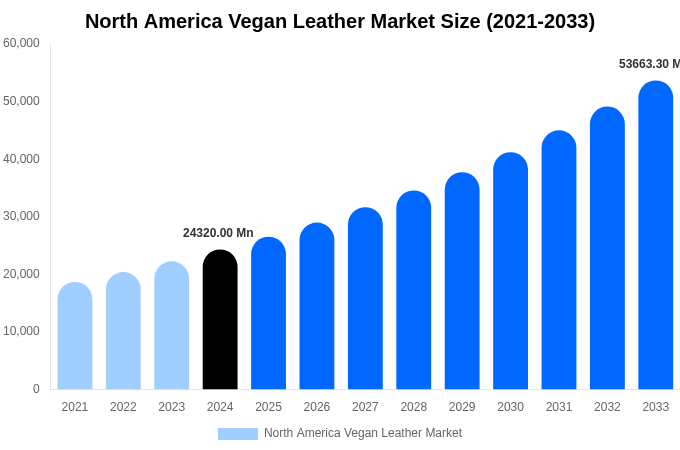
Source: DMI Analysis Company Publications, Primary Interviews.

Other Key Findings
- The global Vegan Leather Market size saw North America holding a share of 33.17% in 2025.
- United States is forecasted to account for the leading share of the global market by 2034.
- In North America, United States is forecasted to be the fastest-expanding market, projected to reach USD 47053.4 Million by 2034.
North America Vegan Leather Market Market Dynamics
- North America's vegan leather market is advancing as manufacturers across fashion, automotive, furniture, and consumer goods accelerate the adoption of animal-free materials. Consumers increasingly prioritize products that combine premium aesthetics, durability, and measurable environmental benefits over conventional leather alternatives.
- Fashion retailers, automotive suppliers, furniture manufacturers, lifestyle brands, specialty stores, and e-commerce platforms collectively create a diversified commercial ecosystem. Direct-to-consumer sales, omnichannel retail strategies, and strategic collaborations continue improving product accessibility throughout the region.
- Product innovation focuses on mushroom-based leather, cactus-derived materials, recycled polymers, bio-based polyurethane, water-based coatings, and circular manufacturing processes. Companies continue investing in scalable production technologies that improve durability, flexibility, and commercial viability across multiple end-use industries.
- Competitive activity emphasizes sustainability certifications, material performance, supply chain transparency, and long-term partnerships with apparel and automotive brands. Manufacturers continue strengthening research capabilities while expanding commercial applications for next-generation bio-based materials.
Key Industry Insights
- More than 60% of North American consumers consider sustainability when purchasing lifestyle products.
- Recycled polymers remain widely used in vegan leather manufacturing.
- Automotive manufacturers continue evaluating animal-free interior materials.
- Direct-to-consumer channels strengthen premium product accessibility.
North America Vegan Leather Market Country 2026-2034 (USD Million)
| North America | 2022 | 2023 | 2024 | 2025 | 2026 | 2027 | 2028 | 2029 | 2030 | 2031 | 2032 | 2033 | 2034 |
|---|---|---|---|---|---|---|---|---|---|---|---|---|---|
| United States | XX.x | XX.x | XX.x | XX.x | XX.x | XX.x | XX.x | XX.x | XX.x | XX.x | XX.x | XX.x | XX.x |
| Canada | XX.x | XX.x | XX.x | XX.x | XX.x | XX.x | XX.x | XX.x | XX.x | XX.x | XX.x | XX.x | XX.x |
| Total | XX.x | XX.x | XX.x | XX.x | XX.x | XX.x | XX.x | XX.x | XX.x | XX.x | XX.x | XX.x | XX.x |
Source: DMI Analysis Company Publications, Primary Interviews.
North America Vegan Leather Market Source Material 2026-2034 (USD Million)
| Source Material | 2022 | 2023 | 2024 | 2025 | 2026 | 2027 | 2028 | 2029 | 2030 | 2031 | 2032 | 2033 | 2034 |
|---|---|---|---|---|---|---|---|---|---|---|---|---|---|
| PU-based vegan leather | XX.x | XX.x | XX.x | 11819.71 | XX.x | XX.x | XX.x | XX.x | XX.x | XX.x | XX.x | XX.x | XX.x |
| PVC-based vegan leather | XX.x | XX.x | XX.x | XX.x | XX.x | XX.x | XX.x | XX.x | XX.x | XX.x | XX.x | XX.x | XX.x |
| Plant-based (pineapple, apple, mushroom, cactus) | XX.x | XX.x | XX.x | XX.x | XX.x | XX.x | XX.x | XX.x | XX.x | XX.x | XX.x | XX.x | XX.x |
| Recycled plastics and composite materials | XX.x | XX.x | XX.x | XX.x | XX.x | XX.x | XX.x | XX.x | XX.x | XX.x | XX.x | XX.x | XX.x |
| Total | XX.x | XX.x | XX.x | 28,828.56 | XX.x | XX.x | XX.x | XX.x | XX.x | XX.x | XX.x | XX.x | XX.x |
Source: DMI Analysis Company Publications, Primary Interviews.
North America Vegan Leather Market Application 2026-2034 (USD Million)
| Application | 2022 | 2023 | 2024 | 2025 | 2026 | 2027 | 2028 | 2029 | 2030 | 2031 | 2032 | 2033 | 2034 |
|---|---|---|---|---|---|---|---|---|---|---|---|---|---|
| Footwear | XX.x | XX.x | XX.x | 10170.71 | XX.x | XX.x | XX.x | XX.x | XX.x | XX.x | XX.x | XX.x | XX.x |
| Bags, wallets, and small leather goods | XX.x | XX.x | XX.x | XX.x | XX.x | XX.x | XX.x | XX.x | XX.x | XX.x | XX.x | XX.x | XX.x |
| Apparel and fashion accessories | XX.x | XX.x | XX.x | XX.x | XX.x | XX.x | XX.x | XX.x | XX.x | XX.x | XX.x | XX.x | XX.x |
| Automotive interiors | XX.x | XX.x | XX.x | XX.x | XX.x | XX.x | XX.x | XX.x | XX.x | XX.x | XX.x | XX.x | XX.x |
| Furniture and home décor | XX.x | XX.x | XX.x | XX.x | XX.x | XX.x | XX.x | XX.x | XX.x | XX.x | XX.x | XX.x | XX.x |
| Total | XX.x | XX.x | XX.x | 28,828.55 | XX.x | XX.x | XX.x | XX.x | XX.x | XX.x | XX.x | XX.x | XX.x |
Source: DMI Analysis Company Publications, Primary Interviews.
North America Vegan Leather Market End User 2026-2034 (USD Million)
| End User | 2022 | 2023 | 2024 | 2025 | 2026 | 2027 | 2028 | 2029 | 2030 | 2031 | 2032 | 2033 | 2034 |
|---|---|---|---|---|---|---|---|---|---|---|---|---|---|
| Fashion and lifestyle brands | XX.x | XX.x | XX.x | 13684.91 | XX.x | XX.x | XX.x | XX.x | XX.x | XX.x | XX.x | XX.x | XX.x |
| Automotive OEMs and aftermarket | XX.x | XX.x | XX.x | XX.x | XX.x | XX.x | XX.x | XX.x | XX.x | XX.x | XX.x | XX.x | XX.x |
| Furniture and interior brands | XX.x | XX.x | XX.x | XX.x | XX.x | XX.x | XX.x | XX.x | XX.x | XX.x | XX.x | XX.x | XX.x |
| Industrial and technical uses | XX.x | XX.x | XX.x | XX.x | XX.x | XX.x | XX.x | XX.x | XX.x | XX.x | XX.x | XX.x | XX.x |
| Total | XX.x | XX.x | XX.x | 28,828.55 | XX.x | XX.x | XX.x | XX.x | XX.x | XX.x | XX.x | XX.x | XX.x |
Source: DMI Analysis Company Publications, Primary Interviews.
North America Vegan Leather Market Sales Channel 2026-2034 (USD Million)
| Sales Channel | 2022 | 2023 | 2024 | 2025 | 2026 | 2027 | 2028 | 2029 | 2030 | 2031 | 2032 | 2033 | 2034 |
|---|---|---|---|---|---|---|---|---|---|---|---|---|---|
| B2B (manufacturers and brands) | XX.x | XX.x | XX.x | 12788.34 | XX.x | XX.x | XX.x | XX.x | XX.x | XX.x | XX.x | XX.x | XX.x |
| Specialty retail stores | XX.x | XX.x | XX.x | XX.x | XX.x | XX.x | XX.x | XX.x | XX.x | XX.x | XX.x | XX.x | XX.x |
| E-commerce brands | XX.x | XX.x | XX.x | XX.x | XX.x | XX.x | XX.x | XX.x | XX.x | XX.x | XX.x | XX.x | XX.x |
| Online marketplaces | XX.x | XX.x | XX.x | XX.x | XX.x | XX.x | XX.x | XX.x | XX.x | XX.x | XX.x | XX.x | XX.x |
| Total | XX.x | XX.x | XX.x | 28,828.55 | XX.x | XX.x | XX.x | XX.x | XX.x | XX.x | XX.x | XX.x | XX.x |
Source: DMI Analysis Company Publications, Primary Interviews.
Inside This Report
This section examines the North America vegan leather market through sustainability initiatives, manufacturing developments, material innovation, commercial applications, and competitive strategies. It highlights how ethical consumption, advanced material technologies, and diversified end-use industries influence commercial activity across the regional market.
- Regional market landscape: Reviews manufacturing ecosystem and commercial applications.
- Consumer and purchasing trends: Explores sustainability-driven purchasing behavior.
- Product innovation and distribution: Covers bio-based materials and omnichannel retail.
- Competitive and industry developments: Highlights research investment and strategic partnerships.
Report Summary
| Report Scope | Details |
|---|---|
| Base Year for Study | 2025 |
| Study Period | 2022-2034 |
| Historical Period | 2022-2024 |
| Forecast Period | 2026-2034 |
| Market Size In 2025 | USD 28828.56 Million |
| Market Size In 2034 | USD 65032.21 Million |
| Largest segment | PU-based vegan leather |
| Units | Revenue in USD Million |
| CAGR | 9.46% (2026-2034) |
| Report Coverage | Revenue Forecast, Competitive Landscape, Growth Factors, Environment & Regulatory Landscape and Trends |