Germany Sporting Goods Market Size & Outlook, 2026-2034
Last Updated : 27 July, 2026 |
Study Period : 2022-2034 |
Format : PDF, Excel |
Author : Anna Morgan
Germany Sporting Goods Market Insights
- According to Deep Market Insights analysis, the Germany Sporting Goods Market size was USD 64.36 Billion in 2025 and is projected to reach USD 145.24 Billion by 2034.
- The Germany market is projected to grow at a CAGR of 9.42% between 2026 and 2034.
- By segment, Footwear emerged as the largest Product type in terms of market size in 2025.
- Footwear is anticipated to remain the most attractive Product type segment, recording the fastest growth during the forecast period.
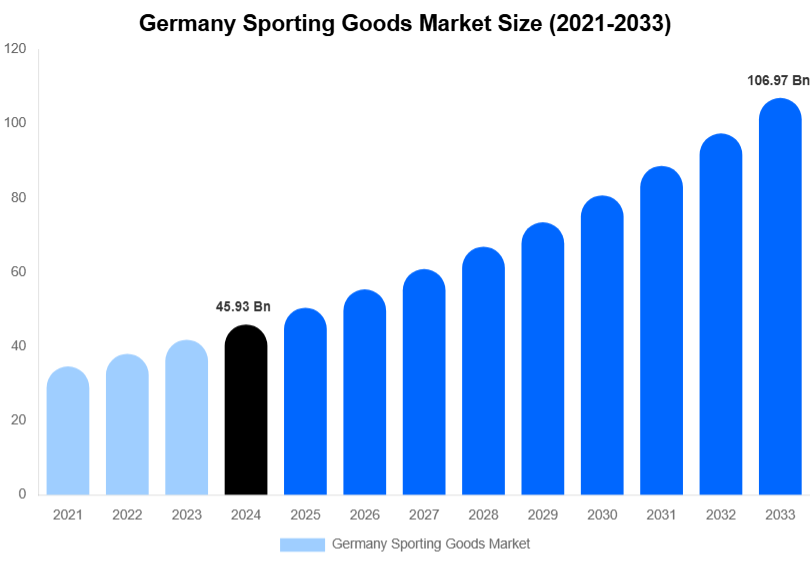
Source: DMI Analysis Company Publications, Primary Interviews.

Other Key Findings
- In 2025, Germany accounted for 7.6% of the global Sporting Goods Market size.
- By 2034, United States is expected to lead the global Sporting Goods Market in terms of market size.
- Within Europe, Germany is projected to dominate the regional Sporting Goods Market size by 2034.
- Russia is identified as the fastest-growing market in Europe, anticipated to reach USD 43.63 Billion by 2034.
Germany Sporting Goods Market Dynamics
- Germany's sporting goods market is driven by strong participation in football, cycling, hiking, winter sports, and recreational fitness. Consumers increasingly seek premium equipment, technical apparel, and durable accessories that combine performance, comfort, and environmental responsibility across both indoor and outdoor activities.
- Specialty sporting goods retailers, outdoor equipment stores, department stores, brand-owned outlets, and e-commerce platforms strengthen accessibility through extensive product portfolios and seamless omnichannel experiences. Digital product guidance, in-store demonstrations, and equipment testing encourage informed purchasing decisions and stronger customer engagement.
- Manufacturers prioritize sustainable materials, ergonomic product engineering, lightweight construction, and smart sports technologies to improve product differentiation. Innovation also includes recyclable components, repair-friendly designs, and responsibly sourced materials that align with environmentally conscious consumer preferences.
- Sporting goods companies collaborate with sports clubs, outdoor organizations, athletes, and recreational communities to promote active lifestyles and strengthen brand visibility. Continued investment in premium retail formats, localized manufacturing expertise, and digital commerce reinforces long-term competitiveness across Germany's sporting goods industry.
Key Industry Insights
- Cycling remains a widely practiced recreational activity.
- Outdoor recreation supports equipment purchases.
- Sustainable materials influence consumer preferences.
- Specialty retailers strengthen premium product accessibility.
Germany Sporting Goods Market Product type 2026-2034 (USD Billion)
| Product type | 2022 | 2023 | 2024 | 2025 | 2026 | 2027 | 2028 | 2029 | 2030 | 2031 | 2032 | 2033 | 2034 |
|---|---|---|---|---|---|---|---|---|---|---|---|---|---|
| Footwear | XX.x | XX.x | XX.x | 28.46 | XX.x | XX.x | XX.x | XX.x | XX.x | XX.x | XX.x | XX.x | XX.x |
| Apparel | XX.x | XX.x | XX.x | XX.x | XX.x | XX.x | XX.x | XX.x | XX.x | XX.x | XX.x | XX.x | XX.x |
| Equipment | XX.x | XX.x | XX.x | XX.x | XX.x | XX.x | XX.x | XX.x | XX.x | XX.x | XX.x | XX.x | XX.x |
| Accessories | XX.x | XX.x | XX.x | XX.x | XX.x | XX.x | XX.x | XX.x | XX.x | XX.x | XX.x | XX.x | XX.x |
| Total | XX.x | XX.x | XX.x | 64.36 | XX.x | XX.x | XX.x | XX.x | XX.x | XX.x | XX.x | XX.x | XX.x |
Source: DMI Analysis Company Publications, Primary Interviews.
Germany Sporting Goods Market End user 2026-2034 (USD Billion)
| End user | 2022 | 2023 | 2024 | 2025 | 2026 | 2027 | 2028 | 2029 | 2030 | 2031 | 2032 | 2033 | 2034 |
|---|---|---|---|---|---|---|---|---|---|---|---|---|---|
| Men | XX.x | XX.x | XX.x | 29.17 | XX.x | XX.x | XX.x | XX.x | XX.x | XX.x | XX.x | XX.x | XX.x |
| Women | XX.x | XX.x | XX.x | XX.x | XX.x | XX.x | XX.x | XX.x | XX.x | XX.x | XX.x | XX.x | XX.x |
| Children | XX.x | XX.x | XX.x | XX.x | XX.x | XX.x | XX.x | XX.x | XX.x | XX.x | XX.x | XX.x | XX.x |
| Total | XX.x | XX.x | XX.x | 64.37 | XX.x | XX.x | XX.x | XX.x | XX.x | XX.x | XX.x | XX.x | XX.x |
Source: DMI Analysis Company Publications, Primary Interviews.
Germany Sporting Goods Market Sport type 2026-2034 (USD Billion)
| Sport type | 2022 | 2023 | 2024 | 2025 | 2026 | 2027 | 2028 | 2029 | 2030 | 2031 | 2032 | 2033 | 2034 |
|---|---|---|---|---|---|---|---|---|---|---|---|---|---|
| Outdoor | XX.x | XX.x | XX.x | 30.03 | XX.x | XX.x | XX.x | XX.x | XX.x | XX.x | XX.x | XX.x | XX.x |
| Team Sports | XX.x | XX.x | XX.x | XX.x | XX.x | XX.x | XX.x | XX.x | XX.x | XX.x | XX.x | XX.x | XX.x |
| Fitness Equipment | XX.x | XX.x | XX.x | XX.x | XX.x | XX.x | XX.x | XX.x | XX.x | XX.x | XX.x | XX.x | XX.x |
| Total | XX.x | XX.x | XX.x | 64.36 | XX.x | XX.x | XX.x | XX.x | XX.x | XX.x | XX.x | XX.x | XX.x |
Source: DMI Analysis Company Publications, Primary Interviews.
Germany Sporting Goods Market Distribution channel 2026-2034 (USD Billion)
| Distribution channel | 2022 | 2023 | 2024 | 2025 | 2026 | 2027 | 2028 | 2029 | 2030 | 2031 | 2032 | 2033 | 2034 |
|---|---|---|---|---|---|---|---|---|---|---|---|---|---|
| Specialty Stores | XX.x | XX.x | XX.x | 31.95 | XX.x | XX.x | XX.x | XX.x | XX.x | XX.x | XX.x | XX.x | XX.x |
| Mass Retail | XX.x | XX.x | XX.x | XX.x | XX.x | XX.x | XX.x | XX.x | XX.x | XX.x | XX.x | XX.x | XX.x |
| E-commerce | XX.x | XX.x | XX.x | XX.x | XX.x | XX.x | XX.x | XX.x | XX.x | XX.x | XX.x | XX.x | XX.x |
| Total | XX.x | XX.x | XX.x | 64.35 | XX.x | XX.x | XX.x | XX.x | XX.x | XX.x | XX.x | XX.x | XX.x |
Source: DMI Analysis Company Publications, Primary Interviews.
Inside This Report
This section examines Germany's sporting goods market through participation trends, retail developments, product innovation, sustainability initiatives, and commercial strategies. It highlights how manufacturers and retailers strengthen competitiveness by enhancing product performance, expanding omnichannel retail, and supporting active lifestyle participation.
- Country market landscape: Reviews Germany's sporting goods ecosystem.
- Consumer and purchasing trends: Explores outdoor recreation and fitness habits.
- Product innovation and distribution: Covers sustainable materials and technical products.
- Competitive and industry developments: Highlights retail innovation and industry partnerships.
Report Summary
| Report Scope | Details |
|---|---|
| Base Year for Study | 2025 |
| Study Period | 2022-2034 |
| Historical Period | 2022-2024 |
| Forecast Period | 2026-2034 |
| Market Size In 2025 | USD 64.36 Billion |
| Market Size In 2034 | USD 145.24 Billion |
| Largest segment | Footwear |
| Units | Revenue in USD Billion |
| CAGR | 9.42% (2026-2034) |
| Report Coverage | Revenue Forecast, Competitive Landscape, Growth Factors, Environment & Regulatory Landscape and Trends |