United States Leather Goods Market Size & Outlook, 2026-2034
Last Updated : 29 July, 2026 |
Study Period : 2022-2034 |
Format : PDF, Excel |
Author : Anna Morgan
United States Leather Goods Market Insights
- As highlighted in Deep Market Insights analysis, the United States Leather Goods Market, worth USD 138.43 Billion in 2025, is forecasted to achieve USD 249.92 Billion by 2034.
- The United States market is anticipated to grow at a CAGR of 6.73% during the period 2026–2034.
- By 2025, Handbags represented the largest share of the Product market size.
- Handbags is expected to remain the key growth driver within Product, registering the fastest CAGR during the forecast period.
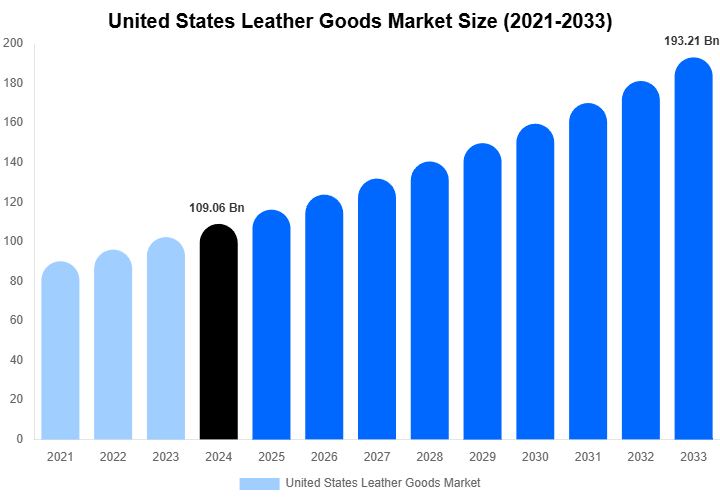
Source: DMI Analysis Company Publications, Primary Interviews.

Other Key Findings
- As of 2025, United States held 25.78% of the global Leather Goods Market size.
- By 2034, United States is anticipated to capture the largest share of the global Leather Goods Market.
- In North America, United States is expected to lead the regional Leather Goods Market size by 2034.
- United States will remain the fastest-growing market in North America, reaching USD 248.76 Billion by 2034.
United States Leather Goods Market Dynamics
- The United States leather goods market continues expanding through rising consumer spending on premium fashion accessories, increasing demand for luxury lifestyle products, growing preference for sustainable materials, and expanding adoption of personalized fashion products. Consumers increasingly seek handbags, wallets, belts, luggage, backpacks, footwear, briefcases, travel accessories, and small leather goods that combine premium quality, durability, functionality, and contemporary design.
- Department stores, luxury boutiques, specialty leather retailers, warehouse clubs, shopping malls, e-commerce platforms, direct-to-consumer brands, and online retailers strengthen accessibility through diversified distribution channels. Companies increasingly improve omnichannel retail strategies, premium product portfolios, digital customer engagement, personalized shopping experiences, and exclusive brand collaborations to strengthen customer retention.
- Manufacturers invest in premium leather, recycled leather materials, plant-based leather alternatives, sustainable sourcing, advanced tanning technologies, digital customization, smart manufacturing, sustainable packaging, recyclable materials, and artisan craftsmanship to strengthen competitive differentiation. Innovation also emphasizes luxury finishes, durability, sustainability, lightweight construction, customization, and premium product quality.
- Manufacturers collaborate with leather suppliers, fashion brands, retailers, logistics providers, e-commerce companies, designers, luxury houses, and research institutions to strengthen supply chain resilience and product innovation. Continued investment in sustainable materials, advanced manufacturing technologies, premium craftsmanship, and omnichannel retail capabilities reinforces competitiveness across the United States leather goods industry.
Key Industry Insights
- Luxury fashion strengthens demand.
- Sustainable materials expand adoption.
- Product customization improves competitiveness.
- Direct-to-consumer channels enhance growth.
United States Leather Goods Market Product 2026-2034 (USD Billion)
| Product | 2022 | 2023 | 2024 | 2025 | 2026 | 2027 | 2028 | 2029 | 2030 | 2031 | 2032 | 2033 | 2034 |
|---|---|---|---|---|---|---|---|---|---|---|---|---|---|
| Handbags | XX.x | XX.x | XX.x | 55.94 | XX.x | XX.x | XX.x | XX.x | XX.x | XX.x | XX.x | XX.x | XX.x |
| Footwear | XX.x | XX.x | XX.x | XX.x | XX.x | XX.x | XX.x | XX.x | XX.x | XX.x | XX.x | XX.x | XX.x |
| Wallets | XX.x | XX.x | XX.x | XX.x | XX.x | XX.x | XX.x | XX.x | XX.x | XX.x | XX.x | XX.x | XX.x |
| Belts | XX.x | XX.x | XX.x | XX.x | XX.x | XX.x | XX.x | XX.x | XX.x | XX.x | XX.x | XX.x | XX.x |
| Total | XX.x | XX.x | XX.x | 138.43 | XX.x | XX.x | XX.x | XX.x | XX.x | XX.x | XX.x | XX.x | XX.x |
Source: DMI Analysis Company Publications, Primary Interviews.
United States Leather Goods Market Tier 2026-2034 (USD Billion)
| Tier | 2022 | 2023 | 2024 | 2025 | 2026 | 2027 | 2028 | 2029 | 2030 | 2031 | 2032 | 2033 | 2034 |
|---|---|---|---|---|---|---|---|---|---|---|---|---|---|
| Luxury | XX.x | XX.x | XX.x | 67.88 | XX.x | XX.x | XX.x | XX.x | XX.x | XX.x | XX.x | XX.x | XX.x |
| Premium | XX.x | XX.x | XX.x | XX.x | XX.x | XX.x | XX.x | XX.x | XX.x | XX.x | XX.x | XX.x | XX.x |
| Mass | XX.x | XX.x | XX.x | XX.x | XX.x | XX.x | XX.x | XX.x | XX.x | XX.x | XX.x | XX.x | XX.x |
| Total | XX.x | XX.x | XX.x | 138.41 | XX.x | XX.x | XX.x | XX.x | XX.x | XX.x | XX.x | XX.x | XX.x |
Source: DMI Analysis Company Publications, Primary Interviews.
United States Leather Goods Market Material 2026-2034 (USD Billion)
| Material | 2022 | 2023 | 2024 | 2025 | 2026 | 2027 | 2028 | 2029 | 2030 | 2031 | 2032 | 2033 | 2034 |
|---|---|---|---|---|---|---|---|---|---|---|---|---|---|
| Genuine leather | XX.x | XX.x | XX.x | XX.x | XX.x | XX.x | XX.x | XX.x | XX.x | XX.x | XX.x | XX.x | XX.x |
| Synthetic | XX.x | XX.x | XX.x | XX.x | XX.x | XX.x | XX.x | XX.x | XX.x | XX.x | XX.x | XX.x | XX.x |
| Total | XX.x | XX.x | XX.x | XX.x | XX.x | XX.x | XX.x | XX.x | XX.x | XX.x | XX.x | XX.x | XX.x |
Source: DMI Analysis Company Publications, Primary Interviews.
United States Leather Goods Market Channel 2026-2034 (USD Billion)
| Channel | 2022 | 2023 | 2024 | 2025 | 2026 | 2027 | 2028 | 2029 | 2030 | 2031 | 2032 | 2033 | 2034 |
|---|---|---|---|---|---|---|---|---|---|---|---|---|---|
| Offline retail | XX.x | XX.x | XX.x | XX.x | XX.x | XX.x | XX.x | XX.x | XX.x | XX.x | XX.x | XX.x | XX.x |
| E-commerce | XX.x | XX.x | XX.x | XX.x | XX.x | XX.x | XX.x | XX.x | XX.x | XX.x | XX.x | XX.x | XX.x |
| Total | XX.x | XX.x | XX.x | XX.x | XX.x | XX.x | XX.x | XX.x | XX.x | XX.x | XX.x | XX.x | XX.x |
Source: DMI Analysis Company Publications, Primary Interviews.
Report Summary
| Report Scope | Details |
|---|---|
| Base Year for Study | 2025 |
| Study Period | 2022-2034 |
| Historical Period | 2022-2024 |
| Forecast Period | 2026-2034 |
| Market Size In 2025 | USD 138.43 Billion |
| Market Size In 2034 | USD 249.92 Billion |
| Largest segment | Handbags |
| Units | Revenue in USD Billion |
| CAGR | 6.73% (2026-2034) |
| Report Coverage | Revenue Forecast, Competitive Landscape, Growth Factors, Environment & Regulatory Landscape and Trends |