Global Yerba Mate Market Size
According to Deep Market Insights, the global yerba mate market size was valued at USD 2,960 million in 2025 and is projected to grow from USD 3,143.52 million in 2026 to reach USD 4,246.58 million by 2031, expanding at a CAGR of 6.2% during the forecast period (2026–2031). The yerba mate market growth is primarily driven by the rising global shift toward natural stimulants, increasing demand for functional beverages, and the rapid expansion of ready-to-drink (RTD) herbal energy drinks across North America, Europe, and Asia-Pacific.
Key Market Insights
- RTD yerba mate beverages are gaining strong traction globally, driven by demand for convenient, on-the-go natural energy drinks among urban consumers.
- Latin America remains the core consumption hub, with Argentina, Brazil, and Paraguay accounting for the majority of traditional yerba mate demand.
- North America is a key import-driven growth market, supported by rising demand for clean-label and plant-based energy alternatives.
- Europe is witnessing strong adoption in premium wellness and organic beverage segments, particularly in Germany, the UK, and Spain.
- Asia-Pacific is the fastest-growing region, driven by café culture expansion, fitness trends, and rising interest in herbal stimulants.
- E-commerce and direct-to-consumer channels are reshaping distribution, enabling global access to niche yerba mate brands.
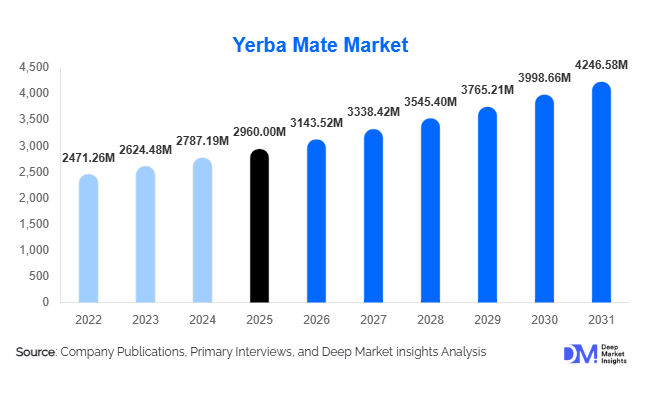
Global Yerba Mate Market Latest Trends
RTD and Functional Beverage Innovation
The yerba mate market is undergoing rapid transformation through innovation in ready-to-drink (RTD) and functional beverage formats. Brands are introducing sparkling yerba mate, energy-infused blends, and flavored variants targeting younger consumers seeking healthier alternatives to synthetic energy drinks. This trend is significantly expanding consumption beyond traditional South American markets into North America, Europe, and urban Asia. Product innovation is also enhancing shelf appeal through low-sugar, organic, and antioxidant-rich formulations, positioning yerba mate as a premium wellness beverage.
Premiumization and Organic Certification Growth
Consumers are increasingly shifting toward premium, organic, and sustainably sourced yerba mate products. This is driving higher demand for certified organic cultivation and eco-friendly packaging solutions. Premiumization is particularly strong in Europe and North America, where consumers are willing to pay higher prices for clean-label and ethically sourced beverages. Brands are investing in fair-trade certifications, regenerative agriculture, and carbon-neutral supply chains to strengthen brand positioning and expand global acceptance.
Global Market Drivers
Rising Demand for Natural Energy Alternatives
One of the strongest drivers of the yerba mate market is the global shift away from synthetic caffeine sources toward natural stimulants. Yerba mate is increasingly preferred over traditional energy drinks due to its balanced caffeine profile and antioxidant properties. This demand is especially strong among health-conscious consumers, athletes, and working professionals seeking sustained energy without crash effects. The trend is further reinforced by rising awareness of clean-label nutrition and plant-based diets.
Expansion of Café Culture and Functional Beverage Consumption
The global café culture is expanding rapidly, particularly in urban regions across North America, Europe, and Asia-Pacific. Yerba mate is increasingly being incorporated into café menus as iced beverages, lattes, and energy drinks. This has significantly boosted mainstream visibility and consumer trial rates. Specialty beverage chains and wellness cafés are also integrating yerba mate into functional drink offerings, strengthening its position in the global beverage ecosystem.
Global Market Restraints
Limited Awareness in Non-Traditional Markets
Despite growing global penetration, yerba mate still faces limited consumer awareness outside Latin America. In many regions, it is perceived as a niche or ethnic beverage, restricting mass-market adoption. Lack of familiarity with preparation methods and taste profiles further slows penetration in Asia and parts of Europe. Brands must invest heavily in marketing and education to overcome these barriers.
Raw Material Supply Volatility
The yerba mate industry is heavily dependent on agricultural production in Argentina, Brazil, and Paraguay. Climate variability, seasonal yield fluctuations, and farming limitations can lead to supply instability. This impacts pricing consistency and creates challenges for global manufacturers relying on steady raw material imports. Such volatility can also affect export volumes and profit margins across the value chain.
Global Yerba Mate Industry Key Opportunities
Expansion into RTD Functional Beverage Category
The fastest-growing opportunity lies in the RTD functional beverage segment, where yerba mate is increasingly positioned as a natural energy drink alternative. Urban consumers are actively seeking healthier, portable beverages, creating strong demand for canned and bottled yerba mate drinks. This segment also enables higher margins compared to traditional loose-leaf products, making it attractive for new entrants and beverage giants.
Digital Commerce and Direct-to-Consumer Growth
E-commerce platforms are enabling global yerba mate brands to bypass traditional retail limitations and directly reach consumers. Subscription-based models, wellness marketplaces, and social media-driven sales are accelerating adoption. Digital channels also allow niche and premium brands to build strong global identities without heavy retail investments, significantly lowering entry barriers.
Report Scope
| Report Metric | Details |
|---|---|
| Market Size in 2025 | USD 2960.00 Million |
| Market Size in 2026 | USD 3143.52 Million |
| Market Size in 2031 | USD 4246.58 Million |
| CAGR | 6.2% (2026-2031) |
| Base Year for Estimation | 2025 |
| Historical Data | 2022-2024 |
| Forecast Period | 2026-2031 |
| Report Coverage | Revenue Forecast, Competitive Landscape, Supply Chain Disruption, Growth Factors, Environment & Regulatory Landscape and Trends |
| Geographies Covered | North America, Europe, APAC, Middle East and Africa, LATAM |
| Countries Covered | U.S., Canada, U.K., Germany, France, Spain, Italy, Russia, Nordic, Benelux, Rest of Europe, China, Korea, Japan, India, Australia, Singapore, Taiwan, South East Asia, Rest of Asia-Pacific, UAE, Turky, Saudi Arabia, South Africa, Egypt, Nigeria, Rest of MEA, Brazil, Mexico, Argentina, Chile, Colombia, Rest of LATAM |
Explore more data points, trends and opportunities Download Free Sample Report
Product Type Insights
Traditional yerba mate, consisting primarily of pure dried leaves, continues to dominate the global yerba mate market and is projected to account for approximately 34% of the global market share in 2025. The leadership of this segment is strongly supported by deep-rooted cultural consumption patterns across Latin American countries such as Argentina, Brazil, Paraguay, and Uruguay, where yerba mate remains an integral part of daily social and dietary routines. The segment also benefits from widespread product availability, affordability, and long-standing consumer familiarity. In addition, traditional yerba mate products are increasingly being positioned internationally as natural energy-enhancing beverages, further supporting export demand and market expansion.Blended and flavored yerba mate products are gaining substantial traction among younger consumers and first-time users, particularly in developed markets where taste diversification plays a critical role in product adoption. Fruit-infused, herbal, mint-based, and exotic flavor combinations are helping brands expand beyond traditional consumer groups and improve mainstream appeal. This trend is particularly strong in North America and Europe, where consumers increasingly seek functional beverages that combine health benefits with enhanced taste profiles.Organic yerba mate products are also witnessing rapid growth as consumers increasingly prioritize clean-label beverages, sustainably sourced ingredients, and environmentally responsible production practices. Rising awareness regarding pesticide-free cultivation and ethical sourcing standards is encouraging premiumization within the category. Organic certifications are becoming important competitive differentiators for manufacturers targeting health-conscious and environmentally aware consumers in developed economies.
Application Insights
Household consumption remains the dominant application segment within the global yerba mate market, supported by the beverage’s longstanding traditional usage across Latin American households. Daily consumption habits, cultural rituals, and strong intergenerational consumption patterns continue to drive segment leadership. The household segment also benefits from increasing product accessibility through supermarkets, specialty stores, and online retail channels, helping maintain consistent demand across both mature and emerging markets.The nutraceutical and functional beverage segment is expected to witness the fastest growth during the forecast period due to rising consumer interest in natural wellness products, energy-enhancing beverages, and metabolism-supporting formulations. Yerba mate is increasingly being incorporated into dietary supplements, herbal capsules, powdered drink mixes, detox products, and functional energy beverages due to its antioxidant properties, caffeine content, and perceived health benefits. Growing awareness regarding preventive healthcare and active lifestyle trends is further supporting segment expansion.The fitness and sports nutrition industry is also increasingly adopting yerba mate-based ingredients in natural pre-workout supplements and endurance-enhancing products. Consumers are actively seeking plant-based energy alternatives that offer sustained stimulation without the high sugar content associated with conventional energy drinks. As a result, sports nutrition brands are integrating yerba mate into functional beverages, protein blends, and hydration products targeted toward athletes and fitness-focused consumers.Additionally, cafés, restaurants, and beverage chains are playing a growing role in expanding global exposure to yerba mate through innovative menu offerings such as iced mate beverages, functional teas, energy infusions, and specialty wellness drinks. The expansion of café culture and premium beverage experiences is increasing product trial rates among younger consumers and supporting long-term category penetration in non-traditional markets.
Distribution Channel Insights
Supermarkets and hypermarkets continue to dominate the global yerba mate distribution landscape due to their extensive retail networks, strong product visibility, and ability to offer a wide variety of brands and packaging formats under a single platform. The segment benefits from high consumer footfall, organized shelf placement, and promotional activities that improve consumer awareness and purchasing frequency. Large retail chains also support bulk purchasing and private-label product expansion, further strengthening segment growth.Online retail and e-commerce platforms represent the fastest-growing distribution channel, driven by rising digital adoption, expanding direct-to-consumer business models, and increasing consumer preference for convenient purchasing experiences. E-commerce platforms allow manufacturers to reach international consumers more efficiently while enabling access to niche, premium, and organic yerba mate products that may not be widely available through conventional retail channels. Subscription-based beverage models, targeted digital marketing campaigns, and influencer-driven wellness promotion are further accelerating online sales growth.Specialty health stores continue to maintain a significant role in premium and organic yerba mate distribution, particularly across North America and Europe where consumers actively seek natural and functional wellness products. These stores often serve as important educational and product discovery channels for first-time buyers interested in herbal beverages and clean-label nutrition products.The café and foodservice channel is also expanding rapidly as coffee shops, wellness cafés, and hospitality providers increasingly introduce yerba mate beverages into their menus. This channel acts as a key consumer trial platform and contributes significantly to brand exposure, particularly among urban consumers seeking healthier alternatives to traditional caffeinated beverages.
Explore more data points, trends and opportunities Download Free Sample Report
Yerba Mate Market Segmentations
By Product Type
- Traditional Yerba Mate
- Blended Yerba Mate
- Flavored Yerba Mate
- Organic Yerba Mate
- Ready-to-Drink (RTD) Yerba Mate Beverages
By Form
- Loose Leaf
- Tea Bags
- Powdered / Instant Yerba Mate
- Liquid Concentrates
- RTD Bottled & Canned Beverages
By Distribution Channel
- Supermarkets & Hypermarkets
- Convenience Stores
- Specialty Health Stores
- Online Retail / E-commerce
- Foodservice
By End-Use Application
- Household Consumption
- Food & Beverage Industry
- Nutraceutical & Functional Supplements
- Fitness & Sports Nutrition
- Hospitality & Café Sector
Regional Insights
Latin America
Latin America dominates the global yerba mate market and is expected to account for approximately 41% of the global market share in 2025. Argentina alone contributes nearly 18–20% of worldwide consumption due to deeply embedded cultural consumption habits and widespread daily intake across households. Brazil and Paraguay also remain major production and consumption centers supported by favorable agricultural conditions and extensive cultivation infrastructure. Regional market growth is primarily driven by strong traditional demand, abundant raw material availability, established domestic supply chains, and the region’s long-standing expertise in yerba mate processing and exports. Increasing international demand for natural functional beverages is also encouraging export expansion from Latin American producers.
North America
North America is projected to hold around 24% market share in 2025, led primarily by the United States. The region is experiencing strong growth due to rising demand for plant-based energy beverages, natural caffeine alternatives, and functional wellness drinks among health-conscious consumers. Increasing consumer preference for clean-label products and reduced-sugar beverages is accelerating adoption of RTD yerba mate products across urban markets. The expansion of fitness culture, growing popularity of organic beverages, and strong innovation by beverage companies in flavored and convenience-oriented formulations are further supporting regional market growth. Canada is also emerging as a promising niche market driven by rising awareness regarding herbal wellness products.
Europe
Europe accounts for approximately 19% of the global yerba mate market, with Germany, the United Kingdom, France, and Spain representing major consumption hubs. Regional growth is being driven by increasing consumer demand for sustainable, organic, and ethically sourced beverages. European consumers are highly receptive to functional drinks offering natural energy and antioxidant benefits, which supports steady yerba mate adoption. Strict regulatory focus on clean-label food and beverage products is also encouraging premium organic product development. Additionally, rising vegan and plant-based lifestyle trends across the region are contributing to increasing demand for botanical beverage alternatives.
Asia-Pacific
Asia-Pacific is expected to register the fastest growth during the forecast period due to rapidly increasing health awareness, rising disposable incomes, and expanding urban café culture across China, India, Japan, South Korea, and Australia. The region is witnessing strong demand for herbal beverages, functional energy drinks, and convenient RTD products among younger consumers. Rapid modernization of retail infrastructure, increasing exposure to global wellness trends, and the growing influence of Western beverage consumption habits are accelerating market penetration. In addition, the expansion of e-commerce platforms and digital health-focused marketing campaigns is significantly enhancing product accessibility across emerging Asian economies.
Middle East & Africa
The Middle East & Africa region represents an emerging growth market for yerba mate, supported by increasing imports of premium functional beverages and the rapid expansion of café culture in countries such as the UAE and Saudi Arabia. Rising disposable income levels, expanding expatriate populations, and growing consumer interest in wellness-oriented lifestyles are contributing to gradual market development. Demand for premium herbal beverages among affluent urban consumers is encouraging retailers and hospitality chains to introduce yerba mate-based drinks into their product portfolios. The increasing popularity of specialty cafés and premium foodservice establishments is also supporting long-term regional growth potential.
Key Players in the Global Yerba Mate Market
- Guayakí Yerba Mate
- Las Marías (Taragüi)
- CBSe
- Rosamonte
- Cruz de Malta
- Piporé
- La Tranquera
- Mate Factor
- ECOTEAS
- Canarias
- Nobleza Gaucha
- Yerba Mate Reverde
- Hierbas del Litoral
- La Merced
- Soul Mate Tea