Smoked Meats Market Size
According to Deep Market Insights, the global smoked meats market size was valued at USD 39.82 billion in 2025 and is projected to grow from USD 40.58 billion in 2026 to reach USD 44.58 billion by 2031, expanding at a CAGR of 1.9% during the forecast period (2026–2031). The smoked meats market growth is primarily driven by increasing global demand for convenient protein-rich foods, expansion of foodservice chains, and rising consumer preference for premium and flavored meat products. Growing adoption of ready-to-eat meals, improved cold-chain infrastructure, and innovation in smoking and packaging technologies are further strengthening market expansion worldwide.
Key Market Insights
- Premium and clean-label smoked meats are gaining strong consumer traction, driven by demand for natural ingredients, reduced preservatives, and authentic wood-smoked flavors.
- Foodservice and quick-service restaurant expansion is accelerating bulk demand for smoked pork, beef brisket, and smoked poultry products globally.
- North America dominates global consumption, supported by established BBQ culture and high processed meat penetration.
- Asia-Pacific is the fastest-growing region, fueled by westernized diets, urbanization, and expanding organized retail channels.
- Vacuum and modified-atmosphere packaging technologies are improving shelf life and enabling long-distance exports.
- Automation and digital smoking technologies are improving yield efficiency while reducing production emissions and operating costs.
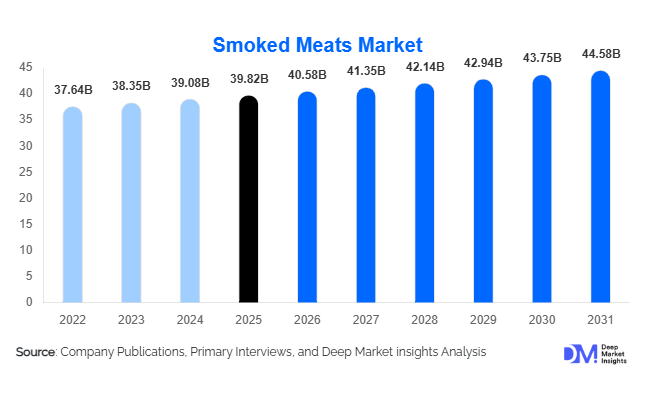
What are the latest trends in the smoked meats market?
Premiumization and Artisanal Smoking Techniques
The smoked meats industry is witnessing a strong shift toward premium and artisanal offerings. Consumers increasingly associate traditional wood smoking with authenticity, quality, and superior flavor, encouraging manufacturers to introduce small-batch and craft-style smoked products. Organic meats, nitrate-free curing, and natural hardwood smoking methods are becoming key differentiators in developed markets. Retailers are expanding premium private-label portfolios, while specialty meat brands are positioning smoked meats as gourmet products rather than basic processed foods. This premiumization trend allows producers to command higher margins while appealing to health-conscious and experience-driven consumers seeking transparency in sourcing and processing methods.
Technology-Driven Processing and Packaging Innovation
Technological advancements are reshaping production efficiency and product quality. Automated smoke chambers equipped with digital monitoring systems allow precise control over temperature, humidity, and smoke density, ensuring consistent flavor and safety compliance. Packaging innovations such as vacuum sealing and modified atmosphere packaging are extending shelf life while reducing food waste. Smart labeling, QR traceability, and cold-chain monitoring solutions are improving transparency across supply chains. These technological integrations not only enhance operational efficiency but also enable manufacturers to expand exports into emerging markets with longer distribution timelines.
What are the key drivers in the smoked meats market?
Growing Demand for Ready-to-Eat and Convenience Foods
Rapid urbanization and busy lifestyles are increasing reliance on convenient meal solutions. Smoked meats serve as ready-to-consume protein options that require minimal preparation, making them ideal for sandwiches, salads, frozen meals, and snack packs. Rising demand for convenience foods among working populations and younger consumers continues to accelerate retail sales worldwide. Food manufacturers are incorporating smoked meats into value-added prepared meals, further expanding consumption across multiple eating occasions.
Expansion of Foodservice and Global BBQ Culture
The proliferation of quick-service restaurants, casual dining chains, and specialty BBQ concepts has significantly boosted demand for smoked meats. Restaurants increasingly use smoked brisket, bacon, and smoked chicken as premium menu components that enhance flavor differentiation. Growth of global tourism and hospitality sectors is also driving institutional consumption, particularly in urban markets where dining-out culture continues to expand.
What are the restraints for the global market?
Health Concerns Around Processed Meat Consumption
Rising consumer awareness regarding sodium levels, preservatives, and processed meat intake presents a notable restraint. Regulatory scrutiny and nutritional labeling requirements are pushing manufacturers to reformulate products with cleaner ingredient profiles. While premium and natural smoked meats help mitigate these concerns, health perceptions continue to influence purchasing behavior in certain markets.
Volatility in Livestock and Raw Material Prices
Fluctuating pork, beef, and poultry prices significantly impact production costs. Feed price inflation, disease outbreaks, and supply chain disruptions can compress margins for processors. Since raw materials account for a majority share of manufacturing expenses, price instability remains a persistent operational challenge for market participants.
What are the key opportunities in the smoked meats industry?
Expansion in Emerging Asian Markets
Asia-Pacific markets present significant growth opportunities as western-style diets gain popularity. Rising disposable incomes and expanding supermarket networks in countries such as China, India, and Southeast Asia are increasing demand for processed protein products. Local production facilities and joint ventures allow global companies to reduce import costs while tailoring flavors to regional preferences.
Clean-Label and Functional Protein Innovations
Consumers increasingly prefer minimally processed foods with recognizable ingredients. This trend is encouraging manufacturers to introduce low-sodium, preservative-free, and organic smoked meats. High-protein snack packs and portion-controlled products are opening new consumption occasions beyond traditional meals, particularly among fitness-oriented consumers and younger demographics.
Report Scope
| Report Metric | Details |
|---|---|
| Market Size in 2025 | USD 39.82 Billion |
| Market Size in 2026 | USD 40.58 Billion |
| Market Size in 2031 | USD 44.58 Billion |
| CAGR | 1.9% (2026-2031) |
| Base Year for Estimation | 2025 |
| Historical Data | 2022-2024 |
| Forecast Period | 2026-2031 |
| Report Coverage | Revenue Forecast, Competitive Landscape, Supply Chain Disruption, Growth Factors, Environment & Regulatory Landscape and Trends |
| Geographies Covered | North America, Europe, APAC, Middle East and Africa, LATAM |
| Countries Covered | U.S., Canada, U.K., Germany, France, Spain, Italy, Russia, Nordic, Benelux, Rest of Europe, China, Korea, Japan, India, Australia, Singapore, Taiwan, South East Asia, Rest of Asia-Pacific, UAE, Turky, Saudi Arabia, South Africa, Egypt, Nigeria, Rest of MEA, Brazil, Mexico, Argentina, Chile, Colombia, Rest of LATAM |
Explore more data points, trends and opportunities Download Free Sample Report
Product Type Insights
The smoked meats market is primarily led by smoked pork, which continues to account for the largest revenue share globally due to its deep integration into traditional diets and modern convenience food consumption. Products such as bacon, ham, and sausages remain staple protein options across North America and Europe, supported by strong retail penetration, established processing infrastructure, and high consumer familiarity. The leading segment growth driver for smoked pork is the sustained demand for ready-to-cook and ready-to-eat protein products that offer extended shelf life, flavor enhancement, and meal convenience, making it highly suitable for both household consumption and foodservice applications.Smoked beef products are witnessing accelerated expansion, particularly through premium barbecue culture, specialty restaurants, and evolving culinary trends emphasizing slow-cooked and authentic smoked preparations. Increasing consumer willingness to pay for premium cuts such as brisket and pastrami is strengthening demand across developed markets while also expanding into emerging economies through international restaurant chains. Smoked poultry is gaining traction as consumers increasingly prioritize lean protein alternatives aligned with health-conscious lifestyles, lower fat consumption, and high-protein dietary trends. This shift is especially evident among younger consumers seeking balanced nutrition without sacrificing flavor.Smoked seafood, led by salmon and other premium fish varieties, maintains strong momentum in retail and hospitality channels due to its association with premium dining, wellness-focused diets, and high omega-3 nutritional value. Growth is supported by expanding cold-chain logistics and increased availability of packaged seafood products. Meanwhile, smoked lamb and specialty meats occupy niche yet profitable segments driven by regional culinary heritage, gourmet consumption patterns, and artisanal production methods, contributing to market diversification and premiumization.
Application Insights
Household consumption represents the dominant application segment, supported by rising demand for convenient meal solutions and increasing adoption of packaged smoked meat products suitable for quick preparation. The leading segment driver is the growing consumer preference for time-saving protein options that align with busy lifestyles while maintaining taste and nutritional value. Retail innovations such as pre-sliced portions, vacuum-sealed packaging, and flavored variants have further enhanced accessibility and repeat purchases among home consumers.Foodservice applications are expanding at a significant pace as restaurants, quick-service chains, and casual dining establishments increasingly incorporate smoked meats into diversified menus. Smoked meats are widely used in burgers, sandwiches, pizzas, breakfast offerings, and premium entrees, enabling operators to deliver distinctive flavor profiles and menu differentiation. The rise of barbecue-themed dining concepts and global culinary fusion trends continues to strengthen demand within this segment.Industrial food processing also represents a substantial application area, with smoked meats serving as key ingredients in frozen foods, ready meals, processed snacks, and packaged convenience products. Manufacturers benefit from the flavor stability and preservation advantages of smoked proteins, supporting large-scale production efficiency. Emerging applications such as protein-based snack products, meal kits, and high-protein convenience foods are generating incremental demand, particularly among urban consumers seeking functional and portable nutrition solutions.
Distribution Channel Insights
Supermarkets and hypermarkets dominate global distribution channels due to their advanced refrigeration infrastructure, extensive product assortments, and strong consumer trust in food safety standards. The leading driver for this segment is the ability to provide one-stop shopping experiences combined with private-label expansion and promotional pricing strategies, which encourage higher purchase volumes. Large retail chains also enable manufacturers to scale distribution efficiently across multiple regions.Convenience stores are gaining increasing relevance, particularly in densely populated urban markets where consumers prioritize quick purchasing options and ready-to-eat meal solutions. Rising urbanization and on-the-go consumption habits are reinforcing demand through this channel. Online retail and direct-to-consumer platforms are experiencing rapid growth as digital grocery adoption accelerates globally. Improvements in refrigerated delivery systems, subscription-based meat services, and e-commerce logistics have significantly enhanced consumer confidence in purchasing perishable products online.Specialty butcher shops and artisanal retailers continue to maintain an important presence, especially in Europe and North America, where consumers value craftsmanship, customization, and premium-quality smoked meat offerings. These outlets play a critical role in supporting high-margin products and preserving traditional smoking techniques that appeal to gourmet and specialty food consumers.
End-User Insights
Households remain the largest end-user segment, driven by increasing consumption of convenient protein foods that fit modern lifestyles. The leading segment driver is the growing reliance on ready-to-eat and minimally prepared meal components that reduce cooking time while maintaining flavor and nutritional appeal. Rising dual-income households and evolving eating habits continue to reinforce consistent demand across retail channels.The foodservice sector represents the fastest-growing end-user category, supported by global restaurant expansion, menu innovation, and premiumization trends. Restaurants increasingly use smoked meats to enhance menu value perception and create differentiated dining experiences. Growth in tourism, casual dining formats, and international cuisine adoption further strengthens foodservice demand.Industrial food manufacturers provide a stable and recurring demand base, as smoked meats remain essential ingredients in processed and packaged foods. Their extended shelf life and strong flavor profiles improve product consistency across mass-produced food items. Export-oriented consumption is also expanding, particularly in regions benefiting from tourism growth and hospitality sector development, where smoked meats are widely utilized in hotels, catering services, and international cuisine offerings.
Explore more data points, trends and opportunities Download Free Sample Report
Smoked Meats Market Segmentations
By Type
- Fish
- Pork
- Beef
- Poultry
- Others
By Application
- Hotel & Restaurant
- Barbecue
- Personal
- Others
Regional Insights
North America
North America remains the largest smoked meats market, contributing approximately 34% of global demand, driven by deeply rooted barbecue traditions, high per capita meat consumption, and advanced food processing capabilities. The United States leads regional growth through strong consumer preference for smoked and processed meats, widespread availability across retail and foodservice channels, and continuous product innovation in flavors and packaging formats. Regional growth is further supported by well-established cold-chain logistics, rising demand for premium and craft-smoked products, and the expansion of quick-service restaurant chains incorporating smoked proteins into menus. Canada demonstrates steady market expansion fueled by premium product adoption, increasing demand for organic and clean-label meats, and strong private-label penetration within major retail chains.
Europe
Europe accounts for nearly 29% of the global smoked meats market, supported by longstanding charcuterie traditions across Germany, the United Kingdom, Italy, Spain, and other Western European countries. Regional growth is driven by consumer preference for artisanal products, geographical indication specialties, and heritage smoking techniques that emphasize authenticity and quality. Increasing demand for organic, sustainably sourced, and minimally processed meats is shaping product innovation across the region. Additionally, rising interest in gourmet food experiences, premium retail offerings, and specialty delicatessen culture continues to strengthen market expansion, while evolving convenience trends support packaged sliced meat consumption.
Asia-Pacific
Asia-Pacific represents the fastest-growing regional market, fueled by rapid urbanization, rising disposable incomes, and growing exposure to Western dietary patterns. Countries such as China, India, Japan, South Korea, and Southeast Asian nations are witnessing expanding demand as consumers increasingly adopt protein-rich diets and modern retail formats. Regional growth drivers include rapid expansion of organized retail, increasing penetration of international restaurant chains, and rising demand for ready-to-eat convenience foods among urban populations. Improvements in cold-chain infrastructure and food processing investments are enabling broader product availability, while younger consumers are driving experimentation with global cuisines that incorporate smoked meat products.
Latin America
Latin America is experiencing steady growth led by Brazil and Mexico, supported by strong domestic meat production capabilities and expanding food processing industries. Regional growth is driven by improving cold storage infrastructure, retail modernization, and increasing availability of packaged meat products in supermarkets and hypermarkets. Rising middle-class populations and growing demand for convenient protein foods are encouraging adoption of smoked meats across household and foodservice sectors. Additionally, barbecue culture and traditional meat consumption patterns align well with smoked product offerings, creating favorable long-term growth prospects.
Middle East & Africa
The Middle East & Africa region is gradually emerging as a growth market, supported by expanding hospitality industries, rising urban populations, and increasing reliance on imported processed meat products. In the Middle East, demand is driven by tourism growth, hotel and restaurant expansion, and increasing availability of halal-certified smoked poultry and beef products tailored to regional dietary requirements. African markets are witnessing gradual development as investments in food processing infrastructure, retail modernization, and cold-chain logistics improve product accessibility. Urbanization and changing consumer lifestyles are encouraging greater adoption of packaged and ready-to-eat protein foods, supporting long-term regional market expansion.
Key Players in the Smoked Meats Market
- Tyson Foods
- Hormel Foods Corporation
- Smithfield Foods
- JBS S.A.
- Maple Leaf Foods
- BRF S.A.
- WH Group
- Danish Crown
- Perdue Farms
- Pilgrim’s Pride
- OSI Group
- Kerry Group
- Marfrig Global Foods
- Seaboard Corporation
- Bell Food Group