Sauces Market Size
According to Deep Market Insights, the global sauces market size was valued at USD 165.2 billion in 2025 and is projected to grow from USD 178.5 billion in 2026 to reach USD 255 billion by 2031, expanding at a CAGR of 7.4% during the forecast period (2026–2031). The sauces market growth is primarily driven by the increasing demand for convenience foods, rapid expansion of the global foodservice industry, and growing consumer preference for diverse and international flavors.
Key Market Insights
- Rising demand for convenience and ready-to-eat foods is significantly boosting the adoption of packaged sauces globally.
- Asia-Pacific dominates the global market, supported by high consumption of cooking sauces and expanding urban populations.
- Foodservice industry expansion, including QSRs and cloud kitchens, is a major demand generator for bulk sauces.
- Health-conscious consumption trends are driving demand for organic, low-sugar, and clean-label sauces.
- Online retail is emerging as a fast-growing distribution channel, reshaping purchasing behavior.
- Product innovation and premiumization are key strategies among leading manufacturers to enhance market share.
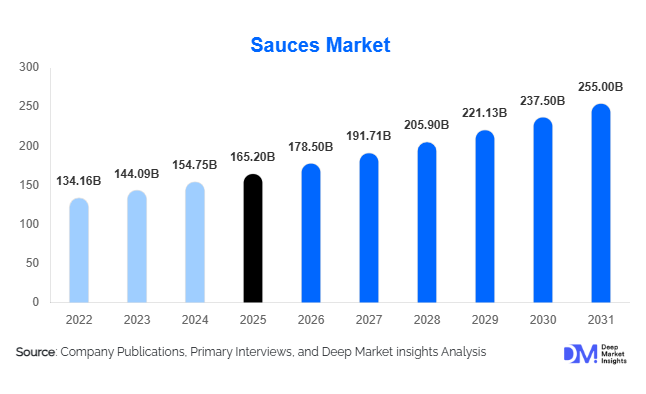
What are the latest trends in the sauces market?
Clean-Label and Health-Focused Sauces Gaining Popularity
Consumers are increasingly prioritizing health and transparency in food products, leading to strong demand for clean-label sauces. Manufacturers are reformulating products to eliminate artificial preservatives, reduce sodium and sugar content, and incorporate organic ingredients. This trend is particularly prominent in North America and Europe, where regulatory frameworks and consumer awareness are more advanced. Plant-based and allergen-free sauces are also gaining traction, catering to vegan and gluten-free diets. The shift toward healthier formulations is not only influencing product development but also enabling companies to command premium pricing and enhance brand loyalty.
Globalization of Flavors and Ethnic Sauce Expansion
The globalization of cuisines has significantly influenced the sauces market, with consumers seeking authentic international flavors. Asian sauces such as soy, teriyaki, and chili-based variants, along with Latin American and Middle Eastern sauces, are witnessing increased adoption across Western markets. Social media, food blogs, and cooking shows are playing a crucial role in driving this trend by exposing consumers to diverse culinary experiences. As a result, manufacturers are expanding their product portfolios to include region-specific and fusion sauces, catering to evolving taste preferences.
What are the key drivers in the sauces market?
Growth of Convenience Food Consumption
The rising demand for convenience foods is a major driver of the sauces market. Busy lifestyles, urbanization, and increasing participation of women in the workforce are encouraging consumers to opt for ready-to-use cooking solutions. Sauces enhance flavor while reducing preparation time, making them essential components of modern kitchens. This trend is particularly strong in emerging economies where disposable incomes are rising.
Expansion of Foodservice Industry
The rapid growth of quick-service restaurants, casual dining chains, and cloud kitchens is significantly driving demand for sauces. These establishments require standardized and high-quality sauces to maintain consistency across locations. Bulk procurement and long-term supplier contracts are common, providing stable revenue streams for manufacturers. The rise of online food delivery platforms has further amplified this demand.
What are the restraints for the global market?
Raw Material Price Volatility
The sauces market is highly sensitive to fluctuations in raw material prices, including tomatoes, edible oils, and spices. Climate change, supply chain disruptions, and geopolitical factors contribute to price instability, impacting production costs and profit margins. Manufacturers often face challenges in maintaining consistent pricing while ensuring product quality.
Stringent Regulatory Standards
Increasing regulatory scrutiny regarding food safety, labeling, and nutritional content poses challenges for market participants. Governments are imposing stricter limits on sugar, sodium, and preservatives, requiring manufacturers to reformulate products. Compliance with these regulations can increase operational costs and affect product taste, potentially impacting consumer acceptance.
What are the key opportunities in the sauces industry?
Premium and Functional Sauce Development
The growing demand for premium and functional food products presents significant opportunities in the sauces market. Consumers are willing to pay higher prices for sauces with added health benefits, such as probiotic content or fortified nutrients. Premium packaging, gourmet flavors, and artisanal production methods are also gaining traction, particularly among urban consumers.
Emerging Market Expansion
Emerging economies in Asia-Pacific, Latin America, and Africa offer substantial growth opportunities due to rising urbanization, increasing disposable incomes, and changing dietary habits. Localizing flavors to suit regional preferences while maintaining global quality standards is a key strategy for market penetration. These markets are expected to witness strong growth over the forecast period.
Report Scope
| Report Metric | Details |
|---|---|
| Market Size in 2025 | USD 165.2 Billion |
| Market Size in 2026 | USD 178.5 Billion |
| Market Size in 2031 | USD 255 Billion |
| CAGR | 7.4% (2026-2031) |
| Base Year for Estimation | 2025 |
| Historical Data | 2022-2024 |
| Forecast Period | 2026-2031 |
| Report Coverage | Revenue Forecast, Competitive Landscape, Supply Chain Disruption, Growth Factors, Environment & Regulatory Landscape and Trends |
| Geographies Covered | North America, Europe, APAC, Middle East and Africa, LATAM |
| Countries Covered | U.S., Canada, U.K., Germany, France, Spain, Italy, Russia, Nordic, Benelux, Rest of Europe, China, Korea, Japan, India, Australia, Singapore, Taiwan, South East Asia, Rest of Asia-Pacific, UAE, Turky, Saudi Arabia, South Africa, Egypt, Nigeria, Rest of MEA, Brazil, Mexico, Argentina, Chile, Colombia, Rest of LATAM |
Explore more data points, trends and opportunities Download Free Sample Report
Product Type Insights
The global sauces market is characterized by a diverse range of product categories, each catering to distinct consumer preferences, culinary traditions, and consumption occasions. Among these, table sauces—including ketchup, mayonnaise, mustard, and salad dressings—continue to dominate the market, accounting for approximately 34% of the total market share in 2025. The dominance of this segment can be attributed to its ubiquitous presence across both household and foodservice applications. Table sauces are staple accompaniments for a wide variety of foods such as snacks, fast food, sandwiches, and ready-to-eat meals, making them indispensable in daily consumption patterns.The leading position of table sauces is further supported by strong brand loyalty, extensive product availability, and continuous product innovation in terms of flavors, reduced sugar variants, and organic offerings. Additionally, aggressive marketing strategies and increasing penetration in emerging markets continue to strengthen their global footprint.Specialty and ethnic sauces represent one of the fastest-growing segments within the market. This growth is primarily driven by consumer curiosity and willingness to explore new and diverse flavors such as Korean, Thai, Mexican, and Middle Eastern cuisines. The rising multicultural population in urban centers and the expansion of global restaurant chains have further amplified demand for these niche products. Moreover, the premiumization trend, wherein consumers are willing to pay higher prices for unique and high-quality products, is supporting the growth of artisanal and gourmet sauces within this segment.
Ingredient Base Insights
The sauces market is also segmented based on ingredient base, reflecting the diversity of culinary traditions and consumer preferences across regions. Tomato-based sauces hold the largest share, accounting for nearly 28% of the market. Their dominance is largely driven by the widespread popularity of products such as ketchup, pizza sauces, and pasta sauces. The universal appeal of tomato-based products, combined with their compatibility with a wide range of cuisines, has solidified their leading position in the global market.The growth of this segment is further supported by continuous product innovation, including organic, low-sugar, and preservative-free variants. Additionally, the increasing consumption of fast food and Western-style meals in emerging economies is contributing to the rising demand for tomato-based sauces.Oil-based and vinegar-based sauces are gaining traction, particularly in North America and Europe. These sauces are often associated with health-conscious consumption patterns, as they are perceived to be lighter and more natural compared to cream-based alternatives. The increasing demand for clean-label and minimally processed products is further supporting the growth of these segments. Moreover, the rising popularity of salads, grilled foods, and Mediterranean diets is driving demand for oil-based dressings and vinaigrettes.The diversification of ingredient bases reflects a broader shift toward customization and personalization in food consumption. Consumers are increasingly seeking products that align with their dietary preferences, including vegan, gluten-free, and low-calorie options, prompting manufacturers to expand their ingredient portfolios.
Packaging Type Insights
Packaging plays a crucial role in influencing consumer purchasing decisions and ensuring product convenience, safety, and shelf life. Plastic bottles dominate the packaging segment, accounting for approximately 41% of the market share. The widespread adoption of plastic packaging can be attributed to its cost-effectiveness, lightweight nature, durability, and ease of handling. Additionally, innovations such as squeeze bottles and flip-top caps enhance user convenience, making plastic packaging highly preferred among consumers.Glass bottles, on the other hand, are typically associated with premium and high-quality products. They are often used for specialty sauces, gourmet offerings, and organic variants, where packaging aesthetics and perceived value play a significant role. Glass packaging is also favored for its non-reactive properties, which help preserve the flavor and quality of sauces.Pouches and sachets are gaining significant popularity, particularly in emerging markets across Asia, Latin America, and Africa. These packaging formats are highly affordable, portable, and suitable for single-use consumption, making them ideal for price-sensitive consumers. The growing trend of on-the-go consumption and the expansion of street food culture are further driving the demand for flexible packaging solutions.Bulk packaging remains essential for the foodservice industry, including restaurants, hotels, and catering services. Large-volume containers offer cost efficiency and convenience for commercial use, supporting the growth of this segment in parallel with the expansion of the global foodservice sector.
Distribution Channel Insights
The distribution landscape of the sauces market is highly dynamic, with multiple channels contributing to product accessibility and market growth. Supermarkets and hypermarkets dominate the distribution segment, accounting for approximately 46% of the market share. These retail formats offer a wide variety of products under one roof, enabling consumers to compare brands, prices, and product features. High consumer footfall, attractive promotional activities, and strategic shelf placements further enhance sales through these channels.The leading position of supermarkets and hypermarkets is driven by their strong supply chain networks, extensive geographic presence, and ability to offer competitive pricing. Additionally, the growing trend of organized retail in emerging economies is further supporting the expansion of this segment.Online retail is emerging as the fastest-growing distribution channel, driven by increasing internet penetration, smartphone usage, and changing consumer shopping behaviors. The convenience of home delivery, availability of a wide range of products, and access to detailed product information are key factors driving the growth of e-commerce platforms. The COVID-19 pandemic has also accelerated the adoption of online grocery shopping, a trend that continues to persist in the post-pandemic era.Other distribution channels, including convenience stores, specialty stores, and traditional retail outlets, continue to play a significant role, particularly in rural and semi-urban areas. These channels provide easy access to everyday essentials and cater to localized consumer needs.
End-Use Insights
Based on end-use, the sauces market is segmented into household consumption, foodservice, and food processing industries. Household consumption accounts for the largest share, representing approximately 52% of the market. The leading position of this segment is driven by the increasing trend of home cooking, influenced by factors such as health awareness, cost savings, and the growing popularity of culinary experimentation.The availability of a wide range of ready-to-use sauces has simplified meal preparation, encouraging consumers to incorporate diverse flavors into their daily diets. Additionally, rising disposable incomes and urbanization are contributing to increased spending on packaged food products, including sauces.The foodservice industry is the fastest-growing end-use segment, supported by the rapid expansion of quick-service restaurants (QSRs), cafes, and cloud kitchens. The growing demand for convenience foods, coupled with busy lifestyles, is driving consumers toward dining out and food delivery services. Sauces play a critical role in enhancing taste, consistency, and presentation in foodservice operations, thereby driving their demand in this segment.The food processing industry also represents a significant share of the market, utilizing sauces as key ingredients in ready meals, snacks, and packaged foods. The increasing demand for convenience foods and the growth of the processed food industry are key drivers supporting this segment.
Explore more data points, trends and opportunities Download Free Sample Report
Sauces Market Segmentations
By Product Type
- Table Sauces
- Cooking Sauces
- Specialty & Ethnic Sauces
By Ingredient Base
- Tomato-Based
- Soy-Based
- Oil-Based
- Dairy-Based
- Vinegar-Based
- Others
By Packaging Type
- Glass Bottles
- Plastic Bottles
- Pouches & Sachets
- Cans
- Bulk Packaging
By Distribution Channel
- Supermarkets & Hypermarkets
- Convenience Stores
- Online Retail
- Specialty Stores
- Foodservice/HoReCa
By End-Use
- Household Consumption
- Foodservice Industry
- Food Processing Industry
Regional Insights
Asia-Pacific
Asia-Pacific dominates the global sauces market, accounting for approximately 38% of the total market share in 2025. The region's leadership is primarily driven by its large population base, diverse culinary traditions, and high consumption of sauces as integral components of daily meals. Countries such as China, India, Japan, and Southeast Asian nations play a significant role in shaping regional demand dynamics.China leads the region due to its extensive use of soy-based and cooking sauces in traditional cuisine. The presence of a well-established food processing industry and strong domestic production further supports market growth. In India, rapid urbanization, increasing disposable incomes, and the westernization of dietary habits are driving the demand for packaged sauces, particularly tomato-based and fusion variants.Key growth drivers in the Asia-Pacific region include rising middle-class populations, increasing adoption of convenience foods, expansion of organized retail, and the growing influence of global cuisines. Additionally, the proliferation of food delivery platforms and cloud kitchens is significantly boosting sauce consumption across urban centers. Government initiatives supporting food processing industries and increasing foreign investments are further contributing to market expansion.
North America
North America holds approximately 24% of the global sauces market share, with the United States being the largest contributor. The region is characterized by high consumption of condiments such as ketchup, barbecue sauces, and salad dressings, reflecting well-established food habits and preferences.The strong presence of the foodservice industry, including fast-food chains and casual dining restaurants, is a major driver of sauce consumption in this region. Additionally, the growing demand for premium, organic, and clean-label products is influencing product innovation and market growth.Other key drivers include increasing health consciousness, leading to demand for low-sugar and low-fat sauces, and the rising popularity of international cuisines, which is expanding the market for ethnic and specialty sauces. The well-developed retail infrastructure and high penetration of e-commerce platforms further support market growth in North America.
Europe
Europe accounts for approximately 22% of the global sauces market, with major contributions from countries such as Germany, the United Kingdom, France, and Italy. The region is known for its diverse culinary heritage and strong demand for high-quality food products.The market in Europe is driven by increasing consumer preference for premium, organic, and sustainably sourced products. Health-conscious consumers are seeking sauces with natural ingredients, reduced additives, and clean-label certifications. This trend is encouraging manufacturers to innovate and introduce healthier product variants.Additional growth drivers include the rising popularity of gourmet and artisanal foods, the expansion of private-label brands by retailers, and increasing demand for convenience foods. The presence of a well-established food processing industry and strong regulatory frameworks supporting food quality and safety also contribute to market growth.
Latin America
Latin America contributes approximately 9% of the global sauces market, with Brazil and Mexico being key markets. The region is experiencing steady growth, driven by increasing urbanization, rising disposable incomes, and changing dietary patterns.The expansion of fast-food chains and the growing popularity of ready-to-eat meals are key factors driving sauce consumption in this region. Additionally, the rich culinary traditions of Latin America, which heavily incorporate sauces and condiments, support sustained demand.Other important growth drivers include the increasing penetration of modern retail formats, rising consumer awareness of packaged food products, and the growing influence of international cuisines. Government initiatives aimed at boosting the food processing sector and improving supply chain infrastructure are also contributing to market development.
Middle East & Africa
The Middle East & Africa region holds approximately 7% of the global market share, emerging as a promising growth market for sauces. The region's growth is supported by increasing urbanization, rising disposable incomes, and changing consumer lifestyles.The growing expatriate population and the influence of international cuisines are significantly driving demand for a wide variety of sauces. Additionally, the expansion of the foodservice industry, particularly in urban centers, is contributing to increased consumption.Key growth drivers in this region include the rising adoption of packaged and convenience foods, increasing investments in retail infrastructure, and the expansion of global food brands. Furthermore, improving economic conditions and growing consumer awareness are expected to create new opportunities for market players in the coming years.
Key Players in the Sauces Market
- Nestlé S.A.
- The Kraft Heinz Company
- Unilever PLC
- McCormick & Company, Inc.
- Conagra Brands, Inc.
- General Mills, Inc.
- Kikkoman Corporation
- Ajinomoto Co., Inc.
- Hormel Foods Corporation
- Campbell Soup Company
- Del Monte Foods, Inc.
- Fuchs Group
- Lee Kum Kee Company Limited
- Heinz Wattie’s
- Remia International