Pureed Baby Food Market Size
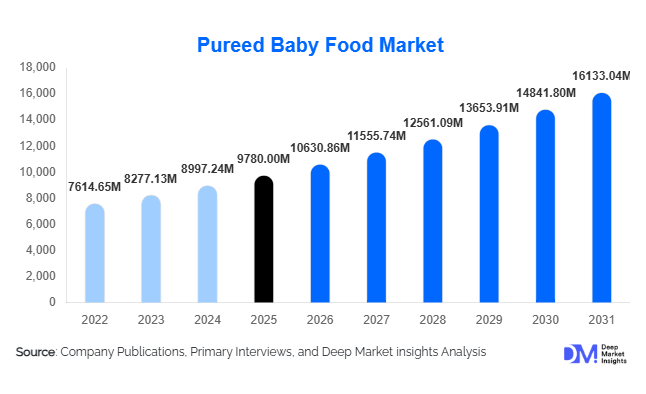
According to Deep Market Insights,the global pureed baby food market size was valued at USD 9,780 million in 2025 and is projected to grow from USD 10,630.86 million in 2026 to reach USD 16,133.04 million by 2031, expanding at a CAGR of 8.7% during the forecast period (2026–2031). The pureed baby food market growth is primarily driven by increasing parental awareness regarding infant nutrition, rising demand for convenient feeding solutions, and growing adoption of packaged baby foods among urban households.
Pureed baby foods are a fundamental category within the global infant nutrition industry, designed to support infants during the transition from milk-based diets to solid foods. These products typically contain blended fruits, vegetables, grains, dairy ingredients, or proteins and are formulated to provide balanced nutrition and smooth textures that are easy for infants to digest. The growing number of dual-income households worldwide has increased demand for ready-to-eat baby food products that reduce meal preparation time while maintaining high nutritional standards.
In addition, the growing popularity of organic and clean-label baby food products is reshaping the market landscape. Parents are increasingly prioritizing products that contain natural ingredients, minimal processing, and transparent labeling. Innovations in packaging, particularly resealable pouches and eco-friendly materials, are also improving product convenience and portability. These factors, combined with expanding distribution channels such as e-commerce platforms and specialty baby food stores, are expected to sustain strong growth in the pureed baby food market over the next decade.
Key Market Insights
- Fruit-based purees dominate the market, accounting for nearly 38% of global demand due to their natural sweetness, digestibility, and suitability for early-stage infant feeding.
- Convenient pouch packaging is rapidly replacing traditional glass jars, offering portability, resealability, and easy feeding for both parents and toddlers.
- North America leads the global market, supported by strong consumer purchasing power and high awareness of infant nutrition products.
- Asia-Pacific is the fastest-growing regional market, driven by rising birth rates, urbanization, and increasing disposable incomes in countries such as China and India.
- Organic and clean-label baby food products are expanding rapidly, reflecting growing consumer concerns about food safety and ingredient transparency.
- Online retail channels are transforming distribution, enabling direct-to-consumer sales, subscription-based delivery models, and personalized nutrition recommendations.
What are the latest trends in the pureed baby food market?
Rapid Growth of Organic and Clean-Label Baby Food
One of the most prominent trends in the pureed baby food market is the rising demand for organic and clean-label products. Parents increasingly prefer baby food products that are free from artificial preservatives, pesticides, and synthetic additives. As a result, manufacturers are expanding their organic product lines and investing in certified organic ingredient sourcing. The shift toward transparency in labeling has also encouraged brands to highlight ingredient origin, production methods, and nutritional value. Many companies now promote “no added sugar,” “non-GMO,” and “allergen-free” formulations, which resonate strongly with health-conscious consumers.
Innovative and Sustainable Packaging Solutions
Packaging innovations are significantly reshaping the pureed baby food market. Flexible pouch packaging has emerged as the most popular format due to its lightweight structure, portability, and ease of use. Pouches allow infants and toddlers to consume purees independently while reducing the risk of spills. Additionally, manufacturers are increasingly introducing recyclable and biodegradable packaging materials in response to growing environmental concerns. Sustainable packaging initiatives are becoming a major competitive differentiator among leading baby food brands.
What are the key drivers in the pureed baby food market?
Rising Demand for Convenient Infant Nutrition Products
The growing number of working parents globally is significantly increasing demand for ready-to-eat baby food products. Pureed baby foods provide a convenient feeding option that eliminates the need for time-consuming home preparation. These products are carefully formulated to ensure consistent nutritional value and safety, making them highly attractive for modern households with busy lifestyles. Urbanization and changing family structures have further accelerated the adoption of packaged baby food products.
Increasing Awareness of Infant Health and Nutrition
Healthcare professionals and pediatric nutritionists emphasize the importance of proper nutrition during early childhood development. This has encouraged parents to choose fortified and nutritionally balanced baby food products. Manufacturers are increasingly incorporating vitamins, minerals, probiotics, and omega-3 fatty acids into pureed baby food formulations to support cognitive development, immune health, and overall infant growth.
What are the restraints for the global market?
High Cost of Premium and Organic Baby Food Products
Premium baby food products, particularly those labeled organic or allergen-free, often carry higher price points compared to homemade alternatives. In price-sensitive markets, many parents continue to prepare baby food at home to reduce expenses. This price gap limits adoption of commercial baby food products in certain developing economies.
Strict Regulatory Standards for Infant Nutrition Products
The baby food industry is heavily regulated to ensure product safety and nutritional adequacy. Manufacturers must comply with strict food safety standards, ingredient restrictions, and labeling requirements across different countries. These regulatory frameworks increase production and compliance costs while creating entry barriers for smaller market participants.
What are the key opportunities in the pureed baby food industry?
Functional and Nutritionally Fortified Baby Foods
Growing demand for functional foods presents a major opportunity for the pureed baby food market. Products enriched with probiotics, iron, vitamins, and omega-3 fatty acids are gaining popularity among parents who seek enhanced nutritional benefits for their infants. Manufacturers investing in research and development to create nutritionally advanced baby food products are expected to gain a strong competitive advantage.
Expansion of E-commerce and Direct-to-Consumer Sales
Online retail channels are rapidly transforming the baby food distribution landscape. E-commerce platforms allow manufacturers to reach a wider customer base while offering personalized feeding recommendations and subscription-based delivery services. The growing adoption of online grocery platforms in countries such as China, the United States, and India is expected to significantly boost sales of pureed baby food products.
Report Scope
| Report Metric | Details |
|---|---|
| Market Size in 2025 | USD 9780 Million |
| Market Size in 2026 | USD 10630.86 Million |
| Market Size in 2031 | USD 16133.04 Million |
| CAGR | 8.7% (2026-2031) |
| Base Year for Estimation | 2025 |
| Historical Data | 2022-2024 |
| Forecast Period | 2026-2031 |
| Report Coverage | Revenue Forecast, Competitive Landscape, Supply Chain Disruption, Growth Factors, Environment & Regulatory Landscape and Trends |
| Geographies Covered | North America, Europe, APAC, Middle East and Africa, LATAM |
| Countries Covered | U.S., Canada, U.K., Germany, France, Spain, Italy, Russia, Nordic, Benelux, Rest of Europe, China, Korea, Japan, India, Australia, Singapore, Taiwan, South East Asia, Rest of Asia-Pacific, UAE, Turky, Saudi Arabia, South Africa, Egypt, Nigeria, Rest of MEA, Brazil, Mexico, Argentina, Chile, Colombia, Rest of LATAM |
Explore more data points, trends and opportunities Download Free Sample Report
Product Type Insights
Fruit-based purees represent the leading product segment in the global pureed baby food market, accounting for approximately 38% of total demand. The dominance of this segment is largely driven by the natural sweetness, smooth texture, and high digestibility of fruits, making them ideal as introductory foods for infants transitioning from milk-based nutrition. Fruits such as apples, bananas, pears, peaches, and mangoes are commonly used in baby food formulations due to their high vitamin, mineral, and fiber content, which supports healthy growth and digestive development during early infancy.
The growing consumer preference for minimally processed and naturally flavored baby foods is further supporting demand for fruit-based purees. Manufacturers are increasingly developing innovative fruit blends and fortified formulations that combine fruits with vegetables, grains, or proteins to enhance nutritional value while maintaining appealing taste profiles for infants.Vegetable-based purees, including carrot, pumpkin, sweet potato, peas, and spinach blends, represent another significant product segment. This segment is driven by rising parental awareness regarding the importance of introducing vegetables early in an infant's diet to support balanced nutrition and healthy eating habits. Pediatric nutrition guidelines in many countries also encourage early exposure to vegetables to reduce the likelihood of food aversions later in childhood.
Grain-based and protein-based purees are gaining increasing traction as infants progress into later feeding stages that require higher energy and protein intake. Grain-based products often incorporate oats, rice, quinoa, or barley, while protein-enriched purees include lentils, poultry, beans, and yogurt-based formulations. These products are designed to support muscle development, energy requirements, and overall nutritional balance.Additionally, organic pureed baby food products are witnessing particularly strong growth across global markets. Increasing consumer demand for pesticide-free ingredients, clean-label formulations, and sustainable agricultural practices is driving the expansion of organic product offerings. Many leading manufacturers are expanding their organic portfolios to capture premium market segments and meet evolving consumer preferences for natural infant nutrition solutions.
Application Insights
Household consumption represents the dominant application segment in the pureed baby food market, accounting for the majority of global demand. The growth of this segment is primarily driven by busy lifestyles, increasing urbanization, and the growing participation of women in the workforce, which has significantly increased reliance on convenient, ready-to-feed baby food products. Packaged pureed baby food provides consistent nutritional composition, safety assurance, and ease of use, making it a preferred choice for modern parents.In addition to convenience, strict regulatory standards governing infant nutrition products have enhanced consumer trust in commercially prepared baby foods. Manufacturers continue to invest in quality control, ingredient transparency, and product innovation to ensure safe and nutritionally balanced feeding solutions for infants.
Childcare centers and daycare facilities are emerging as important institutional consumers of pureed baby food products. As the number of working parents continues to increase globally, daycare centers are adopting standardized feeding programs that incorporate commercially prepared baby foods to maintain nutritional consistency and simplify food preparation processes.Hospitals and pediatric clinics also represent a niche but growing application segment. Healthcare institutions often utilize specialized baby food formulations for infants with specific nutritional needs, digestive sensitivities, or developmental conditions. These medically recommended products often include fortified or allergen-controlled formulations.Furthermore, export-driven demand from developing economies is increasing as international baby food brands expand their presence in emerging markets. Rising disposable incomes, improving retail access, and increasing awareness of infant nutrition are encouraging parents in developing countries to adopt packaged baby food products.
Distribution Channel Insights
Supermarkets and hypermarkets dominate the global distribution landscape for pureed baby food products, accounting for nearly 41% of total market sales. The leading position of this segment is driven by strong product visibility, wide product variety, promotional pricing strategies, and consumer trust in established retail chains. Large retail outlets allow consumers to compare multiple brands, ingredients, and product types, which supports higher purchasing volumes.Retailers are also expanding dedicated baby care sections, enabling parents to conveniently access a broad range of infant nutrition products including purees, cereals, snacks, and formula.Convenience stores and pharmacies represent another important distribution channel, particularly in densely populated urban areas where consumers prioritize quick and easy access to baby food products. Pharmacies often serve as trusted outlets for parents seeking specialized or medically recommended baby food products.
Online retail platforms are currently the fastest-growing distribution channel in the pureed baby food market. The rapid expansion of e-commerce platforms, mobile shopping applications, and digital payment systems has significantly improved accessibility to baby food products across global markets. Online channels allow consumers to access detailed product information, ingredient transparency, and customer reviews before making purchasing decisions.Additionally, direct-to-consumer sales models and subscription-based baby food delivery services are gaining traction. These services offer customized meal plans, organic product options, and convenient home delivery, enabling manufacturers to build stronger customer relationships and improve brand loyalty.
Age Group Insights
Stage 2 baby food products represent the leading age-group segment in the pureed baby food market, accounting for approximately 34% of global demand. This stage typically targets infants aged 6–8 months who are transitioning from simple single-ingredient purees to more complex multi-ingredient blends. The strong demand for Stage 2 products is driven by the need to introduce diverse flavors, textures, and nutritional components that support developmental growth and dietary variety.
Stage 2 products often combine fruits, vegetables, grains, and proteins to deliver balanced nutrition while maintaining a smooth texture suitable for infants who are still developing chewing abilities. Manufacturers are increasingly introducing innovative flavor combinations and fortified formulations that support immune development and digestive health.
Stage 1 baby food products, intended for infants aged 4–6 months, focus primarily on single-ingredient purees such as apples, carrots, pears, and sweet potatoes. These products are designed to introduce infants to solid foods gradually while minimizing the risk of allergic reactions or digestive discomfort.
Stage 3 baby food and toddler purees support older infants and young children who require more textured foods and higher nutritional density. These products often include chunkier textures, mixed ingredients, and protein-rich formulations that help support muscle growth, cognitive development, and overall energy requirements. The introduction of functional ingredients such as probiotics, omega-3 fatty acids, and plant-based proteins is also contributing to the growth of this segment.
Explore more data points, trends and opportunities Download Free Sample Report
Pureed Baby Food Market Segmentations
By Product Type
- Fruit-Based Purees
- Vegetable-Based Purees
- Grain-Based Purees
- Protein-Based Purees
- Dairy-Based Purees
- Organic Pureed Baby Food
- Conventional Pureed Baby Food
By Age Group
- Stage 1 (4–6 months)
- Stage 2 (6–8 months)
- Stage 3 (8–12 months)
- Toddler Purees (12–24 months)
By Packaging Format
- Pouches
- Glass Jars
- Plastic Tubs/Cups
- Carton Packs
By Distribution Channel
- Supermarkets & Hypermarkets
- Convenience Stores
- Pharmacies & Drugstores
- Online Retail / E-commerce
- Specialty Baby Food Stores
By Region
- North America
- Europe
- Asia-Pacific
- Latin America
- Middle East & Afric
Regional Insights
North America
North America holds the largest share of the global pureed baby food market, accounting for approximately 32% of total revenue. The United States represents the dominant market within the region due to high consumer awareness regarding infant nutrition, strong purchasing power, and the widespread availability of premium and organic baby food brands. The region benefits from a well-established retail infrastructure and strong distribution networks that ensure easy product availability across supermarkets, pharmacies, and online platforms.Several factors are driving market growth across North America, including increasing demand for organic baby food products, growing parental preference for clean-label ingredients, and rising adoption of convenient ready-to-feed baby food solutions. In addition, technological advancements in food processing, sustainable packaging innovations, and strong regulatory standards for infant nutrition are further supporting regional market expansion.
Europe
Europe accounts for nearly 29% of the global pureed baby food market, with Germany, France, and the United Kingdom representing the leading markets within the region. European consumers place strong emphasis on product quality, organic certification, ingredient transparency, and environmentally sustainable packaging solutions.The region benefits from stringent food safety regulations and well-established organic food standards, which have strengthened consumer confidence in packaged baby food products. Germany is one of the largest producers and exporters of baby food products in Europe, supported by advanced food processing infrastructure and strong research capabilities in infant nutrition.Growing demand for plant-based baby food formulations, increasing adoption of premium baby nutrition products, and strong government support for organic farming are key factors contributing to market growth across the European region.
Asia-Pacific
Asia-Pacific represents the fastest-growing regional market for pureed baby food, accounting for approximately 24% of global demand. Rapid population growth, rising disposable incomes, and increasing urbanization are key factors driving the expansion of the baby food market across the region.China dominates the regional market due to its large infant population and expanding middle-class consumer base. Chinese parents increasingly prefer imported baby food products due to concerns regarding domestic food safety, which has created strong opportunities for international baby food brands.India is also witnessing significant market growth driven by increasing awareness of infant nutrition, rising female workforce participation, and expanding modern retail infrastructure. The growing presence of e-commerce platforms is further improving access to baby food products across both urban and semi-urban regions.
Latin America
Latin America accounts for approximately 9% of the global pureed baby food market, with Brazil and Mexico emerging as the key regional markets. Increasing disposable incomes, expanding middle-class populations, and improving retail distribution networks are supporting the adoption of packaged baby food products across the region.Urbanization and changing lifestyles are encouraging parents to shift from traditional homemade baby food preparations to convenient packaged alternatives. In addition, multinational baby food manufacturers are strengthening their presence in Latin America through strategic partnerships, localized product offerings, and expanded distribution channels.
Middle East & Africa
The Middle East and Africa region represents roughly 6% of global demand for pureed baby food products. Market growth in this region is supported by rising birth rates, increasing disposable incomes, and expanding retail infrastructure.Countries such as the United Arab Emirates and Saudi Arabia are witnessing increased adoption of premium packaged baby food products due to higher consumer purchasing power and strong demand for imported infant nutrition products. The rapid growth of modern retail outlets and e-commerce platforms is also improving product availability across the region.South Africa represents one of the leading markets in the African region, driven by improving consumer awareness of infant nutrition and expanding distribution networks for baby food products.
Key Players in the Pureed Baby Food Market
- Nestlé S.A.
- Danone S.A.
- The Kraft Heinz Company
- Abbott Laboratories
- HiPP GmbH & Co. Vertrieb KG
- Hain Celestial Group
- Hero Group
- Campbell Soup Company
- Bellamy’s Organic
- Plum Organics
- Once Upon a Farm
- Baby Gourmet Foods
- Amara Organic Foods
- Little Spoon
- Ella’s Kitchen