Potato Protein Market Size
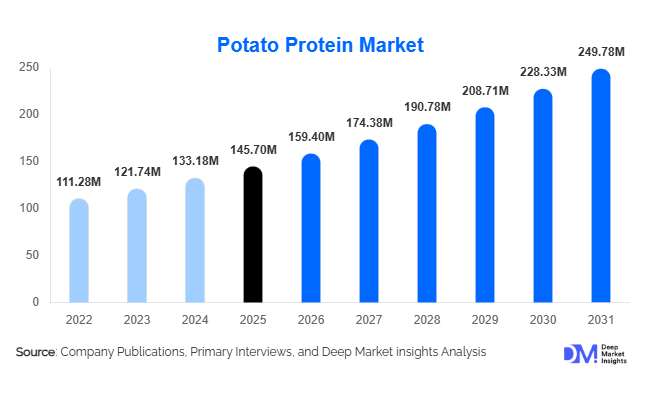
According to Deep Market Insights, the global potato protein market size was valued at USD 145.7 million in 2025 and is projected to grow from USD 159.40 million in 2026 to reach USD 249.78 million by 2031, expanding at a CAGR of 9.4% during the forecast period (2026–2031). The potato protein market growth is primarily driven by rising demand for plant-based proteins, increasing adoption of clean-label food ingredients, and expanding applications across meat alternatives, sports nutrition, and animal feed industries.
Key Market Insights
- Potato protein is increasingly gaining traction as a sustainable plant-based ingredient, supported by growing consumer preference for allergen-free and non-GMO proteins.
- Food and beverage applications dominate global demand, particularly in plant-based meat, bakery products, dairy alternatives, and nutritional beverages.
- Europe remains the largest production and consumption hub, driven by strong potato starch processing infrastructure in countries such as the Netherlands, Germany, and Denmark.
- Asia-Pacific is emerging as the fastest-growing regional market, fueled by rising protein consumption and rapid expansion of processed food industries in China and India.
- Animal nutrition and aquaculture feed industries are accelerating adoption, as feed manufacturers seek sustainable alternatives to fishmeal and soy protein.
- Technological advancements in protein extraction and purification, including membrane filtration and enzymatic processing, are improving protein yield, taste profile, and functionality.
potato protein market latest trends
Rapid Expansion of Plant-Based Food Formulations
The global shift toward plant-based nutrition is significantly influencing the potato protein market. Food manufacturers are increasingly utilizing potato protein in meat substitutes, vegan snacks, dairy alternatives, and functional beverages because of its strong emulsification, foaming, and water-binding properties. Consumers are actively seeking clean-label, allergen-free protein ingredients, positioning potato protein as an attractive alternative to soy and wheat proteins. Plant-based meat producers are also integrating potato protein to improve texture, juiciness, and product stability. Growing investments in vegan food innovation across North America and Europe are further strengthening product adoption.
Advanced Extraction Technologies Improving Product Quality
Manufacturers are increasingly adopting advanced extraction and purification technologies to enhance protein purity and sensory performance. Membrane filtration, enzymatic extraction, and low-temperature drying systems are enabling producers to improve protein functionality while minimizing off-flavors. These technological improvements are expanding potato protein applications in premium nutrition products and sports supplements. Companies are also investing in customized protein blends tailored for specific end-use industries, including bakery, dairy alternatives, and clinical nutrition. Sustainability-focused extraction systems that utilize potato processing by-products are becoming increasingly important as manufacturers align with circular economy objectives.
potato protein market drivers
Growing Demand for Sustainable Plant Proteins
Increasing awareness regarding environmental sustainability and animal welfare is driving consumer preference for plant-derived proteins globally. Potato protein production utilizes by-products from potato starch processing, making it a highly sustainable ingredient with lower environmental impact compared to animal proteins. Food manufacturers are actively reformulating products to incorporate plant-based proteins that support clean-label positioning and carbon reduction goals. The rapid rise of vegan and flexitarian diets across developed economies is significantly contributing to market expansion.
Rising Utilization in Functional Foods and Sports Nutrition
Potato protein is gaining strong acceptance within functional food and sports nutrition industries due to its favorable amino acid profile and high digestibility. Consumers increasingly prefer allergen-free protein supplements that do not contain dairy or soy ingredients. Sports nutrition manufacturers are integrating potato protein into protein powders, recovery beverages, and meal replacement products targeting fitness-focused consumers. The ingredient’s superior foaming and solubility characteristics also support its usage in high-protein beverages and nutritional snacks. Increasing health awareness and active lifestyle trends are expected to continue driving demand globally.
global market restraints
High Production and Processing Costs
Potato protein extraction requires advanced processing technologies, including membrane filtration and specialized drying systems, which increase production costs. Compared to soy protein and certain other plant proteins, potato protein remains relatively expensive, limiting adoption in price-sensitive applications. Operational costs associated with energy-intensive extraction processes and transportation further impact overall profitability. Manufacturers must continuously invest in process optimization to improve cost competitiveness within global protein ingredient markets.
Raw Material Supply Volatility
The potato protein market remains dependent on potato crop production and starch processing activities, particularly within Europe. Climatic fluctuations, drought conditions, and crop diseases can affect potato yields and create instability in raw material availability. Seasonal production variability can influence pricing and limit supply consistency for manufacturers. Dependence on a limited number of processing regions also creates supply chain concentration risks, particularly during periods of agricultural disruption or energy market volatility.
potato protein industry key opportunities
Expansion in Aquaculture and Animal Nutrition
Growing pressure on fishmeal and soymeal supply chains is creating substantial opportunities for potato protein within animal nutrition and aquaculture feed industries. Feed manufacturers are increasingly seeking sustainable and digestible protein alternatives that support animal growth performance. Potato protein has demonstrated favorable amino acid balance and digestibility in fish feed and piglet nutrition applications. Rising global aquaculture production, particularly in Asia-Pacific and Latin America, is expected to accelerate long-term demand for specialty plant proteins in feed formulations.
Premium Clinical and Infant Nutrition Applications
The increasing prevalence of food allergies and lactose intolerance is creating opportunities for hypoallergenic protein ingredients in medical and infant nutrition products. Potato protein is emerging as a suitable ingredient for clinical nutrition formulations and specialized dietary products due to its digestibility and low allergen profile. Nutraceutical manufacturers are increasingly investing in clean-label nutritional supplements targeting aging populations and health-conscious consumers. Demand for specialized protein formulations in pediatric and elderly nutrition segments is expected to create premium-margin growth opportunities for manufacturers over the coming years.
Report Scope
| Report Metric | Details |
|---|---|
| Market Size in 2025 | USD 145.70 Million |
| Market Size in 2026 | USD 159.40 Million |
| Market Size in 2031 | USD 249.78 Million |
| CAGR | 9.4% (2026-2031) |
| Base Year for Estimation | 2025 |
| Historical Data | 2022-2024 |
| Forecast Period | 2026-2031 |
| Report Coverage | Revenue Forecast, Competitive Landscape, Supply Chain Disruption, Growth Factors, Environment & Regulatory Landscape and Trends |
| Geographies Covered | North America, Europe, APAC, Middle East and Africa, LATAM |
| Countries Covered | U.S., Canada, U.K., Germany, France, Spain, Italy, Russia, Nordic, Benelux, Rest of Europe, China, Korea, Japan, India, Australia, Singapore, Taiwan, South East Asia, Rest of Asia-Pacific, UAE, Turky, Saudi Arabia, South Africa, Egypt, Nigeria, Rest of MEA, Brazil, Mexico, Argentina, Chile, Colombia, Rest of LATAM |
Explore more data points, trends and opportunities Download Free Sample Report
Product Type Insights
Potato protein isolate dominates the global market, accounting for the largest share due to its high protein concentration and superior functionality across food and nutrition applications. Isolates are extensively used in sports nutrition, plant-based meat, and dairy alternative products because of their improved solubility, emulsification, and neutral flavor profile. Potato protein concentrate continues to maintain significant demand within animal feed and processed food applications due to lower production costs and broader industrial utilization. Hydrolyzed potato protein is gaining traction in specialized nutrition and clinical formulations because of enhanced digestibility and bioavailability. Native potato protein is increasingly utilized in clean-label applications where minimal processing and natural ingredient positioning are prioritized. Modified potato protein variants are also expanding within processed food industries due to improved texture stabilization and water-binding capabilities.
Application Insights
Food and beverage applications represent the largest segment within the potato protein market, supported by increasing demand for plant-based foods, bakery products, and nutritional beverages. Meat alternatives remain a particularly important application area, with manufacturers using potato protein to improve texture, moisture retention, and mouthfeel in vegan products. Sports nutrition and protein-enriched snacks are witnessing strong growth due to rising consumer interest in active lifestyles and functional nutrition. Animal feed applications, especially aquaculture and piglet feed, are expanding rapidly as feed producers seek sustainable protein alternatives. Pharmaceutical and nutraceutical applications are also increasing, driven by demand for allergen-free and highly digestible protein formulations. Industrial applications, including bioplastics and bio-based adhesives, are emerging as niche but promising areas for future growth.
Distribution Channel Insights
Direct B2B sales dominate the potato protein market as large food processors, feed manufacturers, and nutraceutical companies prefer long-term procurement agreements with ingredient suppliers. Ingredient distributors continue to play a significant role in expanding regional market access, particularly for small and medium-sized food manufacturers. Online ingredient sourcing platforms are gradually gaining importance, enabling buyers to compare ingredient specifications, pricing, and certifications more efficiently. Specialty nutrition suppliers focusing on plant-based and clean-label ingredients are also strengthening their market presence, particularly in North America and Europe. Manufacturers are increasingly enhancing digital sales channels and technical support services to improve customer engagement and expand global distribution capabilities.
End-Use Insights
Food processing companies account for the largest share of potato protein consumption globally, supported by rising production of plant-based foods, protein snacks, and dairy alternatives. Nutraceutical manufacturers represent one of the fastest-growing end-use segments due to increasing demand for protein supplements and functional nutrition products. Animal nutrition companies are rapidly expanding potato protein utilization within aquaculture, poultry, and piglet feed applications because of its digestibility and sustainable sourcing advantages. Pharmaceutical manufacturers are incorporating potato protein into clinical nutrition and specialty dietary products targeting sensitive consumer groups. Cosmetic and personal care manufacturers are also exploring potato-derived bioactive proteins for use in skin care and hair care formulations, particularly within natural and sustainable product categories.
Explore more data points, trends and opportunities Download Free Sample Report
Potato Protein Market Segmentations
By Product Type
- Potato Protein Isolate
- Potato Protein Concentrate
- Hydrolyzed Potato Protein
- Native Potato Protein
- Modified Potato Protein
By Application
- Food & Beverages
- Animal Feed
- Sports Nutrition
- Pharmaceuticals & Nutraceuticals
- Personal Care & Cosmetics
- Industrial Applications
By Distribution Channel
- Direct/B2B Sales
- Ingredient Distributors
- Online Ingredient Platforms
- Specialty Nutrition Suppliers
By Form
- Powder
- Liquid
- Paste/Slurry
By Nature
- Organic Potato Protein
- Conventional Potato Protein
Regional Insights
North America
North America represents a significant share of the global potato protein market, led primarily by the United States and Canada. Rising demand for plant-based foods, sports nutrition products, and clean-label ingredients is driving regional market growth. U.S. food manufacturers are increasingly utilizing potato protein in vegan meat products, protein beverages, and bakery applications. Investments in alternative protein innovation and expanding consumer preference for allergen-free nutrition are supporting market expansion. Canada is also experiencing growing demand due to strong agricultural processing capabilities and increasing exports of plant-based ingredients.
Europe
Europe dominates the global potato protein market, accounting for nearly 41% of global revenue in 2025. Countries including the Netherlands, Germany, Denmark, France, and Poland maintain strong production capabilities due to well-established potato starch processing industries. The Netherlands serves as a major export hub for potato-derived proteins, while Germany continues to witness strong demand from plant-based food manufacturers. European sustainability regulations and circular economy initiatives are encouraging investments in protein extraction technologies and food waste valorization. Increasing vegan food consumption across the U.K., France, and Scandinavia is further strengthening regional demand.
Asia-Pacific
Asia-Pacific is emerging as the fastest-growing regional market and is projected to expand at a CAGR exceeding 11% during the forecast period. China remains the largest demand center due to rapid growth in processed food manufacturing and aquaculture feed production. Japan and South Korea are witnessing increasing demand for premium nutrition products and functional beverages containing plant-based proteins. India is becoming an important growth market because of rising vegan awareness, expanding food processing infrastructure, and increasing protein consumption among urban populations. Growing imports of high-purity protein isolates into Asia-Pacific are expected to continue over the next decade.
Latin America
Latin America is gradually increasing its market presence, particularly in Brazil, Argentina, and Mexico. Expanding livestock industries and rising demand for sustainable feed ingredients are supporting potato protein adoption across the region. Brazil remains a major growth contributor due to increasing investments in aquaculture and animal nutrition. Food manufacturers in Mexico and Argentina are also incorporating plant proteins into processed foods and nutritional products to meet evolving consumer preferences for healthier and sustainable diets.
Middle East & Africa
The Middle East & Africa region currently represents a smaller share of the global potato protein market but is witnessing steady growth. The UAE and Saudi Arabia are increasing imports of plant-based ingredients to support expanding food manufacturing industries and premium nutrition markets. South Africa is emerging as a regional demand center for functional food products and specialty feed ingredients. Increasing investment in food security initiatives and sustainable agriculture is expected to create new growth opportunities across the region during the forecast period.
Key Players in the Potato Protein Market
- Avebe
- Tereos Group
- Roquette Frères
- KMC Ingredients
- Emsland Group
- AKV Langholt
- Pepees Group
- Agrana Beteiligungs-AG
- PPZ Niechlow
- Lyckeby Group
- Südstärke GmbH
- Kemin Industries
- Novidon
- Meelunie B.V.
- Omega Protein Corporation