Pomegranate Market Size
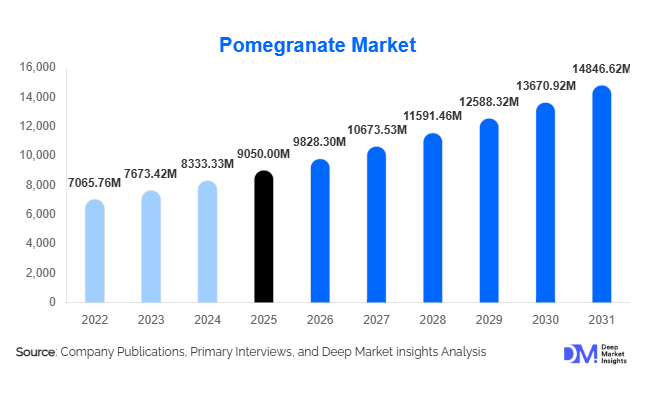
According to Deep Market Insights, the global pomegranate market size was valued at USD 9,050 million in 2025 and is projected to grow from USD 9,828.30 million in 2026 to reach USD 14,846.62 million by 2031, expanding at a CAGR of 8.6% during the forecast period (2026–2031). The pomegranate market growth is primarily driven by increasing consumer demand for antioxidant-rich foods, rising adoption of functional beverages, and expanding applications across nutraceuticals, cosmetics, and pharmaceutical industries. Growing awareness regarding preventive healthcare and plant-based nutrition is further accelerating demand globally, positioning pomegranate as a high-value superfruit in both fresh and processed forms.
Key Market Insights
- Processed pomegranate products dominate the market, driven by rising demand for juices, concentrates, and nutraceutical ingredients with extended shelf life.
- Asia-Pacific leads global production and consumption, with India and China acting as key supply hubs and export contributors.
- Functional beverages are the fastest-growing application segment, supported by increasing health awareness and demand for immunity-boosting products.
- Organic pomegranate demand is rising steadily, although conventional variants still account for the majority of global consumption.
- Technological advancements in cold chain and processing are improving product quality, shelf life, and export capabilities.
- Online retail channels are gaining traction, especially for premium and organic pomegranate products.
What are the latest trends in the pomegranate market?
Rising Popularity of Functional and Fortified Beverages
Pomegranate is increasingly being incorporated into functional beverages, including cold-pressed juices, energy drinks, and immunity-boosting formulations. Consumers are actively seeking natural alternatives to synthetic supplements, and pomegranate’s high antioxidant content positions it as a preferred ingredient. Beverage manufacturers are launching innovative blends combining pomegranate with other superfruits, herbs, and vitamins to cater to evolving consumer preferences. This trend is particularly strong in North America and Europe, where functional beverages are becoming a daily consumption category.
Shift Toward Clean Label and Organic Products
Clean-label trends are influencing purchasing behavior, with consumers demanding transparency in sourcing and production. Organic pomegranate products are gaining popularity, especially in developed markets, where consumers are willing to pay premium prices for chemical-free produce. Certifications and traceability are becoming critical factors in product differentiation. Companies are increasingly investing in organic farming practices and sustainable packaging solutions to align with environmental and health-conscious consumer expectations.
What are the key drivers in the pomegranate market?
Growing Demand for Antioxidant-Rich Superfoods
The increasing focus on preventive healthcare is driving demand for foods rich in antioxidants. Pomegranate contains bioactive compounds such as polyphenols and flavonoids, which are associated with cardiovascular health, anti-inflammatory benefits, and immune support. This has significantly boosted its consumption across food, beverage, and nutraceutical industries. The superfruit positioning of pomegranate continues to attract health-conscious consumers globally.
Expansion of Nutraceutical and Dietary Supplement Industry
The global nutraceutical industry is expanding rapidly, and pomegranate extracts are widely used in dietary supplements targeting heart health, skin care, and overall wellness. Manufacturers are investing in clinical research to validate health claims, further strengthening consumer trust. The integration of pomegranate into capsules, powders, and functional foods is creating new growth avenues for market participants.
What are the restraints for the global market?
Seasonality and Supply Chain Constraints
Pomegranate production is highly dependent on climatic conditions, leading to seasonal supply fluctuations. This creates volatility in pricing and availability, particularly in regions with limited domestic production. Inconsistent supply can impact processing industries and export commitments, posing challenges for market stability.
High Processing and Storage Costs
Processing pomegranate into value-added products such as juice, concentrate, and extract requires advanced technology and infrastructure. Maintaining freshness and nutrient content involves cold storage and efficient logistics, which increase operational costs. These factors can limit market entry for small-scale producers and impact overall profitability.
What are the key opportunities in the pomegranate industry?
Expansion in Emerging Markets
Emerging economies in Asia, Latin America, and Africa present significant growth opportunities due to rising disposable incomes and increasing health awareness. Urbanization and changing dietary habits are driving demand for premium fruits and functional products. Governments are also promoting horticulture exports, creating favorable conditions for market expansion.
Technological Advancements in Processing
Innovations such as freeze-drying, cold-pressed extraction, and advanced packaging technologies are enhancing product quality and shelf life. These advancements enable manufacturers to diversify product portfolios and cater to global markets more efficiently. Adoption of precision farming and AI-driven agriculture is also improving yield and reducing wastage.
Report Scope
| Report Metric | Details |
|---|---|
| Market Size in 2025 | USD 9050.00 Million |
| Market Size in 2026 | USD 9828.30 Million |
| Market Size in 2031 | USD 14846.62 Million |
| CAGR | 8.6% (2026-2031) |
| Base Year for Estimation | 2025 |
| Historical Data | 2022-2024 |
| Forecast Period | 2026-2031 |
| Report Coverage | Revenue Forecast, Competitive Landscape, Supply Chain Disruption, Growth Factors, Environment & Regulatory Landscape and Trends |
| Geographies Covered | North America, Europe, APAC, Middle East and Africa, LATAM |
| Countries Covered | U.S., Canada, U.K., Germany, France, Spain, Italy, Russia, Nordic, Benelux, Rest of Europe, China, Korea, Japan, India, Australia, Singapore, Taiwan, South East Asia, Rest of Asia-Pacific, UAE, Turky, Saudi Arabia, South Africa, Egypt, Nigeria, Rest of MEA, Brazil, Mexico, Argentina, Chile, Colombia, Rest of LATAM |
Explore more data points, trends and opportunities Download Free Sample Report
Product Type Insights
The global pomegranate market demonstrates a strong inclination toward processed products, which collectively account for approximately 58% of the total market share in 2025. This dominance is largely attributed to the increasing consumer preference for convenience-oriented food and beverage options, as well as the scalability advantages that processing offers across global supply chains. Processed pomegranate products, including juices, concentrates, powders, extracts, and ready-to-drink formulations, provide extended shelf life and ease of storage compared to fresh fruit. These characteristics are particularly valuable in international trade, where maintaining product quality over long distances is critical. Furthermore, advancements in food processing technologies have enabled manufacturers to retain a higher concentration of bioactive compounds such as antioxidants and polyphenols, thereby enhancing the functional appeal of these products.Another key driver behind the growth of processed pomegranate products is the increasing incorporation of pomegranate derivatives into a wide range of applications beyond traditional juice consumption. Functional beverages, dietary supplements, nutraceutical capsules, and even fortified snacks are leveraging pomegranate extracts due to their scientifically supported health benefits, including anti-inflammatory and cardiovascular support properties. Additionally, the growing popularity of clean-label and plant-based ingredients has further elevated the demand for minimally processed, natural pomegranate derivatives.Despite the rapid growth of processed products, fresh pomegranates continue to maintain a substantial share of the market, particularly in regions where traditional consumption patterns remain deeply rooted. In Asia-Pacific and the Middle East, fresh fruit consumption is often associated with cultural practices, seasonal diets, and culinary traditions. Consumers in these regions prefer whole fruit due to its perceived naturalness and freshness, as well as its use in home-based preparations such as juices, salads, and desserts. Moreover, improvements in cold chain logistics and storage infrastructure are gradually enhancing the availability of fresh pomegranates in urban markets, thereby sustaining their relevance alongside processed alternatives.
Application Insights
The food and beverages segment represents the largest application area for pomegranate products, accounting for approximately 52% of the global market share. This dominance is driven by the widespread use of pomegranate in juices, flavored beverages, dairy products, confectionery, and culinary preparations. The leading driver for this segment is the increasing consumer demand for functional and fortified foods that offer both nutritional value and sensory appeal. Pomegranate’s rich antioxidant profile, coupled with its distinctive sweet-tart flavor, makes it an ideal ingredient for product innovation across multiple food categories.In the beverage industry, pomegranate has become a key component in the formulation of premium juices, energy drinks, and wellness beverages. Manufacturers are increasingly blending pomegranate with other superfruits and botanicals to create differentiated offerings that cater to health-conscious consumers. Additionally, the rise of low-sugar and natural beverages has further boosted the adoption of pomegranate as a flavoring and functional ingredient, as it provides natural sweetness along with health benefits.The nutraceutical segment is emerging as the fastest-growing application area, supported by rising consumer awareness regarding preventive healthcare and dietary supplementation. Pomegranate extracts are widely used in capsules, tablets, and powders due to their high concentration of polyphenols and punicalagins, which are associated with antioxidant and anti-aging properties. The leading driver for this segment is the growing global emphasis on immunity enhancement and chronic disease prevention, particularly in the post-pandemic era. Consumers are increasingly seeking natural alternatives to synthetic supplements, thereby creating significant opportunities for pomegranate-based nutraceutical products.The cosmetics and personal care segment is also witnessing notable growth, as pomegranate extracts are increasingly incorporated into skincare and haircare formulations. The leading driver in this segment is the rising demand for natural and plant-based ingredients in beauty products. Pomegranate’s antioxidant properties help protect the skin from oxidative stress and environmental damage, making it a popular ingredient in anti-aging creams, serums, and sunscreens. Additionally, its moisturizing and regenerative properties contribute to improved skin texture and elasticity, further enhancing its appeal among consumers and manufacturers alike.
Distribution Channel Insights
Supermarkets and hypermarkets continue to dominate the distribution landscape, accounting for nearly 38% of global sales. The leading driver for this segment is the extensive retail infrastructure and the ability of these outlets to offer a wide variety of products under one roof. Consumers benefit from the convenience of one-stop shopping, competitive pricing, and the opportunity to compare different brands and product formats. Additionally, organized retail chains often engage in promotional activities and in-store marketing, which further стимулирует consumer purchasing decisions.Online retail is rapidly gaining momentum as a key distribution channel, driven by the increasing penetration of e-commerce platforms and changing consumer shopping behavior. The leading driver for this segment is the convenience of home delivery, coupled with the availability of a broader range of products, including organic, premium, and imported pomegranate items. Digital platforms also enable consumers to access detailed product information, reviews, and personalized recommendations, which enhance the overall shopping experience. Furthermore, the growth of direct-to-consumer (DTC) models is allowing manufacturers to establish closer connections with their customers and offer customized product solutions.Specialty stores, particularly those focusing on organic and health-oriented products, are also gaining traction. These stores cater to niche consumer segments that prioritize quality, sustainability, and transparency in sourcing. The leading driver for this segment is the increasing consumer inclination toward clean-label and ethically sourced products. Specialty retailers often emphasize product authenticity and provide curated selections, which appeal to discerning consumers seeking high-quality pomegranate products.
End-Use Industry Insights
The beverage industry represents the largest end-use segment, contributing approximately 34% of the global market. The leading driver for this segment is the growing popularity of functional and wellness beverages that offer health benefits beyond basic hydration. Pomegranate-based drinks are widely recognized for their antioxidant content and are often marketed as heart-healthy and immunity-boosting options. The increasing demand for ready-to-drink beverages, coupled with the expansion of premium and artisanal drink categories, is further fueling the growth of this segment.The nutraceutical industry is the fastest-growing end-use segment, expanding at a rate exceeding 10% CAGR. The leading driver here is the rising consumer focus on preventive healthcare and the increasing prevalence of lifestyle-related diseases. Pomegranate extracts are widely used in dietary supplements aimed at improving cardiovascular health, reducing inflammation, and enhancing overall well-being. The growing aging population and the increasing adoption of wellness-oriented lifestyles are also contributing to the expansion of this segment.The cosmetics industry is another significant end-use sector, with increasing adoption of pomegranate extracts in skincare and personal care products. The leading driver for this segment is the growing demand for natural and sustainable beauty solutions. Consumers are increasingly avoiding synthetic chemicals and seeking products that incorporate plant-based ingredients with proven efficacy. Pomegranate’s antioxidant and anti-inflammatory properties make it an attractive ingredient for a wide range of cosmetic applications, including anti-aging, hydration, and skin repair formulations.
Explore more data points, trends and opportunities Download Free Sample Report
Pomegranate Market Segmentations
By Product Type
- Fresh Pomegranates
- Pomegranate Juice
- Pomegranate Concentrate
- Pomegranate Powder
- Pomegranate Extract
- Pomegranate Arils
By Application
- Food & Beverages
- Nutraceuticals & Dietary Supplements
- Cosmetics & Personal Care
- Pharmaceuticals
By Distribution Channel
- Supermarkets/Hypermarkets
- Convenience Stores
- Online Retail
- Specialty Stores
- Direct Sales
Regional Insights
Asia-Pacific
Asia-Pacific dominates the global pomegranate market, accounting for approximately 42% of the total market share in 2025. The region’s leadership is underpinned by its strong production base, favorable agro-climatic conditions, and robust domestic demand. India plays a pivotal role as the largest producer and exporter of pomegranates, benefiting from government support initiatives, advanced cultivation practices, and a well-established export network. China is also emerging as a significant market, driven by rapid urbanization, rising disposable incomes, and increasing awareness of health and wellness.The key drivers for regional growth include the expansion of agricultural infrastructure, increasing adoption of high-yield crop varieties, and growing investments in food processing industries. Additionally, the rising popularity of functional foods and beverages is стимулирует demand for processed pomegranate products. The region’s large population base and evolving dietary preferences further contribute to sustained market growth. Moreover, the integration of modern retail channels and e-commerce platforms is enhancing product accessibility, thereby supporting both urban and rural consumption.
Europe
Europe holds around 24% of the global market share, characterized by strong demand for high-quality and organic pomegranate products. Spain serves as a major producer within the region, while countries such as Germany, the United Kingdom, and France are key importers. The region’s stringent regulatory framework ensures high standards of product quality and safety, which enhances consumer confidence and supports market growth.The primary drivers for growth in Europe include the increasing consumer preference for organic and sustainably sourced products, as well as the rising demand for functional foods and beverages. Health-conscious consumers are активно seeking products that offer nutritional benefits, and pomegranate fits well within this trend. Additionally, the growing popularity of plant-based diets and clean-label products is further boosting demand. The expansion of specialty retail stores and online distribution channels is also playing a crucial role in improving product availability and visibility across the region.
North America
North America accounts for approximately 18% of the global market, with the United States being the dominant contributor. The region is characterized by high consumer awareness, strong purchasing power, and a well-developed food and beverage industry. The demand for pomegranate products is primarily driven by the increasing popularity of functional beverages and dietary supplements.Key growth drivers in North America include the rising prevalence of health and wellness trends, growing interest in natural and organic products, and continuous product innovation by manufacturers. Consumers in this region are highly receptive to premium offerings and are willing to pay a premium for products that deliver health benefits and quality assurance. Additionally, the strong presence of established retail networks and e-commerce platforms is facilitating easy access to a wide range of pomegranate products. Marketing strategies emphasizing scientific research and health claims are also contributing to increased consumer adoption.
Middle East & Africa
The Middle East and Africa region contributes approximately 10% of the global market, supported by both production and consumption dynamics. Countries such as Iran and Turkey are major producers, benefiting from favorable climatic conditions and long-standing agricultural traditions. Pomegranates hold cultural and culinary significance in this region, which sustains steady demand for both fresh and processed products.The main drivers for regional growth include strong export activity, increasing investments in agricultural modernization, and rising demand for value-added products. The expansion of food processing industries is enabling producers to diversify their product offerings and capture higher value in international markets. Additionally, the growing awareness of health benefits associated with pomegranate consumption is стимулирует domestic demand. Improvements in logistics and trade infrastructure are also facilitating smoother export operations, thereby enhancing the region’s global competitiveness.
Latin America
Latin America holds nearly 6% of the global market share, with countries such as Brazil and Mexico emerging as key markets. While the region currently represents a smaller share compared to others, it is experiencing steady growth driven by increasing consumer awareness and expanding retail networks.The leading drivers for growth in Latin America include rising health consciousness among consumers, growing adoption of functional foods and beverages, and increasing urbanization. The expansion of modern retail formats and e-commerce platforms is improving product accessibility and encouraging consumption. Additionally, favorable trade agreements and investments in agricultural development are supporting the growth of pomegranate cultivation and processing in the region. As consumer preferences continue to evolve toward healthier lifestyles, the demand for pomegranate products is expected to witness sustained growth in the coming years.
Key Players in the Pomegranate Market
- Pom Wonderful LLC
- Lakewood Organic
- The Coca-Cola Company
- PepsiCo Inc.
- Ocean Spray Cranberries Inc.
- POMONA Organic Juices
- ITC Limited
- Dabur India Ltd.
- Tropicana Products Inc.
- Minute Maid
- Ariza BV
- Antalya Tarim
- Sun-Maid Growers
- Kerr Concentrates
- AGRANA Beteiligungs AG