Organic Baby Food Market Size
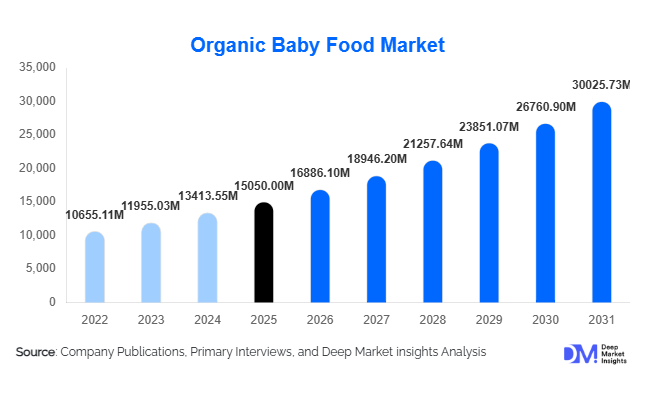
According to Deep Market Insights,the global organic baby food market size was valued at USD 15,050 million in 2025 and is projected to grow from USD 16,886.10 million in 2026 to reach USD 30,025.73 million by 2031, expanding at a CAGR of 12.2% during the forecast period (2026–2031). The organic baby food market growth is driven by increasing parental awareness regarding infant nutrition, growing preference for pesticide-free and chemical-free food products, and rising demand for premium organic food products for infants and toddlers.
Organic baby food products are manufactured using certified organic ingredients without synthetic fertilizers, pesticides, antibiotics, or genetically modified organisms (GMOs). As concerns around food safety and early childhood nutrition increase globally, parents are shifting toward organic alternatives that promise higher nutritional value and safer ingredient sourcing. Increasing female workforce participation, especially in urban regions, has further accelerated demand for convenient ready-to-eat organic baby food products such as purees, cereals, snacks, and infant formulas.
Rapid expansion of online retail channels and premium baby food brands has improved product accessibility across developed and emerging markets. Furthermore, innovation in packaging formats such as recyclable pouches and eco-friendly containers is strengthening the market’s sustainability appeal. Governments across North America and Europe are also promoting organic agriculture and implementing stringent food safety regulations, which support the expansion of organic baby food production globally.
Key Market Insights
- Organic baby food demand is increasing globally as parents prioritize chemical-free and nutritionally balanced infant diets.
- Flexible pouch packaging is rapidly gaining popularity due to convenience, portability, and improved shelf life.
- North America dominates the market, supported by strong consumer awareness and established organic certification standards.
- Asia-Pacific is the fastest-growing region, driven by rising middle-class incomes and growing concerns regarding infant food safety.
- Plant-based organic ingredients account for the largest share as fruits, vegetables, and grains remain primary ingredients in infant nutrition.
- E-commerce and subscription-based baby food delivery services are reshaping consumer purchasing behavior globally.
What are the latest trends in the organic baby food market?
Rise of Functional and Fortified Organic Baby Foods
Manufacturers are increasingly developing organic baby food products enriched with functional ingredients such as probiotics, omega-3 fatty acids, plant proteins, and essential micronutrients. Parents are seeking products that support early childhood development, immune health, and cognitive growth. This trend has led to the introduction of fortified organic cereals, probiotic fruit purees, and plant-based infant snacks. As pediatric nutrition research advances, companies are investing in scientifically backed formulations that enhance infant health outcomes while maintaining organic certification standards.
Sustainable Packaging and Supply Chain Transparency
Sustainability has become a key priority in the organic baby food industry. Manufacturers are adopting recyclable glass jars, biodegradable packaging materials, and eco-friendly flexible pouches to reduce environmental impact. Additionally, companies are integrating digital traceability solutions that allow consumers to track ingredient sourcing and production processes through QR codes and blockchain-based platforms. These transparency initiatives build consumer trust while strengthening brand loyalty among environmentally conscious parents.
What are the key drivers in the organic baby food market?
Growing Awareness of Infant Nutrition
Increasing awareness regarding the long-term health impact of early childhood nutrition is one of the most important drivers for the organic baby food market. Parents are becoming more cautious about pesticide residues, artificial preservatives, and genetically modified ingredients present in conventional baby foods. This has significantly increased demand for certified organic products that ensure safe and natural feeding options for infants and toddlers.
Rising Urbanization and Working Parents
The growing number of dual-income households is increasing demand for convenient baby feeding solutions. Organic ready-to-eat purees, snacks, and cereals provide balanced nutrition while saving preparation time for busy parents. Modern retail outlets and e-commerce platforms are expanding distribution networks, making premium organic baby food products more accessible to urban consumers.
What are the restraints for the global market?
Higher Cost Compared to Conventional Baby Food
Organic baby food products typically cost significantly more than conventional alternatives due to higher farming costs, certification processes, and supply chain limitations. Organic farming often involves lower yields and higher labor requirements, which increases production costs. This price premium restricts market penetration among price-sensitive consumers in developing economies.
Limited Shelf Life of Organic Products
Organic baby foods generally contain fewer preservatives, which results in shorter shelf life compared to conventional baby food products. Maintaining product freshness during transportation and storage requires advanced packaging technologies and efficient logistics infrastructure. These factors increase operational costs for manufacturers and retailers.
What are the key opportunities in the organic baby food industry?
Expansion in Emerging Markets
Emerging economies such as China, India, Brazil, and Indonesia present significant growth opportunities for organic baby food manufacturers. Rising disposable incomes, growing middle-class populations, and increasing awareness regarding infant nutrition are encouraging parents in these regions to shift toward premium organic food products. As distribution networks expand and organic farming increases, companies can tap into these markets to accelerate global growth.
Direct-to-Consumer Subscription Models
Subscription-based baby food delivery services are gaining traction among modern parents seeking convenience and personalized nutrition plans for their children. These services deliver age-specific organic baby food products directly to households on a regular basis. The model enhances customer retention while allowing companies to collect valuable consumer data to refine product development and marketing strategies.
Report Scope
| Report Metric | Details |
|---|---|
| Market Size in 2025 | USD 15050 Million |
| Market Size in 2026 | USD 16886.10 Million |
| Market Size in 2031 | USD 30025.73 Million |
| CAGR | 12.2% (2026-2031) |
| Base Year for Estimation | 2025 |
| Historical Data | 2022-2024 |
| Forecast Period | 2026-2031 |
| Report Coverage | Revenue Forecast, Competitive Landscape, Supply Chain Disruption, Growth Factors, Environment & Regulatory Landscape and Trends |
| Geographies Covered | North America, Europe, APAC, Middle East and Africa, LATAM |
| Countries Covered | U.S., Canada, U.K., Germany, France, Spain, Italy, Russia, Nordic, Benelux, Rest of Europe, China, Korea, Japan, India, Australia, Singapore, Taiwan, South East Asia, Rest of Asia-Pacific, UAE, Turky, Saudi Arabia, South Africa, Egypt, Nigeria, Rest of MEA, Brazil, Mexico, Argentina, Chile, Colombia, Rest of LATAM |
Explore more data points, trends and opportunities Download Free Sample Report
Product Type Insights
Organic pureed baby food represents the leading product segment in the global organic baby food market, accounting for approximately 32% of total revenue in 2025. The segment’s dominance is primarily driven by the growing preference for smooth-textured foods during the early stages of complementary feeding for infants. Pureed formulations provide easy digestibility and are widely recommended by pediatric nutrition guidelines for babies transitioning from liquid to solid diets. Fruit- and vegetable-based purees are especially popular as they introduce infants to natural flavors while delivering essential micronutrients such as vitamin A, vitamin C, and potassium.
The increasing focus on clean-label products and minimal ingredient processing has further supported the demand for organic purees, as parents seek products free from preservatives, artificial colors, and added sugars. In addition, manufacturers are expanding their product portfolios by offering multi-ingredient blends, including fruit and grain combinations or vegetable and protein blends, to enhance nutritional value.
Organic baby cereals also represent a significant segment of the market as they provide a convenient source of iron, fiber, and complex carbohydrates necessary for infant growth and development. Cereals are often among the first solid foods introduced to babies and are commonly fortified with essential nutrients to support early development. Meanwhile, organic baby snacks-including teething biscuits, puffs, and fruit bars—are experiencing rising demand as parents increasingly prefer healthier snack options for toddlers. These products are designed to support self-feeding skills and oral development while maintaining a balanced nutritional profile. The introduction of organic ready-to-eat meals for toddlers is further expanding the product landscape, as working parents increasingly seek convenient yet nutritious meal solutions.
Ingredient Type Insights
Plant-based organic ingredients dominate the ingredient segment, accounting for nearly 61% of global demand. The leadership of this segment is largely attributed to the extensive use of fruits, vegetables, grains, and legumes in infant nutrition products. These ingredients provide essential vitamins, antioxidants, dietary fiber, and minerals while maintaining a low allergen risk profile, making them suitable for infant consumption.Fruits such as apples, bananas, pears, and berries are commonly used in organic baby food formulations due to their natural sweetness and high nutrient density. Vegetables such as sweet potatoes, carrots, and peas contribute important micronutrients that support infant immune system development and healthy growth. Organic grains including oats, rice, and quinoa are widely used in baby cereals and snack products, offering complex carbohydrates and sustained energy for infants.
Organic dairy ingredients also play an important role in infant nutrition products, particularly in baby cereals, yogurt-based snacks, and infant formulas. Organic milk-based ingredients provide calcium, protein, and essential fatty acids necessary for bone development and brain function. In addition, organic meat-based purees, including chicken, turkey, and beef blends, are gradually gaining popularity as parents look to introduce protein-rich foods that support muscle development and overall growth.The rising global adoption of plant-forward diets among consumers and increasing awareness regarding sustainable food production are further strengthening the demand for plant-based organic baby food products. Manufacturers are also exploring innovative plant protein sources and fortified formulations to enhance nutritional profiles while maintaining organic certification standards.
Packaging Insights
Flexible pouch packaging leads the organic baby food market with nearly 38% share in 2025. The segment’s dominance is primarily driven by its convenience, portability, and ease of use for parents. Resealable pouches allow caregivers to feed infants directly from the packaging while traveling, reducing preparation time and minimizing food waste. The lightweight nature of pouch packaging also reduces transportation costs and improves supply chain efficiency for manufacturers and retailers.In addition, pouches support extended product shelf life through advanced barrier technologies that protect baby food from moisture, oxygen, and contamination. This packaging format has become particularly popular for pureed baby foods and snack products, enabling portion-controlled feeding and easy storage.
Glass jars continue to maintain a strong presence in the premium segment of the market due to their excellent product preservation properties and chemical stability. Many parents perceive glass packaging as a safer and more environmentally friendly option because it is fully recyclable and does not interact with food contents. As sustainability concerns grow, manufacturers are increasingly investing in recyclable materials, biodegradable packaging solutions, and reduced-plastic alternatives to align with global environmental regulations and consumer expectations.
Distribution Channel Insights
Supermarkets and hypermarkets account for approximately 36% of total organic baby food sales, making them the leading distribution channel in the global market. The dominance of this segment is largely attributed to the extensive product variety, competitive pricing, and convenience offered by large retail chains. These stores provide parents with access to multiple organic baby food brands in one location, allowing them to compare nutritional information, ingredients, and price points before making purchasing decisions.In addition, supermarkets and hypermarkets often feature dedicated baby care sections that include infant nutrition products, feeding accessories, and hygiene products, enhancing consumer convenience and driving impulse purchases. The presence of promotional campaigns, loyalty programs, and in-store discounts further supports sales growth in this channel.
Pharmacies and specialty baby stores also play an important role in the market, particularly for organic infant formulas and pediatrician-recommended nutrition products. These stores are often perceived as trusted sources for infant health products, providing expert guidance and product assurance to parents.Online retail channels are experiencing the fastest growth due to the increasing adoption of e-commerce platforms and digital shopping habits among parents. Online marketplaces offer convenient home delivery services, subscription-based purchasing models, and access to niche organic baby food brands that may not be widely available in traditional retail stores. The integration of digital marketing strategies, personalized recommendations, and mobile shopping applications is further accelerating the growth of online distribution channels.
Explore more data points, trends and opportunities Download Free Sample Report
Organic Baby Food Market Segmentations
By Product Type
- Organic Pureed Baby Food
- Organic Baby Cereals
- Organic Baby Snacks
- Organic Infant Formula
- Ready-to-Eat Organic Meals for Toddlers
By Ingredient Type
- Plant-Based Organic Ingredients
- Organic Dairy Ingredients
- Organic Meat-Based Ingredients
- Fortified/Functional Ingredients
By Packaging Type
- Flexible Pouches
- Glass Jars
- Plastic Containers
- Biodegradable/Compostable Packaging
By Distribution Channel
- Supermarkets & Hypermarkets
- Specialty Baby Stores
- Pharmacies
- Online Retail & Subscription Services
Regional Insights
North America
North America holds the largest share of the global organic baby food market, accounting for approximately 36% of global demand in 2025. The United States represents the dominant market within the region due to high consumer awareness regarding organic nutrition and strong demand for premium infant food products. Parents in the region are increasingly prioritizing clean-label and certified organic foods to ensure safe and healthy nutrition for their children.Several factors are driving regional market growth, including the strong presence of established organic baby food manufacturers, widespread availability of certified organic products, and advanced retail distribution networks. The United States Department of Agriculture (USDA) organic certification framework has strengthened consumer confidence in organic labeling and product authenticity. In addition, increasing parental concerns about pesticide exposure, genetically modified organisms (GMOs), and artificial additives in conventional baby foods are encouraging the adoption of organic alternatives.Canada is also experiencing growing demand for organic baby food products due to rising awareness regarding infant nutrition, expanding organic farming practices, and strong regulatory standards related to food safety and labeling. The rapid expansion of online retail platforms and subscription-based baby food delivery services is further supporting market growth across North America.
Europe
Europe represents the second-largest market for organic baby food, accounting for nearly 31% of global demand. The region benefits from a well-established organic food culture and strong regulatory frameworks that promote organic farming and sustainable food production. Countries such as Germany, the United Kingdom, and France are among the leading consumers of organic baby food products due to high consumer awareness and strong purchasing power.Strict food safety standards established by the European Union ensure high-quality infant nutrition products, which has further strengthened consumer trust in organic baby food brands. In addition, European consumers place significant emphasis on sustainability, ethical sourcing, and transparency in food production. This trend is encouraging manufacturers to adopt environmentally friendly packaging materials, traceable supply chains, and carbon-reduction initiatives.The growing popularity of organic farming across the region and government initiatives supporting sustainable agriculture are also contributing to the expansion of the organic baby food market. Increasing participation of private-label organic brands in major retail chains has further improved product accessibility and affordability for consumers across Europe.
Asia-Pacific
Asia-Pacific is the fastest-growing regional market for organic baby food and is expected to expand at a CAGR exceeding 14% during the forecast period. Rapid urbanization, increasing disposable income, and growing awareness regarding infant health and nutrition are major factors driving regional market expansion.China represents the largest market in the region due to heightened concerns regarding infant food safety following past contamination incidents. As a result, parents are increasingly turning to certified organic baby food products that guarantee higher safety standards and quality assurance. The rapid expansion of cross-border e-commerce platforms has also enabled Chinese consumers to access premium international organic baby food brands.Japan and South Korea represent mature markets characterized by strong demand for premium and high-quality infant nutrition products. Consumers in these countries place a strong emphasis on product safety, nutritional value, and innovative packaging solutions. Meanwhile, India is emerging as a high-growth market due to its large infant population, rising middle-class income levels, and increasing penetration of online retail platforms. The growing presence of domestic organic food brands and government initiatives promoting organic agriculture are further supporting market development across the Asia-Pacific region.
Latin America
Latin America is an emerging market for organic baby food products, with Brazil and Mexico representing the largest demand centers. Rising urbanization, increasing participation of women in the workforce, and improving awareness regarding infant nutrition are contributing to the gradual adoption of organic baby food products in the region.The expansion of modern retail infrastructure, including supermarkets and hypermarkets, has improved product availability and consumer accessibility. In addition, government initiatives supporting organic farming and sustainable agricultural practices are encouraging the development of local organic supply chains. Regional manufacturers are also expanding production capacities and introducing new product variants tailored to local dietary preferences, further supporting market growth.
Middle East & Africa
The Middle East and Africa region is experiencing steady growth in the organic baby food market as awareness regarding infant nutrition and food safety continues to improve. Countries such as the United Arab Emirates and Saudi Arabia represent key demand centers due to high purchasing power, a growing expatriate population, and strong demand for premium imported baby food products.The rapid expansion of modern retail channels, including hypermarkets and online grocery platforms, has improved access to international organic baby food brands in the region. In addition, increasing government focus on food safety regulations and product quality standards is supporting consumer confidence in organic baby food products.In Africa, market growth is gradually supported by improving retail infrastructure, rising disposable income, and expanding awareness regarding safe infant feeding practices. Although the market remains relatively nascent in several African countries, growing urban populations and increasing exposure to global nutrition trends are expected to create new growth opportunities for organic baby food manufacturers in the coming years.
Key Players in the Organic Baby Food Market
- Nestlé S.A.
- Danone S.A.
- The Kraft Heinz Company
- Hain Celestial Group
- Hero Group
- HiPP GmbH & Co. Vertrieb KG
- Bellamy’s Organic
- Abbott Laboratories
- Baby Gourmet Foods Inc.
- Plum Organics
- Ella’s Kitchen
- Sprout Foods Inc.
- Once Upon a Farm
- Little Spoon
- Serenity Kids