Mango Seed Oil Market Size
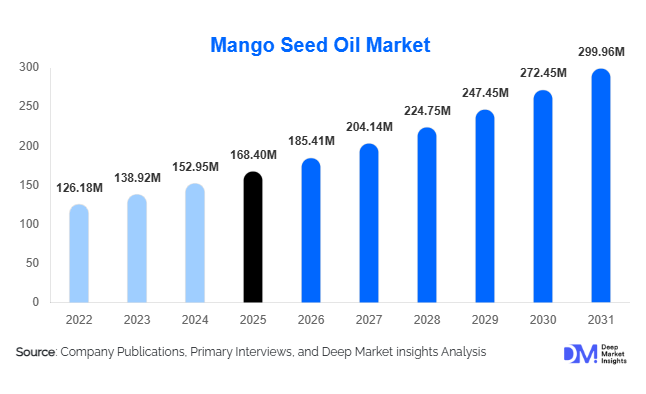
According to Deep Market Insights, the global mango seed oil market size was valued at USD 168.4 million in 2025 and is projected to grow from USD 185.41 million in 2026 to reach USD 299.96 million by 2031, expanding at a CAGR of 10.1% during the forecast period (2026–2031). The market growth is primarily driven by rising demand for natural cosmetic ingredients, increasing utilization of fruit-based bio-oils in personal care formulations, and expanding applications across food, pharmaceutical, and nutraceutical industries. Mango seed oil, derived from mango kernel waste generated during fruit processing, is increasingly recognized as a sustainable and value-added ingredient aligned with circular economy practices.
Key Market Insights
- Natural and clean-label cosmetics are accelerating adoption, with mango seed oil emerging as a preferred emollient in skincare and haircare products.
- Waste valorization trends in the fruit processing industry are supporting raw material availability and improving cost efficiency.
- Asia-Pacific dominates global production and consumption, supported by large mango cultivation volumes in India and Southeast Asia.
- Europe is the fastest-growing market, driven by organic certification standards and sustainable sourcing requirements.
- Cold-pressed and organic oil variants are gaining premium pricing advantages in high-end cosmetics.
- Technological improvements in oil extraction are increasing yield efficiency and improving product purity.
What are the latest trends in the mango seed oil market?
Shift Toward Upcycled Beauty Ingredients
The cosmetics industry is increasingly adopting upcycled ingredients derived from agricultural waste streams. Mango seed oil fits strongly within this trend as it is extracted from kernels discarded during mango pulp processing. Beauty brands are positioning products containing mango seed oil as environmentally responsible alternatives to synthetic emollients. Consumers are responding positively to sustainability narratives emphasizing reduced food waste and carbon footprint reduction. Premium skincare manufacturers are incorporating mango butter and mango kernel oil into moisturizers, lip balms, and anti-aging formulations due to their high fatty acid composition and oxidative stability.
Expansion of Plant-Based Functional Oils
Demand for multifunctional plant oils is rising across cosmetics, nutraceuticals, and food applications. Mango seed oil is increasingly used as a cocoa butter substitute in confectionery and as a bioactive carrier oil in pharmaceutical formulations. Manufacturers are investing in refining technologies to improve odor neutrality and shelf stability, allowing broader industrial use. Digital transparency tools such as traceability platforms and sustainability labeling are further influencing purchasing decisions, particularly among European and North American buyers seeking ethically sourced ingredients.
What are the key drivers in the mango seed oil market?
Growth of Natural Personal Care Industry
The global shift toward botanical cosmetics is a major growth driver. Consumers increasingly avoid synthetic chemicals, parabens, and petroleum-derived ingredients, boosting demand for natural oils. Mango seed oil provides moisturizing, anti-inflammatory, and antioxidant benefits, making it attractive for premium skincare and haircare formulations. Personal care manufacturers are reformulating products using plant-based oils to meet clean-label certification standards.
Rising Mango Processing Volumes Worldwide
Expansion of mango pulp, juice, and frozen fruit industries has significantly increased seed waste availability. Processing industries in India, Thailand, Mexico, and Brazil generate millions of tons of mango kernels annually, creating abundant raw material for oil extraction. This improves supply consistency and reduces input costs, supporting commercial scalability.
Demand for Sustainable Bio-Based Ingredients
Governments and corporations are promoting bio-based industrial inputs to reduce environmental impact. Mango seed oil aligns with circular economy goals by converting agricultural waste into high-value ingredients. Sustainability commitments by cosmetic giants are accelerating procurement contracts with mango oil processors.
What are the restraints for the global market?
Limited Consumer Awareness Outside Cosmetics
Despite strong cosmetic adoption, awareness in food and pharmaceutical sectors remains limited. Many manufacturers continue to rely on established vegetable oils such as coconut or shea butter, slowing diversification of applications.
Price Volatility Linked to Mango Harvest Cycles
Raw material supply depends heavily on seasonal mango production, which is vulnerable to climate variability. Poor harvests can increase kernel prices and disrupt processing margins, posing operational challenges for producers.
What are the key opportunities in the mango seed oil industry?
Expansion into Nutraceutical and Functional Food Applications
Mango seed oil contains stearic and oleic acids suitable for functional food formulations. Growing consumer demand for plant-based fats presents opportunities to develop specialty edible oil blends and cocoa butter equivalents for confectionery manufacturers.
Emerging Demand from Sustainable Packaging and Bio-Lubricants
Research into bio-lubricants and biodegradable industrial oils is opening new application areas. Mango seed oil derivatives show potential in eco-friendly coatings and green chemistry formulations, creating diversification opportunities beyond cosmetics.
Regional Processing Investments in Mango-Producing Countries
Governments in India and Southeast Asia are promoting agro-processing infrastructure under industrial development programs. Investments in extraction facilities close to mango farms reduce logistics costs while improving farmer income through by-product utilization.
Report Scope
| Report Metric | Details |
|---|---|
| Market Size in 2025 | USD 168.4 Million |
| Market Size in 2026 | USD 185.41 Million |
| Market Size in 2031 | USD 299.96 Million |
| CAGR | 10.1% (2026-2031) |
| Base Year for Estimation | 2025 |
| Historical Data | 2022-2024 |
| Forecast Period | 2026-2031 |
| Report Coverage | Revenue Forecast, Competitive Landscape, Supply Chain Disruption, Growth Factors, Environment & Regulatory Landscape and Trends |
| Geographies Covered | North America, Europe, APAC, Middle East and Africa, LATAM |
| Countries Covered | U.S., Canada, U.K., Germany, France, Spain, Italy, Russia, Nordic, Benelux, Rest of Europe, China, Korea, Japan, India, Australia, Singapore, Taiwan, South East Asia, Rest of Asia-Pacific, UAE, Turky, Saudi Arabia, South Africa, Egypt, Nigeria, Rest of MEA, Brazil, Mexico, Argentina, Chile, Colombia, Rest of LATAM |
Explore more data points, trends and opportunities Download Free Sample Report
Product Type Insights
The global mango seed oil market is heavily influenced by the type of oil processed and used across various industries. Refined mango seed oil currently dominates the market due to its neutral odor, light color, and high compatibility with cosmetic formulations, accounting for approximately 42% of the global market share in 2025. Cosmetic manufacturers prefer refined variants because they provide consistent quality, better shelf stability, and improved formulation characteristics, making them ideal for large-scale product manufacturing. Refined oils also exhibit reduced impurities and negligible taste or scent interference, which is critical in high-end cosmetic and personal care products.Meanwhile, cold-pressed mango seed oil is gaining considerable traction, especially in premium organic and niche segments. The cold-pressing process preserves the oil's natural bioactive compounds, including antioxidants, essential fatty acids, and vitamins, which enhances its functional benefits in skin and hair care formulations. Consumers are increasingly seeking clean-label, minimally processed ingredients, which has elevated the demand for cold-pressed variants in luxury skincare lines and specialty organic cosmetics. The nutritional richness of cold-pressed oil also makes it appealing for small-batch gourmet food products, such as bakery and confectionery applications, where natural oils can replace traditional fats.Crude mango seed oil, though less prominent in cosmetics, retains importance in industrial applications. Its robust fatty acid profile and lower refinement costs make it suitable for soap manufacturing, lubricants, and certain food processing applications. However, the global trend toward high-purity and certified organic oils has constrained the growth of crude oil in mainstream consumer-facing products.
Extraction Method Insights
Extraction methods are a critical determinant of the market’s supply and quality dynamics. Solvent extraction dominates the global mango seed oil market, accounting for nearly 48% market share in 2025. The efficiency of solvent extraction in achieving higher yields at lower costs makes it ideal for industrial-scale production. Large manufacturers and contract suppliers leverage this method to meet bulk demand, particularly in regions with high cosmetic and food ingredient consumption.On the other hand, cold pressing, although yielding less oil per kilogram of seeds, is gaining a strong foothold in premium and organic product categories. The process preserves bioactive compounds, natural color, and the antioxidant properties of mango seed oil, aligning with growing consumer preferences for minimally processed and nutrient-rich ingredients. Market players focusing on the organic and sustainable cosmetics segment are investing in cold-pressing facilities and marketing campaigns that highlight the “natural” and “nutrient-preserving” qualities of their oils, which is driving adoption globally.
Application Insights
The largest application of mango seed oil remains in the personal care and cosmetics sector, accounting for around 55% of total market demand in 2025. Its emollient properties, high oxidative stability, and smooth texture make it a preferred ingredient for a wide array of products including moisturizers, hair masks, lip balms, anti-aging creams, and bath formulations. The oil's compatibility with both water-based and oil-based cosmetic systems allows formulators to develop innovative products, further boosting market demand.Food applications of mango seed oil are emerging steadily, particularly as a natural substitute for cocoa butter in chocolate and confectionery production. The high melting point and pleasant mouthfeel make it a suitable replacement in tropical climates, while also catering to the growing demand for plant-based fats in vegan and health-conscious diets. Additionally, functional foods and nutraceutical products are exploring mango seed oil as a source of polyunsaturated fatty acids and bioactive compounds, providing a dual benefit of taste and health.In pharmaceutical applications, mango seed oil is being increasingly recognized for its anti-inflammatory, antimicrobial, and skin-soothing properties. Research on its bioactive components, such as tocopherols and phytosterols, suggests potential in topical therapeutic formulations and wound-healing applications, thereby creating new opportunities for industrial and clinical markets.
Distribution Channel Insights
Distribution channels play a crucial role in shaping the availability and pricing of mango seed oil. B2B direct industrial supply currently dominates, capturing nearly 63% of global revenue. Cosmetic manufacturers and food processors typically rely on long-term supply contracts with oil producers to ensure consistent quality and volume, which stabilizes industrial demand. Large-scale suppliers often offer bulk oil in customized packaging, further reinforcing the B2B distribution model.Online specialty ingredient platforms are witnessing rapid growth, particularly catering to small-scale cosmetic brands, indie manufacturers, and DIY beauty enthusiasts. These platforms facilitate access to premium, cold-pressed, and organic oils, bridging the gap between niche producers and end-users. The convenience of online procurement, coupled with the growing emphasis on traceable and certified sustainable ingredients, is driving digital distribution channels as a key growth enabler globally.
End-Use Industry Insights
The cosmetics and personal care industry remains the fastest-growing end-use sector for mango seed oil, expanding at an estimated CAGR above 11%. Growth is fueled by rising consumer demand for natural, vegan, and cruelty-free products, particularly in skincare and hair care segments. Premium skincare brands are increasingly sourcing certified organic mango seed oil to formulate luxury creams, serums, and hair treatments, often marketed under clean beauty or eco-conscious positioning.The pharmaceutical and nutraceutical sectors are also emerging as important growth areas. Mango seed oil's anti-inflammatory and antioxidant properties are being explored in topical ointments, lip balms, and functional dietary supplements. Pharmaceutical manufacturers are particularly interested in sourcing high-quality, refined oils that meet regulatory standards for therapeutic applications.In food processing industries, mango seed oil is finding its niche as a specialty fat in bakery products, confectioneries, and vegan chocolates. The shift toward plant-based diets and healthy fats is driving experimental adoption, particularly in Europe and North America, where consumer awareness of functional and sustainable ingredients is high.Export-driven demand continues to strengthen the market, with European and North American cosmetic manufacturers increasingly sourcing mango seed oil from Asia, particularly India, due to its reliable production volumes, cost advantages, and certification options for organic and fair-trade ingredients. Trade relationships are further supported by international quality standards and sustainability certifications, which ensure buyer confidence in long-term supply.
Explore more data points, trends and opportunities Download Free Sample Report
Mango Seed Oil Market Segmentations
By Product Type
- Refined Mango Seed Oil
- Unrefined (Virgin/Cold-Pressed) Mango Seed Oil
- Organic Certified Mango Seed Oil
- Fractionated Mango Butter Oil
By Application
- Cosmetics & Personal Care
- Food & Nutraceuticals
- Pharmaceutical & Therapeutic Products
- Soap & Detergent Manufacturing
- Industrial & Specialty Chemicals
By End Use Industry
- Beauty & Personal Care Manufacturers
- Food Processing Industry
- Pharmaceutical Companies
- Aromatherapy & Wellness Industry
- Chemical Processing Industry
By Extraction Method
- Cold Press Extraction
- Solvent Extraction
- Supercritical CO₂ Extraction
By Distribution Channel
- Direct B2B Sales
- Ingredient Distributors
- Online Retail
- Specialty Cosmetic Ingredient Suppliers
Regional Insights
Asia-Pacific
Asia-Pacific accounts for approximately 41% of the global market share in 2025, with India, China, Thailand, and Indonesia leading regional demand. India remains the dominant supplier due to its status as the world’s largest mango producer, supported by extensive agro-processing infrastructure and government initiatives promoting agricultural exports. The expansion of domestic cosmetic manufacturing, particularly in cities such as Mumbai, Bangalore, and Pune, is driving consistent local demand for high-quality mango seed oil.China and Thailand are rapidly increasing consumption in personal care products, fueled by rising disposable incomes, urbanization, and a growing preference for natural beauty products. In addition, awareness of sustainable and organic ingredient sourcing is increasing in urban populations, promoting higher adoption of cold-pressed and certified oils. Export-oriented facilities in these countries are also benefiting from improved trade logistics and bilateral agreements, which further strengthen their regional leadership. The combination of strong production capability, growing domestic demand, and favorable trade policies makes Asia-Pacific a key growth engine for the global market.
Europe
Europe represents nearly 24% of global market share, driven by demand from countries such as France, Germany, Italy, and the U.K. Stringent regulations on organic cosmetics and the growing clean beauty movement are encouraging adoption of plant-based oils, including mango seed oil. European consumers prioritize traceable supply chains, fair-trade certification, and sustainable production methods, supporting premium pricing for refined and cold-pressed oils.The rise of eco-conscious indie brands and luxury skincare lines further reinforces the demand for high-quality mango seed oil. European manufacturers are investing in research to optimize oil integration into anti-aging creams, facial serums, and hair care products. Additionally, the European Union’s focus on natural ingredient certification has catalyzed partnerships between suppliers in India and certified European buyers, strengthening cross-continental trade and reinforcing Europe’s position as a high-value consumer market.
North America
The North American market is primarily led by the United States, which continues to be a major hub for natural and indie beauty brands. The region’s consumer base is increasingly inclined toward vegan, cruelty-free, and sustainably sourced products, which has created steady demand for both refined and cold-pressed mango seed oil. The proliferation of natural skincare startups, particularly in California and New York, has stimulated imports, and niche cold-pressed oils are being positioned as premium ingredients in luxury cosmetic formulations.In Canada, growing awareness of functional foods and organic products is driving the adoption of mango seed oil in nutraceutical applications. Overall, North America is witnessing steady growth due to health-conscious consumers, the presence of influential beauty brands, and a strong preference for high-quality, traceable ingredients.
Middle East & Africa
The Middle East and Africa represent emerging growth regions, driven by increasing cosmetics consumption in countries like the UAE, Saudi Arabia, and South Africa. High disposable incomes, rising urbanization, and growing interest in personal grooming products are contributing to market expansion. UAE-based luxury cosmetic brands and retail channels are increasingly sourcing refined mango seed oil for premium skincare offerings, while South Africa and other African mango-producing nations are exploring domestic processing facilities to capture higher value from agricultural exports.The establishment of processing units in Africa not only supports local employment but also allows producers to meet international quality and sustainability standards, which is essential for exporting to Europe and North America. Additionally, cultural emphasis on natural remedies and herbal formulations provides an added boost to regional demand for mango seed oil.
Latin America
Latin America, led by Brazil and Mexico, is emerging as one of the fastest-growing regions for mango seed oil. Local production of mangoes, coupled with expanding cosmetic manufacturing capacity, supports both domestic consumption and export potential. Rising awareness of natural beauty products and the adoption of plant-based oils in skincare and hair care applications are driving demand. Moreover, regional governments are supporting agricultural processing initiatives and promoting local entrepreneurship, which further enhances the supply chain and stimulates market growth.Latin America’s growth is also reinforced by increasing integration into global trade networks and improved certification infrastructure for organic and fair-trade products. This enables producers to meet stringent international standards, making Latin American mango seed oil competitive in premium cosmetic and food markets worldwide.
Key Players in the Mango Seed Oil Market
- Manorama Industries Limited
- AOS Products Pvt. Ltd.
- Hallstar Company
- Gustav Heess GmbH
- AA Oil Mills
- Natural Sourcing LLC
- O&3 Limited
- Jedwards International Inc.
- K.K. India Pet Products
- Eco Aurous
- All Organic Treasures GmbH
- Henry Lamotte Oils GmbH
- Plimon Global
- Saronee Oils & Chemicals
- Aromaaz International