Global Lotus Products Market Size
According to Deep Market Insights, the global lotus products market size was valued at USD 3,200 million in 2025 and is projected to grow from USD 3,513.60 million in 2026 to reach USD 5,607.43 million by 2031, expanding at a CAGR of 9.8% during the forecast period (2026–2031). The lotus products market growth is primarily driven by rising global demand for plant-based nutrition, increasing adoption of herbal and Ayurvedic medicine, and expanding applications of lotus-derived ingredients in functional foods, nutraceuticals, and cosmetics.
Key Market Insights
- Lotus-based superfoods such as makhana (lotus seeds) are rapidly gaining global popularity as high-protein, low-fat snack alternatives in health-conscious markets.
- Cosmetics and personal care industries are increasingly adopting lotus extracts due to their antioxidant, anti-aging, and skin-soothing properties.
- Asia-Pacific dominates global production and supply, while North America and Europe lead demand for premium botanical and clean-label products.
- E-commerce and direct-to-consumer herbal brands are reshaping distribution channels, enabling faster global penetration of lotus-based products.
- Growing integration of lotus ingredients in nutraceuticals and dietary supplements is strengthening demand in preventive healthcare markets.
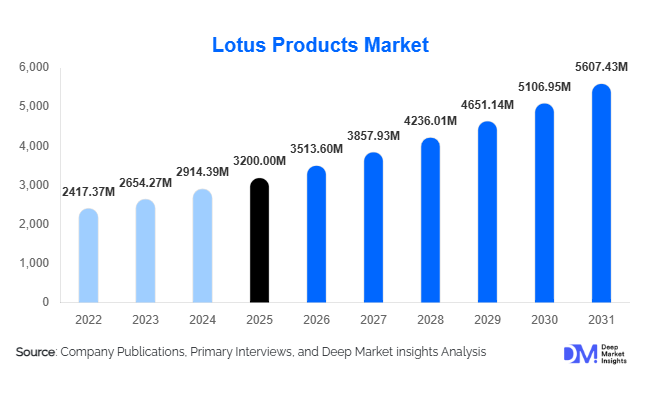
What are the latest trends in the global lotus products market?
Expansion of Functional Food and Superfood Applications
Lotus products, particularly lotus seeds (makhana), are increasingly being positioned as premium superfoods in global markets. Rising health consciousness and demand for plant-based protein snacks are driving innovation in flavored, roasted, and fortified lotus seed products. Food manufacturers are also incorporating lotus root and lotus flour into gluten-free and low-calorie formulations. This trend is particularly strong in North America and Europe, where consumers are actively seeking clean-label and nutrient-dense alternatives to processed snacks.
Rising Integration into Clean Beauty and Herbal Skincare
The cosmetics industry is rapidly adopting lotus flower and leaf extracts in skincare formulations due to their natural antioxidant and hydrating properties. Clean beauty trends are pushing brands to replace synthetic ingredients with botanical alternatives. Lotus-based serums, anti-aging creams, and herbal masks are gaining traction in premium skincare segments, especially in South Korea, Japan, and Europe. This trend is also supported by increasing consumer preference for Ayurvedic and plant-based personal care products.
What are the key drivers in the global lotus products market?
Growing Demand for Plant-Based and Functional Nutrition
The shift toward plant-based diets is one of the strongest drivers of the lotus products market. Consumers are increasingly choosing lotus seeds and lotus root as nutrient-rich alternatives to conventional snacks. High fiber, protein content, and low glycemic index positioning are making lotus products highly attractive in fitness and wellness segments globally.
Expansion of Herbal Medicine and Nutraceutical Industry
Increasing adoption of Ayurveda and Traditional Chinese Medicine is significantly boosting demand for lotus-based herbal formulations. Lotus extracts are widely used in stress relief, digestion improvement, and immunity-enhancing supplements, supporting strong growth in the global nutraceutical industry.
Rising Popularity of Clean-Label and Organic Products
Consumers are increasingly demanding chemical-free, organic, and minimally processed food and cosmetic products. Lotus ingredients naturally align with these expectations, making them highly preferred in clean-label product formulations across global markets.
What are the restraints for the global market?
Seasonal Supply and Agricultural Dependency
Lotus cultivation is highly seasonal and geographically concentrated, leading to supply fluctuations and price volatility. This dependency limits large-scale industrial scalability and creates inconsistencies in global supply chains.
Lack of Standardization and Processing Infrastructure
The absence of standardized extraction, drying, and quality control processes across regions restricts global pharmaceutical and cosmetic adoption. Variability in product quality remains a key challenge for large-scale commercialization.
What are the key opportunities in the lotus products industry?
Expansion in Nutraceutical and Dietary Supplement Markets
The global nutraceutical industry presents a major opportunity for lotus-based products, particularly in immunity-boosting and stress-relief supplements. Increasing demand for preventive healthcare is driving capsule, powder, and extract-based lotus formulations.
Growth of Premium Cosmetic Applications
Lotus-based skincare ingredients are gaining strong traction in premium beauty markets. Anti-aging, hydration, and skin-soothing properties are driving adoption in luxury cosmetic brands, especially in Asia-Pacific and Europe.
Export-Driven Expansion from Asia-Pacific
India and China are emerging as major export hubs for lotus seeds and lotus root products. Rising global demand in North America and Europe is creating strong export opportunities for processed and value-added lotus products.
Report Scope
| Report Metric | Details |
|---|---|
| Market Size in 2025 | USD 3200.00 Million |
| Market Size in 2026 | USD 3513.60 Million |
| Market Size in 2031 | USD 5607.43 Million |
| CAGR | 9.8% (2026-2031) |
| Base Year for Estimation | 2025 |
| Historical Data | 2022-2024 |
| Forecast Period | 2026-2031 |
| Report Coverage | Revenue Forecast, Competitive Landscape, Supply Chain Disruption, Growth Factors, Environment & Regulatory Landscape and Trends |
| Geographies Covered | North America, Europe, APAC, Middle East and Africa, LATAM |
| Countries Covered | U.S., Canada, U.K., Germany, France, Spain, Italy, Russia, Nordic, Benelux, Rest of Europe, China, Korea, Japan, India, Australia, Singapore, Taiwan, South East Asia, Rest of Asia-Pacific, UAE, Turky, Saudi Arabia, South Africa, Egypt, Nigeria, Rest of MEA, Brazil, Mexico, Argentina, Chile, Colombia, Rest of LATAM |
Explore more data points, trends and opportunities Download Free Sample Report
Product Type Insights
The global lotus products market is witnessing substantial expansion as consumers increasingly shift toward plant-based nutrition, herbal wellness products, and functional food ingredients. Among all product categories, lotus seeds (makhana) continue to dominate the market, accounting for nearly 38% share of the global market in 2025. The segment’s leadership is primarily driven by rising global demand for healthy snacking alternatives that are low in calories, rich in protein, and high in antioxidants. Lotus seeds have gained strong popularity among health-conscious consumers, fitness enthusiasts, and vegan populations due to their nutritional composition, which includes magnesium, potassium, fiber, and plant-based protein. The growing preference for roasted and flavored makhana snacks across urban retail channels, combined with increasing product innovation in seasoning and packaging, continues to strengthen market growth. The expansion of sports nutrition and preventive healthcare industries has further accelerated the adoption of lotus seed-based products as consumers seek clean-label and minimally processed snack options.Lotus-based powders, capsules, and dietary supplements are emerging as one of the fastest-growing product categories within the market. Increasing consumer focus on immunity enhancement, stress management, cardiovascular health, and preventive healthcare is driving demand for lotus-derived nutraceutical products. Manufacturers are actively investing in advanced extraction technologies and standardized herbal formulations to enhance product quality and efficacy. The growing integration of lotus ingredients into Ayurveda, Traditional Chinese Medicine (TCM), and holistic wellness systems is also strengthening demand globally. Furthermore, increasing penetration of herbal wellness products across e-commerce platforms has enabled lotus supplement brands to expand beyond regional markets and target international consumers seeking natural health solutions.Processed and value-added lotus products are gaining considerable traction worldwide as manufacturers diversify product offerings to cater to evolving consumer preferences. Flavored makhana snacks, lotus herbal teas, lotus flour, lotus beverages, lotus confectionery products, and ready-to-drink functional drinks are increasingly entering mainstream retail shelves. The growing demand for convenient functional foods and premium wellness products is encouraging food manufacturers to launch innovative lotus-based product variants with enhanced nutritional positioning. In addition, advancements in food processing technologies, improved packaging solutions, and rising investment in organic and non-GMO product development are supporting long-term market growth across multiple product categories.
Application Insights
The food and beverage sector remains the largest application segment within the global lotus products market, supported by increasing consumer demand for functional foods, natural ingredients, and plant-based nutrition. Lotus seeds and lotus root products are widely used in snacks, soups, bakery products, beverages, desserts, frozen foods, and traditional culinary preparations across both developed and emerging economies. The leading driver for this segment is the rapid global shift toward healthy eating habits and low-calorie nutritious food alternatives. Consumers are increasingly seeking products that provide both nutritional value and clean-label appeal, positioning lotus-derived ingredients as attractive alternatives in modern diets. Rising adoption of vegan and vegetarian lifestyles, coupled with increasing demand for gluten-free and minimally processed foods, continues to fuel the expansion of lotus applications within mainstream food manufacturing industries.Traditional medicine applications continue to represent a significant portion of market demand, particularly across Asia-Pacific countries where lotus products have been deeply integrated into herbal healing systems for centuries. Lotus seeds, roots, leaves, and flowers are widely used in Ayurveda and Traditional Chinese Medicine for their perceived benefits related to digestion, sleep support, circulation, stress reduction, and detoxification. Increasing global acceptance of alternative medicine and herbal healthcare therapies is helping lotus-based medicinal products gain traction beyond traditional regional markets. Government initiatives promoting herbal medicine industries in countries such as India and China are also contributing to increasing production and commercialization of lotus-derived medicinal ingredients.Industrial applications of lotus products are gradually emerging as niche opportunities within the broader market. Lotus fibers and plant materials are being explored for biodegradable packaging materials, eco-friendly textiles, natural dyes, and sustainable industrial products. As environmental concerns and sustainability regulations continue to intensify worldwide, manufacturers are increasingly evaluating plant-based raw materials with low environmental impact. The growing focus on circular economy practices and sustainable sourcing is expected to create future opportunities for industrial lotus applications across multiple sectors.
Distribution Channel Insights
Distribution channels within the lotus products market are evolving rapidly due to digital transformation, expanding retail infrastructure, and changing consumer purchasing behavior. Online retail and e-commerce platforms currently represent the fastest-growing distribution channel, driven by increasing internet penetration, smartphone usage, and growing consumer preference for convenient shopping experiences. The leading growth driver for this segment is the rapid expansion of direct-to-consumer wellness brands and digital health product marketplaces. Consumers are increasingly purchasing lotus-based snacks, supplements, herbal teas, and skincare products through online channels due to wider product availability, subscription-based purchasing models, and access to international brands. Social media marketing, influencer-driven promotions, and personalized wellness advertising are further supporting online sales growth globally.Business-to-business distribution networks remain essential for large-scale manufacturing operations across food processing, nutraceutical, pharmaceutical, and cosmetic industries. Ingredient suppliers are increasingly forming strategic partnerships with food and wellness companies to ensure consistent sourcing of lotus-derived raw materials. Growing industrial demand for botanical extracts and functional plant ingredients is encouraging manufacturers to expand cultivation and processing capacities to support global supply chain requirements.Foodservice distribution channels are also gradually expanding, particularly within Asian restaurants, wellness cafes, vegan dining chains, and premium hospitality sectors. Lotus seed snacks, lotus teas, and lotus-root-based dishes are increasingly being incorporated into restaurant menus as consumers seek unique and nutritious dining experiences. The rising popularity of Asian cuisine across North America and Europe is further creating opportunities for foodservice-driven product expansion.
Consumer Segment Insights
Health-conscious consumers represent the largest consumer segment within the global lotus products market, supported by rising awareness regarding nutrition, preventive healthcare, and functional food consumption. The leading driver for this segment is the increasing global preference for plant-based and natural dietary solutions that support long-term wellness goals. Consumers are actively seeking products with clean labels, low fat content, and high nutritional value, making lotus seeds and lotus-derived products highly attractive across multiple demographics. Growing concerns regarding obesity, diabetes, and cardiovascular diseases are also encouraging healthier snacking habits, further strengthening market demand.Fitness enthusiasts and wellness-focused consumers represent another major growth segment due to increasing adoption of protein-rich snacks and herbal supplements. Lotus seed products are widely perceived as healthy alternatives to conventional processed snacks because of their high fiber and protein content. Sports nutrition brands are increasingly incorporating lotus ingredients into functional snack formulations aimed at active lifestyle consumers. Rising gym memberships, wellness awareness campaigns, and digital fitness trends are supporting continued segment expansion globally.Urban middle-class populations in emerging economies are becoming the fastest-growing consumer base due to rising disposable income, increasing health awareness, and expanding access to modern retail channels. Rapid urbanization and changing lifestyles are encouraging consumers to spend more on premium wellness products, functional foods, and preventive healthcare solutions. Growing exposure to international health trends through digital platforms is also accelerating lotus product adoption across developing markets.
Explore more data points, trends and opportunities Download Free Sample Report
Lotus Products Market Segmentations
By Product Type
- Lotus Seeds
- Lotus Root
- Lotus Flower Extracts
- Lotus Leaf Products
- Lotus Nutraceuticals
- Lotus Cosmetics & Personal Care Ingredients
By Form
- Fresh Lotus Products
- Dried Lotus Products
- Powdered Lotus Derivatives
- Liquid Extracts & Concentrates
- Processed & Value-Added Lotus Foods
By Application
- Food & Beverages
- Nutraceuticals & Dietary Supplements
- Cosmetics & Personal Care
- Traditional Medicine
- Industrial Applications
By Distribution Channel
- Online Retail & E-commerce
- Supermarkets & Hypermarkets
- Specialty Health Stores
- Foodservice
- B2B Ingredient Supply Chains
Regional Insights
Asia-Pacific
Asia-Pacific dominates the global lotus products market with nearly 45% market share in 2025, supported by strong agricultural production, extensive cultural consumption patterns, and well-established herbal medicine industries. India remains the leading producer of lotus seeds (makhana), while China dominates lotus root cultivation and traditional medicinal applications. The primary growth driver for the region is the deep-rooted integration of lotus products into daily diets, traditional healthcare systems, and wellness practices. Rising health awareness, rapid urbanization, and expanding middle-class populations are significantly increasing regional demand for functional foods and herbal supplements. Governments across India and China are also promoting agricultural modernization and herbal product exports, strengthening international trade opportunities. Japan and South Korea contribute significantly to market growth through strong demand for premium cosmetics, botanical skincare products, and functional wellness foods. Increasing investment in food processing infrastructure, export-oriented cultivation, and nutraceutical manufacturing continues to position Asia-Pacific as the global production and supply hub for lotus-derived products.
North America
North America accounts for approximately 18% market share, driven by growing demand for superfoods, plant-based diets, and natural wellness products. The United States leads regional consumption, particularly within nutraceuticals, healthy snacks, and herbal supplement categories. The leading regional growth driver is the increasing consumer shift toward preventive healthcare and clean-label food products. Rising awareness regarding Asian superfoods and functional ingredients is encouraging mainstream retailers and wellness brands to introduce lotus-based products across multiple categories. Expanding vegan populations, rising fitness culture, and growing demand for gluten-free snacks are further supporting market growth. Additionally, strong e-commerce penetration and advanced health food retail networks are enabling international lotus brands to reach a broader consumer base across North America.
Europe
Europe holds nearly 22% market share, with Germany, the United Kingdom, and France representing major regional markets. The primary driver for European market growth is the increasing consumer preference for organic, clean-label, and sustainably sourced products. Rising demand for botanical supplements, herbal teas, and natural cosmetic ingredients is significantly supporting lotus product adoption across the region. European consumers are increasingly prioritizing wellness-focused lifestyles and environmentally responsible purchasing decisions, encouraging manufacturers to introduce organic and ethically sourced lotus-based offerings. Strict regulations regarding synthetic ingredients in food and cosmetics are also creating opportunities for plant-based alternatives. In addition, expanding multicultural food consumption trends and rising popularity of Asian cuisines are contributing to higher demand for lotus root and lotus seed products throughout Europe.
Latin America
Latin America is emerging as a promising growth market for lotus products, led by Brazil and Mexico. Increasing consumer awareness regarding herbal wellness products and functional nutrition is supporting gradual market expansion across the region. The leading growth driver is the rising adoption of natural healthcare products among urban middle-class consumers seeking affordable preventive wellness solutions. Expanding retail modernization, growing health food sectors, and increasing imports of Asian botanical ingredients are further supporting market penetration. Additionally, the rising popularity of plant-based diets and organic food trends among younger populations is expected to create long-term opportunities for lotus-derived food and supplement products across Latin America.
Middle East & Africa
The Middle East & Africa region is witnessing steady growth in the lotus products market, driven primarily by rising demand for premium wellness imports and expanding herbal healthcare awareness. The UAE and Saudi Arabia remain key regional markets due to increasing consumer spending on luxury wellness products, herbal supplements, and premium skincare solutions. The leading growth driver for the region is the rapid expansion of high-income urban populations seeking natural and imported health products. Growing tourism and hospitality industries are also increasing demand for premium herbal beverages and wellness-oriented food products. In Africa, improving trade networks, rising urbanization, and expanding retail infrastructure are gradually supporting the availability of lotus-based food and herbal products. Increasing focus on natural medicine and sustainable food consumption is expected to contribute to long-term regional market growth.
Key Players in the Global Lotus Products Market
- Indena S.p.A.
- Sabinsa Corporation
- International Flavors & Fragrances (IFF)
- Symrise AG
- Archer Daniels Midland (ADM)
- Kerry Group
- BASF SE
- Martin Bauer Group
- Vidya Herbs
- Himalaya Wellness Company
- Dabur India Ltd
- NOW Foods
- Nature’s Way Products LLC
- Herbalife Nutrition Ltd
- Amway (Nutrilite)