Linseed Oil Market Size
According to Deep Market Insights, the global linseed oil market size was valued at USD 1,065 million in 2025 and is projected to grow from USD 1,143.81 million in 2026 to reach USD 1,634.46 million by 2031, expanding at a CAGR of 7.4% during the forecast period (2026–2031). The linseed oil market growth is primarily driven by rising demand in paints, coatings, wood finishing, and nutraceutical applications, alongside increasing adoption of bio-based and sustainable industrial materials. Additionally, growing consumer preference for plant-derived oils in food, health supplements, and industrial applications is creating significant growth opportunities globally.
Key Market Insights
- Linseed oil is increasingly used as a sustainable alternative to petroleum-based oils in paints, coatings, and industrial applications, supporting environmentally friendly production practices.
- Cold-pressed and solvent-extracted linseed oils dominate production, owing to their high quality, versatility, and suitability for nutritional, industrial, and cosmetic applications.
- North America and Europe remain leading consumption regions, driven by growing demand in the coatings and nutraceutical segments.
- Asia-Pacific is emerging as the fastest-growing region, led by India and China, fueled by industrial expansion, rising construction, and increased use in health supplements.
- Technological integration in oil processing, including high-efficiency cold pressing and polymerization techniques, is improving product quality and shelf life.
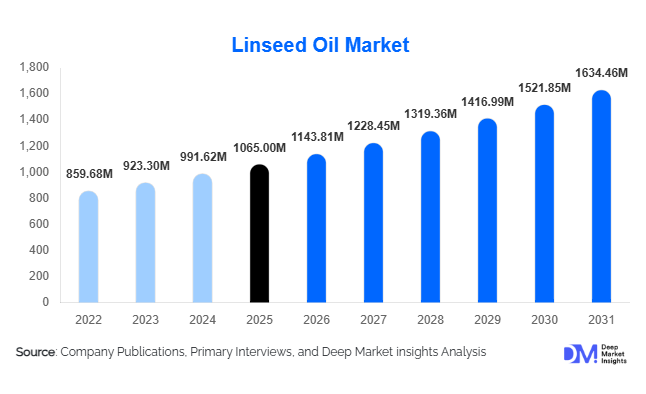
What are the latest trends in the linseed oil market?
Rising Demand for Bio-Based Industrial Materials
Linseed oil is increasingly recognized as a bio-based substitute for synthetic resins, varnishes, and industrial lubricants. Industrial manufacturers are adopting linseed oil-based coatings and sealants due to environmental regulations, sustainability commitments, and customer demand for low-VOC products. The trend is especially evident in the construction and furniture sectors, where wood finishing using natural oils is replacing conventional chemical-based products. Additionally, linseed oil is integrated into printing inks and linoleum production, which enhances its industrial footprint.
Expansion into Nutraceutical and Dietary Applications
Linseed oil is gaining traction in the health and wellness industry due to its high alpha-linolenic acid (ALA) content and antioxidant properties. Nutraceutical manufacturers are increasingly formulating omega-3 rich supplements, functional foods, and fortified beverages using linseed oil. This trend is reinforced by consumer awareness of heart health, cognitive benefits, and anti-inflammatory effects of plant-based oils. Packaging innovations, including encapsulation and cold-pressed variants, are enhancing product stability and shelf life for end consumers.
What are the key drivers in the linseed oil market?
Increasing Demand from Paints, Coatings, and Wood Finishing Industries
Linseed oil is extensively used in paints, varnishes, and wood finishing due to its natural drying properties and eco-friendliness. The global surge in construction and furniture manufacturing is directly boosting linseed oil demand. Sustainable interior design trends, premium furniture markets, and artisanal woodcraft sectors are prioritizing plant-based oils, providing stable growth for the linseed oil market. High-quality linseed oil variants, including boiled and polymerized types, are capturing significant industrial consumption.
Rising Awareness of Health and Nutritional Benefits
Consumers worldwide are increasingly seeking plant-derived oils rich in omega-3 fatty acids. Linseed oil, with its cardiovascular and anti-inflammatory benefits, is being incorporated in dietary supplements, functional foods, and beverages. Nutraceutical demand is particularly strong in North America and Europe, where health-conscious populations are willing to pay a premium for high-quality linseed oil products. Cold-pressed oil varieties are gaining popularity due to better nutrient retention, further boosting market growth.
Regulatory Support for Sustainable Products
Governments and environmental agencies are promoting bio-based industrial materials over synthetic, petroleum-derived alternatives. Regulatory frameworks favor low-VOC coatings and biodegradable oils, encouraging industries to adopt linseed oil in manufacturing paints, varnishes, lubricants, and sealants. Subsidies and incentives for renewable and plant-based products in Europe and North America are also facilitating increased production and consumption of linseed oil.
What are the restraints for the global market?
Price Volatility and Raw Material Availability
Linseed oil prices are sensitive to fluctuations in flaxseed cultivation, climate variability, and transportation costs. Supply shortages due to poor harvests can lead to price spikes, affecting industrial adoption. Additionally, competition from alternative oils such as soybean and canola oil can limit market penetration in some regions.
Processing and Quality Standard Challenges
High-quality linseed oil production requires precise cold-pressing, refining, and polymerization processes. Inconsistent quality and low shelf-life in improperly processed oils restrict wider adoption in nutraceutical and industrial sectors. Regulatory compliance for food-grade and industrial-grade linseed oil is complex, which may pose barriers for smaller manufacturers entering the market.
What are the key opportunities in the linseed oil market?
Integration into Bio-Based Industrial Solutions
Linseed oil presents significant potential as a sustainable raw material for coatings, paints, linoleum, and industrial lubricants. Manufacturers investing in high-quality polymerized linseed oil and eco-friendly formulations can capture market share from synthetic alternatives. The growing regulatory emphasis on environmental safety and low-VOC materials reinforces this opportunity.
Expansion in Nutraceuticals and Health Supplements
With rising awareness of omega-3 fatty acids and plant-based nutrition, linseed oil is expanding into dietary supplements, fortified foods, and functional beverages. Companies focusing on cold-pressed, organic, or enriched linseed oil variants can differentiate their offerings and target premium consumer segments in North America, Europe, and Asia-Pacific.
Emerging Markets in Asia-Pacific
Rapid industrialization, rising middle-class income, and growing health consciousness in countries such as India, China, and Japan are creating new demand avenues for linseed oil. The construction, furniture, and nutraceutical sectors are witnessing increased linseed oil adoption, making Asia-Pacific the fastest-growing regional market. Local manufacturers can capitalize on domestic demand while exporting to neighboring countries.
Report Scope
| Report Metric | Details |
|---|---|
| Market Size in 2025 | USD 1065 Million |
| Market Size in 2026 | USD 1143.81 Million |
| Market Size in 2031 | USD 1634.46 Million |
| CAGR | 7.4% (2026-2031) |
| Base Year for Estimation | 2025 |
| Historical Data | 2022-2024 |
| Forecast Period | 2026-2031 |
| Report Coverage | Revenue Forecast, Competitive Landscape, Supply Chain Disruption, Growth Factors, Environment & Regulatory Landscape and Trends |
| Geographies Covered | North America, Europe, APAC, Middle East and Africa, LATAM |
| Countries Covered | U.S., Canada, U.K., Germany, France, Spain, Italy, Russia, Nordic, Benelux, Rest of Europe, China, Korea, Japan, India, Australia, Singapore, Taiwan, South East Asia, Rest of Asia-Pacific, UAE, Turky, Saudi Arabia, South Africa, Egypt, Nigeria, Rest of MEA, Brazil, Mexico, Argentina, Chile, Colombia, Rest of LATAM |
Explore more data points, trends and opportunities Download Free Sample Report
Product Type Insights
The global linseed oil market is predominantly led by raw linseed oil, which accounts for approximately 38% of market share in 2025. This dominance is driven by its remarkable versatility across industrial, nutraceutical, and food applications. In the industrial sector, raw linseed oil is widely used in paints, coatings, varnishes, and wood treatments, providing superior adhesion, durability, and finish quality. Nutritionally, it is valued for its high alpha-linolenic acid content, supporting heart health and anti-inflammatory benefits. Boiled and polymerized linseed oils, representing around 25% of the market, are primarily preferred in the paints and coatings industry due to their enhanced drying properties, film-forming capabilities, and longevity, making them suitable for both residential and commercial construction applications. Cold-pressed linseed oil, accounting for nearly 20% of the market, is increasingly favored in the nutraceutical and functional food segments because it preserves vital nutrients and omega-3 fatty acids. The rising consumer focus on plant-based diets, dietary supplements, and natural health products is accelerating demand for cold-pressed variants. Furthermore, innovations in extraction techniques and certifications for organic and non-GMO products are expected to drive sustained growth across premium linseed oil offerings.
Application Insights
Paints and coatings remain the largest application segment globally, capturing about 35% of total linseed oil consumption in 2025. This segment’s growth is propelled by increasing adoption of sustainable construction practices, low-VOC and eco-friendly coatings, and a global shift toward environmentally responsible building materials. Wood finishing and preservation applications follow closely, accounting for around 22% of the market, supported by the expansion of furniture manufacturing, luxury flooring, and interior design projects across residential and commercial sectors. Nutraceutical applications, contributing approximately 15% of the market, are the fastest-growing segment. This surge is fueled by rising health awareness, increasing preference for omega-3-rich diets, and the expanding functional food and dietary supplement markets worldwide. Other industrial uses—including lubricants, printing inks, putty, and linoleum production—represent roughly 28% of the market, driven by industrial demand for bio-based, sustainable alternatives to conventional petroleum-derived products. Overall, technological advancements and regulatory support for environmentally sustainable solutions continue to reinforce linseed oil’s position across diverse applications.
Distribution Channel Insights
Direct industrial sales dominate the linseed oil market, supplying major manufacturers in paints, coatings, and wood treatment sectors. Specialty distributors provide tailored solutions to smaller enterprises, including nutraceutical and functional food companies, offering technical support, flexible delivery schedules, and customized packaging. Simultaneously, e-commerce platforms are rapidly expanding, particularly for retail distribution of cold-pressed and organic linseed oil, enabling easier access for health-conscious consumers. The growth of online sales is complemented by increasing awareness of plant-based and sustainable products, fostering higher adoption rates in premium consumer segments. Strategic partnerships between producers and online retailers are also helping to improve brand visibility and consumer trust, further accelerating market penetration.
Explore more data points, trends and opportunities Download Free Sample Report
Linseed Oil Market Segmentations
By Product Type
- Raw Linseed Oil
- Boiled Linseed Oil
- Cold-Pressed Linseed Oil
- Polymerized Linseed Oil
By Application
- Paints & Coatings
- Wood Finishing & Preservation
- Nutraceuticals & Dietary Supplements
- Industrial Lubricants & Inks
By Distribution Channel
- Direct Industrial Sales
- Specialty Distributors
- Online Commercial Platforms
- Retail Health & Organic Stores
Regional Insights
North America
North America represents approximately 28% of the global linseed oil market in 2025. The region benefits from strong industrial infrastructure and high consumer awareness of sustainability, which drives demand across coatings, wood preservation, and nutraceutical sectors. The United States and Canada are the primary markets, with nutraceutical applications growing rapidly due to an increased focus on heart health, omega-3 intake, and plant-based nutrition. Regulatory support for eco-friendly products, stringent environmental norms, and green building initiatives encourage industrial adoption of linseed oil-based coatings and finishes. Additionally, ongoing innovation in functional foods and dietary supplements, coupled with rising health-conscious consumer spending, further fuels regional growth.
Europe
Europe holds around 25% of the market share, with Germany, France, and the U.K. driving growth. The region is marked by mature industrial applications in paints and coatings, as well as a robust nutraceutical segment benefiting from the increasing demand for dietary supplements and functional foods. Market expansion is reinforced by strict environmental and safety regulations, growing green building certifications, and a strong preference for sustainable, plant-based products among European consumers. The presence of established industrial players, combined with innovation in health-focused and eco-friendly products, creates a stable yet dynamic market environment. Additionally, increasing government incentives for bio-based industrial solutions and research into sustainable oils support continued regional growth.
Asia-Pacific
Asia-Pacific is the fastest-growing region, demonstrating a double-digit CAGR, driven largely by China and India. Rapid urbanization, expanding construction sectors, and rising demand for furniture and interior products are key industrial drivers. Simultaneously, growing awareness of health, wellness, and plant-based nutrition has led to increased consumption of linseed oil in nutraceuticals and dietary supplements. The region benefits from enhanced domestic flaxseed cultivation, reducing import dependence and ensuring supply chain stability. Government initiatives promoting sustainable industrial practices, plant-based oils, and nutritional health further accelerate market growth. Additionally, increasing penetration of e-commerce and specialty retail platforms is helping to expand access to premium cold-pressed linseed oils, enhancing consumer adoption.
Latin America
Latin America, led by Brazil and Argentina, exhibits moderate growth in the linseed oil market. Industrial applications in paints, coatings, and wood finishing are the primary growth drivers, while emerging awareness of nutritional benefits is gradually supporting food and nutraceutical applications. Market expansion is challenged by competition from soybean and other vegetable oils, price sensitivity, and limited consumer awareness about linseed oil’s health advantages. Nevertheless, increased investment in industrial infrastructure, government support for bio-based products, and rising demand for sustainable solutions in the construction and furniture sectors are expected to sustain incremental growth in the region.
Middle East & Africa
The Middle East & Africa region demonstrates steady demand, with South Africa, the UAE, and Saudi Arabia being key markets. Industrial applications in paints, coatings, and wood preservation remain the primary drivers, alongside a growing nutraceutical sector. Market growth is supported by rising consumer awareness of sustainable oils, gradual adoption of plant-based nutritional products, and reliance on imports due to limited domestic production. Additionally, government initiatives promoting industrial diversification, eco-friendly production practices, and health-focused consumption patterns are expected to foster long-term market expansion. The gradual rise in premium consumer spending and the expansion of modern retail channels also contribute to increasing penetration of high-quality linseed oil products.
Key Players in the Linseed Oil Market
- Archer Daniels Midland Company
- Cargill Incorporated
- Bunge Limited
- Gustav Heess GmbH
- Henry Lamotte Oils GmbH
- A&A Fratelli Parodi S.p.A.
- Jedwards International Inc.
- Krishi Oils Limited
- Vandeputte Group
- Natrol LLC
- Flax Oil Products Ltd.
- Linseed Oil Company of India
- Hunan Linseed Oil Co., Ltd.
- BioOils Europe
- Australian Linseed Oil Co.