Kombucha Tea Market Size
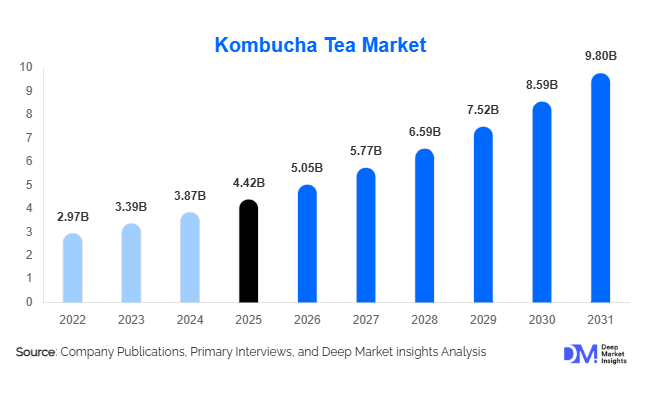
According to Deep Market Insights, the global kombucha tea market size was valued at USD 4.42 billion in 2025 and is projected to grow from USD 5.05 billion in 2026 to reach USD 9.80 billion by 2031, expanding at a CAGR of 14.2% during the forecast period (2026–2031). The kombucha tea market growth is primarily driven by rising consumer demand for probiotic beverages, increasing awareness regarding digestive health, and growing preference for clean-label and low-sugar functional drinks. Expanding retail penetration, premium beverage innovation, and the popularity of wellness-focused lifestyles are further accelerating market expansion globally.
Key Market Insights
- Kombucha tea is increasingly positioned as a functional wellness beverage, supported by rising consumer interest in probiotics, gut microbiome health, and immunity-enhancing nutrition.
- Low-sugar and organic kombucha variants are gaining rapid traction, particularly among millennials and Gen Z consumers seeking healthier alternatives to carbonated soft drinks.
- North America dominates the global kombucha tea market, driven by strong product awareness, premium beverage consumption, and widespread retail availability.
- Asia-Pacific is the fastest-growing regional market, supported by rising disposable income, urban wellness trends, and expanding functional beverage adoption.
- Hard kombucha and alcohol-alternative beverages are emerging as key innovation areas, attracting consumers seeking healthier social drinking options.
- Technological advancements in fermentation and packaging, including AI-assisted flavor development and sustainable aluminum canning, are improving scalability and shelf-life management.
Kombucha Tea Market Latest Trends
Functional and Wellness-Oriented Kombucha Innovation
Kombucha manufacturers are increasingly developing products enriched with probiotics, adaptogens, vitamins, collagen peptides, and botanical extracts to position kombucha as a premium wellness beverage. Consumers are seeking beverages that support immunity, digestion, stress management, hydration, and energy enhancement. This trend has led to the emergence of specialized kombucha formulations targeted toward fitness enthusiasts, health-conscious millennials, and consumers adopting preventive healthcare lifestyles. Functional kombucha products command higher retail pricing and stronger brand loyalty, especially in developed markets such as the United States, Canada, Germany, Japan, and South Korea. Beverage companies are also experimenting with CBD alternatives, herbal infusions, and nootropic ingredients to differentiate products within the competitive functional beverage landscape.
Sustainable Packaging and Low-Sugar Product Expansion
Sustainability and sugar reduction have become central trends within the kombucha tea market. Consumers increasingly prefer beverages packaged in recyclable aluminum cans and eco-friendly glass bottles while demanding reduced-sugar formulations without artificial sweeteners. Governments globally are introducing sugar taxation policies and stricter labeling regulations, encouraging beverage companies to innovate fermentation processes that naturally lower sugar content. Aluminum can packaging is gaining popularity because of portability, lower logistics costs, and improved sustainability profiles. Manufacturers are also emphasizing organic tea sourcing, carbon-neutral production, and environmentally responsible supply chains to attract environmentally conscious consumers. Subscription-based online sales and direct-to-consumer distribution models are further supporting the growth of premium sustainable kombucha brands worldwide.
Kombucha Tea Market Drivers
Growing Consumer Focus on Digestive Health
One of the most significant drivers of the kombucha tea market is the increasing consumer awareness regarding digestive wellness and gut microbiome health. Probiotic-rich beverages are gaining popularity as consumers seek natural products that support digestion, immunity, and overall wellness. Kombucha has emerged as a preferred alternative to sugary carbonated beverages due to its perceived health benefits and fermented probiotic composition. Scientific research related to gut health and preventive nutrition is influencing purchasing decisions across both developed and emerging markets. Consumers increasingly associate kombucha with detoxification, digestive balance, and healthier lifestyles, significantly strengthening global demand.
Expansion of Clean-Label and Low-Sugar Beverage Consumption
Consumers worldwide are shifting away from synthetic soft drinks toward clean-label beverages containing natural ingredients and lower sugar content. Kombucha manufacturers are capitalizing on this trend through organic certifications, reduced-sugar fermentation technologies, and transparent ingredient labeling. Governments introducing sugar taxes and anti-obesity initiatives are further accelerating demand for healthier beverage alternatives. The clean-label movement is particularly strong among younger consumers who prioritize natural ingredients, sustainability, and wellness-oriented food products. This transition is supporting premiumization within the kombucha industry and encouraging innovation in flavor development and ingredient sourcing.
Global Market Restraints
High Product Pricing and Limited Affordability
Kombucha tea remains relatively expensive compared to traditional carbonated beverages and juices because of complex fermentation processes, organic ingredient sourcing, refrigeration requirements, and shorter shelf life. Premium pricing limits adoption among price-sensitive consumers in developing economies where affordability remains a major purchasing factor. Logistics costs related to cold-chain transportation and sustainable packaging further increase retail prices. Although demand for functional beverages is rising globally, mass-market penetration remains constrained by pricing challenges, particularly outside North America and Western Europe.
Regulatory and Fermentation Compliance Challenges
The kombucha tea industry faces regulatory complexities related to alcohol content thresholds, probiotic labeling standards, and fermentation safety requirements. Different countries maintain inconsistent regulations governing fermented beverages, creating operational challenges for multinational brands. Hard kombucha products face additional licensing and taxation issues due to their alcohol content. Improper fermentation control can also create risks related to microbial contamination, carbonation instability, and unintended alcohol formation. As the market expands globally, manufacturers are required to invest significantly in quality assurance systems, laboratory testing, and production standardization to maintain compliance and product consistency.
Kombucha Tea Industry Key Opportunities
Expansion of Hard Kombucha and Alcohol Alternatives
The growing global trend toward reduced alcohol consumption presents significant opportunities for hard kombucha and premium alcohol-alternative beverages. Younger consumers increasingly seek healthier social drinking options that offer lower calories, natural ingredients, and functional wellness benefits. Hard kombucha combines probiotic appeal with alcoholic beverage positioning, enabling manufacturers to capture demand from both wellness-focused consumers and craft beverage enthusiasts. Bars, restaurants, wellness resorts, and premium hospitality operators are increasingly incorporating hard kombucha into beverage menus, creating additional growth opportunities for manufacturers globally.
Emerging Market Penetration Across Asia-Pacific and Latin America
Asia-Pacific and Latin America represent major untapped opportunities for kombucha tea manufacturers. Urbanization, rising disposable income, growing health awareness, and expanding organized retail infrastructure are accelerating demand for functional beverages across countries such as China, India, Brazil, Indonesia, Thailand, and Vietnam. International brands are increasingly partnering with local beverage producers to establish regional manufacturing and improve affordability. E-commerce growth and social media-driven wellness trends are also supporting kombucha adoption among younger consumers in emerging economies. These regions are expected to contribute significantly to long-term market expansion over the forecast period.
Report Scope
| Report Metric | Details |
|---|---|
| Market Size in 2025 | USD 4.42 Billion |
| Market Size in 2026 | USD 5.05 Billion |
| Market Size in 2031 | USD 9.80 Billion |
| CAGR | 14.2% (2026-2031) |
| Base Year for Estimation | 2025 |
| Historical Data | 2022-2024 |
| Forecast Period | 2026-2031 |
| Report Coverage | Revenue Forecast, Competitive Landscape, Supply Chain Disruption, Growth Factors, Environment & Regulatory Landscape and Trends |
| Geographies Covered | North America, Europe, APAC, Middle East and Africa, LATAM |
| Countries Covered | U.S., Canada, U.K., Germany, France, Spain, Italy, Russia, Nordic, Benelux, Rest of Europe, China, Korea, Japan, India, Australia, Singapore, Taiwan, South East Asia, Rest of Asia-Pacific, UAE, Turky, Saudi Arabia, South Africa, Egypt, Nigeria, Rest of MEA, Brazil, Mexico, Argentina, Chile, Colombia, Rest of LATAM |
Explore more data points, trends and opportunities Download Free Sample Report
Product Type Insights
Traditional kombucha dominates the market, accounting for approximately 41% of global market share in 2025, supported by strong consumer preference for authentic fermented beverages with natural probiotic benefits. Flavored kombucha products, particularly fruit-based variants such as berry, citrus, mango, and ginger-lemon combinations, are witnessing strong growth due to broader consumer appeal and improved taste accessibility. Functional kombucha products infused with adaptogens, vitamins, and botanicals are rapidly expanding within premium wellness categories. Hard kombucha is also emerging as a high-growth segment, driven by increasing demand for low-calorie alcoholic beverages. Low-sugar and zero-sugar kombucha variants are gaining traction as governments implement sugar reduction initiatives and consumers prioritize healthier beverage alternatives. Organic kombucha continues to command premium pricing due to strong clean-label and sustainability trends across North America and Europe.
Application Insights
Digestive health beverages remain the leading application segment within the kombucha tea market, supported by rising consumer awareness regarding probiotics and microbiome wellness. Functional beverage applications dominate overall market demand as consumers increasingly seek drinks associated with immunity enhancement, detoxification, hydration, and energy support. Sports and fitness hydration applications are growing rapidly, with fitness centers and wellness chains promoting kombucha as a natural alternative to synthetic sports beverages. Alcohol-alternative beverage applications, including hard kombucha and mocktail-based kombucha beverages, are also expanding strongly among younger demographics seeking healthier social drinking experiences. Premium lifestyle beverage positioning is further broadening kombucha’s appeal among affluent urban consumers.
Distribution Channel Insights
Supermarkets and hypermarkets dominate kombucha tea sales globally, accounting for nearly 37% of total market revenue in 2025 due to increasing shelf space dedicated to refrigerated functional beverages. Convenience stores are expanding kombucha offerings to support impulse purchases and urban on-the-go consumption trends. Online retail and direct-to-consumer channels are witnessing rapid growth through subscription-based beverage delivery services and wellness-focused e-commerce platforms. Specialty health stores and wellness retailers remain important channels for premium organic and functional kombucha products. Foodservice and café channels are also expanding as kombucha becomes increasingly integrated into wellness dining, premium hospitality, and healthy lifestyle establishments.
Consumer Demographic Insights
Millennials account for the largest share of global kombucha consumption, contributing approximately 39% of market demand in 2025. This demographic strongly aligns with wellness-focused lifestyles, clean-label consumption, and premium beverage experimentation. Generation Z consumers are increasingly driving demand for low-sugar kombucha products and sustainable packaging formats, influenced heavily by social media wellness trends and environmental awareness. Generation X consumers contribute significantly to premium organic kombucha sales due to higher disposable incomes and growing interest in preventive health management. Baby boomers represent a smaller but steadily growing consumer segment, particularly for probiotic beverages associated with digestive health and immunity support.
Packaging Insights
Glass bottles remain the dominant packaging format in the kombucha tea market, accounting for approximately 44% of global sales in 2025. Consumers perceive glass packaging as premium, environmentally friendly, and better suited for preserving beverage freshness and fermentation quality. However, aluminum cans are emerging as the fastest-growing packaging segment due to their portability, lower transportation costs, and recyclability advantages. PET bottles continue to maintain presence in cost-sensitive markets because of affordability and lightweight logistics benefits. Manufacturers are increasingly investing in sustainable packaging innovation to align with consumer demand for environmentally responsible beverage products.
Explore more data points, trends and opportunities Download Free Sample Report
Kombucha Tea Market Segmentations
By Product Type
- Traditional Kombucha
- Hard Kombucha
- Functional Kombucha
- Low-Sugar / Zero-Sugar Kombucha
- Organic Kombucha
- Flavored Kombucha
- Kombucha Shots
By Flavor Profile
- Citrus
- Berry
- Tropical Fruit
- Ginger
- Herbal & Botanical
- Original/Classic
By Packaging Type
- Glass Bottles
- Aluminum Cans
- PET Bottles
- Cartons
- Pouches
By Nature
- Organic
- Conventional
- Non-GMO Certified
By Distribution Channel
- Supermarkets & Hypermarkets
- Convenience Stores
- Specialty Health Stores
- Foodservice & Cafés
- Online Retail/E-Commerce
- Direct-to-Consumer (DTC)
Regional Insights
North America
North America remains the largest regional market for kombucha tea, accounting for approximately 39% of global revenue in 2025. The United States dominates regional demand due to high consumer awareness regarding probiotic beverages, strong retail infrastructure, and widespread availability of premium functional drinks. Canada also demonstrates strong growth supported by increasing organic beverage consumption and wellness-oriented consumer behavior. Hard kombucha adoption is particularly strong across urban U.S. markets where consumers increasingly seek healthier alcoholic beverage alternatives.
Europe
Europe represents nearly 27% of global kombucha tea market share, led by Germany, the United Kingdom, France, and the Netherlands. Germany remains a leading producer and consumer because of strong organic beverage culture and probiotic product awareness. The U.K. market is witnessing rapid expansion due to increasing supermarket penetration and wellness beverage demand among younger consumers. European consumers strongly prefer clean-label, sustainable, and low-sugar beverage products, supporting premium kombucha growth throughout the region.
Asia-Pacific
Asia-Pacific is projected to be the fastest-growing regional market, expected to expand at a CAGR exceeding 17% during the forecast period. China, Japan, South Korea, India, and Australia are major contributors to regional growth. Japan and South Korea benefit from established fermented beverage traditions and high probiotic acceptance. China is experiencing strong premium functional beverage demand driven by rising disposable income and urban wellness trends. India’s kombucha market is emerging rapidly through café culture expansion, wellness startups, and online retail penetration.
Latin America
Latin America is witnessing moderate but steadily increasing kombucha demand, led primarily by Brazil and Mexico. Urban consumers are increasingly adopting functional beverages associated with digestive wellness and healthy lifestyles. Rising imports of premium wellness beverages and expanding organized retail infrastructure are supporting regional growth. Brazil remains the largest regional market because of its large urban population and growing health beverage industry.
Middle East & Africa
The Middle East & Africa region currently accounts for a smaller share of the global kombucha tea market but demonstrates strong long-term growth potential. The UAE and Saudi Arabia are emerging as premium wellness beverage markets supported by affluent consumers, wellness tourism, and modern retail development. South Africa is also witnessing increasing consumer interest in fermented functional beverages. Growing expatriate populations and premium hospitality expansion are expected to support future regional demand growth.
Key Players in the Kombucha Tea Market
- GT’s Living Foods
- KeVita
- Health-Ade Kombucha
- Brew Dr. Kombucha
- Remedy Drinks
- Humm Kombucha
- Better Booch
- The Hain Celestial Group
- Carpe Diem Kombucha
- Lo Bros
- Equinox Kombucha
- Wild Kombucha
- Revive Kombucha
- NessAlla Kombucha
- Kosmic Kombucha