Kids Food Market Size
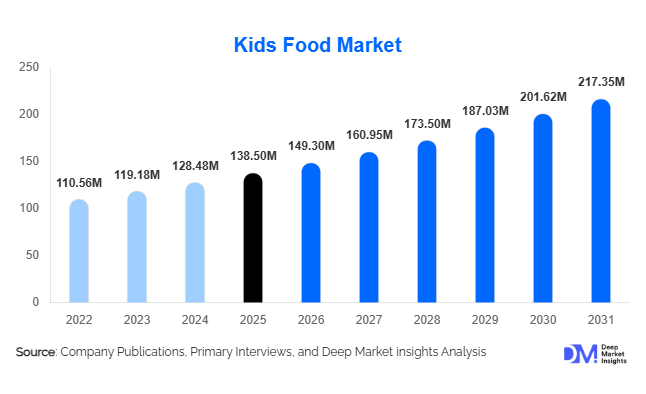
According to Deep Market Insights, the global kids food market size was valued at USD 138.5 billion in 2025 and is projected to grow from USD 149.30 billion in 2026 to reach USD 217.35 billion by 2031, expanding at a CAGR of 7.8% during the forecast period (2026–2031). The kids food market growth is primarily driven by rising parental awareness regarding child nutrition, increasing demand for convenient and ready-to-eat food options, and the growing adoption of fortified and organic food products tailored for children across different age groups.
Key Market Insights
- Rising demand for fortified and functional foods is reshaping product innovation, with brands focusing on immunity, cognitive development, and digestive health.
- Asia-Pacific dominates the global market, supported by high population density, increasing birth rates, and rising disposable incomes in countries like China and India.
- Supermarkets and hypermarkets remain the leading distribution channel, accounting for the largest share due to wide product availability and consumer trust.
- Organic and clean-label products are gaining traction, especially in North America and Europe, driven by increasing health consciousness among parents.
- E-commerce and direct-to-consumer channels are rapidly expanding, enabling personalized nutrition solutions and subscription-based models.
- Single-serve packaging formats are increasingly preferred, driven by convenience, portion control, and on-the-go consumption trends.
What are the latest trends in the kids food market?
Shift Toward Clean-Label and Organic Products
The kids food market is witnessing a strong shift toward clean-label and organic offerings as parents become more cautious about ingredient sourcing and nutritional quality. Products free from artificial additives, preservatives, and allergens are increasingly preferred. This trend is particularly prominent in developed markets, where regulatory frameworks and consumer awareness are high. Manufacturers are reformulating products to include natural ingredients, plant-based proteins, and minimally processed components, while also investing in transparent labeling to build consumer trust. Organic baby food and snacks are seeing accelerated adoption, especially among urban households with higher disposable income.
Growth of Functional and Fortified Kids Foods
Functional foods enriched with vitamins, minerals, probiotics, and omega-3 fatty acids are becoming mainstream in the kids food market. These products are designed to support immunity, brain development, and overall growth, addressing concerns related to nutritional deficiencies. Parents are increasingly opting for products with targeted health benefits, such as digestive health or cognitive enhancement. This has led to innovation in dairy-based drinks, cereals, and snacks, with brands positioning their offerings as both nutritious and convenient. The integration of functional ingredients is also helping companies differentiate their products in a competitive market.
What are the key drivers in the kids food market?
Increasing Awareness of Child Nutrition
Growing awareness about the importance of balanced nutrition during early childhood is a major driver of the kids food market. Parents are actively seeking products that provide essential nutrients required for physical and cognitive development. Government initiatives and healthcare campaigns promoting child nutrition are further supporting this trend, particularly in emerging markets.
Urbanization and Demand for Convenience Foods
Rapid urbanization and the rise of dual-income households are increasing the demand for convenient, ready-to-eat kids food products. Busy lifestyles are encouraging parents to opt for packaged meals, snacks, and beverages that save time while ensuring nutritional value. This trend is significantly boosting the growth of processed and packaged kids food segments globally.
Product Innovation and Branding Strategies
Continuous innovation in flavors, packaging, and nutritional composition is driving market growth. Companies are leveraging attractive packaging, character branding, and digital marketing strategies to appeal to both children and parents. The introduction of new product formats such as squeezable pouches and fortified beverages is further enhancing market penetration.
What are the restraints for the global market?
Stringent Regulatory Standards
The kids food market is subject to strict regulations regarding ingredient safety, labeling, and nutritional content. Compliance with these standards can increase production costs and limit product innovation. Regulatory scrutiny is particularly high in developed regions, where authorities impose strict guidelines on sugar content and additives.
Rising Concerns Over Childhood Obesity
Growing concerns about obesity and excessive sugar consumption among children are acting as a restraint on market growth. Consumers are increasingly avoiding high-sugar and highly processed foods, which is impacting traditional segments such as confectionery and sweetened beverages. Companies must adapt by reformulating products to meet evolving consumer expectations.
What are the key opportunities in the kids food industry?
Expansion in Emerging Markets
Emerging economies in Asia-Pacific, Latin America, and Africa present significant growth opportunities due to rising disposable incomes, urbanization, and increasing awareness of child nutrition. Governments in these regions are also promoting child health programs, creating opportunities for partnerships and institutional sales.
Digital and Direct-to-Consumer Channels
The rapid growth of e-commerce platforms is transforming the distribution landscape of the kids food market. Direct-to-consumer models enable brands to offer personalized nutrition solutions and build strong customer relationships. Subscription-based services for baby food and kids snacks are gaining popularity, providing recurring revenue streams for companies.
Report Scope
| Report Metric | Details |
|---|---|
| Market Size in 2025 | USD 138.5 Million |
| Market Size in 2026 | USD 149.30 Million |
| Market Size in 2031 | USD 217.35 Million |
| CAGR | 7.8% (2026-2031) |
| Base Year for Estimation | 2025 |
| Historical Data | 2022-2024 |
| Forecast Period | 2026-2031 |
| Report Coverage | Revenue Forecast, Competitive Landscape, Supply Chain Disruption, Growth Factors, Environment & Regulatory Landscape and Trends |
| Geographies Covered | North America, Europe, APAC, Middle East and Africa, LATAM |
| Countries Covered | U.S., Canada, U.K., Germany, France, Spain, Italy, Russia, Nordic, Benelux, Rest of Europe, China, Korea, Japan, India, Australia, Singapore, Taiwan, South East Asia, Rest of Asia-Pacific, UAE, Turky, Saudi Arabia, South Africa, Egypt, Nigeria, Rest of MEA, Brazil, Mexico, Argentina, Chile, Colombia, Rest of LATAM |
Explore more data points, trends and opportunities Download Free Sample Report
Product Type Insights
The product type segmentation of the global kids food market reflects a highly dynamic and evolving landscape, shaped by changing parental expectations, scientific advancements in nutrition, and the growing influence of health and wellness trends. Infant and toddler foods continue to dominate the market, accounting for approximately 32% of the total market share in 2025. This leadership position is primarily driven by the critical nutritional requirements during the early stages of life, where proper intake of vitamins, minerals, proteins, and essential fatty acids plays a vital role in cognitive and physical development. Parents demonstrate a high level of brand loyalty and trust in this category, often favoring clinically tested and pediatrician-recommended products. The leading segment driver here is the increasing awareness of early-life nutrition and its long-term health implications, coupled with rising disposable incomes that enable parents to invest in premium infant nutrition solutions.The kids beverages segment, particularly fortified milk drinks, plant-based alternatives, and fruit juices, is witnessing steady and sustained growth. Parents are increasingly moving away from carbonated and high-sugar beverages, seeking healthier options that support hydration and nutritional intake. Functional beverages enriched with calcium, vitamin D, probiotics, and DHA are gaining traction, especially in urban markets. This segment is also benefiting from aggressive marketing strategies and the introduction of appealing flavors and packaging formats. The primary growth driver for beverages is the rising preference for healthier hydration options that align with broader family wellness goals.The healthy and functional foods segment is emerging as one of the fastest-growing categories within the kids food market. This includes organic products, allergen-free formulations, gluten-free snacks, and foods fortified with additional nutrients. Increasing concerns about food allergies, childhood obesity, and long-term health outcomes are prompting parents to choose products with clean labels and transparent ingredient sourcing. Regulatory support for organic certifications and the expansion of specialty product lines by major manufacturers are further accelerating growth. The leading driver for this segment is the heightened focus on preventive health and the demand for functional benefits beyond basic nutrition.
Application Insights
In terms of application, household consumption remains the dominant segment, accounting for over 75% of total demand globally. This dominance is rooted in the central role parents play as primary decision-makers when it comes to children’s dietary choices. Modern households are increasingly prioritizing balanced nutrition, convenience, and product safety, leading to higher adoption of packaged kids food products. The shift toward dual-income families has further intensified the need for ready-to-eat and easy-to-prepare food options that do not compromise on quality. The leading driver for this segment is the growing reliance on convenient yet nutritionally balanced food solutions in busy household environments.Institutional applications, including schools, daycare centers, and childcare facilities, are emerging as a significant growth area within the market. These institutions are increasingly adopting packaged and standardized kids food products to ensure consistent quality, portion control, and compliance with nutritional guidelines. Government initiatives and policies promoting child nutrition programs, particularly in developing regions, are also contributing to the expansion of this segment. Schools are integrating healthier meal plans and collaborating with food manufacturers to provide fortified and balanced meals. The leading driver for institutional adoption is the structured approach to child nutrition, supported by policy frameworks and the need for operational efficiency in large-scale food service environments.Additionally, the rise of after-school programs and extracurricular activities has created new consumption occasions, further boosting demand across both household and institutional channels. The integration of technology in meal planning and monitoring, such as digital menus and nutrition tracking, is also influencing purchasing decisions. As awareness of childhood nutrition continues to grow, both households and institutions are expected to increasingly prioritize high-quality, safe, and nutritionally enriched food products.
Distribution Channel Insights
The distribution landscape of the kids food market is characterized by a strong presence of traditional retail channels alongside rapidly expanding digital platforms. Supermarkets and hypermarkets dominate the segment, accounting for approximately 38% of the global market share. These retail formats offer a comprehensive range of products under one roof, competitive pricing, and a high level of consumer trust. Their ability to provide in-store promotions, product visibility, and immediate availability makes them a preferred choice for parents. The leading driver for this segment is the convenience of one-stop shopping combined with the assurance of product authenticity and variety.Online retail is the fastest-growing distribution channel, driven by the increasing penetration of e-commerce platforms and the growing comfort of consumers with digital transactions. Parents are increasingly turning to online channels for their convenience, wider product assortment, and access to detailed product information and reviews. Subscription-based models for infant formula and baby food are gaining popularity, offering consistent supply and cost savings. The COVID-19 pandemic accelerated the shift toward online shopping, and this trend continues to persist. The leading driver for online retail is the unmatched convenience and accessibility it offers, along with personalized shopping experiences.Emerging retail formats, including convenience stores and direct-to-consumer channels, are also contributing to market expansion. Brands are increasingly investing in omnichannel strategies to ensure seamless integration between offline and online platforms. This holistic approach enables them to reach a broader consumer base while enhancing customer engagement and loyalty.
Age Group Insights
The age group segmentation of the kids food market highlights varying nutritional needs and consumption patterns across different developmental stages. Toddlers aged 1–3 years represent the largest segment, accounting for around 28% of the market share. This stage marks a critical transition from liquid-based diets to solid foods, creating significant demand for diverse, easy-to-digest, and nutrient-rich products. Parents are particularly attentive during this phase, seeking products that support growth, immunity, and cognitive development. The leading driver for this segment is the increasing demand for transitional foods that bridge the gap between infancy and early childhood nutrition.The early childhood segment, typically covering ages 4–8 years, is experiencing steady growth as children begin to develop independent food preferences. This stage sees increased consumption of snacks, beverages, and convenience foods, with a growing emphasis on taste and variety. Manufacturers are responding by introducing fun, engaging, and nutritionally balanced products that cater to both children’s preferences and parental expectations. The leading driver here is the balance between taste appeal and nutritional value.Pre-teen consumers represent an emerging segment with unique consumption patterns influenced by peer behavior, marketing, and lifestyle trends. This group shows a higher inclination toward on-the-go snacks and beverages, creating opportunities for product innovation. The growth of this segment is driven by increasing autonomy in food choices and exposure to diverse food options.
Explore more data points, trends and opportunities Download Free Sample Report
Kids Food Market Segmentations
By Product Type
- Infant & Toddler Foods
- Children’s Packaged Foods
- Kids Beverages
- Healthy & Functional Kids Foods
By Age Group
- Infants
- Toddlers
- Early Childhood
- Pre-teens
By Distribution Channel
- Supermarkets & Hypermarkets
- Convenience Stores
- Online Retail
- Pharmacies & Specialty Stores
- Institutional Sales
Regional Insights
Asia-Pacific
Asia-Pacific dominates the global kids food market, accounting for approximately 34% of the total market share in 2025. The region’s growth is underpinned by its large and rapidly expanding population, particularly in countries such as China and India. Rising disposable incomes, urbanization, and increasing awareness of child nutrition are key factors driving demand. In China, the market is significantly influenced by strong demand for infant formula, supported by a growing middle class and heightened concerns about product safety and quality. India, on the other hand, is experiencing rapid growth due to government-led nutrition programs, such as mid-day meal schemes, and increasing penetration of packaged foods in urban and semi-urban areas. Additional drivers include the expansion of retail infrastructure, the rise of e-commerce platforms, and growing female workforce participation, which increases demand for convenient food solutions.
North America
North America holds around 26% of the global market share, with the United States leading the region. The market is characterized by high consumer awareness, advanced retail infrastructure, and a strong preference for organic, clean-label, and premium products. Parents in this region are highly informed and prioritize transparency, ingredient quality, and sustainability. The presence of established market players and continuous product innovation further support growth. Key regional drivers include the increasing demand for organic and non-GMO products, the rise of functional foods, and the growing influence of health and wellness trends. Additionally, strong regulatory frameworks and high purchasing power contribute to market stability and expansion.
Europe
Europe accounts for approximately 22% of the global kids food market, with countries such as Germany, France, and the United Kingdom leading demand. The region is defined by stringent food safety regulations and a strong preference for organic and sustainably sourced products. Consumers in Europe place a high emphasis on quality, traceability, and environmental impact, driving demand for premium offerings. The market is also influenced by government initiatives promoting child nutrition and healthy eating habits. Key growth drivers include the increasing adoption of organic foods, rising awareness of food allergies, and the expansion of private-label brands offering high-quality products at competitive prices.
Latin America
Latin America represents an emerging market with significant growth potential, driven by countries such as Brazil and Mexico. The region is witnessing steady expansion due to increasing urbanization, rising middle-class income levels, and improving retail infrastructure. Demand for affordable and nutritious kids food products is a primary growth factor, as consumers seek value-for-money options that meet basic nutritional needs. Additional drivers include the growing influence of Western dietary patterns, increased availability of packaged foods, and government initiatives aimed at improving child nutrition. The expansion of modern retail channels and the entry of international brands are further enhancing market development.
Middle East & Africa
The Middle East and Africa region is the fastest-growing market, with a projected CAGR of approximately 9.5%. Growth in this region is driven by rapid urbanization, improving economic conditions, and increasing awareness of child nutrition. Countries such as the UAE and South Africa are leading the market, supported by higher disposable incomes and expanding retail networks. The region also benefits from a young population demographic, which creates sustained demand for kids food products. Key drivers include the rising adoption of packaged foods, increased investment in healthcare and nutrition awareness programs, and the growing presence of international brands. Additionally, the expansion of e-commerce and modern trade channels is improving product accessibility across urban and rural areas, further accelerating market growth.
Key Players in the Kids Food Market
- Nestlé S.A.
- Danone S.A.
- Abbott Laboratories
- Kraft Heinz Company
- General Mills Inc.
- Unilever PLC
- Reckitt Benckiser Group
- Hain Celestial Group
- Hero Group
- Mead Johnson Nutrition
- Kellogg Company
- FrieslandCampina
- Arla Foods
- Campbell Soup Company
- Yili Group