Gourmet Ice Cream Market Size
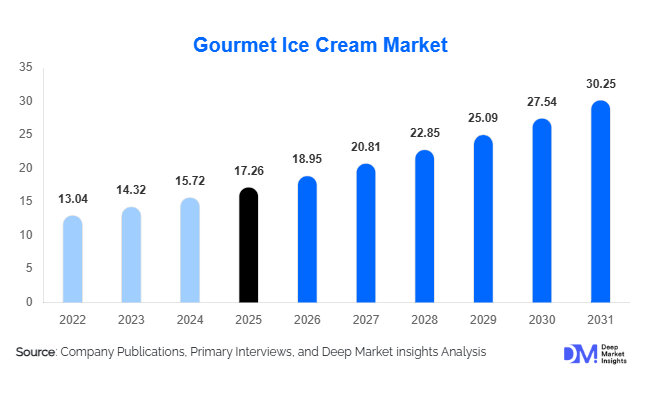
According to Deep Market Insights, the global gourmet ice cream market size was valued at USD 17.26 billion in 2025 and is projected to grow from USD 18.95 billion in 2026 to reach USD 30.25 billion by 2031, expanding at a CAGR of 9.8% during the forecast period (2026–2031). The gourmet ice cream market growth is primarily driven by rising consumer preference for premium indulgent desserts, increasing demand for artisanal and clean-label frozen treats, and rapid innovation in plant-based and functional ice cream offerings.
Key Market Insights
- Premiumization trends are reshaping the frozen dessert industry, with consumers increasingly willing to spend on artisanal, organic, and luxury gourmet ice cream products.
- Plant-based gourmet ice cream is witnessing rapid adoption, driven by vegan lifestyles, lactose intolerance awareness, and sustainability-focused consumer behavior.
- North America dominates the gourmet ice cream market, supported by strong premium dessert consumption and extensive presence of artisanal brands.
- Asia-Pacific remains the fastest-growing regional market, led by rising disposable incomes, expanding café culture, and growing Western dessert adoption.
- Millennials and Gen Z consumers are driving demand through experimentation with exotic flavors, customized desserts, and social-media-driven food trends.
- Technological advancements in cold-chain logistics and direct-to-consumer delivery are significantly improving accessibility and premium frozen dessert distribution globally.
What are the latest trends in the gourmet ice cream market?
Rise of Plant-Based and Functional Gourmet Ice Cream
The gourmet ice cream industry is increasingly shifting toward plant-based and functional product innovation. Manufacturers are introducing premium vegan ice cream variants made using oat milk, almond milk, coconut milk, and cashew milk to cater to evolving dietary preferences. Functional ingredients such as probiotics, collagen, protein fortification, adaptogens, and low-sugar formulations are also gaining popularity among health-conscious consumers. Consumers increasingly seek indulgent desserts that align with wellness goals without compromising taste or texture. Premium vegan gourmet ice cream brands are particularly expanding across North America and Europe, while emerging Asian markets are witnessing strong adoption of lactose-free frozen desserts due to rising health awareness and urban lifestyle changes.
Experiential and Artisanal Dessert Consumption
Consumers are increasingly seeking immersive dessert experiences rather than conventional packaged frozen desserts. Boutique ice cream parlors, chef-inspired dessert cafés, and experiential gourmet dessert stores are becoming mainstream globally. Companies are introducing limited-edition flavors, alcohol-infused ice creams, globally inspired recipes, and customized frozen desserts to differentiate themselves in a highly competitive market. Social media platforms are accelerating demand for visually appealing and innovative gourmet desserts, encouraging manufacturers to focus heavily on premium presentation and seasonal product launches. Artisanal small-batch production, locally sourced ingredients, and handcrafted flavor combinations are further strengthening premium positioning across the market.
What are the key drivers in the gourmet ice cream market?
Growing Consumer Preference for Premium Desserts
The rising global trend toward premiumization in food and beverages is one of the primary growth drivers for the gourmet ice cream market. Consumers increasingly view gourmet frozen desserts as affordable luxury products and are willing to pay premium prices for authentic ingredients, artisanal production methods, and superior flavor quality. Urban consumers, particularly millennials and Gen Z demographics, are driving strong demand for exotic flavors, imported ingredients, and handcrafted premium dessert experiences. Luxury dessert positioning has also expanded gourmet ice cream consumption beyond seasonal demand into year-round indulgence.
Expansion of Organized Retail and Online Frozen Delivery
The rapid expansion of supermarkets, hypermarkets, specialty frozen dessert chains, and online grocery delivery platforms has significantly improved accessibility to gourmet ice cream products. Advances in cold-chain logistics, insulated packaging technologies, and quick-commerce delivery infrastructure are enabling premium brands to expand geographically while preserving product quality. Direct-to-consumer frozen dessert delivery models are also helping companies strengthen customer engagement and increase repeat purchases. The integration of AI-driven recommendation systems and personalized flavor subscriptions is further enhancing consumer retention and digital market penetration.
What are the restraints for the global market?
High Production and Ingredient Costs
Gourmet ice cream production involves premium dairy ingredients, imported nuts, natural flavorings, specialty cocoa, and artisanal manufacturing techniques, resulting in significantly higher production costs compared to conventional ice cream. Volatility in dairy prices, cocoa prices, and international ingredient sourcing costs continues to pressure manufacturer margins. Premium gourmet products also require sophisticated cold-chain logistics and specialized storage infrastructure, increasing operational expenses and limiting affordability in price-sensitive markets.
Increasing Health and Sugar Consumption Concerns
Growing consumer awareness regarding obesity, diabetes, and sugar consumption poses a challenge to the gourmet ice cream industry. Regulatory authorities across several countries are implementing stricter nutritional labeling regulations, sugar taxes, and calorie disclosure requirements that may impact indulgent dessert categories. While manufacturers are introducing low-sugar and functional variants, balancing indulgence with healthier formulations remains a complex challenge. Consumer demand for guilt-free indulgence is expected to continue shaping product innovation and reformulation strategies across the market.
What are the key opportunities in the gourmet ice cream industry?
Expansion in Emerging Economies
Emerging markets such as India, China, Indonesia, Brazil, and Saudi Arabia present significant growth opportunities for gourmet ice cream manufacturers. Rising disposable incomes, expanding urban populations, and increasing Western food influence are accelerating demand for premium desserts across these regions. Organized retail growth and expansion of premium café chains are also creating strong market penetration opportunities for both international and domestic gourmet brands. Companies introducing localized flavors combined with affordable premium pricing strategies are likely to gain strong competitive advantages in high-growth emerging markets.
Direct-to-Consumer and Subscription-Based Frozen Dessert Models
The rapid growth of e-commerce and quick-commerce food delivery ecosystems is opening new opportunities for direct-to-consumer gourmet ice cream distribution. Premium brands are increasingly launching online-exclusive flavors, subscription-based frozen dessert boxes, and personalized gifting solutions to improve customer engagement and loyalty. Advanced cold-chain delivery technologies and insulated packaging innovations are enabling nationwide distribution of premium frozen desserts without compromising quality. This trend is expected to create strong opportunities for digital-first gourmet dessert brands globally.
Report Scope
| Report Metric | Details |
|---|---|
| Market Size in 2025 | USD 17.26 |
| Market Size in 2026 | USD 18.95 |
| Market Size in 2031 | USD 30.25 |
| CAGR | 9.8% (2026-2031) |
| Base Year for Estimation | 2025 |
| Historical Data | 2022-2024 |
| Forecast Period | 2026-2031 |
| Report Coverage | Revenue Forecast, Competitive Landscape, Supply Chain Disruption, Growth Factors, Environment & Regulatory Landscape and Trends |
| Geographies Covered | North America, Europe, APAC, Middle East and Africa, LATAM |
| Countries Covered | U.S., Canada, U.K., Germany, France, Spain, Italy, Russia, Nordic, Benelux, Rest of Europe, China, Korea, Japan, India, Australia, Singapore, Taiwan, South East Asia, Rest of Asia-Pacific, UAE, Turky, Saudi Arabia, South Africa, Egypt, Nigeria, Rest of MEA, Brazil, Mexico, Argentina, Chile, Colombia, Rest of LATAM |
Explore more data points, trends and opportunities Download Free Sample Report
Product Type Insights
The global gourmet ice cream market is experiencing substantial expansion across multiple product categories as consumers increasingly prioritize premium indulgence, artisanal craftsmanship, innovative formulations, and experiential dessert consumption. Among all product types, premium dairy ice cream continues to dominate the market and accounts for the largest revenue share globally due to strong consumer preference for rich texture, superior creaminess, high butterfat content, and authentic handcrafted quality. Consumers across developed and emerging markets increasingly associate premium dairy ice cream with luxury indulgence, emotional comfort, and elevated dessert experiences, which continues to strengthen demand for artisanal frozen desserts made with premium dairy ingredients, natural flavorings, and small-batch production methods. The growing popularity of gourmet dessert culture, premium café chains, and luxury food experiences is further accelerating adoption of premium dairy-based frozen desserts worldwide.Seasonal and limited-edition gourmet ice cream products continue to play a critical role in strengthening premium brand differentiation and enhancing consumer engagement. Manufacturers are increasingly leveraging festive launches, culturally inspired flavors, and region-specific seasonal innovations to stimulate repeat purchases and maintain strong consumer excitement throughout the year. Holiday-themed dessert collections, summer-exclusive flavors, and collaborative product launches with confectionery, bakery, and beverage brands are becoming increasingly common strategies among leading gourmet ice cream manufacturers globally. The growing influence of social media-driven food trends and visually appealing dessert presentations is further accelerating demand for innovative premium frozen dessert experiences.
Flavor Insights
Flavor innovation remains one of the most important growth drivers shaping the global gourmet ice cream market as consumers increasingly seek premium indulgence, unique sensory experiences, and internationally inspired dessert offerings. Chocolate-based gourmet flavors continue to dominate the market and account for nearly 26% of global revenues due to strong universal consumer familiarity, premium ingredient compatibility, and broad demographic appeal. The segment continues to benefit from rising consumer preference for indulgent premium desserts featuring rich cocoa content, artisan chocolate inclusions, and sophisticated flavor layering. Belgian chocolate, dark chocolate truffle, cocoa-rich artisan formulations, and single-origin chocolate variants remain particularly popular among premium dessert consumers seeking luxury and authenticity in frozen dessert experiences.Alcohol-infused gourmet ice cream products are emerging as a niche yet rapidly growing category, particularly among millennials and younger urban consumers seeking experimental and premium dessert experiences. Bourbon vanilla, rum raisin, Irish cream, champagne sorbet, and wine-inspired frozen desserts are increasingly being introduced by artisanal brands and specialty dessert chains to cater to evolving premium indulgence preferences. Manufacturers are continuously expanding flavor portfolios and introducing cross-category innovations to maintain strong consumer interest and enhance competitive differentiation within the gourmet frozen dessert industry.
Distribution Channel Insights
Distribution channels play a critical role in determining market penetration, product accessibility, and premium brand visibility within the global gourmet ice cream market. Supermarkets and hypermarkets continue to dominate global distribution due to their extensive retail networks, strong frozen food infrastructure, high consumer footfall, and dedicated premium dessert sections. Large retail chains provide gourmet ice cream manufacturers with broad geographic reach, strong merchandising capabilities, and enhanced product visibility, enabling premium frozen dessert brands to effectively target mass-premium consumers. The growing expansion of organized retail infrastructure across emerging economies is further supporting the availability and penetration of gourmet frozen desserts in both urban and semi-urban markets.Foodservice channels including cafés, restaurants, luxury hotels, catering services, bakeries, and premium dessert chains are also witnessing strong demand growth as gourmet ice cream becomes increasingly integrated into experiential dining and upscale dessert menus. Premium frozen desserts are widely used in plated desserts, gourmet milkshakes, specialty beverages, pastries, and fusion dessert concepts across hospitality and foodservice establishments. The rapid expansion of tourism, luxury hospitality infrastructure, and premium café culture globally continues to support rising institutional demand for gourmet frozen dessert products.
Consumer Age Group Insights
Consumer demographics continue to significantly influence purchasing behavior, product innovation, and premium positioning strategies within the global gourmet ice cream market. Millennials account for the largest market share and contribute nearly 37% of global revenues due to their strong preference for premium indulgence, innovative flavor experimentation, artisanal food products, and social-media-driven food trends. Millennials are highly responsive to visually appealing desserts, clean-label ingredients, sustainability claims, and globally inspired flavor experiences, making them the primary target demographic for premium gourmet ice cream manufacturers worldwide.Generation X consumers remain important contributors to household consumption and family-pack purchases due to their relatively high purchasing power and preference for premium family-oriented dessert experiences. This demographic increasingly seeks high-quality frozen desserts featuring trusted ingredients, premium taste profiles, and value-added packaging formats suitable for at-home consumption. Meanwhile, baby boomers are increasingly adopting low-sugar, functional, and clean-label frozen desserts as health consciousness and dietary management become more important purchasing considerations.Children and teenagers continue to play a major role in driving demand for colorful gourmet desserts, seasonal offerings, novelty flavors, and visually engaging frozen treats. Manufacturers increasingly introduce cartoon-themed packaging, candy-inspired flavors, and interactive dessert formats to strengthen appeal among younger consumers while simultaneously influencing family purchasing decisions globally.
Explore more data points, trends and opportunities Download Free Sample Report
Gourmet Ice Cream Market Segmentations
By Product Type
- Premium Dairy Ice Cream
- Gelato
- Frozen Custard
- Mochi Ice Cream
- Vegan Gourmet Ice Cream
- Functional Gourmet Ice Cream
- Alcohol-Infused Gourmet Ice Cream
- Seasonal & Limited-Edition Gourmet Ice Cream
By Flavor Category
- Chocolate-Based Flavors
- Vanilla & Cream-Based Flavors
- Fruit-Based Flavors
- Nut-Based Flavors
- Coffee & Beverage-Inspired Flavors
- Exotic & International Flavors
- Alcoholic Dessert Flavors
By Distribution Channel
- Supermarkets & Hypermarkets
- Convenience Stores
- Specialty Dessert Stores
- Ice Cream Parlors & Boutiques
- Online Retail
- Direct-to-Consumer Platforms
- Foodservice Distribution
By End Use
- Household Consumption
- Restaurants
- Hotels
- Cafés & Bakeries
- Catering Services
- Events & Entertainment Venues
Regional Insights
North America
North America remains the largest regional market for gourmet ice cream and accounts for approximately 36% of global revenues in 2025. The region benefits from highly developed cold-chain infrastructure, strong premium food consumption patterns, widespread availability of artisanal dessert brands, and high consumer spending on indulgent food products. The United States dominates regional demand due to strong consumer preference for premium frozen desserts, extensive product innovation activity, and rapid expansion of plant-based gourmet ice cream portfolios. The growing popularity of clean-label products, organic ingredients, and functional indulgence continues to encourage manufacturers to expand healthier premium dessert offerings across the region.Canada is witnessing increasing demand for sustainable, organic, and locally sourced gourmet frozen desserts due to rising environmental awareness and premium food consumption trends. Mexico is emerging as a promising market supported by rapid urbanization, expanding retail infrastructure, rising disposable incomes, and growing exposure to Western dessert culture. Increasing penetration of international gourmet dessert brands and quick-service restaurant expansion are also contributing to regional market growth.
Europe
Europe accounts for nearly 29% of the global gourmet ice cream market and continues to maintain strong demand for artisanal frozen desserts, premium gelato, and luxury dairy-based indulgence products. The region benefits from strong culinary heritage, high consumer appreciation for artisanal food craftsmanship, and widespread preference for high-quality dairy products. Italy remains a global leader in premium gelato production and exports, while France and Belgium continue to dominate luxury dessert innovation through the use of premium chocolate, dairy, and confectionery ingredients.Germany and the United Kingdom are witnessing particularly strong growth in vegan, low-sugar, and lactose-free gourmet frozen desserts due to rising health awareness and expanding plant-based food adoption. In addition, increasing disposable income levels, strong private-label innovation, and continuous flavor experimentation continue to support premium frozen dessert sales across major European economies.
Asia-Pacific
Asia-Pacific represents the fastest-growing regional gourmet ice cream market and is projected to expand at a CAGR exceeding 12% through 2031. Rapid urbanization, rising disposable incomes, expanding middle-class populations, and increasing Western food adoption are significantly accelerating premium frozen dessert consumption across the region. China is witnessing rapid growth in premium café chains, dessert retail concepts, and Western-style food consumption among younger urban consumers. The country’s expanding quick-commerce infrastructure and highly digitalized retail ecosystem are also supporting rapid premium frozen dessert penetration.India is emerging as a major high-growth market supported by increasing disposable income, expanding organized retail infrastructure, rapid quick-commerce development, and rising consumer willingness to spend on premium food experiences. Japan and South Korea continue to drive innovation in luxury packaging, artisanal dessert concepts, and unique flavor development. Australia maintains strong demand for organic and premium frozen desserts due to advanced dairy processing capabilities, high-quality milk production, and strong consumer awareness regarding sustainable food sourcing.
Latin America
Latin America is gradually emerging as a promising gourmet ice cream market led by Brazil, Argentina, and Chile. Rising middle-class spending, growing urban café culture, increasing premium food exposure, and expanding modern retail infrastructure are supporting regional demand for gourmet frozen desserts. Consumers increasingly prefer indulgent imported flavors, premium chocolate-based desserts, and artisanal frozen treats that deliver elevated sensory experiences.The primary regional growth drivers include increasing urbanization, rising tourism activity, expanding international restaurant chains, and growing influence of Western dessert culture. Manufacturers are increasingly introducing tropical fruit-inspired gourmet formulations and regionally customized flavor innovations to cater to local consumer preferences and strengthen market penetration. The expansion of premium supermarkets, food delivery services, and quick-commerce platforms is also improving product accessibility across major metropolitan areas.
Middle East & Africa
The Middle East & Africa gourmet ice cream market is witnessing steady growth due to rapid expansion of luxury hospitality infrastructure, premium retail development, tourism growth, and rising disposable incomes in urban areas. The UAE and Saudi Arabia remain major regional contributors driven by high-income consumer populations, expanding gourmet café culture, strong international brand penetration, and increasing demand for premium indulgence products. Luxury shopping malls, upscale restaurants, and premium dessert chains continue to create substantial opportunities for gourmet frozen dessert manufacturers across the region.The key growth drivers in the Middle East & Africa include rapid tourism expansion, increasing Western lifestyle adoption, rising youth population, and strong development of premium foodservice infrastructure. Consumers increasingly prefer luxury dining experiences, imported premium products, and innovative dessert concepts that align with evolving urban consumption trends. South Africa continues to maintain stable demand for premium artisanal frozen desserts supported by urban retail expansion, rising café culture, and increasing consumer preference for premium-quality indulgence products.
Key Players in the Gourmet Ice Cream Market
- Unilever
- Nestlé
- General Mills
- Danone
- Blue Bell Creameries
- Tillamook
- Jeni’s Splendid Ice Creams
- Amul
- Baskin-Robbins
- Graeter’s
- Häagen-Dazs
- Gelato Messina
- Lotte Wellfood
- Movenpick
- Bulla Dairy Foods