Edible Fungus Market Size
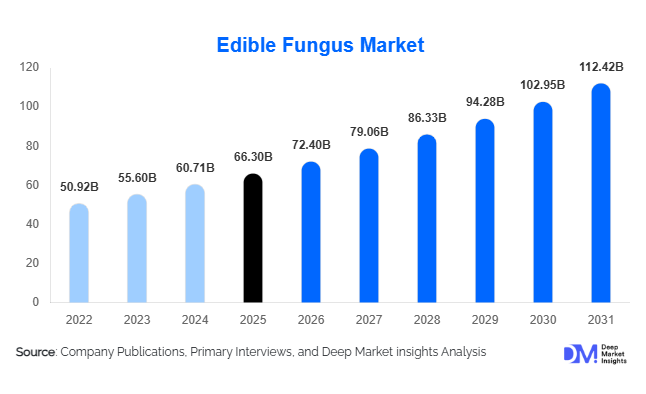
According to Deep Market Insights, the global edible fungus market size was valued at USD 66.3 billion in 2025 and is projected to grow from USD 72.40 billion in 2026 to reach USD 112.42 billion by 2031, expanding at a CAGR of 9.3% during the forecast period (2026–2031). The edible fungus market growth is primarily driven by rising consumer demand for plant-based nutrition, expanding applications in functional foods and nutraceuticals, and increasing adoption of sustainable protein alternatives across global food systems.
Key Market Insights
- Functional and medicinal mushrooms are gaining commercial importance, driven by growing awareness of immunity, cognitive health, and adaptogenic nutrition.
- Asia-Pacific dominates global production and consumption, supported by strong culinary integration and large-scale cultivation infrastructure.
- Fresh edible fungus remains the leading product category, accounting for over half of global consumption due to consumer preference for minimally processed foods.
- Plant-based and alternative protein innovation is accelerating mushroom usage in meat substitutes and hybrid food formulations.
- E-commerce and direct-to-consumer channels are expanding access to specialty mushroom powders and extracts globally.
- Technological advancements in controlled-environment agriculture are improving yield efficiency and enabling year-round production.
What are the latest trends in the edible fungus market?
Rise of Functional and Medicinal Mushrooms
One of the most prominent trends shaping the edible fungus market is the rapid commercialization of functional mushroom varieties such as Lion’s Mane, Reishi, Cordyceps, and Maitake. These fungi are increasingly incorporated into dietary supplements, functional beverages, and wellness foods targeting immunity, cognitive performance, and stress management. Manufacturers are investing in standardized extraction processes and clinical validation to position mushroom-derived ingredients as scientifically backed health solutions. The transition from traditional herbal usage to mainstream retail products is expanding consumer acceptance and enabling premium pricing. Functional mushrooms are also being integrated into coffee alternatives, protein powders, and fortified snacks, aligning with broader health-conscious consumption patterns.
Technology-Driven Indoor Cultivation
Indoor farming and controlled-environment agriculture are transforming edible fungus production. Automated climate systems, AI-based humidity control, and optimized substrate recycling techniques are improving productivity while reducing contamination risk. Vertical mushroom farms are gaining adoption in urban areas where land availability is limited, enabling local production and reducing transportation costs. These innovations enhance supply stability and help producers maintain consistent quality standards. Digital monitoring systems now allow growers to track yield performance in real time, improving operational efficiency and sustainability metrics across commercial cultivation facilities.
What are the key drivers in the edible fungus market?
Growing Demand for Plant-Based Nutrition
The global shift toward plant-based diets is a primary driver of edible fungus market expansion. Mushrooms provide natural umami flavor, dietary fiber, and micronutrients while maintaining low fat and calorie content. Flexitarian consumers increasingly use mushrooms as meat substitutes or nutritional enhancers in everyday meals. Food manufacturers are also incorporating mushroom blends into processed foods to improve nutritional profiles while lowering production costs. This dietary transition is particularly strong in North America and Europe, where sustainability and health considerations strongly influence purchasing decisions.
Expansion of Functional Food and Nutraceutical Industries
The rapid growth of the nutraceutical industry has significantly increased demand for mushroom extracts rich in beta-glucans and bioactive compounds. Edible fungi are widely used in immunity supplements, adaptogenic formulations, and wellness beverages. As consumers prioritize preventive healthcare, manufacturers are launching mushroom-based products with targeted health claims, supporting sustained market expansion. Pharmaceutical research into fungal polysaccharides further strengthens long-term demand potential.
What are the restraints for the global market?
Short Shelf Life and Supply Chain Constraints
Fresh edible fungi are highly perishable, requiring refrigerated logistics and rapid distribution systems. Inadequate cold-chain infrastructure in developing regions leads to product losses and higher operational costs. These logistical challenges limit market penetration in certain emerging economies and increase price volatility for producers and retailers.
Regulatory Variability for Medicinal Claims
Regulatory frameworks governing health claims for functional mushrooms vary widely across countries. Differences in approval processes for nutraceutical ingredients slow product commercialization and cross-border trade. Companies must invest heavily in compliance and certification, which can delay innovation and market entry.
What are the key opportunities in the edible fungus industry?
Alternative Protein Product Development
The increasing popularity of alternative proteins presents a major growth opportunity for edible fungi. Mushrooms offer texture and flavor characteristics ideal for meat substitutes, enabling food companies to develop hybrid or fully plant-based products. The incorporation of mushroom ingredients into burgers, ready meals, and protein snacks allows manufacturers to improve sustainability credentials while maintaining consumer familiarity. This trend is expected to generate strong B2B ingredient demand across global food processing industries.
Expansion of Organic and Premium Cultivation
Consumer preference for clean-label and organic foods is encouraging producers to adopt certified organic cultivation practices. Premium mushrooms grown using sustainable substrates command higher retail prices and attract environmentally conscious consumers. Government support for sustainable agriculture and controlled-environment farming further enhances opportunities for new entrants investing in advanced cultivation technologies.
Report Scope
| Report Metric | Details |
|---|---|
| Market Size in 2025 | USD 66.30 Billion |
| Market Size in 2026 | USD 72.40 Billion |
| Market Size in 2031 | USD 112.42 Billion |
| CAGR | 9.2% (2026-2031) |
| Base Year for Estimation | 2025 |
| Historical Data | 2022-2024 |
| Forecast Period | 2026-2031 |
| Report Coverage | Revenue Forecast, Competitive Landscape, Supply Chain Disruption, Growth Factors, Environment & Regulatory Landscape and Trends |
| Geographies Covered | North America, Europe, APAC, Middle East and Africa, LATAM |
| Countries Covered | U.S., Canada, U.K., Germany, France, Spain, Italy, Russia, Nordic, Benelux, Rest of Europe, China, Korea, Japan, India, Australia, Singapore, Taiwan, South East Asia, Rest of Asia-Pacific, UAE, Turky, Saudi Arabia, South Africa, Egypt, Nigeria, Rest of MEA, Brazil, Mexico, Argentina, Chile, Colombia, Rest of LATAM |
Explore more data points, trends and opportunities Download Free Sample Report
Product Type Insights
The edible fungus market is primarily led by button mushrooms, which continue to dominate global production and consumption owing to their cost efficiency, high yield per cultivation cycle, and strong adaptability to controlled farming environments. Their mild flavor profile and versatility across multiple cuisines make them a staple ingredient in both household cooking and commercial food preparation. The scalability of button mushroom cultivation, supported by advanced substrate technologies and automated farming systems, further strengthens their leadership position within the market. In addition, consistent supply chains and established distribution networks allow producers to maintain stable pricing, encouraging widespread adoption across developed and emerging economies.Specialty mushrooms, including shiitake and oyster varieties, are experiencing accelerated growth as consumers increasingly prioritize functional nutrition, culinary diversity, and natural food ingredients. These varieties benefit from rising awareness regarding their immune-supporting properties, antioxidant content, and plant-based protein potential. Foodservice operators and premium retail channels are expanding offerings that feature specialty mushrooms as center-of-plate ingredients rather than complementary items, contributing to higher demand volumes. Meanwhile, premium fungi such as truffles and medicinal mushrooms occupy a smaller share in terms of volume but generate substantial revenue due to their premium pricing, niche culinary applications, and growing inclusion in wellness-focused products.Processed mushroom formats, including dried, frozen, powdered, and extract-based products, represent one of the fastest-expanding product categories. The growth of this segment is primarily driven by increasing demand from nutraceutical manufacturers and processed food producers seeking functional ingredients with extended shelf life and concentrated nutritional value. Powdered mushrooms are gaining traction as clean-label additives in plant-based foods, beverages, and dietary supplements, while dried varieties support export-oriented trade by reducing logistics costs and storage limitations. Continuous innovation in dehydration and extraction technologies is further enhancing product quality and expanding application versatility across global markets.
Application Insights
Direct food consumption remains the leading application segment within the edible fungus market, supported by the widespread integration of mushrooms into daily diets across households, restaurants, and institutional catering environments. The segment’s dominance is largely driven by increasing consumer preference for nutrient-dense, low-calorie foods that align with modern health-conscious lifestyles. Mushrooms are increasingly positioned as natural meat alternatives due to their umami flavor and texture, reinforcing their role within vegetarian and flexitarian dietary patterns. Growing culinary experimentation and rising global exposure to international cuisines further sustain demand in this segment.The processed food application segment is expanding steadily as food manufacturers incorporate mushrooms into soups, sauces, ready-to-eat meals, snacks, and plant-based meat analogs. The leading growth driver for this segment is the rising demand for clean-label and functional ingredients that enhance flavor while improving nutritional profiles. Mushrooms provide natural flavor enhancement and moisture retention properties, allowing manufacturers to reduce sodium and artificial additives. As convenience food consumption rises globally, particularly in urban populations, mushroom-based ingredients are increasingly utilized to deliver both health and taste benefits.Nutraceutical applications represent the fastest-growing application segment, fueled by increasing consumer focus on immunity, stress management, and overall wellness. Medicinal mushrooms such as reishi, lion’s mane, and cordyceps are gaining popularity due to their bioactive compounds and adaptogenic properties. Expanding research validating functional health benefits is encouraging supplement manufacturers to develop capsules, powders, and functional beverages containing fungal extracts. Pharmaceutical applications are also emerging as scientific advancements uncover therapeutic potential in fungal polysaccharides and bioactive molecules, creating long-term opportunities for drug development and clinical research collaborations.
Distribution Channel Insights
Supermarkets and hypermarkets continue to dominate edible fungus distribution, supported by strong consumer confidence, standardized quality assurance, and reliable cold-chain logistics that preserve product freshness. These retail formats benefit from high footfall and diversified product assortments, enabling consumers to access both conventional and premium mushroom varieties in a single purchasing environment. Retailers are increasingly allocating dedicated shelf space to organic and specialty mushrooms, reflecting evolving consumer purchasing behavior toward health-oriented foods.Online retail channels are witnessing rapid expansion, driven by digital grocery adoption, improved last-mile delivery infrastructure, and growing consumer preference for convenience-based purchasing. E-commerce platforms are particularly effective for specialty mushrooms, dried products, and functional extracts, which appeal to niche consumer segments seeking premium or wellness-focused offerings. Subscription-based delivery models introduced by growers and specialty retailers are further strengthening customer loyalty and recurring revenue streams.Specialty health stores play a significant role in positioning high-value mushroom products, particularly medicinal and organic varieties, by targeting health-conscious consumers willing to pay premium prices. Meanwhile, foodservice distribution remains essential for large-scale supply to restaurants, hotels, and catering operators, ensuring consistent bulk demand. Direct-to-consumer sales channels are increasingly adopted by cultivators leveraging digital platforms to improve profit margins, enhance brand storytelling, and build closer relationships with end users, thereby reshaping traditional distribution dynamics.
End-Use Insights
Household consumption represents the largest end-use segment, reflecting the growing incorporation of mushrooms into everyday cooking practices worldwide. Rising awareness of plant-based nutrition, combined with increasing availability of fresh and processed mushroom products through modern retail channels, continues to support strong residential demand. Consumers increasingly perceive mushrooms as both a flavor enhancer and a functional food ingredient, reinforcing repeat purchase behavior.The food processing industry serves as a major growth engine for the edible fungus market, driven by increasing product innovation in ready meals, frozen foods, snacks, and meat alternatives. The leading driver within this segment is manufacturers’ need for natural ingredients that improve texture, flavor complexity, and nutritional value without compromising clean-label standards. Mushrooms’ versatility allows them to serve as fillers, flavor bases, and protein enhancers, making them highly attractive to large-scale food producers.Nutraceutical companies are emerging as significant end users, purchasing large volumes of mushroom powders and extracts to develop high-margin health supplements and functional products. Growing consumer demand for preventive healthcare solutions continues to accelerate adoption in this segment. Additionally, hospitality and foodservice sectors drive sustained demand for premium mushroom varieties, particularly in urban centers and tourism-driven economies where fine dining and experiential cuisine trends encourage the use of specialty fungi.
Explore more data points, trends and opportunities Download Free Sample Report
Edible Fungus Market Segmentations
By Type
- Shiitake
- Auricularia Auricula-judae
- Pleurotus Ostreatus
- Enokitake
- Agaricus Bisporus
- Others
By Application
- Fresh Mushrooms
- Dried Mushrooms
- Canned Mushrooms
- Frozen Mushrooms
- Others
Regional Insights
North America
North America represents a mature yet expanding market characterized by strong consumer adoption of plant-based diets and functional wellness products. The United States leads regional demand due to rapid growth in mushroom-based meat alternatives, dietary supplements, and functional beverages. Increasing investment in indoor farming technologies and controlled-environment agriculture is improving year-round production efficiency, reducing dependency on seasonal supply fluctuations. Canada is witnessing rising adoption of organic mushroom cultivation supported by sustainability initiatives, government-backed agricultural innovation programs, and consumer preference for locally sourced produce. The expansion of vegan and flexitarian lifestyles, combined with heightened awareness of immunity-supporting foods following recent global health concerns, continues to act as a primary driver for regional growth.
Europe
Europe maintains stable and consistent market growth driven by strong regulatory support for sustainable agriculture and increasing consumer demand for organic and ethically produced foods. Countries such as Germany, France, the Netherlands, and Poland serve as key production and consumption hubs supported by advanced cultivation infrastructure and efficient export networks. Regional growth is further propelled by rising vegan populations, strict food traceability standards, and retailer emphasis on environmentally responsible sourcing. Government initiatives promoting circular agriculture and waste reduction encourage mushroom cultivation due to its efficient use of agricultural by-products as substrates. Additionally, expanding premium retail segments and gourmet culinary trends support demand for specialty and high-value mushroom varieties.
Asia-Pacific
Asia-Pacific dominates the global edible fungus market, accounting for the largest share of both production and consumption. China remains the global leader due to large-scale cultivation capacity, strong domestic consumption, and well-established export channels supplying international markets. Japan and South Korea focus on high-value functional and medicinal mushrooms supported by long-standing cultural acceptance and advanced biotechnology research. India is emerging as a high-growth market driven by urbanization, rising disposable incomes, expanding organized retail infrastructure, and increasing awareness of nutritional foods. Regional growth is further supported by favorable climatic conditions, low production costs, government support for agricultural diversification, and strong integration of mushrooms into traditional cuisines across multiple countries.
Latin America
Latin America is experiencing gradual but steady expansion, particularly in Brazil and Mexico, where agricultural diversification strategies encourage farmers to adopt mushroom cultivation as a high-value crop. Increasing urbanization and growth of middle-income populations are boosting demand for nutritious and affordable protein alternatives. Government-led rural development programs and training initiatives are improving cultivation knowledge and infrastructure, enabling local producers to scale operations. The expansion of modern retail chains and foodservice industries is also increasing consumer exposure to mushroom-based products, supporting long-term regional market development.
Middle East & Africa
The Middle East edible fungus market relies heavily on imports due to climatic limitations restricting large-scale cultivation; however, demand is rising steadily through premium retail and hospitality sectors. Countries such as the United Arab Emirates and Saudi Arabia are key growth markets driven by expanding tourism industries, increasing expatriate populations, and rising consumption of international cuisines. Investments in controlled-environment agriculture and hydroponic farming are gradually enabling localized production. In Africa, commercial mushroom cultivation is expanding at a measured pace, supported by food security initiatives, agricultural modernization programs, and the promotion of low-cost indoor farming systems suitable for small-scale entrepreneurs. Increasing awareness of nutritional benefits and government-backed agribusiness development programs are expected to drive sustained regional growth over the forecast period.
Key Players in the Edible Fungus Market
- Monterey Mushrooms Inc.
- Bonduelle Group
- Okechamp S.A.
- Shanghai Finc Bio-Tech Inc.
- Greenyard NV
- Costa Group Holdings
- Drinkwater Mushrooms Ltd.
- South Mill Champs
- Banken Champignons BV
- Hughes Mushrooms
- Monaghan Mushrooms
- CMP Mushrooms
- Yuguan Modern Agriculture
- Hokto Kinoko Company
- Hirano Mushroom LLC