Dehydrated Onion and Garlic Market Size
According to Deep Market Insights, the global dehydrated onion and garlic market size was valued at USD 8.21 billion in 2025 and is projected to grow from USD 8.97 billion in 2026 to reach USD 13.92 billion by 2031, expanding at a CAGR of 9.2% during the forecast period (2026–2031). The dehydrated onion and garlic market growth is primarily driven by increasing demand for convenience foods, rising adoption of shelf-stable ingredients in processed food manufacturing, and the growing use of natural flavoring agents across foodservice and packaged food industries globally.
Key Market Insights
- Processed food manufacturers are increasingly adopting dehydrated onion and garlic ingredients due to their long shelf life, flavor consistency, and lower transportation costs.
- Asia-Pacific dominates the global market, led by India and China, which serve as major production and export hubs for dehydrated vegetables and seasonings.
- Organic dehydrated onion and garlic products are witnessing rapid growth, driven by rising clean-label and preservative-free food preferences in Europe and North America.
- Foodservice demand is accelerating globally, particularly from quick-service restaurants, cloud kitchens, and institutional catering providers seeking standardized ingredients.
- Freeze-drying and vacuum-drying technologies are gaining traction, improving aroma retention, nutritional stability, and premium product positioning.
- Export-driven demand remains a major market catalyst, with increasing imports from Germany, the United States, Saudi Arabia, Japan, and the United Kingdom.
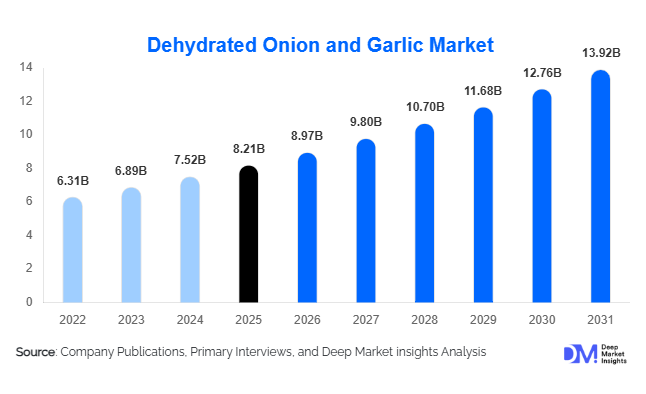
What are the latest trends in the dehydrated onion and garlic market?
Growing Adoption of Clean-Label and Organic Ingredients
Food manufacturers are increasingly shifting toward clean-label formulations that eliminate synthetic flavor enhancers and preservatives. This trend is significantly boosting demand for organic dehydrated onion and garlic products, particularly in premium soups, sauces, seasoning blends, and ready-to-eat meals. Consumers in Europe and North America are actively seeking natural ingredients with traceable sourcing and minimal processing. Manufacturers are therefore investing in certified organic cultivation, sulfur-free dehydration technologies, and sustainable packaging solutions to meet evolving consumer preferences. Organic dehydrated garlic powder and onion flakes are especially gaining popularity within health-focused and gourmet packaged food categories.
Advanced Drying Technologies Transforming Product Quality
Technological innovation is reshaping the dehydrated onion and garlic industry. Freeze drying, vacuum drying, infrared drying, and hybrid dehydration technologies are increasingly being adopted to improve flavor retention, product texture, and nutritional preservation. These technologies enable manufacturers to produce higher-quality ingredients suitable for premium food applications and export markets with stringent quality standards. Automation is also expanding across grading, moisture control, and packaging operations, reducing contamination risks while improving operational efficiency. Smart packaging systems with enhanced moisture barriers are additionally extending shelf life and reducing product spoilage during global transportation.
What are the key drivers in the dehydrated onion and garlic market?
Expansion of the Global Processed Food Industry
The rapid growth of the processed food sector remains one of the strongest drivers for the dehydrated onion and garlic market. Manufacturers of instant noodles, frozen meals, savory snacks, canned foods, and ready-to-cook products increasingly rely on dehydrated ingredients because they offer stable flavor profiles, extended shelf life, and reduced storage costs. Large-scale food processing facilities prefer dehydrated onion and garlic products due to lower wastage and operational convenience. Rising urbanization and changing consumer lifestyles are further strengthening demand for packaged and convenience foods globally.
Rising Demand from Foodservice and Quick-Service Restaurants
Foodservice operators and quick-service restaurant chains are significantly increasing their consumption of dehydrated onion and garlic products. These ingredients simplify kitchen operations, reduce preparation time, and ensure flavor consistency across large-scale operations. Cloud kitchens, institutional catering providers, and fast-food chains are increasingly integrating dehydrated seasonings into standardized recipes to improve efficiency and minimize inventory losses. The expansion of global restaurant chains into emerging markets is also supporting sustained demand growth.
What are the restraints for the global market?
Volatility in Raw Material Prices
The dehydrated onion and garlic market is highly dependent on agricultural output, making it vulnerable to fluctuations in raw material pricing. Climatic disruptions, droughts, floods, and crop diseases can significantly impact onion and garlic production volumes, creating instability in raw material supply chains. These fluctuations increase procurement costs for processors and affect profit margins, particularly for small and mid-sized manufacturers that lack vertically integrated sourcing operations.
Stringent Food Safety and Export Regulations
Export-oriented manufacturers face growing pressure to comply with strict food safety standards regarding pesticide residues, microbial contamination, sulfur content, and traceability requirements. Markets such as Europe and North America maintain highly regulated import standards that require advanced testing, certifications, and quality assurance systems. Smaller processors in developing countries often face challenges in achieving international certifications such as HACCP, ISO 22000, and BRC compliance, limiting access to premium export markets.
What are the key opportunities in the dehydrated onion and garlic industry?
Expansion of Ready-to-Eat and Convenience Foods
The continued growth of convenience foods presents a major opportunity for dehydrated onion and garlic manufacturers. Consumers increasingly prefer quick meal solutions that reduce cooking time without compromising flavor quality. This trend is driving demand from frozen food manufacturers, instant noodle producers, snack companies, and meal-kit providers. The rapid expansion of online food delivery platforms and cloud kitchens is also strengthening industrial demand for shelf-stable seasoning ingredients with consistent quality and long storage life.
Growth in Nutraceutical and Functional Food Applications
Dehydrated garlic products are increasingly being incorporated into nutraceuticals and functional food formulations due to their perceived cardiovascular and immunity-supporting benefits. Garlic powder and extracts are gaining traction within dietary supplements, herbal medicines, and wellness-oriented food products. This diversification beyond culinary applications is creating new high-margin growth opportunities for manufacturers. Demand for natural immunity-supporting ingredients has accelerated significantly in recent years, encouraging product innovation within the nutraceutical sector.
Report Scope
| Report Metric | Details |
|---|---|
| Market Size in 2025 | USD 8.21 Billion |
| Market Size in 2026 | USD 8.97 Billion |
| Market Size in 2031 | USD 13.92 Billion |
| CAGR | 9.2% (2026-2031) |
| Base Year for Estimation | 2025 |
| Historical Data | 2022-2024 |
| Forecast Period | 2026-2031 |
| Report Coverage | Revenue Forecast, Competitive Landscape, Supply Chain Disruption, Growth Factors, Environment & Regulatory Landscape and Trends |
| Geographies Covered | North America, Europe, APAC, Middle East and Africa, LATAM |
| Countries Covered | U.S., Canada, U.K., Germany, France, Spain, Italy, Russia, Nordic, Benelux, Rest of Europe, China, Korea, Japan, India, Australia, Singapore, Taiwan, South East Asia, Rest of Asia-Pacific, UAE, Turky, Saudi Arabia, South Africa, Egypt, Nigeria, Rest of MEA, Brazil, Mexico, Argentina, Chile, Colombia, Rest of LATAM |
Explore more data points, trends and opportunities Download Free Sample Report
Product Type Insights
The global dehydrated onion and garlic market is characterized by a highly diversified product portfolio that caters to the evolving requirements of food manufacturers, foodservice operators, retail consumers, and industrial ingredient processors. Among all product categories, garlic powder continues to dominate the market and is projected to maintain its leadership position throughout the forecast period. Garlic powder accounted for nearly 24% of the global market share in 2025, primarily driven by its extensive utilization across seasoning blends, processed meat products, savory snacks, sauces, soups, marinades, ready-to-eat meals, and frozen food applications. The widespread popularity of garlic powder can be attributed to its long shelf life, ease of storage, strong flavor concentration, and ability to provide consistent taste profiles in large-scale food manufacturing operations. Food manufacturers increasingly prefer garlic powder over fresh garlic because it minimizes labor costs, reduces wastage, and improves production efficiency while maintaining flavor consistency across batches.Premium freeze-dried garlic and roasted onion products are emerging as some of the fastest-growing product categories within the market. Freeze-drying technology enables superior flavor retention, enhanced aroma preservation, and improved nutritional integrity compared to conventional air-dried alternatives. As a result, premium food brands and gourmet packaged food manufacturers are increasingly incorporating freeze-dried garlic and onion ingredients into premium soups, instant meal kits, seasoning blends, and specialty snack products. Roasted onion variants are also gaining popularity due to rising consumer preference for deeper flavor profiles and restaurant-style packaged foods. The growing demand for artisanal and gourmet culinary products is expected to further strengthen the adoption of premium dehydrated ingredients over the coming years.Organic dehydrated onion and garlic products are additionally witnessing rapid growth across developed and emerging markets. Increasing consumer awareness regarding pesticide-free food production, clean-label products, and natural ingredient sourcing is encouraging food manufacturers to expand their organic product offerings. Organic garlic powder and organic onion flakes are becoming increasingly popular within health-focused food categories, including organic soups, baby foods, wellness snacks, and plant-based packaged meals. Rising certification standards and growing retailer emphasis on sustainable sourcing are expected to further support the expansion of organic dehydrated vegetable ingredients globally.
Application Insights
Food processing remains the dominant application segment within the global dehydrated onion and garlic market, contributing nearly 57% of total market demand in 2025. The segment’s leadership is primarily driven by the rapid expansion of the global processed food industry and the increasing need for cost-efficient, shelf-stable, and flavor-consistent ingredients. Dehydrated onion and garlic products are extensively utilized across instant noodles, frozen foods, canned soups, ready-to-cook meal kits, savory snacks, spice blends, processed meat products, sauces, dressings, and bakery fillings. Their ability to simplify large-scale manufacturing processes while reducing storage and transportation costs makes them highly valuable within industrial food production environments.Retail household consumption is witnessing steady growth as consumers increasingly incorporate dehydrated cooking ingredients into daily meal preparation. Rising awareness regarding the convenience, affordability, and extended shelf life of dehydrated onion and garlic products is supporting retail demand across supermarkets, hypermarkets, specialty food stores, and online grocery platforms. Consumers are increasingly using garlic powder, onion flakes, and dehydrated minced garlic in home cooking, spice mixing, marinades, and meal preparation due to their ease of use and consistent flavor profiles.Pharmaceutical and nutraceutical applications are additionally emerging as niche yet promising growth segments within the market. Dehydrated garlic powder and garlic extracts are increasingly utilized in immunity-support supplements, cardiovascular wellness products, herbal formulations, and functional foods due to garlic’s widely recognized antioxidant and antimicrobial properties. Rising consumer interest in preventive healthcare, natural wellness solutions, and herbal supplementation is expected to support growing utilization of dehydrated garlic ingredients across nutraceutical applications over the forecast period.
Distribution Channel Insights
Direct B2B sales continue to dominate the global dehydrated onion and garlic market owing to the large-scale procurement practices of multinational food manufacturers, restaurant chains, and industrial ingredient buyers. Long-term supply agreements between dehydrated vegetable processors and packaged food companies ensure consistent product quality, pricing stability, and uninterrupted supply availability. Major food manufacturers typically prefer direct sourcing relationships to optimize procurement costs and maintain strict quality control standards for seasoning ingredients used in high-volume production.E-commerce and digital wholesale procurement platforms are rapidly transforming ingredient sourcing dynamics within the dehydrated onion and garlic market. Digital procurement systems allow buyers to compare suppliers, evaluate certifications, monitor pricing trends, and access global export inventories more efficiently. The growing adoption of B2B e-commerce platforms among food manufacturers and distributors is improving procurement transparency while simplifying international trade processes. Increasing digitalization within food ingredient supply chains is expected to further enhance online wholesale transactions during the forecast period.Retail distribution channels are additionally gaining momentum as consumer awareness regarding dehydrated cooking ingredients continues to rise. Supermarkets, convenience stores, specialty grocery retailers, and online grocery platforms are increasingly expanding their offerings of dehydrated garlic and onion products to meet growing household demand. Premium packaging innovations, clean-label branding, and organic product positioning are also contributing to stronger retail sales growth across developed consumer markets.
End-Use Industry Insights
The food and beverage manufacturing industry remains the largest end-use segment within the global dehydrated onion and garlic market, accounting for approximately 52% of total market consumption in 2025. The segment’s growth is primarily driven by the increasing global production of packaged foods, frozen meals, ready-to-eat snacks, processed meats, sauces, seasonings, and instant meal products. Dehydrated onion and garlic ingredients provide manufacturers with consistent flavor profiles, longer shelf life, reduced transportation costs, and improved operational efficiency compared to fresh produce alternatives.The nutraceutical industry is also emerging as a promising demand center for dehydrated garlic products due to growing consumer interest in wellness-oriented food ingredients and herbal supplementation. Garlic powder and garlic extracts are increasingly incorporated into immunity-support capsules, cardiovascular health supplements, and functional food formulations. Rising awareness regarding natural preventive healthcare solutions and plant-based wellness products is expected to support long-term growth within this segment.Animal nutrition applications are gradually gaining traction as garlic-derived additives become increasingly utilized in functional livestock and poultry feed formulations. Garlic-based feed ingredients are associated with digestive health support and natural antimicrobial benefits, making them increasingly attractive as alternatives to synthetic feed additives. The growing emphasis on sustainable livestock nutrition and antibiotic-free animal feed production is expected to create additional opportunities for dehydrated garlic ingredient manufacturers.
Explore more data points, trends and opportunities Download Free Sample Report
Dehydrated Onion and Garlic Market Segmentations
By Product Type
- Dehydrated Onion
- Dehydrated Garlic
- Blended Onion & Garlic Products
- Organic Dehydrated Onion & Garlic
By Form
- Powder
- Flakes
- Granules
- Minced/Chopped
- Paste & Blended Dry Mixes
By Processing Technology
- Air Drying
- Freeze Drying
- Vacuum Drying
- Spray Drying
- Drum Drying
By Application
- Processed Foods
- Snack Seasonings
- Soups & Sauces
- Meat & Seafood Processing
- Ready-to-Eat Meals
- Nutraceutical & Pharmaceutical Products
By Distribution Channel
- Direct B2B Sales
- Food Ingredient Distributors
- Online Wholesale Platforms
- Supermarkets & Hypermarkets
- E-commerce Retail
Regional Insights
Asia-Pacific
Asia-Pacific dominates the global dehydrated onion and garlic market, accounting for approximately 43% of total market revenue in 2025. The region’s leadership position is primarily supported by abundant agricultural production, favorable climatic conditions, cost-efficient labor availability, and strong export-oriented food processing infrastructure. India and China remain the largest producers and exporters of dehydrated onion and garlic products globally, supplying substantial volumes to food manufacturers across Europe, North America, the Middle East, and Asia.Japan and South Korea represent major premium import markets driven by advanced food processing industries and high demand for convenience-oriented packaged foods. Consumers in these countries increasingly prefer premium-quality dehydrated ingredients with superior flavor retention and strict quality certifications. Rising demand for clean-label products, natural seasonings, and minimally processed ingredients is expected to further support regional market expansion.
North America
North America accounts for nearly 24% of the global dehydrated onion and garlic market, led primarily by the United States. The region’s market growth is strongly supported by its highly developed processed food industry, extensive quick-service restaurant networks, and rising consumer preference for convenience-oriented food products. Dehydrated onion and garlic ingredients are widely utilized across frozen meals, savory snacks, sauces, processed meats, and ready-to-eat meal applications throughout the region.The expansion of food delivery services, meal kit subscriptions, and convenience meal solutions is further contributing to regional market growth. The United States remains one of the largest consumers of processed and packaged foods globally, creating sustained demand for industrial-scale dehydrated ingredient sourcing. Canada is also witnessing increasing adoption of dehydrated ingredients across foodservice operations, institutional catering, and household cooking applications due to growing convenience food consumption and changing culinary preferences.
Europe
Europe represents approximately 22% of global market demand, with Germany, the United Kingdom, France, Italy, and Spain serving as major importers and consumers of dehydrated onion and garlic products. The region demonstrates particularly strong demand for premium-quality, organic, and sustainably sourced ingredients, supported by stringent food safety standards and increasing consumer awareness regarding ingredient transparency.Another major driver supporting regional market growth is the increasing demand for convenience foods among urban consumers. Busy lifestyles and rising workforce participation rates are encouraging higher consumption of frozen meals, packaged soups, and ready-to-cook products that heavily rely on dehydrated flavoring ingredients. Additionally, sustainability initiatives and traceability requirements across European retail chains are encouraging manufacturers to prioritize certified and responsibly sourced dehydrated ingredients.
Latin America
Latin America is witnessing steady growth within the global dehydrated onion and garlic market, particularly across Brazil and Mexico. Rising urbanization, increasing disposable incomes, and expanding processed food industries are creating favorable growth conditions for dehydrated ingredient consumption throughout the region. The growing popularity of packaged snacks, frozen foods, and ready-to-eat meals is significantly increasing industrial demand for garlic and onion flavoring ingredients.Brazil is additionally experiencing rising consumption of processed foods and convenience-oriented meal products due to rapid urban population growth and evolving dietary habits. Increasing investment in food processing infrastructure, retail modernization, and regional export capabilities is expected to further support market development across Latin America during the forecast period.
Middle East & Africa
The Middle East and Africa region is experiencing growing demand for dehydrated onion and garlic products due to the rapid expansion of hospitality, tourism, and institutional foodservice industries. Countries such as Saudi Arabia and the United Arab Emirates remain heavily dependent on food imports because of limited domestic agricultural production and water scarcity challenges. This strong import dependency creates sustained demand for shelf-stable dehydrated food ingredients.In Africa, increasing urbanization, population growth, and expansion of packaged food manufacturing are contributing to rising market demand. Governments across several Middle Eastern countries are also prioritizing food security and supply chain diversification initiatives, encouraging higher imports of long shelf-life food ingredients. The growing penetration of supermarkets, modern retail channels, and processed food brands across the region is expected to further strengthen long-term market growth for dehydrated onion and garlic products.
Key Players in the Dehydrated Onion and Garlic Market
- Jain Farm Fresh Foods Ltd.
- Sensient Technologies Corporation
- Olam Group
- McCormick & Company
- Garlico Industries Ltd.
- Natural Dehydrated Vegetables Pvt. Ltd.
- Van Drunen Farms
- Oceanic Foods Ltd.
- BCFoods Inc.
- Rocky Mountain Spice Company
- Silva International
- V.T. Foods Pvt. Ltd.
- Earth Expo Company
- Henan Sunny Foodstuff Co., Ltd.
- Daksh Foods Pvt. Ltd.