Condiments Market Size
According to Deep Market Insights, the global condiments market size was valued at USD 110 billion in 2025 and is projected to grow from USD 116.38 billion in 2026 to reach USD 154.28 billion by 2031, expanding at a CAGR of 5.8% during the forecast period (2026–2031). The condiments market growth is primarily driven by rising consumption of convenience foods, increasing globalization of cuisines, and strong expansion of the foodservice industry worldwide.
Key Market Insights
- Demand for clean-label and health-oriented condiments is rising, driven by consumer preference for organic, low-sodium, and preservative-free products.
- Asia-Pacific dominates the global market, supported by high population density, diverse culinary traditions, and strong domestic manufacturing.
- Foodservice industry expansion, particularly QSRs and cloud kitchens, is significantly boosting bulk condiment consumption.
- E-commerce is the fastest-growing distribution channel, enabling direct-to-consumer sales and personalized product offerings.
- The premiumization trend is gaining traction, with consumers willing to pay higher prices for artisanal, gourmet, and specialty condiments.
- Technological advancements in packaging and preservation are improving shelf life and reducing food waste.
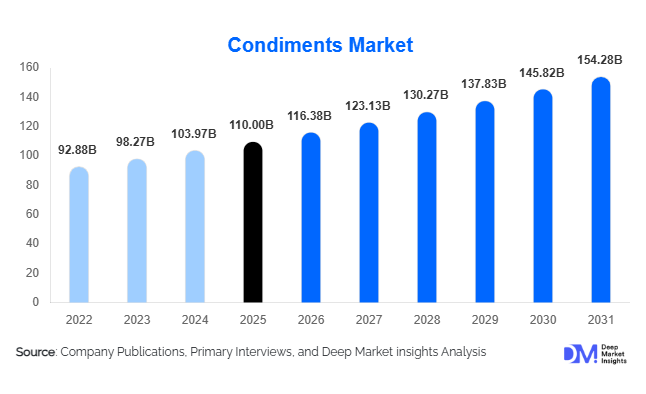
What are the latest trends in the condiments market?
Shift Toward Healthier and Functional Condiments
Consumers are increasingly demanding healthier alternatives in condiments, leading to the rapid growth of low-sugar, low-sodium, and organic variants. Functional condiments enriched with probiotics, vitamins, and plant-based ingredients are gaining popularity, particularly among health-conscious consumers. Clean-label trends are also influencing purchasing decisions, with transparency in ingredient sourcing becoming a key differentiator. Manufacturers are reformulating products to eliminate artificial preservatives and additives, aligning with global health regulations and consumer expectations.
Rise of Ethnic and Fusion Flavors
The globalization of food culture is driving demand for ethnic and fusion condiments. Consumers are experimenting with international cuisines, boosting sales of products such as soy sauce, salsa, and specialty spice blends. Fusion condiments that combine flavors from multiple cuisines are also emerging, catering to adventurous consumers. This trend is particularly strong among younger demographics and urban populations, where exposure to global food trends is higher.
What are the key drivers in the condiments market?
Expansion of the Food Service Industry
The rapid growth of quick-service restaurants, cafes, and cloud kitchens is a major driver of the condiments market. These establishments rely heavily on sauces, dressings, and dips to enhance menu offerings and maintain consistency in taste. Increasing urbanization and digital food delivery platforms are further accelerating demand from this segment.
Growing Demand for Convenience Foods
Busy lifestyles and increasing workforce participation have led to a surge in demand for ready-to-eat and ready-to-cook meals. Condiments play a crucial role in enhancing the taste and appeal of these products, making them an essential component of modern diets. This trend is particularly prominent in urban areas across both developed and emerging economies.
What are the restraints for the global market?
Volatility in Raw Material Prices
Fluctuations in the prices of key raw materials such as tomatoes, edible oils, and spices pose a significant challenge for manufacturers. Climate change and supply chain disruptions can impact production costs and profit margins, leading to pricing instability in the market.
Stringent Regulatory Standards
Governments worldwide are imposing stricter regulations on sugar, salt, and preservative content in food products. Compliance with these regulations requires continuous product reformulation and investment in research and development, which can increase operational costs for manufacturers.
What are the key opportunities in the condiments industry?
Premium and Organic Product Expansion
The growing demand for premium and organic condiments presents significant opportunities for market players. Consumers are willing to pay higher prices for products that offer superior quality, unique flavors, and health benefits. This trend allows companies to improve profit margins while catering to evolving consumer preferences.
Emerging Market Penetration
Rapid urbanization and rising disposable incomes in emerging economies such as India, China, and Brazil are driving demand for packaged food products, including condiments. Localization of flavors and affordable packaging formats can help companies expand their presence in these high-growth markets.
Report Scope
| Report Metric | Details |
|---|---|
| Market Size in 2025 | USD 110 Billion |
| Market Size in 2026 | USD 116.38 Billion |
| Market Size in 2031 | USD 154.28 Billion |
| CAGR | 5.8% (2026-2031) |
| Base Year for Estimation | 2025 |
| Historical Data | 2022-2024 |
| Forecast Period | 2026-2031 |
| Report Coverage | Revenue Forecast, Competitive Landscape, Supply Chain Disruption, Growth Factors, Environment & Regulatory Landscape and Trends |
| Geographies Covered | North America, Europe, APAC, Middle East and Africa, LATAM |
| Countries Covered | U.S., Canada, U.K., Germany, France, Spain, Italy, Russia, Nordic, Benelux, Rest of Europe, China, Korea, Japan, India, Australia, Singapore, Taiwan, South East Asia, Rest of Asia-Pacific, UAE, Turky, Saudi Arabia, South Africa, Egypt, Nigeria, Rest of MEA, Brazil, Mexico, Argentina, Chile, Colombia, Rest of LATAM |
Explore more data points, trends and opportunities Download Free Sample Report
Product Type Insights
Sauces and ketchups continue to dominate the global condiments market, accounting for approximately 35% of the total market share in 2025. The leadership of this segment is primarily driven by its universal applicability across both household and foodservice settings. The rapid expansion of quick-service restaurants (QSRs), fast food chains, and ready-to-eat meal consumption has significantly increased demand for ketchup, chili sauces, and barbecue sauces. Additionally, the adaptability of sauces across multiple cuisines, from Western fast food to Asian dishes, makes them a staple product category globally. The segment has also benefited from continuous innovation, including low-sugar, organic, and flavored variants, further strengthening its market position.
Dressings and mayonnaise represent the second-largest segment, supported by rising demand for convenience foods such as salads, sandwiches, and ready-to-eat meals. Increasing health awareness has also led to the introduction of low-fat and vegan mayonnaise alternatives, expanding the consumer base. Meanwhile, dips and pastes are witnessing strong growth due to the rising popularity of ethnic and fusion cuisines, particularly in urban markets. Products such as hummus, salsa, and garlic paste are gaining traction among younger consumers. Pickled and fermented condiments are emerging as a niche but rapidly growing segment, driven by increasing awareness of gut health and probiotics. Traditional fermented products such as kimchi and sauerkraut are gaining global acceptance, supported by the broader trend toward functional foods.
Application (End-Use) Insights
Household consumption remains the largest end-use segment in the condiments market, accounting for approximately 50% of the total market share in 2025. This dominance is driven by the essential role of condiments in daily cooking and meal preparation across diverse cuisines. The increasing trend of home cooking, particularly post-pandemic, has further reinforced demand in this segment. Consumers are increasingly experimenting with global flavors at home, boosting the consumption of a wide range of condiments. The foodservice industry is the fastest-growing end-use segment, driven by the rapid expansion of QSRs, cafes, and cloud kitchens. The proliferation of online food delivery platforms has significantly increased the consumption of condiments in bulk quantities. Foodservice operators rely heavily on sauces, dressings, and dips to standardize taste and enhance menu offerings, making this segment a key growth driver for the overall market.
The food processing industry also plays a crucial role, utilizing condiments as ingredients in packaged foods, snacks, and ready meals. The growth of the global processed food industry, coupled with increasing demand for convenience products, continues to drive steady demand from this segment.
Distribution Channel Insights
Supermarkets and hypermarkets dominate the distribution landscape, accounting for nearly 45% of global condiment sales in 2025. The leadership of this segment is driven by wide product availability, strong brand visibility, and the ability to offer competitive pricing through bulk purchasing. These retail formats provide consumers with access to a diverse range of products, including private-label and premium offerings, making them the preferred shopping destination globally.
Online retail is the fastest-growing distribution channel, supported by increasing internet penetration, smartphone usage, and the convenience of home delivery. E-commerce platforms enable consumers to explore a wider variety of products, compare prices, and access niche or imported condiments that may not be available in traditional retail stores. The rise of direct-to-consumer (D2C) models has also allowed manufacturers to strengthen customer engagement and improve profit margins. Convenience stores and direct B2B sales channels continue to play a significant role, particularly in urban and semi-urban areas. Convenience stores cater to immediate consumption needs, while B2B channels are critical for supplying bulk quantities to foodservice operators and industrial users.
Explore more data points, trends and opportunities Download Free Sample Report
Condiments Market Segmentations
By Product Type
- Sauces & Ketchups
- Dressings & Mayonnaise
- Dips & Pastes
- Pickled & Fermented Condiments
- Seasoning Blends & Dry Condiments
- Sweet Condiments
By Application
- Household Consumption
- Foodservice Industry
- Food Processing Industry
By Distribution Channel
- Supermarkets/Hypermarkets
- Convenience Stores
- Online Retail/E-commerce
- Foodservice/B2B Sales
Regional Insights
North America
North America accounts for approximately 25% of the global condiments market share in 2025, with the United States representing the largest contributor. The region’s growth is primarily driven by high consumption of fast food and processed meals, which heavily rely on condiments such as ketchup, sauces, and dressings. The strong presence of leading global brands, continuous product innovation, and well-established retail infrastructure further support market expansion. Additionally, increasing consumer demand for organic, clean-label, and premium condiments is driving innovation and higher-value product adoption in the region.
Europe
Europe holds around 22% of the global market share, with key markets including Germany, France, and the United Kingdom. Growth in this region is driven by strong consumer preference for high-quality, organic, and clean-label products. The increasing focus on health and sustainability has led to rising demand for low-sugar, low-sodium, and preservative-free condiments. Additionally, Europe’s well-developed food processing industry and extensive retail networks contribute to stable demand. The popularity of gourmet and artisanal condiments is also supporting premiumization trends in the region.
Asia-Pacific
Asia-Pacific dominates the global condiments market, accounting for approximately 38% of the total market share in 2025. The region’s leadership is driven by large population bases in countries such as China and India, coupled with strong cultural reliance on condiments in daily cooking. Rapid urbanization, rising disposable incomes, and increasing adoption of packaged foods are key growth drivers. The expansion of the foodservice sector, particularly in emerging economies, is further accelerating demand. Additionally, the region benefits from strong domestic production and export capabilities, making it both a major consumer and supplier of condiments globally. Asia-Pacific is also the fastest-growing region, supported by evolving dietary habits and increasing exposure to international cuisines.
Latin America
Latin America accounts for approximately 8% of the global condiments market, with Brazil and Mexico being the primary contributors. The region’s growth is driven by its rich culinary traditions, which heavily incorporate sauces, spices, and condiments. Increasing urbanization and rising consumption of packaged and convenience foods are further boosting demand. Additionally, the expansion of modern retail formats and the growing middle-class population are supporting market growth. The rising popularity of international cuisines is also contributing to increased consumption of diverse condiment products.
Middle East & Africa
The Middle East & Africa region holds around 7% of the global market share and is the fastest-growing region, with a CAGR exceeding 6.5% during the forecast period. Growth in this region is driven by rapid urbanization, increasing tourism, and rising disposable incomes, particularly in countries such as the UAE and Saudi Arabia. The growing presence of international food chains and the expanding foodservice sector are significantly boosting demand for condiments. Additionally, increasing adoption of Western and Asian cuisines, along with improving retail infrastructure, is supporting market expansion across the region.
Key Players in the Condiments Market
- Nestlé
- Kraft Heinz Company
- Unilever
- McCormick & Company
- Kikkoman Corporation
- Conagra Brands
- General Mills
- Hormel Foods
- Ajinomoto Co.
- Campbell Soup Company
- PepsiCo
- Fuchs Group
- Tate & Lyle
- Olam Group
- ITC Limited