Chai Tea Mix Market Size
According to Deep Market Insights, the global chai tea mix market size was valued at USD 11.82 billion in 2025 and is projected to grow from USD 13.16 billion in 2026 to reach USD 22.47 billion by 2031, expanding at a CAGR of 11.3% during the forecast period (2026–2031). The chai tea mix market growth is primarily driven by increasing consumer preference for convenient hot beverages, expanding café culture globally, and growing demand for wellness-oriented tea products infused with traditional spices such as ginger, cardamom, cinnamon, and turmeric.
Key Market Insights
- Instant chai tea powder mixes dominate the global market, supported by convenience, long shelf life, and increasing household consumption worldwide.
- Premium and functional chai beverages are witnessing rapid growth, driven by rising consumer interest in immunity-boosting and clean-label products.
- Asia-Pacific dominates the global market, led by India’s large tea-drinking population and strong manufacturing ecosystem.
- North America remains one of the fastest-growing regional markets, fueled by strong demand for café-style chai latte beverages.
- E-commerce and direct-to-consumer sales channels are transforming distribution, enabling global access to premium and artisanal chai blends.
- Plant-based and low-sugar chai formulations are gaining traction, particularly among health-conscious consumers in developed markets.
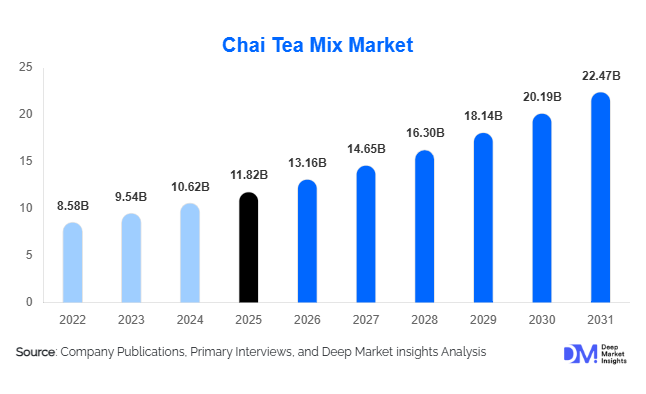
chai tea mix market latest trends
Functional and Wellness-Based Chai Products Gaining Popularity
Consumers are increasingly shifting toward functional beverages that offer both taste and health benefits. This trend is significantly influencing the chai tea mix market, with manufacturers introducing formulations containing turmeric, ashwagandha, probiotics, collagen, adaptogens, and plant proteins. Functional chai beverages are being positioned as immunity-supporting and digestive wellness products, particularly in North America and Europe. Organic, low-sugar, and clean-label chai products are also witnessing increased consumer demand. Brands are leveraging Ayurvedic positioning and traditional Indian wellness ingredients to differentiate their offerings within the competitive hot beverage landscape.
Premium Café-Style Chai Experiences Expanding Globally
The rapid expansion of café culture worldwide is contributing to growing demand for premium chai tea mixes and chai latte concentrates. Coffee chains and specialty cafés are increasingly offering customized chai beverages featuring oat milk, almond milk, saffron infusions, and artisanal spice blends. Consumers are seeking café-quality beverage experiences at home, leading to strong sales of premium instant chai powders and liquid concentrates. Social media-driven beverage trends and experiential consumption patterns are also supporting the popularity of flavored and visually appealing chai beverages across younger demographics.
chai tea mix market drivers
Growing Demand for Convenient Beverage Solutions
Urbanization, busy lifestyles, and rising workforce participation are significantly increasing demand for instant and ready-to-prepare beverages. Chai tea premixes, sachets, and concentrates provide consumers with quick preparation while maintaining authentic taste profiles. Single-serve packaging formats are becoming increasingly popular across households, offices, hotels, and institutional catering environments. Consumers are increasingly seeking portability, convenience, and consistency in beverage preparation, driving adoption across both developed and emerging economies.
Expansion of Global Café Culture
The growing popularity of café chains and specialty beverage outlets is driving global awareness and consumption of chai beverages. Chai latte products are increasingly featured alongside coffee-based beverages in international café menus. Consumers in North America, Europe, and Asia-Pacific are adopting chai as a premium alternative to coffee and sugary drinks. The expansion of premium cafés across urban centers is creating significant opportunities for chai premix manufacturers supplying foodservice operators and hospitality businesses.
Rising Health and Wellness Awareness
Health-conscious consumers are increasingly shifting away from carbonated beverages toward natural and plant-based alternatives. Chai tea mixes containing ingredients such as ginger, cinnamon, cloves, and black pepper are widely associated with antioxidant and digestive benefits. This perception is encouraging manufacturers to launch organic, sugar-free, vegan, and functional chai products. Wellness-oriented positioning is becoming a key factor influencing purchasing decisions, particularly among millennials and premium consumers.
global market restraints
Volatility in Raw Material Prices
Fluctuations in tea leaf, spice, sugar, dairy, and packaging material prices remain a significant challenge for manufacturers. Climate variability and supply disruptions in major tea-producing countries such as India, Sri Lanka, and Kenya can directly impact production costs and profitability. Premium spices such as cardamom and saffron are especially vulnerable to seasonal price volatility, creating pricing pressures across premium chai categories.
Competition from Alternative Premium Beverages
The chai tea mix market faces growing competition from specialty coffee, matcha beverages, kombucha, herbal infusions, and ready-to-drink wellness beverages. Consumers seeking premium beverage experiences have a broad range of options, forcing chai manufacturers to continuously innovate in flavor, packaging, functionality, and branding. Companies must invest heavily in consumer education and product differentiation to maintain long-term market competitiveness.
chai tea mix industry key opportunities
Expansion of Functional Beverage Categories
The rapid growth of the global functional beverage industry presents significant opportunities for chai tea mix manufacturers. Functional chai formulations featuring immunity-supporting spices, adaptogens, probiotics, and plant proteins are emerging as high-margin product categories. Consumers increasingly seek beverages that provide wellness benefits beyond hydration, enabling chai brands to expand into broader health and nutrition markets. Companies integrating Ayurvedic ingredients and clean-label formulations are expected to benefit from rising demand for holistic wellness products.
Growth of E-Commerce and Direct-to-Consumer Channels
The expansion of online grocery platforms and direct-to-consumer beverage brands is creating strong international growth opportunities for chai tea mix manufacturers. E-commerce channels enable companies to access premium consumer segments without extensive physical retail infrastructure. Subscription-based tea services, influencer marketing, and social media promotions are accelerating awareness of artisanal and imported chai products globally. Digital retail is particularly important for smaller premium brands seeking international market penetration.
Report Scope
| Report Metric | Details |
|---|---|
| Market Size in 2025 | USD 11.82 Billion |
| Market Size in 2026 | USD 13.16 Billion |
| Market Size in 2031 | USD 22.47 Billion |
| CAGR | 11.3% (2026-2031) |
| Base Year for Estimation | 2025 |
| Historical Data | 2022-2024 |
| Forecast Period | 2026-2031 |
| Report Coverage | Revenue Forecast, Competitive Landscape, Supply Chain Disruption, Growth Factors, Environment & Regulatory Landscape and Trends |
| Geographies Covered | North America, Europe, APAC, Middle East and Africa, LATAM |
| Countries Covered | U.S., Canada, U.K., Germany, France, Spain, Italy, Russia, Nordic, Benelux, Rest of Europe, China, Korea, Japan, India, Australia, Singapore, Taiwan, South East Asia, Rest of Asia-Pacific, UAE, Turky, Saudi Arabia, South Africa, Egypt, Nigeria, Rest of MEA, Brazil, Mexico, Argentina, Chile, Colombia, Rest of LATAM |
Explore more data points, trends and opportunities Download Free Sample Report
Product Type Insights
The global chai tea mix market is primarily led by instant chai tea powder mixes, which accounted for nearly 38% of total market demand in 2025. The strong performance of this segment is driven by increasing consumer preference for convenience-oriented beverage solutions that offer quick preparation, affordability, and extended shelf stability. Instant chai premixes have become highly popular among working professionals, students, and urban households seeking café-style beverages that can be prepared within minutes without requiring traditional brewing methods. Their widespread adoption across homes, offices, institutional catering, and vending applications continues to strengthen segment growth globally. In addition, manufacturers are increasingly launching low-sugar, dairy-free, and fortified instant chai formulations to address evolving health and wellness trends among consumers.Liquid chai concentrates are emerging as one of the fastest-growing product categories, particularly within cafés, quick-service restaurants, hotels, and foodservice environments. Their ability to deliver standardized taste profiles, operational consistency, and reduced preparation time makes them highly attractive for commercial beverage operators. Growing global café expansion and rising demand for chai latte beverages are significantly supporting the growth of this segment. Meanwhile, ready-to-drink chai beverages are witnessing rising consumer traction, especially among millennials and Gen Z consumers seeking portable, on-the-go refreshment options. The increasing availability of canned, bottled, and refrigerated chai beverages across supermarkets, convenience stores, and online retail platforms is further accelerating category expansion. Premium masala chai blends featuring authentic spice combinations, handcrafted positioning, and artisanal sourcing are also gaining popularity across developed economies where consumers increasingly value cultural authenticity, specialty beverages, and premium tea experiences.
Ingredient Composition Insights
Black tea-based chai mixes dominate the global market with an estimated 62% share in 2025, supported by long-standing traditional consumption patterns and widespread familiarity among consumers worldwide. Black tea continues to serve as the foundational ingredient for masala chai beverages across India, the Middle East, Europe, and North America due to its robust flavor profile and compatibility with traditional spice blends such as ginger, cardamom, cinnamon, and cloves. The strong cultural association between black tea and chai beverages remains a major growth driver for this segment, particularly across Asian and Middle Eastern countries where tea consumption is deeply embedded in daily routines.Organic chai formulations are experiencing accelerated growth as consumers increasingly prioritize clean-label products, sustainable sourcing practices, and chemical-free ingredients. Rising awareness regarding health, environmental sustainability, and ethical sourcing is encouraging manufacturers to introduce certified organic chai products across premium retail channels. Herbal and caffeine-free chai variants are also witnessing steady market expansion due to growing consumer demand for wellness-focused beverage alternatives suitable for evening consumption and sensitive dietary lifestyles. Ingredients such as rooibos, turmeric, ashwagandha, chamomile, and herbal adaptogens are increasingly being incorporated into chai formulations to cater to functional beverage trends and holistic wellness preferences globally.
Flavor Profile Insights
Traditional masala chai remains the leading flavor category in the global chai tea mix market, accounting for approximately 41% of total market demand in 2025. The continued dominance of this segment is driven by strong consumer preference for authentic and culturally familiar spice blends that deliver rich flavor, aroma, and comforting beverage experiences. Traditional masala chai formulations featuring ginger, cardamom, cinnamon, cloves, fennel, and black pepper continue to resonate strongly with consumers across both mature and emerging markets. The rising popularity of café-style chai beverages and homemade specialty tea experiences is further supporting segment growth worldwide.Ginger chai and cardamom chai varieties are particularly popular across Asia-Pacific and Middle Eastern markets due to their strong cultural familiarity and perceived digestive wellness benefits. Consumers increasingly associate these flavors with immunity support, relaxation, and traditional wellness practices, particularly following heightened health awareness trends globally. Premium flavor innovations including saffron chai, turmeric chai, vanilla chai, chocolate chai, and caramel chai are rapidly penetrating North American and European markets where consumers are seeking differentiated beverage experiences and indulgent flavor combinations. Manufacturers are also increasingly experimenting with fusion flavors and seasonal offerings to attract younger consumers and strengthen product premiumization strategies.
Distribution Channel Insights
Supermarkets and hypermarkets remain the leading distribution channel in the global chai tea mix market, accounting for approximately 34% of global sales in 2025. The dominance of this segment is supported by strong product visibility, extensive shelf presence, promotional activities, and broad consumer accessibility. Large-format retail stores allow consumers to compare multiple brands, packaging formats, and flavor varieties, which continues to drive high purchase volumes across both developed and developing economies. The expansion of organized retail infrastructure in emerging markets is further contributing to segment growth.Online retail and direct-to-consumer distribution channels are witnessing the fastest growth globally due to increasing digital grocery adoption, rising smartphone penetration, and growing consumer preference for home delivery convenience. E-commerce platforms are enabling manufacturers to reach wider customer bases while supporting premium product positioning through subscription-based tea services and personalized beverage offerings. Specialty tea stores and café-based retail channels are also gaining importance, particularly for premium, artisanal, and organic chai products targeting affluent consumers seeking authentic tea experiences. In addition, foodservice distribution continues to expand rapidly across hotels, restaurants, airlines, railways, corporate offices, hospitals, and vending machine operators that increasingly require efficient and standardized chai premix solutions to support high-volume beverage preparation.
End-Use Insights
Household consumption continues to represent the largest end-use segment in the global chai tea mix market, contributing nearly 45% of total demand in 2025. The segment’s dominance is largely driven by the growing consumer preference for preparing café-style beverages at home, particularly among urban households seeking convenience and affordability. Rising work-from-home trends, increasing premium tea consumption, and growing experimentation with specialty beverages are further supporting household demand for instant chai powders, chai concentrates, and ready-to-drink chai products. Consumers are also increasingly adopting premium chai mixes as part of daily wellness and comfort-oriented beverage routines.Café chains and specialty coffee shops are among the fastest-growing end-use categories as chai latte beverages continue to gain mainstream popularity across global foodservice menus. The growing influence of international café culture and rising consumer demand for alternative tea-based beverages are significantly contributing to segment expansion. Institutional catering providers, airlines, railways, hospitals, universities, and corporate offices are also increasing adoption of chai premixes due to operational efficiency, reduced preparation complexity, and consistent beverage quality. Furthermore, industrial beverage manufacturers are increasingly incorporating chai-inspired flavors into dairy beverages, protein drinks, wellness beverages, desserts, and functional beverages, thereby expanding the commercial applications and long-term growth potential of chai ingredients globally.
Packaging Type Insights
Sachets and single-serve packaging formats dominate the global chai tea mix market with approximately 36% share in 2025. The leading position of this segment is primarily driven by rising consumer demand for convenience, portion control, portability, hygiene, and reduced beverage preparation time. Single-serve sachets are particularly popular among urban households, office consumers, travelers, and hospitality operators due to their ease of use and minimal product wastage. Their compatibility with vending machines, airline catering, and institutional beverage services further strengthens segment demand across commercial applications.Stand-up pouches and premium carton packaging formats are increasingly being adopted for artisanal, organic, and premium chai products targeting high-income retail consumers. Manufacturers are focusing heavily on visually appealing and sustainable packaging solutions to enhance shelf visibility and support premium brand positioning. Eco-friendly packaging materials, recyclable pouches, and biodegradable solutions are also gaining importance as sustainability becomes a major purchasing consideration among environmentally conscious consumers. Bulk foodservice packaging formats are witnessing strong growth across café chains, restaurants, hotels, and institutional procurement channels where operational efficiency, high-volume consumption, and standardized beverage preparation remain critical purchasing factors.
Explore more data points, trends and opportunities Download Free Sample Report
Chai Tea Mix Market Segmentations
By Product Type
- Instant Chai Tea Powder Mix
- Liquid Chai Concentrate
- Ready-to-Drink (RTD) Chai Mix
- Chai Latte Premix
- Traditional Masala Chai Blend
By Ingredient Composition
- Black Tea-Based Chai Mix
- Green Tea-Based Chai Mix
- Herbal & Caffeine-Free Chai Mix
- Organic Chai Mix
- Plant-Based / Vegan Chai Mix
- Functional Chai Mix
By Flavor Profile
- Traditional Masala Chai
- Cardamom Chai
- Ginger Chai
- Vanilla Chai
- Cinnamon Chai
- Turmeric Chai
- Saffron Chai
- Chocolate Chai
By Packaging Type
- Sachets & Single-Serve Packs
- Stand-Up Pouches
- Cartons & Boxes
- PET Bottles
- Glass Bottles
- Bulk Foodservice Packaging
By Distribution Channel
- Supermarkets & Hypermarkets
- Convenience Stores
- Specialty Tea & Beverage Stores
- Online Retail & D2C Platforms
- HoReCa Distribution
- Institutional & Corporate Procurement
Regional Insights
Asia-Pacific
Asia-Pacific dominates the global chai tea mix market, accounting for approximately 46% of total market demand in 2025. The region’s leadership is primarily supported by deeply rooted tea-drinking traditions, large population bases, and strong domestic tea manufacturing ecosystems. India remains the largest global market for chai tea mixes due to the widespread daily consumption of chai across households, workplaces, transportation hubs, and foodservice establishments. Rising urbanization, expanding middle-class populations, increasing café penetration, and growing demand for premium tea products are accelerating market growth across Indian metropolitan areas. The rapid expansion of convenience retail, e-commerce grocery platforms, and ready-to-drink beverage categories is also contributing significantly to regional market development.China is emerging as one of the fastest-growing markets in the region due to rising acceptance of international beverage formats, increasing premium tea innovation, and growing café culture among younger consumers. Japan, South Korea, and Australia are also witnessing increasing demand for café-style chai beverages, wellness-focused tea products, and premium artisanal tea experiences. Rising disposable incomes, evolving consumer lifestyles, and growing interest in functional beverages containing natural spices and wellness ingredients continue to support long-term regional growth. In addition, the presence of major tea-producing countries across the region provides strong supply chain advantages and cost competitiveness for manufacturers.
North America
North America accounted for nearly 24% of global chai tea mix demand in 2025, with the United States representing the largest regional market. Regional growth is strongly driven by the mainstream adoption of chai latte beverages across cafés, specialty coffee chains, and foodservice establishments. Consumers increasingly perceive chai beverages as premium, flavorful, and healthier alternatives to sugary soft drinks and highly caffeinated coffee beverages. The growing influence of multicultural food trends and increasing consumer interest in global flavors are further supporting market expansion across the region.The United States continues to witness rising demand for organic, plant-based, low-sugar, and clean-label chai formulations as health-conscious consumers increasingly prioritize functional and wellness-oriented beverages. Canada is also experiencing strong market growth driven by rising premium tea consumption, expanding café culture, and increasing demand for sustainable beverage products. The rapid expansion of e-commerce platforms, specialty tea retailers, and subscription-based beverage services is significantly enhancing product accessibility across North America. In addition, growing consumer preference for at-home café experiences and premium convenience beverages continues to create favorable opportunities for market participants throughout the region.
Europe
Europe represents approximately 18% of the global chai tea mix market, led by the United Kingdom, Germany, and France. The region’s growth is strongly supported by established tea-drinking traditions, increasing multicultural culinary influence, and rising consumer interest in specialty tea beverages. The United Kingdom remains a major consumer market due to its longstanding tea culture and significant South Asian population, both of which contribute to high acceptance of traditional chai beverages. Growing café culture and increasing availability of chai latte beverages across retail and foodservice channels continue to support regional demand.European consumers are increasingly attracted to artisanal chai products, premium spice blends, sustainable sourcing practices, and wellness-oriented beverages that align with clean-label and ethical consumption trends. Germany and France are witnessing rising café-based chai consumption driven by growing interest in international beverage experiences and functional tea products. Premium organic chai formulations are gaining popularity across Nordic countries and Western Europe as consumers increasingly prioritize natural ingredients, environmentally responsible packaging, and ethical sourcing certifications. Additionally, rising vegan and plant-based beverage trends are encouraging manufacturers to introduce dairy-free chai products tailored to evolving consumer preferences across the region.
Latin America
Latin America represents a smaller but steadily expanding market for chai tea mixes, supported by evolving consumer lifestyles and increasing exposure to international beverage trends. Brazil and Mexico are emerging as key regional markets due to rapidly expanding café culture, rising urbanization, and growing consumer interest in premium imported beverages. Younger urban consumers are increasingly experimenting with specialty tea products, chai lattes, and flavored wellness beverages as international café chains continue to expand throughout major metropolitan areas.The growth of organized retail infrastructure, digital commerce platforms, and modern convenience stores is significantly improving product availability and market penetration across the region. Rising disposable incomes and growing middle-class populations are also supporting demand for premium beverage experiences and ready-to-drink tea products. Additionally, increasing awareness regarding functional beverages, natural ingredients, and wellness-oriented consumption habits is expected to contribute to long-term growth opportunities for chai tea mix manufacturers operating within Latin America.
Middle East & Africa
The Middle East & Africa region is witnessing strong growth in the global chai tea mix market, supported by deeply rooted tea-drinking traditions, rising premium beverage consumption, and rapid expansion of hospitality infrastructure. Gulf countries including the UAE and Saudi Arabia are experiencing increasing demand for premium chai beverages through cafés, hotels, restaurants, and modern retail channels. The growing popularity of international café chains, rising tourism activity, and strong hospitality sector investments are significantly contributing to regional market expansion.Consumers across the Middle East increasingly prefer authentic spiced tea beverages and premium café-style chai products that align with evolving lifestyle and social consumption patterns. In Africa, countries such as South Africa and Kenya are emerging as important growth markets due to expanding urban middle-class populations, increasing retail modernization, and rising adoption of convenience beverage formats. The strong presence of tea cultivation industries within several African countries also supports regional supply chain development and local manufacturing opportunities. Furthermore, increasing youth populations, improving disposable incomes, and growing demand for ready-to-drink and instant beverage products are expected to continue driving long-term regional market growth.
Key Players in the Chai Tea Mix Market
- Nestlé S.A.
- Unilever PLC
- Starbucks Corporation
- Kerry Group PLC (Oregon Chai)
- Associated British Foods PLC (Twinings)
- Tata Consumer Products Limited
- Wagh Bakri Tea Group
- Girnar Food & Beverages Pvt. Ltd.
- The Hain Celestial Group, Inc.
- Bigelow Tea Company
- Harney & Sons Fine Teas
- Stash Tea Company
- Chaayos
- VAHDAM India
- Tea India Inc.