Beef Jerky Market Size
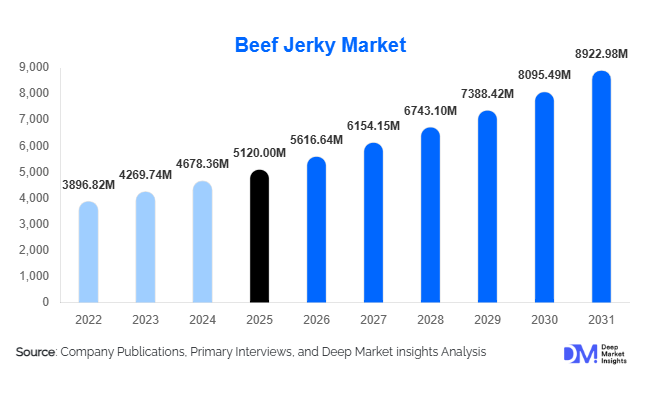
According to Deep Market Insights, the global beef jerky market size was valued at USD 5,120 million in 2025 and is projected to grow from USD 5,616.64 million in 2026 to reach USD 8,922.98 million by 2031, expanding at a CAGR of 9.7% during the forecast period (2026–2031). The beef jerky market growth is primarily driven by rising demand for high-protein, convenient snack options, increasing adoption of low-carb and keto diets, and continuous product innovation across flavors and health-oriented variants.
Key Market Insights
- Beef jerky is transitioning into a premium, health-focused snack category, driven by demand for protein-rich and clean-label products.
- North America dominates the global market, supported by strong consumption habits and well-established retail infrastructure.
- Asia-Pacific is the fastest-growing region, fueled by rising disposable incomes and western dietary influence.
- Flavored and premium jerky products are gaining traction, with consumers seeking diverse taste profiles and artisanal quality.
- E-commerce channels are expanding rapidly, improving accessibility and enabling direct-to-consumer brand growth.
- Fitness and sports nutrition trends are driving demand for high-protein snack alternatives like beef jerky.
What are the latest trends in the beef jerky market?
Premiumization and Clean Label Products
The beef jerky market is witnessing a strong shift toward premium and clean-label offerings. Consumers are increasingly seeking products made from organic, grass-fed beef with minimal additives and preservatives. Brands are focusing on transparency in sourcing and production, highlighting attributes such as hormone-free meat and natural ingredients. This trend is enabling companies to command higher price points while building brand loyalty among health-conscious consumers. Sustainable packaging and ethical sourcing practices are also gaining importance, aligning with broader consumer preferences for environmentally responsible products.
Expansion of Flavor Innovation
Flavor diversification is playing a critical role in expanding the consumer base. Manufacturers are introducing unique combinations such as sweet-spicy blends, ethnic flavors, and gourmet profiles to cater to regional preferences. This innovation is particularly effective in attracting younger consumers and first-time buyers. Seasonal and limited-edition flavors are also being introduced to create excitement and drive repeat purchases. The expansion of flavor portfolios is transforming beef jerky from a traditional snack into a versatile, experiential food category.
What are the key drivers in the beef jerky market?
Rising Demand for High-Protein Snacks
The global shift toward protein-rich diets is a major driver of the beef jerky market. Consumers are increasingly incorporating protein into their daily diets for health, fitness, and weight management purposes. Beef jerky, with its high protein content and low carbohydrate profile, aligns well with dietary trends such as keto and paleo, making it a preferred snack option.
Growth of On-the-Go Consumption
Urbanization and busy lifestyles are driving demand for convenient, ready-to-eat snacks. Beef jerky’s portability, long shelf life, and ease of consumption make it ideal for on-the-go consumption. This trend is particularly strong among working professionals, travelers, and outdoor enthusiasts.
What are the restraints for the global market?
High Product Cost
Beef jerky is relatively expensive compared to other snack options due to the high cost of raw materials and processing. This limits its adoption in price-sensitive markets, particularly in developing regions. Fluctuations in beef prices further impact pricing stability and profit margins.
Health Concerns Related to Sodium Content
Traditional beef jerky products often contain high levels of sodium and preservatives, which may deter health-conscious consumers. Regulatory pressures and increasing awareness about dietary health are prompting manufacturers to reformulate products, but this remains a key challenge.
What are the key opportunities in the beef jerky industry?
Expansion in Emerging Markets
Emerging economies in Asia-Pacific and Latin America offer significant growth potential due to rising disposable incomes and changing dietary habits. Localization of flavors and affordable pricing strategies can help manufacturers penetrate these markets effectively. Increasing retail infrastructure and e-commerce adoption further support market expansion in these regions.
Integration with Fitness and Functional Nutrition
The growing fitness and sports nutrition industry presents a major opportunity for beef jerky manufacturers. High-protein and functional variants enriched with additional nutrients can target athletes and health-conscious consumers. Partnerships with fitness brands and expansion into gym and sports retail channels can further boost market growth.
Report Scope
| Report Metric | Details |
|---|---|
| Market Size in 2025 | USD 5120.00 Million |
| Market Size in 2026 | USD 5616.64 Million |
| Market Size in 2031 | USD 8922.98 Million |
| CAGR | 9.57% (2026-2031) |
| Base Year for Estimation | 2025 |
| Historical Data | 2022-2024 |
| Forecast Period | 2026-2031 |
| Report Coverage | Revenue Forecast, Competitive Landscape, Supply Chain Disruption, Growth Factors, Environment & Regulatory Landscape and Trends |
| Geographies Covered | North America, Europe, APAC, Middle East and Africa, LATAM |
| Countries Covered | U.S., Canada, U.K., Germany, France, Spain, Italy, Russia, Nordic, Benelux, Rest of Europe, China, Korea, Japan, India, Australia, Singapore, Taiwan, South East Asia, Rest of Asia-Pacific, UAE, Turky, Saudi Arabia, South Africa, Egypt, Nigeria, Rest of MEA, Brazil, Mexico, Argentina, Chile, Colombia, Rest of LATAM |
Explore more data points, trends and opportunities Download Free Sample Report
Product Type Insights
The global beef jerky market is strongly led by flavored beef jerky, which accounts for approximately 38% of the global market share in 2025. This dominance is primarily attributed to the evolving consumer palate and the growing demand for diverse and bold taste experiences. Consumers today are increasingly seeking unique flavor profiles, including spicy, smoky, sweet, teriyaki, and regionally inspired variants, which has encouraged manufacturers to continuously innovate and expand their product portfolios. The ability of flavored jerky to cater to both traditional and experimental taste preferences positions it as the leading segment within the market.Premium and artisanal beef jerky products are gaining significant traction, especially in developed markets where consumers are willing to pay a premium for quality, authenticity, and ethical sourcing. Products made from grass-fed cattle, free-range livestock, and organic-certified ingredients are witnessing strong growth due to increasing awareness of sustainability and animal welfare. This shift aligns with broader global trends toward environmentally responsible consumption and transparency in food production.Furthermore, the introduction of functional jerky products enriched with added nutrients such as vitamins, minerals, and enhanced protein content is expanding the category's appeal. This convergence of taste innovation, health benefits, and premium positioning ensures that the product type segment remains dynamic and highly competitive, with flavored beef jerky continuing to act as the primary growth driver.
Application Insights
On-the-go snacking dominates the application landscape, contributing to nearly 55% of the total market share, and serves as the leading driver for overall market growth. This dominance is fueled by increasingly hectic lifestyles, urbanization, and the growing need for convenient, ready-to-eat food options. Beef jerky’s portability, long shelf life, and minimal preparation requirements make it an ideal snack for busy professionals, students, and travelers, reinforcing its position as a staple in the convenience food category.The fitness and protein supplementation segment is emerging as the fastest-growing application area. Athletes, gym-goers, and fitness enthusiasts are increasingly incorporating beef jerky into their diets as a convenient protein source. The segment’s growth is driven by the expansion of fitness culture, rising gym memberships, and the influence of social media on health and wellness trends. Manufacturers are capitalizing on this trend by marketing jerky as a performance-enhancing snack and introducing variants specifically tailored for fitness-conscious consumers.Outdoor and recreational activities such as camping, hiking, and road trips also contribute significantly to market demand. In developed regions, particularly in North America and parts of Europe, beef jerky is widely recognized as an essential outdoor snack due to its durability and energy-boosting properties. Additionally, the product is increasingly being positioned as an emergency and survival food, further broadening its application scope. Its long shelf life and high nutritional value make it suitable for disaster preparedness kits and military use.Overall, the application segment is driven by convenience, health consciousness, and lifestyle trends, with on-the-go snacking acting as the primary catalyst for sustained market growth.
Distribution Channel Insights
Supermarkets and hypermarkets continue to dominate the distribution channel segment, accounting for approximately 46% of global sales. Their leadership is primarily driven by extensive product availability, strong supply chain networks, and high consumer footfall. These retail formats offer a wide range of beef jerky products across different price points and brands, enabling consumers to compare options and make informed purchasing decisions. The visibility and accessibility provided by these stores play a crucial role in driving sales, particularly for established brands.The leading driver for this segment is the strong retail infrastructure and strategic product placement within large-format stores. Promotional activities such as discounts, in-store sampling, and attractive packaging further enhance consumer engagement and encourage impulse purchases. Additionally, supermarkets and hypermarkets benefit from consumer trust and familiarity, making them a preferred shopping destination for packaged food products.Online retail is the fastest-growing distribution channel, expanding at a CAGR of over 12%. The rapid growth of e-commerce platforms and increasing digital adoption are transforming the way consumers purchase food products. Direct-to-consumer strategies, subscription models, and personalized product offerings are gaining popularity, allowing brands to establish stronger connections with their customers. Online platforms also provide access to niche and premium products that may not be readily available in physical stores.
End-Use Insights
Retail consumers dominate the end-use segment, accounting for nearly 70% of the market, and act as the primary driver of overall demand. This dominance is supported by widespread product availability, strong branding efforts, and increasing consumer awareness of beef jerky as a convenient and nutritious snack. The ability of manufacturers to effectively market their products through various channels, including social media and influencer partnerships, has significantly contributed to the growth of this segment.The sports and fitness industry represents the fastest-growing end-use segment. The increasing focus on physical fitness, coupled with the rising popularity of high-protein diets, is driving demand for beef jerky among athletes and fitness enthusiasts. The segment is further supported by endorsements from fitness influencers and the integration of jerky products into sports nutrition regimes.The travel and tourism sector also contributes significantly to market growth, with demand stemming from airlines, hotels, and convenience retail outlets. Beef jerky’s portability and long shelf life make it an ideal snack for travelers, particularly on long journeys. Additionally, emerging applications in emergency food supplies and meal replacement solutions are expanding the market’s reach, highlighting its versatility and adaptability across different use cases.
Explore more data points, trends and opportunities Download Free Sample Report
Beef Jerky Market Segmentations
By Product Type
- Traditional Beef Jerky
- Flavored Beef Jerky
- Organic Beef Jerky
- Grass-Fed Beef Jerky
- Low-Sodium Beef Jerky
- Premium/Artisanal Beef Jerky
- Functional / High-Protein Beef Jerky
By Processing Method
- Smoked
- Dried
- Freeze-Dried
By Packaging Type
- Resealable Packs
- Vacuum-Sealed Packs
- Single-Serve Packs
- Bulk Packaging
By Distribution Channel
- Supermarkets & Hypermarkets
- Convenience Stores
- Online Retail
- Specialty Stores
- Wholesale / Club Stores
By End-Use Industry
- Retail Consumers
- Foodservice Industry
- Sports & Fitness Industry
- Travel & Tourism Industry
Regional Insights
North America
North America dominates the global beef jerky market, accounting for approximately 42% of the market share in 2025, with the United States serving as the primary contributor. The region’s leadership is driven by a combination of cultural familiarity, strong retail infrastructure, and continuous product innovation. Beef jerky has long been a staple snack in the region, deeply ingrained in consumer habits and widely available across multiple distribution channels.The key drivers of regional growth include high consumer awareness, a well-established snacking culture, and the presence of leading manufacturers investing heavily in research and development. Innovation in flavors, packaging, and product formats continues to attract new consumers while retaining existing ones. Additionally, the growing demand for high-protein and low-carbohydrate snacks aligns well with prevailing dietary trends such as keto and paleo diets, further supporting market expansion.The region also benefits from advanced supply chain systems and strong marketing strategies, enabling brands to maintain a competitive edge. The increasing popularity of premium and organic jerky products is further enhancing growth prospects, particularly among health-conscious consumers.
Europe
Europe holds a significant share of approximately 18%, with key markets including the United Kingdom and Germany driving demand. The region is characterized by evolving consumer preferences and a growing inclination toward high-protein and clean-label food products. While beef jerky is relatively newer compared to traditional European snacks, its popularity is steadily increasing.The primary drivers of growth in Europe include rising health consciousness, increasing disposable incomes, and the expanding availability of premium and organic products. Consumers are increasingly seeking snacks that align with their dietary goals, such as low-fat and high-protein options. This has created opportunities for beef jerky manufacturers to position their products as healthier alternatives.Premiumization is a key trend in the region, with consumers willing to pay higher prices for quality, sustainability, and ethical sourcing. Additionally, the growth of e-commerce platforms and specialty health stores is enhancing product accessibility, further supporting market expansion.
Asia-Pacific
Asia-Pacific accounts for around 23% of the global market and represents the fastest-growing region, with a CAGR exceeding 11%. Countries such as China, Japan, and Australia are leading the market, while emerging economies like India are showing strong growth potential.The region’s growth is primarily driven by rising disposable incomes, rapid urbanization, and the increasing influence of western dietary habits. As consumers adopt more globalized food preferences, the demand for convenient and protein-rich snacks such as beef jerky is increasing. Additionally, the expansion of modern retail formats and e-commerce platforms is improving product availability across urban and semi-urban areas.In markets like India, the growth of organized retail and digital commerce is playing a crucial role in market development. Younger consumers, in particular, are more open to experimenting with new snack formats, creating opportunities for innovative product offerings. The region’s large population base and evolving consumption patterns make it a key growth engine for the global beef jerky market.
Latin America
Latin America represents approximately 9% of the market, with Brazil and Mexico serving as major contributors. The region is experiencing steady growth, supported by increasing urbanization and the expansion of retail infrastructure. As consumers become more exposed to global food trends, the demand for packaged and convenience foods is rising.The main drivers of growth in Latin America include improving economic conditions, growing middle-class populations, and increasing awareness of protein-rich diets. The expansion of supermarkets and convenience stores is enhancing product accessibility, while marketing efforts by international brands are helping to educate consumers about the benefits of beef jerky.Although the market is still in a relatively early stage of development compared to North America, the rising demand for convenient and nutritious snacks presents significant growth opportunities in the coming years.
Middle East & Africa
The Middle East & Africa region accounts for around 8% of the global market, with growing demand in countries such as the UAE and South Africa. The market is gradually expanding, driven by increasing exposure to international food products and changing consumer lifestyles.Key growth drivers in this region include rising disposable incomes, urbanization, and the growing popularity of premium imported snacks. Consumers are increasingly seeking high-quality and convenient food options, creating opportunities for beef jerky manufacturers to enter and expand within the market. The influence of tourism and expatriate populations is also contributing to demand, particularly in metropolitan areas.However, high product costs and limited local production remain challenges that may hinder market growth. Despite these constraints, the region offers untapped potential, particularly as awareness of protein-rich snacks continues to increase and distribution networks improve over time.
Key Players in the Beef Jerky Market
- Jack Link’s Protein Snacks
- Conagra Brands
- Tillamook Country Smoker
- Oberto Snacks Inc.
- Golden Island Jerky
- Bridgford Foods Corporation
- Country Archer Jerky Co.
- Perky Jerky
- Lorissa’s Kitchen
- The Hershey Company (Krave)
- Mariani Packing Company
- People’s Choice Beef Jerky
- Werner Gourmet Meat Snacks
- Old Trapper Smoked Products
- Viking Munchies