Bed Bug Control Market Size
According to Deep Market Insights, the global bed bug control market size was valued at USD 2,250 million in 2025 and is projected to grow from USD 2,477.25 million in 2026 to reach USD 4,007.80 million by 2031, expanding at a CAGR of 10.1% during the forecast period (2026–2031). The bed bug control market growth is primarily driven by rising urban population density, increasing international travel, growing awareness regarding hygiene and sanitation, and the adoption of integrated pest management solutions across residential and commercial facilities. Increasing resistance of bed bugs to traditional pesticides and the growing need for preventive pest monitoring services are further accelerating global demand for advanced treatment technologies.
Key Market Insights
- Integrated pest management (IPM) solutions are gaining rapid adoption, combining chemical, thermal, and monitoring approaches for higher treatment effectiveness.
- Hospitality and multi-family housing sectors remain primary demand drivers due to high infestation risks and strict hygiene compliance requirements.
- North America dominates the global market, supported by strong professional pest control penetration and regulatory enforcement.
- Asia-Pacific is the fastest-growing regional market, fueled by rapid urbanization and expansion of organized pest management services.
- Heat treatment technologies are witnessing strong adoption as chemical resistance increases globally.
- Digital monitoring and smart detection systems are transforming pest control from reactive extermination to preventive infestation management.
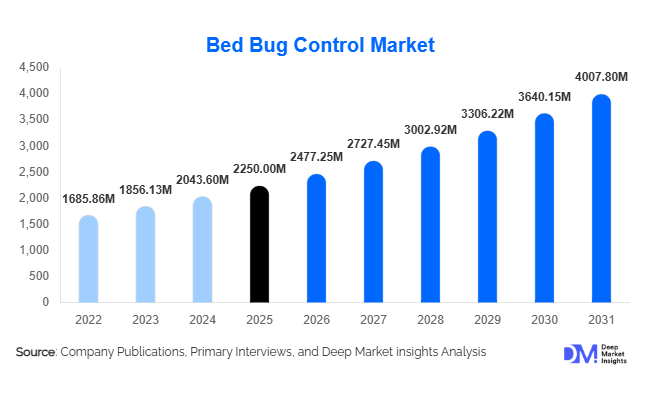
What are the latest trends in the bed bug control market?
Shift Toward Integrated Pest Management (IPM)
Bed bug control strategies are increasingly transitioning from standalone chemical treatments toward integrated pest management models. IPM combines inspection, monitoring, chemical applications, heat treatment, and preventive education to deliver long-term infestation control. Property managers and hospitality operators are adopting recurring service contracts that emphasize prevention rather than emergency extermination. Regulatory pressure to reduce pesticide exposure is further encouraging adoption of multi-method treatment approaches. IPM programs also reduce reinfestation risks, improving treatment success rates while enabling pest control companies to generate recurring revenue streams through subscription-based monitoring services.
Technology-Driven Detection and Monitoring
Technological innovation is reshaping bed bug detection and treatment efficiency. AI-assisted inspection tools, pheromone-based traps, and remote monitoring sensors allow early infestation identification before outbreaks escalate. Digital reporting platforms enable pest control operators to track treatment outcomes and provide real-time compliance documentation for commercial clients. Hotels, hospitals, and transportation providers are increasingly deploying smart monitoring systems that alert facility managers to early infestation signals. Automation and data analytics are improving operational efficiency while reducing labor-intensive inspections, making technology adoption a defining trend across developed markets.
What are the key drivers in the bed bug control market?
Growth in Global Travel and Hospitality Infrastructure
The recovery and expansion of international tourism have significantly contributed to the spread of bed bugs across regions. High traveler turnover in hotels, hostels, airlines, and cruise operations increases infestation risks, compelling operators to implement routine pest management programs. Hospitality brands are investing heavily in preventive pest control to protect brand reputation and avoid litigation risks associated with infestation incidents. Expansion of tourism infrastructure across Asia-Pacific and the Middle East further strengthens long-term demand for professional bed bug control services.
Rising Urbanization and Multi-Family Housing Density
Urban population growth has increased shared housing environments such as apartments, dormitories, and rental communities where infestations spread rapidly between units. Property managers increasingly adopt building-wide pest management contracts instead of individual treatments, expanding service scope and recurring revenue opportunities. Urban housing expansion in emerging economies is therefore becoming a structural growth driver for the market.
What are the restraints for the global market?
High Cost of Advanced Treatment Solutions
Thermal remediation and advanced treatment technologies require specialized equipment and trained personnel, making professional services relatively expensive. Cost sensitivity in developing regions limits adoption despite higher effectiveness compared to traditional pesticides. Smaller property owners often delay treatment decisions due to upfront costs, allowing infestations to worsen.
Stigma and Underreporting of Infestations
Social stigma associated with bed bug infestations discourages early reporting, particularly within hospitality and residential rental markets. Delayed treatment increases infestation severity and raises eradication complexity. This behavioral barrier slows preventive adoption and increases operational challenges for service providers.
What are the key opportunities in the bed bug control industry?
Expansion in Emerging Urban Markets
Rapid urbanization across Asia-Pacific, Latin America, and parts of the Middle East presents substantial growth opportunities. Many cities remain underpenetrated by organized pest control services, creating strong potential for franchise expansion and localized service models. Growing middle-class awareness regarding hygiene standards is expected to accelerate adoption of professional pest management solutions.
Eco-Friendly and Non-Chemical Treatment Innovations
Environmental regulations and consumer preference for low-toxicity solutions are encouraging development of eco-friendly pest control technologies. Heat treatments, steam remediation, and desiccant-based products are gaining popularity across healthcare and hospitality sectors. Companies investing in sustainable solutions are positioned to capture premium service contracts while complying with evolving regulatory standards.
Report Scope
| Report Metric | Details |
|---|---|
| Market Size in 2025 | USD 2250 Million |
| Market Size in 2026 | USD 2477.25 Million |
| Market Size in 2031 | USD 4007.80 Million |
| CAGR | 10.1% (2026-2031) |
| Base Year for Estimation | 2025 |
| Historical Data | 2022-2024 |
| Forecast Period | 2026-2031 |
| Report Coverage | Revenue Forecast, Competitive Landscape, Supply Chain Disruption, Growth Factors, Environment & Regulatory Landscape and Trends |
| Geographies Covered | North America, Europe, APAC, Middle East and Africa, LATAM |
| Countries Covered | U.S., Canada, U.K., Germany, France, Spain, Italy, Russia, Nordic, Benelux, Rest of Europe, China, Korea, Japan, India, Australia, Singapore, Taiwan, South East Asia, Rest of Asia-Pacific, UAE, Turky, Saudi Arabia, South Africa, Egypt, Nigeria, Rest of MEA, Brazil, Mexico, Argentina, Chile, Colombia, Rest of LATAM |
Explore more data points, trends and opportunities Download Free Sample Report
Product Type Insights
The bed bug control market is primarily driven by insecticides and sprays, which continue to dominate overall revenue generation due to their affordability, immediate effectiveness, and widespread accessibility across residential, commercial, and institutional applications. The leading position of this segment is supported by the growing need for rapid infestation elimination solutions that deliver visible results while remaining compatible with both professional and do-it-yourself treatment approaches. Increasing innovation in low-toxicity chemical formulations and residual-effect sprays further strengthens adoption among pest management professionals seeking efficient large-scale treatment solutions.Bed bug traps and monitoring devices are experiencing accelerated adoption as preventive pest management becomes a critical component of integrated pest control strategies. Hotels, property managers, and transportation operators increasingly rely on monitoring technologies to detect infestations at early stages, reducing treatment costs and reputational risks. Mattress encasements and protective solutions are gaining traction among residential consumers focused on long-term prevention, particularly in urban apartment environments where reinfestation risks remain high. Aerosols and dust formulations continue to play an essential role in targeted treatment strategies, especially for cracks, furniture structures, and concealed infestation zones, and are frequently integrated into professional pest management programs to improve treatment efficacy.
Application Insights
The hospitality sector represents the leading application segment, driven primarily by strict hygiene regulations, customer safety expectations, and significant reputational risks associated with bed bug incidents. Hotels and short-term accommodation providers increasingly invest in routine inspection and preventive treatment programs to avoid operational disruptions and negative consumer reviews. The segment’s growth is further supported by rising global tourism and higher occupancy rates, which increase exposure to cross-border pest transmission.Residential housing is emerging as the fastest-growing application area, supported by expanding urban populations, high-density apartment living, and increased consumer awareness regarding pest-related health concerns. Growing access to online information and retail pest control products has encouraged early intervention practices among homeowners and tenants. Healthcare facilities are increasingly demanding non-toxic and environmentally safe treatment solutions to maintain patient safety while complying with infection prevention protocols. Institutional facilities, including schools, universities, and dormitories, are adopting routine inspections and integrated pest management frameworks to prevent outbreaks within shared living environments. Transportation systems such as airlines, cruise operators, and rail networks are also becoming important application areas as operators implement preventive sanitation measures to protect passenger confidence and regulatory compliance.
Distribution Channel Insights
Professional pest control providers dominate distribution channels, accounting for the majority of global revenue due to the technical complexity associated with complete bed bug eradication. The leading position of this segment is driven by the increasing preference for certified treatment services capable of combining chemical, thermal, and monitoring solutions into comprehensive pest management programs. Commercial clients, particularly hospitality and healthcare operators, rely heavily on contractual service agreements that ensure consistent inspection and rapid response capabilities.Retail and do-it-yourself product channels continue to expand as consumers seek cost-effective solutions for early-stage infestations. The rapid growth of e-commerce platforms has significantly improved product accessibility, enabling consumers to compare solutions, access educational content, and purchase preventive tools conveniently. Institutional procurement contracts provide a stable revenue stream as hotels, hospitals, housing authorities, and public facilities increasingly outsource pest control operations to specialized service providers. Additionally, digital booking platforms and mobile-enabled service scheduling are improving customer engagement, transparency, and accessibility, supporting the modernization of pest management service delivery.
End-User Insights
Commercial users account for a substantial share of global demand, with hospitality operators, property management firms, and facility management companies representing key contributors to recurring service revenues. The leadership of this segment is primarily driven by mandatory hygiene compliance standards, liability concerns, and the need for continuous monitoring to protect brand reputation and operational continuity. Long-term pest management contracts and preventive service models further reinforce sustained demand among commercial clients.Residential consumers represent the fastest-growing end-user segment, supported by rising awareness of infestation risks, increasing urbanization, and the growing availability of affordable treatment products. Consumers are increasingly adopting preventive solutions such as mattress encasements and monitoring devices to avoid recurring infestations. Healthcare facilities prioritize preventive pest management as part of broader infection control and patient safety initiatives, creating consistent demand for eco-friendly and non-toxic treatment solutions. Transportation operators and public institutions are emerging as important customer groups as they implement structured sanitation and monitoring programs to maintain hygiene standards and ensure public safety across shared mobility and accommodation environments.
Explore more data points, trends and opportunities Download Free Sample Report
Bed Bug Control Market Segmentations
By Treatment Type
- Chemical Treatment
- Non-Chemical Treatment
- Integrated Pest Management (IPM)
By Product Type
- Insecticides & Sprays
- Powders & Dust Formulations
- Aerosols & Foggers
- Bed Bug Traps & Monitors
- Mattress & Furniture Encasements
- Detection Devices
By Service Type
- Inspection & Detection Services
- Residential Treatment Services
- Commercial Pest Control Contracts
- Preventive Maintenance Programs
- Emergency Infestation Response
By Application
- Residential Housing
- Hospitality
- Healthcare Facilities
- Commercial Offices
- Transportation
- Institutional Facilities
By Distribution Channel
- Professional Pest Control Providers
- Retail & DIY Consumer Sales
- E-commerce Platforms
- Institutional Procurement Contracts
Regional Insights
North America
North America leads the global bed bug control market, accounting for nearly 36% of global demand, supported by high consumer awareness and mature pest management infrastructure. The United States represents the largest national market due to strict public health standards, advanced professional pest control networks, and widespread adoption of integrated pest management practices. Regional growth is further driven by increasing litigation risks related to infestations, strong hospitality compliance requirements, and rising urban mobility that contributes to recurring infestation cycles. Technological innovation, including heat treatment and digital monitoring solutions, also accelerates adoption across commercial and residential sectors.
Europe
Europe holds approximately 27% market share, with strong demand originating from Germany, the United Kingdom, France, and Italy. Increasing international travel and aging housing infrastructure contribute significantly to recurring infestation challenges across densely populated cities. Regional growth is supported by stringent environmental regulations encouraging eco-friendly pest control solutions and reduced chemical usage. The expansion of integrated pest management programs, combined with growing consumer preference for sustainable treatment technologies, is strengthening market development across both residential and commercial applications.
Asia-Pacific
Asia-Pacific represents the fastest-growing regional market, driven by rapid urbanization, expanding middle-class populations, and significant growth in hospitality and tourism industries across China, India, Japan, and Southeast Asia. Rising disposable income levels are enabling increased adoption of professional pest control services, while government-led hygiene awareness campaigns are improving early detection practices. The expansion of organized pest management service providers and growing investments in urban infrastructure are further accelerating regional market growth, particularly in high-density metropolitan areas.
Latin America
Latin America is witnessing gradual market expansion led by Brazil and Mexico, supported by increasing urban density and improving public awareness regarding sanitation and pest-related health risks. Regional growth is driven by expanding hospitality infrastructure, growing middle-income populations, and improving access to professional pest control services. Although market penetration remains relatively low compared to developed regions, rising tourism activity and urban housing development present significant opportunities for international service providers and technology adoption.
Middle East & Africa
The Middle East & Africa region is benefiting from rapid hospitality and tourism development, particularly in the United Arab Emirates and Saudi Arabia, where large-scale tourism investments and luxury hotel expansion are driving preventive pest management adoption. Regional growth is supported by increasing regulatory focus on hygiene standards and facility management practices. In African urban centers, rising population density, expanding residential construction, and improving awareness of pest-related health concerns are contributing to increasing demand for professional bed bug control solutions, creating long-term market growth opportunities.
Key Players in the Bed Bug Control Market
- Rentokil Initial plc
- Rollins Inc.
- Terminix Global Holdings
- Ecolab Inc.
- Anticimex Group
- ServiceMaster Brands
- Truly Nolen
- Arrow Exterminators
- Massey Services Inc.
- Dodson Pest Control
- Viking Pest Control
- Cook’s Pest Control
- Abell Pest Control
- Orkin LLC
- Ehrlich Pest Control