Acai Berry Products Market Size
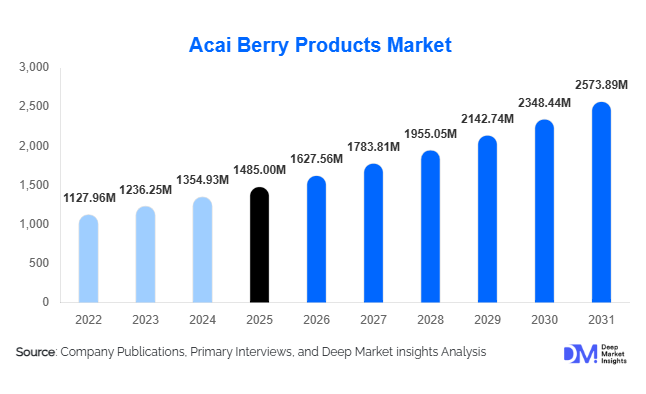
According to Deep Market Insights, the global acai berry products market size was valued at USD 1,485 million in 2025 and is projected to grow from USD 1,627.56 million in 2026 to reach USD 2,573.89 million by 2031, expanding at a CAGR of 9.6% during the forecast period (2026–2031). The acai berry products market growth is primarily driven by rising global demand for functional foods, increasing consumer awareness of antioxidant-rich superfoods, and expanding adoption of plant-based nutrition across beverages, supplements, and healthy snack categories. The market is transitioning from niche health-food retail toward mainstream foodservice and packaged consumer goods, supported by innovation in frozen pulp, ready-to-eat bowls, powders, and nutraceutical formulations.
Key Market Insights
- Functional nutrition trends are accelerating demand, with acai positioned as a premium antioxidant ingredient across food and supplement industries.
- Frozen acai pulp remains the dominant product format, widely used in smoothie bowls and foodservice applications globally.
- North America leads consumption, supported by strong health-conscious consumer adoption and premium retail penetration.
- Asia-Pacific is the fastest-growing region, driven by expanding middle-class health awareness and rising demand for superfruit beverages.
- E-commerce distribution channels are reshaping sales, enabling direct-to-consumer superfood brands to scale globally.
- Sustainability and ethical sourcing from Brazil’s Amazon region are becoming critical purchasing factors for buyers.
What are the latest trends in the acai berry products market?
Functional Superfood Integration Across Food Categories
Acai berry ingredients are increasingly incorporated into functional foods beyond smoothies, including protein bars, dairy alternatives, breakfast cereals, and fortified beverages. Manufacturers are positioning acai as a natural antioxidant and energy-support ingredient aligned with clean-label preferences. Demand is particularly strong among millennials and fitness-focused consumers seeking nutrient-dense foods without synthetic additives. Brands are also combining acai with probiotics, collagen, and plant proteins, creating hybrid wellness products that command premium pricing. This expansion into mainstream packaged foods is shifting acai from a specialty ingredient toward a scalable global commodity within the health-food ecosystem.
Rise of Ready-to-Eat Acai Bowls and Convenience Nutrition
Urban lifestyles and on-the-go consumption patterns are driving growth in ready-to-eat acai bowls and frozen snack formats. Quick-service restaurants, cafés, and health chains are integrating acai menus, expanding visibility beyond specialty juice bars. Retailers are launching single-serve frozen bowls and shelf-stable blends designed for home consumption. Convenience-focused innovation is improving accessibility while maintaining perceived nutritional value. Packaging advancements such as portion-controlled frozen packs and resealable powder pouches are also improving shelf life and distribution efficiency, enabling wider geographic expansion.
What are the key drivers in the acai berry products market?
Growing Global Demand for Functional and Plant-Based Nutrition
Consumers increasingly prioritize preventive health through diet, fueling strong demand for antioxidant-rich fruits. Acai berries, known for polyphenols and anthocyanins, align with plant-based diets and wellness trends. Growth in vegan and flexitarian populations is supporting product adoption across smoothies, supplements, and dairy alternatives. Functional food categories are expanding at over 8% annually globally, directly supporting acai ingredient demand.
Expansion of Health-Focused Foodservice Chains
The rapid growth of smoothie bars, wellness cafés, and fitness-oriented restaurant formats has significantly increased bulk purchases of frozen acai pulp. Franchise expansion in North America, Europe, and Asia-Pacific is accelerating ingredient consumption volumes. Foodservice operators value acai for premium menu positioning and high-margin offerings, helping drive sustained demand growth.
Rising E-Commerce and Direct-to-Consumer Superfood Brands
Online retail channels allow niche wellness brands to reach global consumers without traditional distribution barriers. Subscription-based superfood deliveries and influencer-led marketing have expanded market reach. Digital commerce has particularly accelerated adoption in emerging markets where specialty retail infrastructure remains limited.
What are the restraints for the global market?
Supply Chain Dependence on Amazonian Production
Acai cultivation is geographically concentrated in Brazil, creating supply vulnerability related to climate variability, logistics constraints, and harvesting seasonality. Transportation costs and cold-chain requirements increase operational complexity for global distribution.
Premium Pricing and Limited Mass-Market Accessibility
Compared with conventional fruits, acai products remain relatively expensive due to processing, freezing, and export logistics. Price sensitivity in developing markets may restrict adoption outside urban premium consumer segments.
What are the key opportunities in the acai berry products industry?
Expansion into Emerging Asia-Pacific Markets
Rising disposable incomes and increasing awareness of functional nutrition in countries such as China, India, South Korea, and Southeast Asia present strong growth opportunities. Retailers are introducing localized acai beverage flavors and fusion products suited to regional taste preferences. Governments promoting healthier diets are indirectly supporting superfruit adoption. Market penetration remains low compared with Western markets, offering substantial headroom for new entrants and partnerships with regional beverage manufacturers.
Nutraceutical and Supplement Innovation
Acai extracts are gaining traction in capsules, powders, and sports nutrition supplements due to antioxidant positioning. Integration into immunity, anti-aging, and energy-support formulations is expanding margins beyond traditional food applications. Pharmaceutical-grade processing and standardized extract formulations provide opportunities for premium pricing and long-term contracts with supplement manufacturers.
Sustainable and Ethical Supply Chain Development
Brands investing in traceable sourcing and fair-trade certification can differentiate products and secure long-term buyer relationships. Sustainable harvesting programs in the Amazon support biodiversity preservation while enhancing brand equity. ESG-focused investors increasingly favor companies demonstrating transparent sourcing practices, creating funding opportunities for vertically integrated supply chains.
Report Scope
| Report Metric | Details |
|---|---|
| Market Size in 2025 | USD 1485.00 Million |
| Market Size in 2026 | USD 1627.56 Million |
| Market Size in 2031 | USD 2573.89 Million |
| CAGR | 9.6% (2026-2031) |
| Base Year for Estimation | 2025 |
| Historical Data | 2022-2024 |
| Forecast Period | 2026-2031 |
| Report Coverage | Revenue Forecast, Competitive Landscape, Supply Chain Disruption, Growth Factors, Environment & Regulatory Landscape and Trends |
| Geographies Covered | North America, Europe, APAC, Middle East and Africa, LATAM |
| Countries Covered | U.S., Canada, U.K., Germany, France, Spain, Italy, Russia, Nordic, Benelux, Rest of Europe, China, Korea, Japan, India, Australia, Singapore, Taiwan, South East Asia, Rest of Asia-Pacific, UAE, Turky, Saudi Arabia, South Africa, Egypt, Nigeria, Rest of MEA, Brazil, Mexico, Argentina, Chile, Colombia, Rest of LATAM |
Explore more data points, trends and opportunities Download Free Sample Report
Product Type Insights
The global acai market demonstrates a diversified product landscape shaped by evolving consumer lifestyles, functional nutrition demand, and innovation across foodservice, retail, and nutraceutical industries. Among all product categories, frozen acai pulp continues to dominate the market, accounting for approximately 41% of global revenue in 2025. The leadership of frozen pulp is primarily attributed to its close resemblance to fresh acai in taste, texture, and nutritional integrity, making it the preferred format for smoothie chains, juice bars, and health-focused foodservice establishments worldwide. Frozen pulp enables operators to deliver consistent flavor profiles while maintaining the antioxidant potency associated with acai berries, which has become a critical selling point in wellness-oriented menus. The rapid international expansion of smoothie franchises and independent health cafés has further accelerated demand, particularly in urban centers where consumers increasingly prioritize convenient yet nutrient-dense meal options.The leading segment driver behind frozen acai pulp growth is the global proliferation of smoothie bowl culture. Foodservice operators favor frozen pulp because it allows easy blending, standardized portion control, and scalability across multiple locations. Additionally, advancements in cold-chain logistics and improved freezing technologies have significantly reduced product degradation during transportation, enabling Brazilian exporters to supply distant markets efficiently. As global consumers continue shifting toward minimally processed superfoods, frozen pulp retains a competitive advantage over heavily processed alternatives.Powdered acai products represent the second-largest product category, supported by strong growth in dietary supplementation and e-commerce distribution. Acai powder offers extended shelf life, simplified transportation, and versatility across applications such as protein blends, functional snacks, bakery products, and wellness beverages. The leading driver for powdered acai is its compatibility with the booming home wellness trend, where consumers increasingly prepare smoothies and nutritional drinks independently. Fitness enthusiasts and health-conscious consumers prefer powdered formats due to ease of storage and precise dosage control.
Application Insights
The application landscape of the acai market is strongly influenced by the convergence of nutrition, lifestyle wellness, and functional ingredient innovation. The food & beverages segment dominates overall demand, holding nearly 52% market share in 2025. This leadership is driven by widespread incorporation of acai into smoothie bowls, juices, desserts, dairy alternatives, and functional snack products. The leading segment driver is consumer preference for nutrient-rich foods that combine indulgence with perceived health benefits. Acai’s vibrant color, unique flavor profile, and antioxidant positioning allow manufacturers to market products as both premium and health-enhancing, supporting widespread adoption across global food categories.Food manufacturers increasingly utilize acai as a natural coloring agent and functional ingredient, aligning with clean-label trends that emphasize plant-based and minimally processed components. As consumers scrutinize ingredient lists more carefully, acai provides both visual appeal and nutritional storytelling, making it a valuable addition to innovative food formulations. The expansion of plant-based diets further strengthens this segment, as acai complements vegan and dairy-free product lines effectively.Dietary supplements account for approximately 24% of market demand and continue expanding rapidly. The primary growth driver for this segment is rising consumer awareness regarding immunity, longevity, and preventive health management. Acai’s antioxidant reputation positions it alongside other superfoods within daily supplementation routines. Supplement manufacturers increasingly combine acai with adaptogens, vitamins, and probiotics to create multifunctional health products targeting energy, digestion, and skin health. The global shift toward self-directed healthcare following heightened health awareness has significantly accelerated adoption.Cosmetics and personal care applications represent a growing application area as acai oil gains recognition for its moisturizing and anti-aging properties. The leading driver here is the clean beauty movement, which favors plant-derived ingredients perceived as sustainable and gentle on the skin. Skincare brands incorporate acai extracts into serums, creams, and haircare formulations due to their high fatty acid and antioxidant content. Consumers increasingly associate botanical ingredients with premium skincare efficacy, encouraging cosmetic manufacturers to expand product portfolios featuring acai-derived components.Animal nutrition and specialty applications remain comparatively niche but are gaining traction as research highlights antioxidant supplementation benefits for pet health and livestock performance. Premium pet food brands are introducing superfood formulations targeting digestive health and coat quality. The leading growth driver is the humanization of pets, where owners seek high-quality nutrition comparable to human wellness standards.
Distribution Channel Insights
Distribution dynamics within the acai market reflect evolving consumer purchasing behaviors and the growing integration of omnichannel retail ecosystems. Retail and supermarkets remain the dominant distribution channel, accounting for approximately 38% market share. The leading driver behind this segment is expanding shelf space dedicated to frozen foods and health-oriented products. Major retailers increasingly position acai products within premium wellness sections, enhancing visibility and consumer accessibility. Improved freezer infrastructure and global sourcing capabilities allow supermarkets to stock frozen acai pulp and ready-to-eat bowls consistently throughout the year.Online retail channels represent the fastest-growing distribution pathway, driven by digital commerce expansion and direct-to-consumer wellness brands. E-commerce platforms enable niche brands to reach global audiences without traditional retail constraints. Subscription-based models for supplements and powdered acai products have strengthened recurring revenue streams. The leading driver for online growth is consumer preference for convenience, product variety, and access to specialized health products not always available in physical stores.Foodservice distribution continues to play a critical role in market expansion, particularly through smoothie chains, cafés, and healthy quick-service restaurants. Foodservice operators act as key market educators by introducing acai-based products to new consumers who later seek retail purchases. The leading segment driver is experiential consumption, where consumers discover acai through visually appealing bowls and beverages shared across social media platforms, accelerating brand awareness and product adoption.Specialty health stores maintain influence in premium product positioning and consumer education. These outlets emphasize organic certification, sustainability credentials, and nutritional transparency, attracting health-conscious consumers willing to pay premium prices. Their advisory role helps build trust in emerging superfood categories, reinforcing long-term market growth.
End-Use Industry Insights
The end-use industry landscape highlights how acai demand is shaped by cross-sector adoption spanning food manufacturing, hospitality, and nutraceutical production. The foodservice industry is experiencing the fastest growth in acai consumption, expanding at nearly 11% annually as smoothie cafés and healthy quick-service restaurant concepts scale internationally. The leading growth driver is changing dining behavior, with consumers increasingly replacing traditional fast food with functional and nutrient-rich alternatives. Acai bowls serve as both meal replacements and lifestyle statements aligned with wellness-focused consumption.Packaged functional food manufacturers remain the largest buyers of acai ingredients, integrating them into snack bars, frozen desserts, dairy alternatives, and beverages. The primary driver within this segment is product differentiation in crowded food markets. Brands leverage acai’s superfood reputation to justify premium pricing while appealing to health-conscious consumers seeking added nutritional value.Nutraceutical companies represent an emerging high-value consumer group. Rising supplement adoption across aging populations and fitness-oriented demographics has increased demand for concentrated acai extracts. The leading driver is the global shift toward preventive healthcare models, encouraging daily supplementation to support immune function and overall vitality.Export-driven demand continues to strengthen as Brazilian processors expand international shipments. Investments in processing facilities, sustainability certifications, and traceable supply chains have enabled producers to meet stringent import regulations in developed markets. Growing international trade relationships ensure stable supply availability, supporting long-term industry expansion.
Explore more data points, trends and opportunities Download Free Sample Report
Acai Berry Products Market Segmentations
By Product Type
- Frozen Acai Pulp
- Powdered Acai
- Ready-to-Eat Acai Bowls
- Acai Beverages
- Acai Capsules & Extracts
By Application
- Food & Beverages
- Dietary Supplements
- Cosmetics & Personal Care
- Animal Nutrition
By Distribution Channel
- Retail & Supermarkets
- Online Retail
- Foodservice
- Specialty Health Stores
Regional Insights
North America
North America accounted for approximately 34% of the global acai market in 2025, making it the largest regional market. The United States leads consumption due to widespread adoption of acai bowls, smoothies, and functional beverages across urban and suburban markets. The leading regional growth driver is strong consumer awareness of superfoods combined with high purchasing power and established wellness culture. Health-conscious consumers actively seek antioxidant-rich foods, supporting sustained retail and foodservice demand.The expansion of smoothie chains and fitness-oriented café concepts continues to introduce acai products to mainstream audiences. Retail innovation, including private-label frozen acai products, has improved affordability and accessibility. Canada contributes additional growth through expanding organic food retail networks and increasing demand for plant-based nutrition. Advanced cold-chain infrastructure and efficient import logistics further strengthen regional market dominance.
Europe
Europe holds nearly 26% market share, supported by strong adoption across Germany, the United Kingdom, France, Italy, and Spain. The leading regional driver is the rapid expansion of organic and sustainably sourced food consumption. European consumers prioritize environmental responsibility and ethical sourcing practices, encouraging suppliers to obtain certifications such as organic and fair-trade labels.Plant-based dietary trends significantly influence demand, as acai aligns with vegan and clean-label product positioning. Functional beverages and premium frozen desserts incorporating acai are gaining popularity among younger consumers. Regulatory emphasis on product transparency and ingredient traceability further promotes high-quality imports, strengthening long-term regional growth prospects.
Asia-Pacific
Asia-Pacific represents the fastest-growing regional market, expanding at a CAGR exceeding 12%. The leading driver is rapid urbanization combined with rising middle-class incomes and increasing health awareness. China and Japan lead imports through innovation in functional beverages and nutritional products tailored to wellness-focused consumers. Beverage manufacturers in these markets actively experiment with exotic superfruit ingredients to differentiate offerings.India and Australia are witnessing rapid adoption through café culture expansion and growing fitness communities. Social media influence and exposure to global food trends accelerate consumer curiosity toward acai-based products. Retail penetration is increasing as modern supermarkets and online platforms introduce frozen and powdered formats. Rising demand for premium health foods among younger demographics is expected to sustain strong long-term growth.
Latin America
Latin America plays a dual role as both the production center and an expanding consumption market. Brazil dominates global production, serving as the primary supply hub due to favorable climatic conditions and established harvesting expertise. The leading regional growth driver is strong domestic consumption rooted in traditional dietary practices, where acai has long been consumed as a staple food in certain regions.Investment in processing technology and export infrastructure has strengthened Brazil’s position within international supply chains. Neighboring markets such as Mexico and Chile are emerging importers as wellness trends spread throughout urban populations. Increasing regional awareness of functional nutrition is gradually transforming acai from a traditional food into a premium health product category.
Middle East & Africa
The Middle East & Africa region represents an emerging growth frontier for the acai market. The United Arab Emirates and Saudi Arabia lead demand, supported by premium retail environments and luxury wellness trends. The leading regional driver is rising disposable income combined with strong interest in international health food concepts. High-end supermarkets and specialty cafés introduce acai products as premium lifestyle offerings.South Africa is developing into an important consumer market driven by expanding urban middle-class populations and increasing awareness of functional nutrition. Growth is supported by modern retail expansion and the gradual adoption of global superfood trends. Although market penetration remains comparatively lower than other regions, improving distribution networks and growing health consciousness are expected to drive steady long-term expansion.
Key Players in the Acai Berry Products Market
- Sambazon Inc.
- Açaí Roots Inc.
- Oakberry Global
- The Berry Company
- Nativo Acai
- Amazon Power Pty Ltd.
- Acai Exotic LLC
- Tropical Acai LLC
- Frooty Brazil
- Sunfood Superfoods
- Navitas Organics
- Energy Foods International
- Organique Acai
- Bossa Nova Acai
- Acai Amazonas