Pet Shampoo Market Size
According to Deep Market Insights, the global pet shampoo market size was valued at USD 620 million in 2025 and is projected to grow from USD 665.26 million in 2026 to reach USD 946.22 million by 2031, expanding at a CAGR of 7.3% during the forecast period (2026–2031). The market growth is primarily driven by rising pet adoption rates, increasing humanization of pets, growing awareness of pet hygiene and skin health, and the expansion of premium and specialized formulations such as medicated, hypoallergenic, and organic shampoos.
Key Market Insights
- Premium and natural formulations are becoming mainstream, with consumers opting for organic, cruelty-free, and plant-based shampoos for their pets.
- Dogs dominate the pet shampoo segment, accounting for nearly 70% of the market, driven by high grooming frequency and global dog population trends.
- North America leads the global market, with the U.S. contributing the majority of regional demand due to high disposable income and strong retail infrastructure.
- Asia-Pacific is the fastest-growing region, driven by rising pet adoption in China, India, and Southeast Asia and increasing awareness of pet wellness.
- Online retail and e-commerce are reshaping distribution, offering convenience, subscription models, and targeted marketing for specialized pet shampoos.
- Technological integration, including veterinary-backed formulations, dermatologically tested products, and mobile app-based recommendations, is enhancing consumer engagement and product adoption.
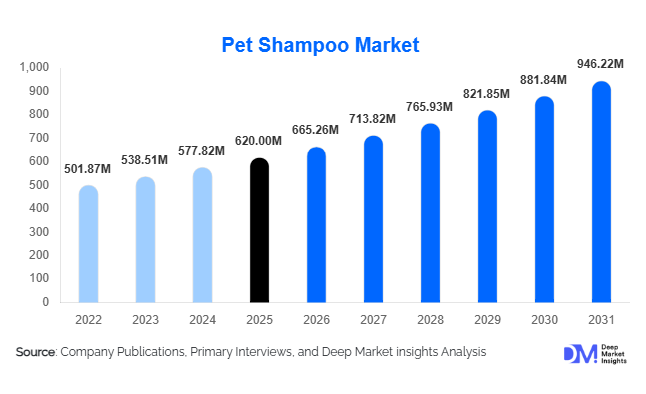
What are the latest trends in the pet shampoo market?
Premiumization and Natural Products
The pet shampoo market is witnessing a shift toward premium and natural formulations. Consumers are increasingly opting for organic, hypoallergenic, and plant-based products to reduce chemical exposure and ensure the well-being of their pets. Brands are emphasizing certifications, cruelty-free labeling, and eco-friendly packaging, which resonates strongly in North America and Europe. This trend is driving higher average selling prices and encouraging product differentiation. Products combining cleansing with conditioning, anti-parasitic, or medicated benefits are gaining popularity, aligning with humanization trends where pets are treated like family members.
Medicated and Functional Shampoos
Veterinary-endorsed medicated shampoos are growing rapidly, addressing skin infections, allergies, and parasitic infestations. Tele-veterinary consultations and digital platforms are enabling pet owners to access personalized recommendations, increasing the adoption of functional shampoos. Medicated variants are particularly prominent in the dog segment, contributing to the overall rise in market value. Clinical testing, dermatological certifications, and ingredient transparency are key selling points that enhance consumer confidence and willingness to pay premium prices.
What are the key drivers in the pet shampoo market?
Rising Pet Ownership and Humanization
The growth of pet ownership worldwide, fueled by nuclear families and urban lifestyles, has increased demand for pet grooming products. The humanization of pets is driving owners to invest in high-quality grooming routines, premium shampoos, and specialized formulations. Pets are increasingly considered family members, resulting in higher frequency of grooming and willingness to spend on functional and aesthetic benefits such as coat shine, odor control, and dermatological care.
Growing Awareness of Pet Health and Hygiene
Awareness campaigns, veterinary advice, and online information platforms are educating pet owners about the importance of regular grooming to prevent skin infections, ticks, and other dermatological issues. This awareness is encouraging routine use of shampoos and the adoption of medicated or hypoallergenic variants. Grooming salons and veterinary clinics also play a critical role in influencing consumer choices, particularly in urban centers and developed economies.
Expansion of E-Commerce and Organized Retail
The growth of online retail platforms, including brand websites and e-commerce marketplaces, has increased accessibility to a wide range of pet shampoos. Subscription models, personalized recommendations, and promotions are enhancing convenience and repeat purchase rates. Additionally, organized pet specialty stores and grooming salons are expanding their product portfolios, enabling premium and functional shampoos to reach a broader audience globally.
What are the restraints for the global market?
Unorganized Market Competition
The presence of low-cost, unbranded pet shampoos in developing regions creates competitive pressure, limiting the penetration of premium products. Price-sensitive consumers may opt for cheaper alternatives that lack quality assurances, impacting revenue growth for established brands.
Adverse Reactions and Product Sensitivity
Pet shampoos, particularly medicated or functional variants, can sometimes cause allergic reactions or skin irritation, leading to consumer distrust. New entrants and smaller brands must invest in clinical testing and compliance to mitigate risks, otherwise adoption rates may be restrained, especially in sensitive markets.
What are the key opportunities in the pet shampoo industry?
Emerging Markets in Asia-Pacific
Asia-Pacific presents immense opportunities due to rising pet adoption, increasing disposable incomes, and urbanization. China, India, and Southeast Asian countries show low penetration of premium shampoos compared to North America and Europe, creating significant headroom for growth. Companies that invest in localized marketing, affordable premium products, and education campaigns can establish a strong foothold in these markets.
Integration with Veterinary and Dermatological Solutions
Medicated and functional shampoos endorsed by veterinarians are gaining popularity. Collaborations with veterinary clinics, pet wellness centers, and telehealth platforms allow companies to offer clinically tested products, increasing consumer confidence and repeat purchase rates. This presents a lucrative niche for premium products targeting specific skin or coat conditions.
Digital Channels and Subscription Models
E-commerce platforms and subscription services enable recurring revenue streams and direct consumer engagement. Personalized recommendations based on pet breed, age, and skin condition enhance customer retention. Brands investing in digital marketing, social media outreach, and AI-based pet care recommendations are well-positioned to capture this growing segment.
Report Scope
| Report Metric | Details |
|---|---|
| Market Size in 2025 | USD 620 Million |
| Market Size in 2026 | USD 665.26 Million |
| Market Size in 2031 | USD 946.22 Million |
| CAGR | 7.3% (2026-2031) |
| Base Year for Estimation | 2025 |
| Historical Data | 2022-2024 |
| Forecast Period | 2026-2031 |
| Report Coverage | Revenue Forecast, Competitive Landscape, Supply Chain Disruption, Growth Factors, Environment & Regulatory Landscape and Trends |
| Geographies Covered | North America, Europe, APAC, Middle East and Africa, LATAM |
| Countries Covered | U.S., Canada, U.K., Germany, France, Spain, Italy, Russia, Nordic, Benelux, Rest of Europe, China, Korea, Japan, India, Australia, Singapore, Taiwan, South East Asia, Rest of Asia-Pacific, UAE, Turky, Saudi Arabia, South Africa, Egypt, Nigeria, Rest of MEA, Brazil, Mexico, Argentina, Chile, Colombia, Rest of LATAM |
Explore more data points, trends and opportunities Download Free Sample Report
Product Type Insights
Non-medicated shampoos dominate the global pet shampoo market, accounting for approximately 35% of the total market share in 2025, primarily due to their widespread use in routine grooming and maintenance. These products are favored for their affordability, ease of use, and suitability across a wide range of pet types and coat conditions, making them the default choice for mass-market consumers. The dominance of this segment is further supported by increasing pet ownership globally and the growing habit of regular at-home grooming.
However, medicated shampoos are the fastest-growing segment, driven by the rising incidence of dermatological issues such as fungal infections, allergies, and parasitic infestations. Increasing veterinary recommendations and awareness around pet skin health are accelerating demand for these specialized formulations. Meanwhile, conditioning shampoos and 2-in-1 variants are gaining traction, particularly among urban consumers seeking convenience and multifunctionality. The organic and natural shampoo segment is also expanding rapidly, supported by consumer preference for chemical-free, hypoallergenic, and eco-friendly products. This shift toward premium, functional, and safe formulations is reshaping the product landscape and driving value growth across the market.
Pet Type Insights
Dogs represent the largest segment in the pet shampoo market, contributing nearly 70% of the total market share in 2031. This dominance is driven by the higher global dog population, greater grooming frequency compared to other pets, and increased spending on canine care products. Dog owners are more likely to purchase specialized shampoos tailored to coat type, odor control, and dermatological conditions, further boosting segment growth. Additionally, professional grooming services for dogs are more prevalent, increasing the consumption of both premium and bulk shampoo products.
Cats constitute the second-largest segment, supported by rising indoor cat ownership, particularly in urban environments. Although grooming frequency is lower compared to dogs, demand for mild, hypoallergenic, and waterless shampoos is increasing due to the sensitive nature of cats. The small mammals and other pets segment, including rabbits, guinea pigs, birds, and reptiles, remains niche but is gradually expanding. Growth in this segment is driven by increasing adoption of exotic pets in urban households and rising disposable income, which allows pet owners to invest in specialized care products. Overall, diversification in pet ownership is expected to create incremental demand opportunities across non-traditional segments.
Distribution Channel Insights
Pet specialty stores lead the distribution landscape, accounting for approximately 30% of the global market share in 2031. Their dominance is attributed to curated product offerings, availability of premium and niche brands, and expert in-store guidance that helps consumers choose appropriate products based on pet needs. These stores also play a crucial role in promoting new product launches and educating consumers about advanced formulations.
Online retail is the fastest-growing distribution channel, driven by increasing digital adoption, convenience, and the availability of a wide product assortment. E-commerce platforms enable personalized recommendations, subscription-based purchases, and competitive pricing, which significantly enhance customer retention. Additionally, direct-to-consumer (D2C) brand strategies are gaining momentum, allowing manufacturers to build stronger relationships with customers.
Veterinary clinics represent a key channel for medicated shampoos, as they provide trusted recommendations for treating specific skin conditions. Supermarkets and hypermarkets continue to serve as important channels for mass-market products, offering high visibility and accessibility. Meanwhile, grooming salons are emerging as a significant B2B channel, driving bulk purchases of premium and specialized shampoos, particularly in urban markets where professional grooming services are expanding rapidly.
Explore more data points, trends and opportunities Download Free Sample Report
Pet Shampoo Market Segmentations
By Product Type
- Medicated Shampoo
- Non-Medicated Shampoo
- Conditioning Shampoo
- Waterless/Dry Shampoo
- Hypoallergenic Shampoo
- Organic/Natural Shampoo
By Pet Type
- Dogs
- Cats
- Small Mammals
- Others
By Distribution Channel
- Online Retail
- Pet Specialty Stores
- Veterinary Clinics & Hospitals
- Supermarkets/Hypermarkets
- Grooming Salons (B2B)
By Price Range
- Economy
- Mid-Range
- Premium
- Super-Premium/Clinical Grade
By Ingredient Composition
- Chemical-Based
- Natural-Based
- Organic Certified
Regional Insights
North America
North America accounts for approximately 38% of the global pet shampoo market in 2025, making it the largest regional market. The United States dominates regional demand, supported by high pet ownership rates, high disposable incomes, and a well-established pet care industry. One of the key growth drivers in this region is the premiumization trend, where consumers increasingly prefer organic, medicated, and specialized shampoos. The widespread presence of grooming salons, veterinary clinics, and advanced retail infrastructure further supports market expansion. Additionally, the rapid adoption of e-commerce platforms and subscription-based pet care services is enhancing product accessibility and driving repeat purchases.
Europe
Europe holds around 27% of the global market share, with major contributions from Germany, the United Kingdom, and France. The region’s growth is driven by stringent regulatory standards that ensure product safety and quality, encouraging the adoption of premium and organic formulations. High awareness of pet hygiene and welfare, combined with strong cultural acceptance of pets as family members, further fuels demand. Additionally, sustainability trends are particularly strong in Europe, with consumers showing a preference for eco-friendly packaging and cruelty-free products. The expansion of specialty pet retail chains and veterinary networks also contributes to steady market growth.
Asia-Pacific
Asia-Pacific is the fastest-growing region, with a projected CAGR exceeding 9% during the forecast period. China and India are the primary growth engines, driven by rapid urbanization, rising disposable incomes, and increasing pet adoption among younger demographics. A key driver in this region is the growing middle-class population, which is increasingly willing to spend on pet grooming and wellness products. Additionally, the expansion of e-commerce platforms and the entry of international brands are improving product availability. Urban centers are witnessing rising demand for premium and medicated shampoos, while rural areas continue to rely on affordable, mass-market options, creating a diverse market landscape.
Latin America
Latin America accounts for approximately 5–6% of the global market, with Brazil and Mexico as the leading countries. Market growth is primarily driven by increasing urbanization and rising pet humanization trends, which are encouraging higher spending on pet grooming products. The region is also witnessing a gradual shift toward premium products, particularly among affluent consumers in metropolitan areas. Additionally, the expansion of organized retail and e-commerce platforms is improving product accessibility. Import-driven demand for international brands is increasing, further contributing to market growth.
Middle East & Africa
The Middle East & Africa region holds a smaller share of around 3–4%, but is emerging as a promising market. Growth is concentrated in urban centers such as the UAE and South Africa, where rising disposable incomes and increasing awareness of pet hygiene are driving demand. The growing expatriate population in the Middle East, along with a cultural shift toward pet ownership, is further supporting market expansion. Additionally, the development of modern retail infrastructure and veterinary services is improving access to premium pet care products. While the market is still in a nascent stage, increasing investment in pet care services and retail channels is expected to drive long-term growth.
Key Players in the Pet Shampoo Market
- Earthbath
- TropiClean
- Burt’s Bees Pet Care
- Wahl Clipper Corporation
- SynergyLabs
- 4-Legger
- Pet Head
- Vet’s Best
- Lambert Kay
- Resco
- Bio-Groom
- Chris Christensen Systems
- Beaphar
- Animology
- Spectrum Brands