Personal Vaginal Lubricant Market Size
According to Deep Market Insights, the global personal vaginal lubricant market size was valued at USD 1,650 million in 2025 and is projected to grow from USD 1,806.75 million in 2026 to reach USD 2,844.26 million by 2031, expanding at a CAGR of 9.5% during the forecast period (2026–2031). The market growth is primarily driven by increasing awareness of sexual wellness, rising prevalence of vaginal dryness and menopause-related conditions, and expanding accessibility through e-commerce platforms. The industry has evolved from a niche healthcare segment into a mainstream personal care category, supported by product innovation, premiumization, and changing consumer attitudes toward intimacy and wellness.
Key Market Insights
- Water-based lubricants dominate the market, accounting for nearly 48% share due to compatibility, affordability, and ease of use.
- Organic and natural formulations are witnessing rapid growth, driven by increasing consumer preference for chemical-free and body-safe products.
- North America leads the global market, supported by high awareness, strong retail infrastructure, and premium product adoption.
- Asia-Pacific is the fastest-growing region, driven by rising urbanization, digital penetration, and improving awareness of sexual wellness.
- E-commerce platforms dominate distribution, enabling discreet purchasing and expanding product accessibility globally.
- Technological innovation in formulations, including pH-balanced, fertility-friendly, and therapeutic lubricants, is reshaping the competitive landscape.
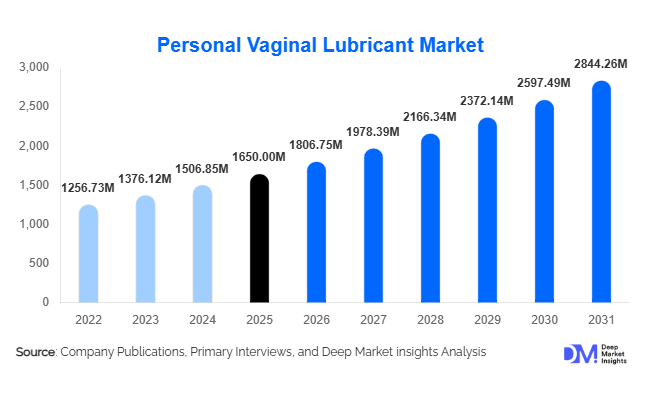
What are the latest trends in the personal vaginal lubricant market?
Shift Toward Natural and Clean-Label Products
Consumers are increasingly prioritizing health-conscious and sustainable personal care products, driving demand for natural and organic lubricants. Products formulated without parabens, glycerin, and synthetic additives are gaining traction, particularly among younger and health-aware consumers. Brands are emphasizing transparency in ingredient sourcing, vegan certifications, and dermatological safety testing. This trend is also supported by regulatory scrutiny and rising awareness about the potential side effects of chemical-based products. As a result, manufacturers are investing in plant-based formulations using aloe vera, coconut oil derivatives, and other natural ingredients to differentiate their offerings and capture premium market segments.
Rise of E-commerce and Direct-to-Consumer Channels
The expansion of online retail has transformed how consumers purchase intimate wellness products. E-commerce platforms provide anonymity, convenience, and access to a wide range of products, reducing the stigma associated with in-store purchases. Direct-to-consumer brands are leveraging digital marketing, subscription models, and personalized recommendations to build strong customer relationships. Social media and influencer campaigns are also playing a critical role in normalizing conversations around sexual health, further driving online sales growth. Cross-border e-commerce is enabling global brands to penetrate emerging markets more efficiently.
What are the key drivers in the personal vaginal lubricant market?
Growing Awareness of Sexual Wellness
The increasing normalization of discussions around sexual health and intimacy is significantly boosting market demand. Educational campaigns, digital content, and healthcare initiatives are encouraging consumers to prioritize sexual well-being. This shift is particularly evident among younger demographics and urban populations, where openness toward such products is higher.
Rising Prevalence of Vaginal Dryness and Menopause
Medical conditions such as menopause, hormonal imbalances, and certain medications contribute to vaginal dryness, driving demand for lubricants. With a growing aging population globally, particularly in developed regions, the need for moisturizing and therapeutic lubricants is increasing steadily.
E-commerce-Driven Accessibility
The availability of products through online platforms has significantly expanded market reach. Consumers can now access a variety of options discreetly, compare products, and make informed decisions, which has contributed to higher adoption rates.
What are the restraints for the global market?
Cultural and Social Stigma
In several developing regions, societal taboos and cultural sensitivities around sexual wellness products continue to restrict market growth. Limited awareness and reluctance to discuss such topics hinder product adoption and distribution expansion.
Regulatory and Safety Concerns
Variations in regulatory frameworks across countries and concerns regarding product safety and ingredient composition can pose challenges for manufacturers. Compliance with stringent standards increases costs and may delay product launches.
What are the key opportunities in the personal vaginal lubricant industry?
Expansion in Emerging Markets
Asia-Pacific, Latin America, and parts of the Middle East present significant growth opportunities due to rising awareness, urbanization, and increasing disposable incomes. Companies adopting localized marketing strategies and affordable pricing models can effectively penetrate these underdeveloped markets.
Integration with Healthcare and Fertility Solutions
Fertility-friendly and therapeutic lubricants are gaining traction, particularly among couples undergoing assisted reproductive treatments. Partnerships with healthcare providers, gynecologists, and fertility clinics offer new revenue streams and enhance product credibility.
Report Scope
| Report Metric | Details |
|---|---|
| Market Size in 2025 | USD 1650 Million |
| Market Size in 2026 | USD 1806.75 Million |
| Market Size in 2031 | USD 2844.26 Million |
| CAGR | 9.5% (2026-2031) |
| Base Year for Estimation | 2025 |
| Historical Data | 2022-2024 |
| Forecast Period | 2026-2031 |
| Report Coverage | Revenue Forecast, Competitive Landscape, Supply Chain Disruption, Growth Factors, Environment & Regulatory Landscape and Trends |
| Geographies Covered | North America, Europe, APAC, Middle East and Africa, LATAM |
| Countries Covered | U.S., Canada, U.K., Germany, France, Spain, Italy, Russia, Nordic, Benelux, Rest of Europe, China, Korea, Japan, India, Australia, Singapore, Taiwan, South East Asia, Rest of Asia-Pacific, UAE, Turky, Saudi Arabia, South Africa, Egypt, Nigeria, Rest of MEA, Brazil, Mexico, Argentina, Chile, Colombia, Rest of LATAM |
Explore more data points, trends and opportunities Download Free Sample Report
Product Type Insights
Water-based lubricants continue to lead the global personal vaginal lubricant market, accounting for approximately 48% of total market share in 2025. This dominance is primarily driven by their universal compatibility with latex condoms and sex toys, ease of cleaning, and minimal risk of irritation or allergic reactions. Additionally, their affordability and wide availability across both online and offline channels make them the preferred choice among first-time users and healthcare-recommended applications. The segment has also benefited from continuous product innovation, including pH-balanced and glycerin-free variants, further strengthening its global leadership.
Silicone-based lubricants are gaining strong traction, particularly within the premium segment, due to their long-lasting properties and superior performance in reducing friction. These products are increasingly favored for specialized use cases, including longer-duration intimacy and medical applications. Oil-based lubricants, while catering to niche consumer segments seeking natural or traditional alternatives, face limitations due to incompatibility with latex products and a higher risk of infections. Meanwhile, hybrid lubricants, combining water and silicone, are emerging as a high-growth category, offering a balance between durability and comfort, and are increasingly adopted by experienced users seeking enhanced performance.
Application Insights
Moisturizing lubricants dominate the application segment, capturing around 35% of the global market share in 2025. Their leadership is driven by the rising prevalence of vaginal dryness associated with menopause, hormonal imbalances, and certain medical treatments. This segment benefits from recurring demand, as many users incorporate these products into daily or long-term wellness routines. The growing global aging population, particularly in developed regions, further supports sustained demand.
Pleasure-enhancing lubricants are experiencing steady growth, fueled by increasing consumer openness toward sexual wellness and experimentation. Innovations such as warming, cooling, flavored, and tingling formulations are attracting younger demographics and contributing to category expansion. Fertility-friendly lubricants are emerging as a high-value niche, particularly in developed markets where assisted reproductive technologies are widely adopted. These products are specifically formulated to be sperm-safe, making them essential for couples undergoing fertility treatments. Therapeutic lubricants designed for pH balance, infection prevention, and post-surgical care are also gaining prominence, supported by growing healthcare integration and physician recommendations.
Distribution Channel Insights
E-commerce platforms dominate the distribution landscape, accounting for approximately 38% of total market share. The primary driver for this segment is the discreet and convenient purchasing experience, which addresses privacy concerns associated with intimate wellness products. The availability of a wide range of brands, customer reviews, subscription models, and competitive pricing further enhances online adoption. Direct-to-consumer strategies adopted by leading brands are also contributing to the rapid expansion of this channel.
Retail pharmacies and drugstores remain a critical distribution channel, particularly for medically recommended and therapeutic lubricants. These outlets benefit from consumer trust and accessibility, especially in developed markets. Supermarkets and hypermarkets cater to mass-market consumers by offering affordable and widely recognized brands. Specialty stores, including sexual wellness boutiques, focus on premium and niche products, often providing personalized recommendations. Clinics and hospitals are increasingly becoming important channels for therapeutic and fertility-focused lubricants, driven by rising integration with healthcare services and reproductive treatments.
End-Use Insights
Individual consumers dominate the market, contributing nearly 70% of total demand in 2025, reflecting the predominantly retail-driven nature of the industry. This segment’s growth is fueled by increasing awareness, normalization of sexual wellness, and the availability of diverse product options catering to different needs and preferences. The shift toward self-care and personal wellness routines has further strengthened demand among individual users.
Healthcare institutions, including gynecology clinics and hospitals, are emerging as significant end-users, particularly for therapeutic and medically prescribed lubricants. These institutions play a crucial role in recommending products for conditions such as vaginal dryness, infections, and post-surgical recovery. Assisted reproductive centers are also contributing to demand, especially for fertility-friendly lubricants used in conception support. The rapid expansion of the global fertility treatment market, coupled with increasing focus on women’s health and reproductive care, is expected to drive sustained growth in institutional demand over the forecast period.
Explore more data points, trends and opportunities Download Free Sample Report
Personal Vaginal Lubricant Market Segmentations
By Product Type
- Water-Based Lubricants
- Silicone-Based Lubricants
- Oil-Based Lubricants
- Hybrid Lubricants
By Application
- Moisturizing Lubricants
- Pleasure-Enhancing Lubricants
- Fertility-Friendly Lubricants
- Therapeutic Lubricants
By Distribution Channel
- E-commerce Platforms
- Retail Pharmacies & Drugstores
- Supermarkets & Hypermarkets
- Specialty Stores
- Clinics & Hospitals
Regional Insights
North America
North America holds the largest share of the global personal vaginal lubricant market, accounting for approximately 35% in 2025, with the United States representing the dominant contributor. The region’s leadership is driven by high awareness of sexual wellness, strong acceptance of intimate care products, and a well-established retail and e-commerce infrastructure. Premiumization is a key trend, with consumers increasingly opting for organic, hypoallergenic, and specialty formulations. Additionally, the presence of leading market players, extensive product availability, and strong healthcare integration further support growth. The rising prevalence of menopause-related conditions and high healthcare spending also act as major demand drivers in this region.
Europe
Europe accounts for approximately 28% of the global market, with key countries including Germany, the United Kingdom, and France. The region’s growth is primarily driven by an aging population, increasing awareness of women’s health, and strong demand for natural and sustainable products. European consumers exhibit a strong preference for organic, vegan, and environmentally friendly formulations, encouraging manufacturers to focus on clean-label innovations. Additionally, stringent regulatory standards ensure product safety and quality, which enhances consumer trust. Government-led healthcare initiatives and growing openness toward sexual wellness further contribute to market expansion.
Asia-Pacific
Asia-Pacific represents around 22% of the global market and is the fastest-growing region, with a CAGR of approximately 11%. Key markets include China, India, and Japan. Growth in this region is driven by rapid urbanization, rising disposable incomes, and increasing digital penetration. The expansion of e-commerce platforms has significantly improved product accessibility, particularly in culturally sensitive markets where discreet purchasing is crucial. Changing social norms, growing awareness of sexual health, and increasing influence of Western lifestyles are also contributing to higher adoption rates. Additionally, large population bases and improving healthcare infrastructure make Asia-Pacific a key growth engine for the global market.
Latin America
Latin America holds approximately 8% of the global market, with Brazil and Mexico as the leading contributors. Market growth is driven by increasing acceptance of sexual wellness products, expanding retail networks, and rising urban middle-class populations. Improved access to healthcare services and growing awareness of reproductive health are also supporting demand. Additionally, the influence of digital media and e-commerce platforms is helping reduce stigma and improve product visibility across the region.
Middle East & Africa
The Middle East & Africa region accounts for nearly 7% of the global market. While overall growth is relatively moderate due to cultural sensitivities, urban centers in countries such as the UAE and South Africa are witnessing increasing adoption. Rising expatriate populations, improving retail infrastructure, and growing awareness of personal wellness are key drivers in these markets. Additionally, gradual shifts in societal attitudes and the expansion of online retail channels are helping overcome traditional barriers, creating new growth opportunities in the region.
Key Players in the Personal Vaginal Lubricant Market
- Reckitt Benckiser
- Church & Dwight
- LifeStyles Healthcare
- Karex Berhad
- BioFilm Inc.
- Lovehoney Group
- Mayer Laboratories
- Sliquid LLC
- Good Clean Love
- Aloe Cadabra
- Bijoux Indiscrets
- Hathor Professional Skin Care
- Yes Yes Company
- ID Lubricants
- Wet International